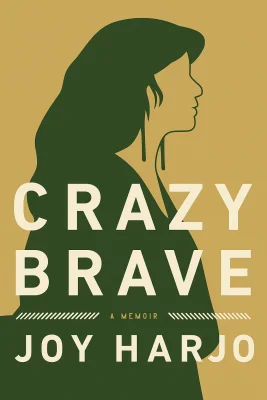
Crazy Brave
Categories
Nonfiction, Biography, Memoir, Feminism, Poetry, Womens, Biography Memoir, Book Club, Indigenous, Native American
Content Type
Book
Binding
Hardcover
Year
2012
Publisher
W. W. Norton & Company
Language
English
ASIN
0393073467
ISBN
0393073467
ISBN13
9780393073461
File Download
PDF | EPUB
Crazy Brave Plot Summary
Introduction
In the landscapes of Oklahoma, where Creek tradition meets the harsh realities of American colonialism, a young girl learns to navigate between worlds. Born into a family bearing the weight of ancestral warriors and the scars of displacement, she must forge her own path through childhood trauma, domestic violence, and the struggle to reclaim her voice. Her story unfolds against the backdrop of the 1960s and 70s, when Indigenous peoples across America were awakening to a new era of cultural renaissance and political resistance. This remarkable journey reveals how art becomes salvation, how trauma transforms into wisdom, and how one woman's courage to break cycles of violence creates ripples that extend far beyond her own life. Through her experiences, readers will discover the profound connection between personal healing and cultural restoration, witness the transformative power of creative expression, and understand how Indigenous voices are reshaping American literature and consciousness. Her path from silence to song, from victim to warrior, illuminates universal truths about resilience, identity, and the sacred responsibility we all carry to transform pain into purpose.
Chapter 1: Roots and Early Childhood: Between Fire and Water
Joy Harjo's earliest memories are painted in contrasts as stark as her parents' opposing natures. Her mother, born of Cherokee and European blood, carried the fire element within her soul - passionate, creative, and fiercely determined. Her father, descended from Creek warriors and chiefs, embodied the water element - sensitive, fluid, and often lost in currents too deep for earthly anchors. Their union created a child who would spend her lifetime learning to balance these elemental forces within herself. Born in Tulsa in 1951, she arrived in a world where Creek territory had been transformed into oil-rich land, where her father's family had once owned vast holdings purchased with petroleum wealth extracted from tribal earth. The prosperity that had elevated her ancestors to prominence - her great-great-grandfather Monahwee had been a leader in the Red Stick War, while Samuel Checotah served as the first principal chief after their forced relocation to Indian Territory - created a complex legacy of power and displacement that would echo through her childhood. Her father's beauty and sensitivity masked a deep wound left by his mother's early death from tuberculosis. This abandonment created in him a restless searching that no earthly love could satisfy. He sought solace in other women, in alcohol, in the mechanical precision of maintaining his Cadillac - anything to fill the void left by maternal loss. Meanwhile, her mother channeled her creative fire into homemaking, sewing clothes from colorful fabrics, baking biscuits, and filling their house with plants and music until it felt like a sanctuary. The young Joy absorbed both her parents' gifts and their pain. From her mother came artistic vision and the understanding that beauty could be created from humble materials. From her father came an intuitive connection to the natural world and the spiritual realm, though this gift was clouded by his struggles with addiction and rage. She learned early that love and violence could inhabit the same heart, that the people who gave you life could also threaten to destroy it. In those early years before formal schooling began, she lived in a world where animals spoke and spirits moved freely between dimensions. She played with bees who cooperated in her storytelling games, observed the luminous energy surrounding pill bugs, and felt the presence of otherworldly guides who would visit her in dreams and visions. This natural mysticism would later become the foundation of her poetic voice, though it would first be driven underground by the demands of Christian education and social conformity.
Chapter 2: The Shadow Years: Surviving Domestic Violence
The divorce that shattered her parents' marriage when she was eight years old marked the beginning of the darkest chapter in Joy's childhood. Her mother's remarriage to a man seventeen years her senior initially seemed like salvation - he courted them with gifts, car rides, and promises of stability. But the facade crumbled quickly once they moved into his house on Independence Street, a address that would prove bitterly ironic given the imprisonment that followed. The transformation was swift and brutal. The man who had charmed them with hamburgers and milkshakes revealed himself as a predator who used violence to maintain control. He established a reign of terror through strategic brutality, threatening to kill the entire family if her mother attempted to leave. The house itself seemed to absorb this malevolence, becoming a place where hundreds of snakes infested the yard and dark spirits prowled the hallways. Young Joy became a sentinel, staying awake through the night to guard against dangers both seen and unseen. Her stepfather's violence followed a calculated pattern designed to isolate and dominate. He severed her mother's friendships, controlled her movements, and systematically destroyed any source of joy or creative expression in the household. When he caught Joy singing along to the radio, he beat her and forbade her from ever singing in the house again. He read her private journal aloud to humiliate her, invaded her personal space with inappropriate touching, and made it clear that she was living on borrowed time in what had once been her refuge. The gender dynamics of oppression became starkly apparent as household duties were divided along rigid lines - the girls responsible for all cooking, cleaning, and childcare while the boys faced only minimal chores. This inequitable distribution was enforced through violence and the constant threat of violence, creating an atmosphere where challenging authority invited swift and brutal punishment. Joy learned to navigate this minefield with hypervigilance, developing survival skills that would serve her well in other dangerous situations but left deep psychological scars. As she entered adolescence, her stepfather's interest in her became increasingly predatory. He would enter her room in early morning hours when her mother was at work, ostensibly to give back rubs but clearly seeking to groom her for sexual abuse. The combination of physical violence and sexual menace created an unbearable pressure that drove her to contemplate suicide, escape, or any means of breaking free from what felt like an inescapable trap. The psychological warfare extended to attempts to destroy her future opportunities. When she earned a role in a school theater production and permission to tour with the company, her stepfather refused to sign the necessary forms, apparently determined to crush any avenue that might lead her away from his control. Only her mother's rare intervention allowed her to participate in what would become a transformative experience, though it came at the cost of months of silence between her parents as punishment for this act of defiance.
Chapter 3: Finding Sanctuary at the Indian School
The Institute of American Indian Arts in Santa Fe became Joy's salvation, a place where being different was not just accepted but celebrated. Arriving in 1967 at age sixteen, she discovered a community of young Indigenous artists from across the continent - Inupiat from Alaska, Seminoles from Florida, Sioux from the Dakotas - all united in their determination to forge new expressions of Native identity that honored tradition while embracing contemporary innovation. The school represented a radical departure from the typical boarding school experience designed to "kill the Indian, save the man." Instead, students were encouraged to explore their tribal heritage while mastering modern artistic techniques. Under the guidance of master artists like Apache sculptor Allan Houser, Hopi potter Otellie Loloma, and Luiseño painter Fritz Scholder, Joy learned that Indigenous art could be both rooted in ancestral wisdom and boldly experimental. Her primary focus remained visual arts - drawing and painting - but she also discovered theater through the program led by Rolland Meinholtz. Despite initially declaring she would never perform on stage, an inner voice guided her to enroll in theater classes, where she learned that the body contains multiple centers of knowledge and that performance could become a bridge between the world of dreams and waking reality. This understanding would later prove crucial to her development as a poet and performer. The school environment fostered intense creativity but also reflected the complex traumas its students carried from their disrupted communities and families. Some channeled their pain into violent outbursts, others into self-harm or suicide attempts. The collision between Indigenous students from historically enemy tribes - Sioux and Pawnee, for instance - initially recreated ancient tensions until shared artistic pursuits revealed their common ground and mutual respect. Joy's time at IAIA coincided with the height of the American Indian Movement and the broader cultural awakening occurring across Indian Country. Students participated in protests, occupied buildings, and organized around issues of sovereignty and cultural preservation. This political consciousness merged with artistic exploration to create a sense of mission that transcended individual ambition - they were not just becoming artists but cultural warriors tasked with carrying forward the voices and visions of their ancestors. The communal aspect of school life provided the stable family structure many students had never experienced. Late-night conversations in dormitories, collaborative art projects, and shared meals created bonds that would last lifetimes. Yet this sanctuary was temporary, and Joy knew that eventually she would have to venture into a world where her Indigenous identity and artistic aspirations would face new forms of resistance and challenge.
Chapter 4: The Warrior Path: Motherhood and Indigenous Identity
The transition from the protective environment of the Indian school to adult responsibilities came swiftly and without preparation. At seventeen, pregnant and naive about the realities of marriage and motherhood, Joy found herself in Tahlequah, the Cherokee Nation capital, married to a fellow artist whose charm masked his own unresolved traumas and addictions. The birth of her son at the Indian hospital revealed both the harsh realities of federal healthcare for Indigenous people and her own fierce maternal instincts. Motherhood awakened in her a warrior spirit that had perhaps been dormant during her survival-focused adolescence. Holding her newborn son, she experienced the weight of responsibility for continuing not just her own bloodline but the cultural traditions and stories that connected them to thousands of years of ancestral wisdom. This child would need to navigate the same complex terrain of identity and belonging that she was still learning to map for herself. The early years of marriage revealed the cyclical nature of trauma within Indigenous communities. Her husband, like her father and stepfather, used alcohol to medicate pain that had no other outlet in a society that offered few resources for healing historical wounds. The violence that erupted during his drinking episodes forced her to become both protector and survivor, making split-second decisions about when to flee, when to fight back, and when to call for help from law enforcement that viewed Indian families with suspicion. Economic survival required constant strategizing. They moved frequently, following job opportunities that rarely lasted long enough to provide stability. Joy worked as a waitress, gas station attendant, and hospital aide while completing her education, often studying for exams while her children slept and preparing for class while cooking dinner. The juggling act required superhuman energy and organization, skills that would serve her well in later literary and academic careers. The isolation experienced by many young Indigenous mothers was compounded by her husband's jealousy and need for control. Like her stepfather, he sought to limit her contacts with friends and colleagues, viewing her growing confidence and competence as threats to his authority. The pattern of abuse escalated until the night he returned home drunk and violent, forcing her to call police and make the final break that would free her children from witnessing the cycle of violence that had marked her own childhood. Raising her children as a single mother while attending university required her to construct new definitions of family and community. She found strength in traditional Creek values of mutual support and shared responsibility, creating networks of care with other Indigenous women who were navigating similar challenges. These relationships became the foundation for a different kind of warrior path - one that prioritized healing, education, and cultural restoration over the traditional masculine model of warfare that had so damaged the men in her life.
Chapter 5: Creative Awakening: Art, Poetry, and Healing
The discovery of poetry as both calling and healing practice emerged from Joy's deepest crisis. During her university years at the University of New Mexico, while juggling single motherhood, academic demands, and the ongoing trauma responses that manifested as panic attacks, she experienced what could only be described as a spiritual awakening. Watching a documentary about an Indonesian shaman who used poetry, music, and dance to facilitate healing, she recognized her own path with startling clarity. The realization came not as intellectual understanding but as embodied knowing: she was meant to become the poem, the music, and the dancer all at once. This integration of artistic expression with spiritual practice connected her to ancestral traditions where healers served their communities through ceremony and storytelling. Poetry became her medicine bundle, carrying the power to transform pain into beauty and isolation into connection. Her early poems emerged directly from personal crisis - the night terrors that plagued her sleep, the panic attacks that made simple activities like crossing the street feel life-threatening, the rage she felt at systems designed to diminish Indigenous people. Writing became a way of wrestling with demons both literal and metaphorical, of claiming space for her voice in a literary landscape that had rarely welcomed Indigenous women's perspectives. The poem "I Give You Back" marked a turning point in her healing journey and artistic development. Addressing her fear directly, she refused to continue carrying trauma that belonged not to her but to the historical forces that had attempted to destroy her people. This act of poetic exorcism freed her from panic's stranglehold and established the template for much of her future work - poetry as ceremony, words as weapons against oppression, art as restoration of sacred relationship. The creative process revealed layers of inherited wisdom she had not consciously possessed. Working with visual arts had already connected her to her grandmother Naomi's artistic legacy, but poetry opened channels to even deeper ancestral knowledge. She began to understand how colonization had severed connections between Indigenous people and their traditional means of expression, and how reclaiming those connections was both personal healing and political resistance. Her emergence as a poet coincided with the broader Native American Renaissance of the 1970s and 80s, when Indigenous writers, artists, and activists were asserting their right to tell their own stories in their own voices. She found community with other Indigenous poets who were likewise discovering that English could be made to carry Indigenous sensibilities, that contemporary forms could express ancient wisdoms, and that survival itself was a form of victory worthy of celebration.
Chapter 6: Breaking Cycles: Confronting Fear and Finding Voice
The pivotal moment in Joy's transformation from victim to artist occurred during one of her darkest nights, when the recurring nightmare that had haunted her since childhood finally revealed its deepest truth. For years, she had run from an unseen pursuer through her dreams, but on this night she found herself trapped with nowhere left to flee. Faced with confronting the monster directly, she discovered resources within herself she had not known existed. The dream confrontation became a template for her waking life. She learned to meet her panic attacks with curiosity rather than resistance, to observe the physical sensations and emotional patterns without being consumed by them. This mindful approach to trauma recovery, though she had no clinical language for it at the time, allowed her to reclaim agency over her own nervous system and psychological responses. Breaking the cycle of violence required not just leaving abusive relationships but understanding the intergenerational patterns that had created them. She began to see how historical trauma - the forced relocations, boarding school experiences, cultural suppression, and systematic marginalization faced by Indigenous peoples - had created wounds that were passed down through families like heirlooms no one wanted to inherit. Healing required not just individual therapy but cultural restoration and community support. Her growing confidence as a poet provided new models for strength and resistance. Rather than the explosive masculine anger that had characterized the men who had hurt her, she discovered the power of witness, of bearing testimony to both beauty and brutality. Poetry became her way of refusing silence, of insisting that Indigenous women's experiences mattered and deserved to be heard by wider audiences. The academic environment of the university provided both opportunities and challenges for her developing voice. While she found mentors who supported her artistic growth, she also encountered professors and fellow students who questioned whether Indigenous perspectives belonged in serious literary discourse. These microaggressions and outright dismissals taught her to trust her own artistic instincts and to seek out communities where her work would be valued and understood. Her children became both motivation and audience for her transformation. She was determined to break the cycles that had shaped her own childhood, to model for them what it looked like to choose healing over revenge, creativity over destruction, voice over silence. The warrior path she had chosen was not about conquering enemies but about conquering the internal and external forces that sought to diminish Indigenous people's humanity and potential.
Chapter 7: Cultural Renaissance: Becoming a Tribal Voice
As Joy's reputation as a poet grew throughout the 1980s and beyond, she consciously embraced her role as a cultural bridge-builder, helping to translate Indigenous experiences and wisdom for broader audiences while maintaining the integrity and specificity of her tribal perspectives. Her work became part of the larger Native American Renaissance that was transforming American literature, challenging dominant narratives, and asserting Indigenous peoples' rightful place in contemporary intellectual and artistic discourse. Her poetry collections began to receive recognition from both Indigenous and mainstream literary communities, earning awards and academic attention that brought new visibility to Native women's voices. This success created opportunities but also responsibilities - she became a spokesperson for issues affecting Indigenous peoples, a role that required careful navigation between her personal artistic vision and her obligations to her communities. The integration of music into her artistic practice represented another step in her evolution from survivor to culture bearer. Taking up the saxophone in her forties, she began to explore the connections between poetry and jazz, finding in improvisation and collaboration new ways to embody the healing practices that had first called her to artistic expression. Her performances became ceremonies that brought together diverse audiences in shared recognition of beauty, struggle, and resilience. Her work as an educator, both in academic settings and through community workshops, allowed her to pass on the lessons she had learned about the connections between personal healing and cultural restoration. She mentored younger Indigenous writers and artists, helping them navigate the challenges she had faced while encouraging them to find their own authentic voices and expressions. The cyclical nature of healing became a central theme in her mature work, reflecting her understanding that recovery from trauma is not a linear process but an ongoing practice of returning to wholeness. Her poetry began to incorporate more explicitly ceremonial elements, drawing on Creek traditions while remaining accessible to readers from diverse backgrounds who were seeking their own paths to healing and authentic expression. Her elevation to the position of United States Poet Laureate in 2019 represented not just personal achievement but a historic moment of recognition for Indigenous voices in American culture. The appointment signaled a broader cultural shift toward acknowledging the central role Indigenous peoples have always played in shaping the American experience, and the vital contributions they continue to make to the nation's ongoing story of becoming.
Summary
Joy Harjo's journey from a traumatized child in Oklahoma to becoming one of America's most celebrated poets demonstrates that our greatest wounds can become our greatest sources of power when we choose healing over revenge and voice over silence. Her life embodies the warrior tradition not as conquest but as the courage to transform pain into beauty, to break cycles of violence and addiction, and to serve as a bridge between worlds that have been artificially divided by colonization and its aftermath. Her story offers profound lessons about the nature of resilience and the possibility of transformation even in the face of seemingly insurmountable obstacles. She shows us that healing is both intensely personal and inevitably communal, that reclaiming our authentic voices requires understanding the historical forces that sought to silence them, and that art can serve as both sanctuary and weapon in the struggle for justice and recognition. Her work speaks especially powerfully to anyone who has experienced trauma, marginalization, or the challenge of maintaining cultural identity in hostile environments, offering both witness to their struggles and proof that survival itself can be a form of victory worthy of celebration.
Best Quote
“A story matrix connects all of us. There are rules, processes, and circles of responsibility in this world. And the story begins exactly where it is supposed to begin. We cannot skip any part.” ― Joy Harjo, Crazy Brave
Review Summary
Strengths: The review highlights the memoir's unique and unconventional style, comparing it to works by Isabel Allende and Miguel Ruiz. The reviewer appreciates the risk taken by the publisher and the authenticity of Joy Harjo's narrative, particularly her concept of "the knowing." Weaknesses: The reviewer expresses disappointment with the memoir's brevity and its focus on Harjo's early life, wishing for insights into her later years. There is a desire for more exploration of "the knowing" in mature life stages. Overall: The reader finds the memoir intriguing and authentic but feels it lacks depth in covering Harjo's later life experiences. The recommendation is mixed, appreciating the style but desiring more comprehensive coverage.
About Author

Joy Harjo
Harjo extends the narrative of Native American identity by weaving together poetry, music, and performance. Her creative work serves a dual purpose: to reclaim indigenous stories and to present them within a modern context. Through collections such as "An American Sunrise" and "She Had Some Horses", Harjo draws from indigenous myths and history, thereby reframing Native experiences with a focus on resilience and survival. Her work not only acknowledges the deep spiritual connection to the land but also addresses themes of colonization and cultural heritage, offering readers a poignant reflection on identity and history.\n\nHer methods are as varied as her themes; Harjo employs a multidisciplinary approach that encompasses poetry, memoir, and music. Her one-woman show, "Wings of Night Sky, Wings of Morning Light", exemplifies this blend of artistic forms, featuring collaborative elements with musicians like Larry Mitchell. Harjo's memoir, "Crazy Brave", further illustrates her adeptness at navigating personal and collective histories through storytelling. Her role as the first Native American Poet Laureate underscores her influence in bringing indigenous narratives to broader audiences.\n\nFor readers and audiences, Harjo's body of work offers a rich exploration of indigenous culture and its intersections with contemporary life. Her diverse oeuvre, celebrated through awards such as the American Book Award and her tenure as Poet Laureate, positions her as a vital voice in literature and beyond. Those interested in indigenous storytelling, poetry, and cultural activism will find her work both enlightening and transformative, providing a profound connection to themes that transcend time and geography. This bio provides a glimpse into the author's ongoing contributions to literature and her commitment to amplifying Native American voices.
Read moreDownload PDF & EPUB
To save this Black List summary for later, download the free PDF and EPUB. You can print it out, or read offline at your convenience.
Crazy Brave
by Joy Harjo
