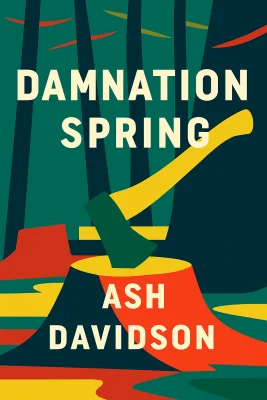
Damnation Spring
Categories
Fiction, Nature, Audiobook, Historical Fiction, Adult, Book Club, Historical, Contemporary, Environment, Literary Fiction
Content Type
Book
Binding
Hardcover
Year
2021
Publisher
Scribner
Language
English
ISBN13
9781982144401
File Download
PDF | EPUB
Damnation Spring Plot Summary
Introduction
# Damnation Spring: The Last Stand of Ancient Giants and Dying Dreams The morning mist clings to the redwood giants like smoke from an ancient fire, and Rich Gundersen climbs toward heaven with steel spurs biting bark and a chainsaw swinging from his belt. At fifty-three, he's already outlived most men in his profession, but the old-growth timber that built his family's dreams is vanishing faster than morning fog. Below him, the coastal forests of Northern California stretch in waves of green and brown—virgin groves giving way to clear-cuts like a disease spreading through living flesh. Rich's wife Colleen tends their small house while watching their son Chub chase butterflies, counting the months since her last miscarriage. The Easter baby would have been due in August. Now September rain taps against windows that frame a world where ancient trees fall to chainsaws and salmon runs grow thinner each year. When a child's skull surfaces in the sacred grove that loggers call Damnation Spring, it sets in motion a chain of events that will test every bond holding this timber community together. Rich has made a secret gamble that could save his family or destroy it, while Colleen finds herself drawn to a man from her past who carries dangerous questions about the water they drink and the air they breathe.
Chapter 1: The Secret Gamble: Rich Stakes Everything on Virgin Timber
The numbers dance in Rich's head like sawdust in sunlight—two hundred fifty thousand dollars for seven hundred twenty acres of virgin timber. The 24-7 Ridge sits like a crown jewel above Damnation Creek, named for the monster redwood that measures twenty-four feet seven inches across her base. Rich's father had walked that ridge every Sunday like it was church, dreaming of the day a Gundersen would own those trees. At the savings and loan, fluorescent lights buzz overhead as Rich signs papers that will mortgage his future. The loan officer's shirt shows sweat stains as he explains the terms—twenty-five hundred dollars left in savings after closing costs, monthly payments that will bleed him dry if the timber market shifts. Rich's hands shake as he initials each page, thinking of Colleen at home, unaware that her husband has just bet everything on trees that may never reach a mill. The secret burns in his chest as he drives home, survey maps hidden in his glove compartment like love letters from another woman. When Colleen asks about his day, he tastes the lie before it leaves his lips. The 24-7 stands three hundred seventy feet tall, worth a fortune in board feet if he can get her out. If the roads reach her. If the rains hold off. If the protesters don't chain themselves to her trunk. Rich climbs his spar tree each morning, steel spurs biting bark as he rises above the controversy brewing below. From two hundred feet up, he can see his secret timber standing proud as flagpoles in the distance. But every day brings new challenges—environmental groups filing lawsuits, tribal activists blocking access roads, his own crew growing restless as work slows to a crawl. The monthly payment looms like a storm cloud, and Rich knows he's running out of time to make his gamble pay off.
Chapter 2: Poisoned Waters: Colleen Discovers the Pattern of Loss
Colleen's hands shake as she delivers another broken baby—this one born with the top of its skull missing, brain exposed like a pink flower that will never bloom. She holds the infant against his mother's chest as his tiny heart flutters and stops, another broken promise in a world that seems designed to break them. The Larson family lives downstream from the timber operations, where spray trucks pass twice weekly, misting the roadside brush with chemicals that make blackberries curl and die. Eight miscarriages have taught Colleen the geography of loss, but she's always blamed her own body for failing to carry life to term. Now, sitting in her kitchen with a notebook spread before her, she begins mapping a different kind of failure. The affected families all drink from creeks that run through recently sprayed areas. They all live in the shadow of clear-cuts where helicopters dump herbicides to kill competing vegetation. The pattern emerges like a photograph developing in chemical baths—birth defects clustering around logging operations, miscarriages spiking after aerial spraying, children born without brains or with organs on the outside of their bodies. Colleen's medical training wars with her loyalty to the community that puts food on their table. These are Rich's coworkers, his friends, the men who risk their lives in the canopy every day to harvest the timber that built their world. When she finds the dead fish in their drinking glass—silver as a folded dime, floating belly-up in what should be clean mountain water—Colleen knows the poison has reached their own home. Rich cleans the intake pipe again and again, but something upstream is wrong, something the spray trucks and clear-cuts have done to the watershed that feeds their lives. The truth sits in her chest like a stone, heavy and sharp-edged, cutting her from the inside.
Chapter 3: Daniel's Return: Science Meets Ancient Grief
Daniel Bywater emerges from the coastal fog like a ghost from Colleen's past, his dark hair longer than she remembers, a pencil tucked behind his ear and questions in his eyes. Sixteen years since high school, since she followed him to Humboldt State for five months before her mother's cancer called her home. Now he's back with a PhD in fisheries biology and water samples that tell stories no one wants to hear. Daniel is Yurok, one of the few tribal members who managed to get an education and return home with knowledge the white world respects. He speaks of salmon runs failing, of creeks running too warm and thick with silt, of his grandmother growing sick in ways the doctors can't explain. His laboratory analysis reveals concentrations of 2,4-D and 2,4,5-T—the same chemicals used in Agent Orange—at levels that could explain the cluster of birth defects plaguing the community. At the old radar station, a concrete bunker left over from World War II, Colleen finds herself crying for the first time in months. This is where Daniel's father was stationed during the war, where his mother danced with soldiers who left babies behind like souvenirs. Daniel picks blackberries with purple-stained fingers, asking gentle questions about her losses that break down the walls she's built around her grief. The betrayal happens on damp grass with the ocean crashing against rocks below. For the first time since the Easter baby died, Colleen feels alive in her own skin, connected to something larger than her own failure. Daniel's hands are gentle on her face, his breath tastes like mint and possibility, and she lets herself believe that maybe her body isn't broken after all. Maybe something else has been stealing her children before they could draw breath.
Chapter 4: Community Fractures: When Truth Threatens Survival
The forestry board meeting erupts like a chainsaw hitting a nail, sparks flying in all directions. Merle Sanderson sits red-faced at the defendant's table while protesters unfurl banners reading "Cathedral Without a Roof" and "Lungs of the Planet." Rich takes the podium with the weight of four generations of loggers behind him, defending his neighbors' right to work while acknowledging that something is poisoning their water. Daniel Bywater follows with scientific evidence that shatters the careful balance Rich tried to maintain. He holds up a jar of water from the Gundersen tap, publicly naming Colleen's miscarriages as proof of chemical contamination. The betrayal cuts deeper than adultery—Daniel is using their private grief as ammunition in a public war, turning their bedroom sorrows into courtroom evidence. The hearing dissolves into chaos as men who've worked together for decades turn on each other with fists and harsh words. Eugene DeWitt, Rich's brother-in-law, threatens to skin Daniel and hang him from a spar tree. The young Sanderson heir eggs him on with the casual cruelty of someone who's never worked for his money, while tribal activists block access roads with their bodies and bullhorns. Helen Yancy takes the microphone last, her quiet dignity shaming both sides into momentary silence. She holds up an envelope of money—Sanderson's attempt to buy her silence after her brainless son died—and lets the bills flutter to the floor like autumn leaves. The cash lies scattered at her feet, worthless as corporate promises, while her words hang in the air like an indictment of them all. Everyone knows the sprays are killing their children, but no one has the courage to say it out loud.
Chapter 5: Betrayals and Broken Trust: Personal Wars Mirror Public Battles
The confrontation comes after Rich discovers the mason jars hidden in Colleen's kitchen cabinet, each one labeled with dates and locations like evidence in a criminal case. Water samples for Daniel's research, collected in secret while Rich climbed trees to pay for the home she's helping to condemn. The betrayal runs deeper than adultery—she's chosen sides in a war that threatens everything they've built together. Rich hurls the jars against the kitchen wall, each breaking container a small explosion of rage and betrayal. Glass shards glitter on the linoleum while water spreads in dark stains that will never fully dry. Colleen stands her ground, finally voicing the resentment that's been building for months. How can she make a baby alone when her husband won't touch her? How can she trust a man who mortgages their future without telling her? The truth about the 24-7 Ridge purchase comes out like poison from a lanced wound. Rich's secret gamble, the mortgage papers hidden in his dresser drawer, the monthly payments that will bleed them dry if the timber market shifts. Colleen stares at the numbers with the expression of a woman watching her marriage dissolve in real time. Seven hundred thousand dollars bet on trees that may never be harvested, their son's future mortgaged against Rich's desperate dreams. They sit across from each other at the kitchen table where they've shared thousands of meals, the weight of their mutual betrayals settling between them like dust after an explosion. Outside, ancient trees creak in the wind, and both know their marriage hangs in the balance like a widow-maker ready to fall. The forest that built their world is also tearing it apart, one secret at a time.
Chapter 6: The Land Rebels: When Nature Strikes Back
Eugene DeWitt makes his move in the pre-dawn darkness, leading a crew into Damnation Grove with chainsaws and desperate fury. The vandalism is breathtaking in its scope—fifteen ancient redwoods, some over a thousand years old, felled without permits or planning. The giants crash into each other like dominoes, creating a wasteland of splintered wood and torn earth that will be impossible to salvage. The illegal cutting forces the forestry board's hand. With the trees already down, environmental arguments about preservation become moot. The timber is cut; the only question is whether it will be harvested or left to rot. From Eugene's perspective, it's brilliant tactics. From every other angle, it's ecological terrorism that will haunt the community for generations. The mudslide follows like divine retribution. The destabilized hillside, no longer anchored by root systems that held soil for centuries, simply gives up its grip on gravity. Tons of earth and debris roar down the mountainside, burying access roads and damming Damnation Creek into a brown lake that backs up into the watershed. The salmon spawning beds where fish returned for millennia disappear under layers of silt and broken dreams. Rich finds himself working alongside Daniel Bywater to clear debris and establish safe passage for trapped families. The two men who've been circling each other like wary animals discover they can cooperate when lives hang in the balance. Their shared concern for Colleen and Chub creates a fragile bridge across the chasm of betrayal and mistrust, but the damage to the land runs deeper than any personal reconciliation can heal.
Chapter 7: Aftermath: Finding Ground That Will Hold
The accident happens on a curve Rich has driven ten thousand times, but this morning the fog is thicker, the road slicker, and fate has finally come to collect its due. The pickup truck rolls down the embankment like a discarded toy, coming to rest upside down among the trees that defined Rich's entire life. When they find him, he's already gone, his body broken against the very forest he loved and harvested for thirty years. Colleen stands at the edge of the wreckage, holding Chub's hand while rescue workers do their grim business. The boy is eight years old and trying to understand why the strongest man he ever knew was defeated by gravity and steel. The forest whispers around them with wind and memory, indifferent to human grief, eternal in its cycles of growth and decay. The funeral brings together the fractured community in shared sorrow. Loggers and environmentalists, tribal members and townspeople, all gather to honor a man who tried to walk the line between tradition and change. Eugene speaks of Rich's skill with a chainsaw, his courage in the canopy, his loyalty to the men beside him. Daniel offers words in Yurok, a prayer for safe passage beyond the fog. In the weeks that follow, Colleen discovers Rich had been carrying more secrets than just the land purchase. The 24-7 Ridge belongs to Chub now, too tangled in legal challenges to ever see a chainsaw, but it's theirs—a legacy of standing trees instead of board feet. She places her hand on her growing belly, feeling new life stir beneath her palm, and wonders what kind of world this child will inherit from the ashes of the old.
Summary
In the end, the great trees of Damnation Spring were saved not by environmental activism or corporate conscience, but by the simple arithmetic of economics and litigation. The protests made harvesting too expensive, the lawsuits too complex, the public relations too damaging. Sanderson Timber moved on to easier prey, leaving behind a forest scarred by roads and intentions but still standing, still breathing, still reaching toward a sky that held both poison and promise. Colleen raised her children in the shadow of those ancient giants, teaching them to read the forest's moods and understand the delicate balance between human need and natural law. Chub grew up knowing his father through stories and the land Rich died trying to protect, learning that some legacies are measured not in board feet but in the simple act of letting something wild remain wild. The water ran cleaner now, the fish returned to spawn, and babies were born whole and healthy, their cries echoing through valleys where chainsaws once roared. In a world where so much had been lost, it was enough to know that some things endured—rooted deep in soil that remembered everything and forgave nothing, reaching always toward the light that filters through the canopy of giants who refuse to fall.
Best Quote
“because what was hope but belief, no matter how rare the miracle?” ― Ash Davidson, Damnation Spring
Review Summary
Strengths: The book's premise and setting are praised as engaging, with an interesting historical context highlighting environmental awareness. The narrative's focus on a tight-knit community and the working-class experience is initially appealing. Weaknesses: The story suffers from a slow pace and is heavily laden with unexplained technical logging jargon, which detracts from reader engagement. The narrative is criticized for its glacial development, particularly in Colleen's storyline, and the large, unlikable cast of characters adds to the confusion. The lack of character introductions and the overwhelming detail in Rich's sections further hinder comprehension. Overall: The reviewer expresses disappointment, citing difficulty in understanding due to the book's slow pace and technical language. The book is rated no higher than 3 stars, indicating a lukewarm recommendation.
About Author

Ash Davidson
Davidson delves into the complexities of environmental and social challenges through her compelling storytelling, focusing on themes of community resilience and familial dynamics in rural settings. Her debut novel, "Damnation Spring," set in the California redwoods during the 1970s, delves into the intertwined crises of deforestation and herbicide contamination. Through multiple perspectives, the book presents characters like Rich, Colleen, and Chub, offering insights into how a logging community contends with environmental exploitation and its human consequences. This narrative structure, while reminiscent of literary greats like John Steinbeck, allows Davidson to carve out her own unique voice in contemporary American fiction.\n\nHer method of intertwining intimate family and community stories with broader environmental themes provides a rich exploration of issues such as corporate greed, chemical toxins, and the sustainability of resource-dependent communities. As a result, readers gain a deeper understanding of the delicate balance between human activity and environmental stewardship. This book has not only captivated audiences but also garnered critical acclaim, earning awards such as the Reading the West Award for Debut Fiction and recognition from the New York Times and Washington Post. Davidson’s work is supported by esteemed organizations like the National Endowment for the Arts, underscoring her commitment to impactful storytelling. Her early experiences in the Klamath region and her education at the Iowa Writers' Workshop significantly shape her writing, making her bio a testament to how personal history can fuel an author's creative vision.
Read moreDownload PDF & EPUB
To save this Black List summary for later, download the free PDF and EPUB. You can print it out, or read offline at your convenience.
Damnation Spring
by Ash Davidson
