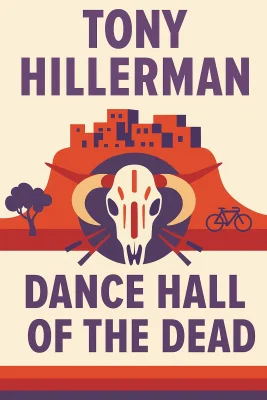
Dance Hall of the Dead
Categories
Fiction, Audiobook, Mystery, Thriller, Westerns, Crime, Native American, Mystery Thriller, Detective, Native Americans
Content Type
Book
Binding
Mass Market Paperback
Year
1990
Publisher
HarperPaperbacks
Language
English
ASIN
0061000027
ISBN
0061000027
ISBN13
9780061000027
File Download
PDF | EPUB
Dance Hall of the Dead Plot Summary
Introduction
In the high desert country where Navajo and Zuñi lands meet, Lieutenant Joe Leaphorn of the Navajo Tribal Police receives a call that will draw him into a web of ancient beliefs and modern murder. A Zuñi boy named Ernesto Cata has vanished, leaving behind only a bicycle and a pool of blood soaked into the red earth. The boy was more than just another missing child—he was Shulawitsi, the Little Fire God, chosen to dance in the sacred Shalako ceremonies that bring rain and blessing to his people. When George Bowlegs, a fourteen-year-old Navajo who desperately wanted to become Zuñi, disappears the same day, suspicion falls heavy on the lonely outsider. But Leaphorn sees patterns that don't fit the obvious answers. In this land where spirits walk among the living and ancient taboos still carry the weight of death, someone is using sacred masks and old fears to cover tracks that lead to a truth more twisted than any legend.
Chapter 1: The Vanishing of Shulawitsi: A Boy's Disappearance and Bloody Tracks
The call came on a bitter December morning, crackling through the radio of Leaphorn's patrol unit as he worked a mundane case near Ramah. Two boys missing, one Zuñi, one Navajo. Blood at the scene. The kind of call that transforms routine police work into something urgent and dark. At the Zuñi police station, Ed Pasquaanti laid out the facts with the precision of a man who knew that in cases like this, details mattered. Ernesto Cata, thirteen years old, chosen to portray Shulawitsi in the upcoming Shalako ceremonies. The boy had been conditioning his body through long runs across the mesa, preparing for the grueling ritual that would honor the Council of the Gods. Yesterday evening he had not returned home. They found his bicycle where he always met George Bowlegs, his unlikely Navajo friend. The ground around the piñon trees was saturated with blood—too much blood for someone to walk away from. But there was no body, no weapon, no clear trail leading anywhere except into questions that multiplied like shadows at sunset. George Bowlegs had borrowed the bicycle to meet Ernesto. George had attended school that morning, asking teachers where his friend might be, playing the part of the worried companion. Then during social studies class, George had simply walked out, claiming illness. By the time police arrived at the school, George was gone, carrying with him whatever secrets the blood-soaked earth might tell. Leaphorn studied the scene with the methodical eye of a tracker who had spent years reading stories written in dust and stone. The tracks told him of a meeting between friends, of someone waiting in the shadows, of violence swift and final. But they also told him something else—something that didn't fit the neat theory of a Navajo boy killing his Zuñi friend.
Chapter 2: Searching for George: The Trail to Understanding Zuñi Ways
The wagon track to Shorty Bowlegs' hogan wound through country that seemed to exist outside of time, where wind-carved sandstone and scattered junipers stretched toward horizons that promised nothing but more emptiness. Leaphorn found George's father drunk on cheap wine, too far gone to provide coherent answers about his missing son. The man's eyes held the defeated look of someone who had lost everything worth losing long before his boy disappeared. Cecil Bowlegs, George's eleven-year-old brother, possessed the kind of watchful intelligence that poverty and neglect sometimes carved into children. He told Leaphorn about the kachina that George feared—not feared exactly, but something that required George to run, to hide, to seek some kind of spiritual resolution that Cecil didn't understand. The boy spoke of George's obsession with becoming Zuñi, of learning their ceremonies, of trying to find a place where he belonged. At the commune called Jason's Fleece, a collection of young white dropouts living in abandoned hogans, Leaphorn met Susanne—a girl too thin and too knowing, with old scars on her hands and older pain in her eyes. She told him about George's desperate questions regarding Zuñi forgiveness, about kachina absolution, about something George called the Dance Hall of the Dead. Her voice carried the weight of someone who had seen too much of how people failed each other. The pattern began to emerge like a photograph developing in chemical baths. George Bowlegs was not running from the law—he was running toward something. Some spiritual destination where he hoped to find answers, or peace, or the belonging that had always eluded him. Father Ingles at the mission knew the mythology: Kothluwalawa, the sacred lake where the spirits of dead Zuñi children had transformed into kachinas, the Council of the Gods who brought rain and blessing to their people.
Chapter 3: The Archaeological Deception: Fragments of Stone and Truth
At the dig site north of Corn Mountain, Ted Isaacs worked with the desperate intensity of a man who saw salvation in every fragment of ancient flint he sifted from the earth. Lean and weathered, with protruding teeth he tried to hide behind his hand, Isaacs had spent months proving the revolutionary theory of the famous archaeologist Chester Reynolds. They were rewriting the textbooks, proving that Folsom Man had not vanished mysteriously but had adapted, evolved, survived. Isaacs showed Leaphorn the evidence—flint chips and broken spear points made from the same piece of silicified wood, artifacts that proved the same Stone Age hunter had crafted both the elaborate Folsom points and the cruder parallel-flaked tools that came later. It was the kind of discovery that could make careers, that could transform a poor graduate student from Tennessee into a respected scholar with a future. But Reynolds himself proved to be different from what Leaphorn expected. Not the stereotypical academic, but a man with predator's eyes and a smile that could switch on and off like electric current. He radiated the kind of controlled intensity that suggested great intelligence wedded to implacable will. When Reynolds spoke of his theory, his contempt for the colleagues who had scorned his work was barely contained beneath professional courtesy. The boys had been banned from the site after Reynolds caught them near his truck. Nothing had been stolen, both men insisted, though Leaphorn sensed undercurrents he couldn't quite identify. Isaacs spoke with protective fondness of the two boys who had watched him work through the summer months, but Reynolds showed only irritation at the interruption they represented. In this place where ancient hunters had once crafted tools to survive in a changing world, modern ambitions were shaping truths in ways that would soon demand their own kind of survival.
Chapter 4: Hunting the Hunter: Danger on the Mesa
The second murder hit Leaphorn like a physical blow. Shorty Bowlegs lay in his hogan with his skull crushed, surrounded by the scattered debris of a life that had never amounted to much. Blood matted the man's gray hair, and the small dwelling had been systematically searched by someone looking for something specific. Cecil Bowlegs rode out of the darkness on horseback, driving the family sheep home through the first bitter wind of winter. Leaphorn realized with sickening clarity that he had seen the killer. A figure in the doorway when his headlights swept the hogan, someone who had faded back into the darkness while Leaphorn sat in his truck, following Navajo protocol, waiting to be invited inside. Those few minutes of traditional courtesy had cost Shorty Bowlegs his life and nearly cost Leaphorn his as well. The killer had found what he sought—George's note to Cecil explaining that he was going to find the kachinas, that he had business with the Council of the Gods. Someone else was hunting George Bowlegs with deadly persistence, someone who wore moccasins and moved like a ghost through the winter landscape. Following George's trail led Leaphorn and Susanne to the mesa country west of Zuñi, to the sacred lake that some believed was Kothluwalawa. There they found evidence that George had been there, had found the place he sought. But they also found that he was no longer alone in his spiritual quest. Someone had followed him, someone who understood enough about Zuñi beliefs to anticipate where a desperate Navajo boy might go to seek absolution. The trap was waiting on the game trail—a compressed air gun rigged to fire a tranquilizer dart when triggered. Leaphorn stumbled into it and felt the needle punch into his stomach, injecting him with the same drugs used to immobilize wild animals. As paralysis crept through his body, he could only watch helplessly as a figure in a Salamobia mask—the fierce warrior kachina with the beaked face and bristling feather ruff—emerged from the shadows. The sacred had been corrupted, turned into a tool of hunting and death.
Chapter 5: The Dance of Spirits: Final Revelations at Shalako
Snow began falling as the great Shalako ceremony commenced in Zuñi Village, the giant bird-like messengers of the gods dancing their ancient welcome in houses prepared with months of prayer and preparation. Ten-foot-tall figures with tiny heads and massive feathered crests moved through rooms packed with believers and curious outsiders, their hooting calls echoing across the plaza where thousands gathered to witness the return of the spirits. Leaphorn, recovered from the paralytic drug but haunted by visions that might have been hallucination or revelation, searched the crowds for George Bowlegs. He knew the boy would come. The fifth day after death was when Ernesto Cata's spirit would complete its journey to join the Council of the Gods. George would be here to say goodbye to his only friend, to complete whatever spiritual business had driven him across the winter landscape. In the smoky, crowded gallery of one of the ceremonial houses, Leaphorn finally spotted him. George's face wore the desperate intensity of someone seeking meaning in ritual, someone hoping that ancient ceremonies might provide answers that life had withheld. The boy disappeared into the crowd before Leaphorn could reach him, leading to a chase through snowy alleys behind the old stone buildings of the village. The shot came from darkness, muffled but final. George Bowlegs crumpled in the snow of a narrow alley, a prayer plume clutched in his hand—willow painted with sacred colors, songbird feathers carefully arranged, and tied to the staff with sinew, a perfect Stone Age spear point. The offering he had hoped to make to the spirits who might have given him the belonging he had never found in life. But the killer did not escape. From an abandoned building came the sounds of struggle, of justice administered outside the boundaries of white man's law. When Leaphorn investigated, he found only trampled snow and the drag marks where several pairs of moccasins had carried something heavy into the night. The Salamobia mask lay abandoned, its fierce beauty now serving as evidence of the price of sacrilege.
Chapter 6: Justice Beyond Law: When Ancient Ways Prevail
The truth, when it finally crystallized for Leaphorn, was both simpler and more corrupt than the drug conspiracy the FBI had imagined. Chester Reynolds, the famous archaeologist, had been planting artifacts at the dig site—salting it with carefully crafted evidence to support his revolutionary theory. When Ernesto Cata innocently stole some of these planted artifacts from Reynolds' truck, the boy signed his own death warrant without knowing it. Reynolds had worn the stolen Salamobia mask to hide his identity when he confronted Ernesto, but the boy had tried to run. The machete blow that nearly severed the child's head was meant to silence him permanently. George Bowlegs became the next target because he possessed part of the stolen evidence—a broken spear point that, when matched with the piece Reynolds had planted at the site, would expose the entire fraud. Ted Isaacs sat in his camped workshop, staring at the fragments of flint that represented both his dreams and their destruction. The parallel-flaked point and the Folsom tip fit together perfectly, two pieces of the same silicified wood that proved not the evolution of Stone Age technology, but the depths of modern deception. Reynolds had prepared his evidence with the same painstaking care that ancient craftsmen had once used to shape their tools. But Reynolds himself had vanished completely, taken by men who understood that some violations demanded justice beyond what courts could provide. The Zuñi police would find his abandoned truck eventually, and Chester Reynolds would become another missing person in the files of unsolved cases. Ed Pasquaanti's grim satisfaction suggested that some forms of justice operated according to laws older than those written in legal books.
Summary
In the high desert where ancient spirits were said to dance beneath sacred lakes, three murders had been committed to protect a lie dressed up as scientific truth. A famous archaeologist's fraud had cost two boys their lives and destroyed the dreams of everyone who had believed in him. George Bowlegs died clutching a prayer plume in a snowy alley, still seeking the spiritual belonging that had always eluded him. Ernesto Cata's blood had soaked into the red earth where he fell, silenced for the crime of innocently taking what was never real. Leaphorn drove away from the mesa country carrying fragments of broken flint and broken trust, understanding that some cases end not with arrests and trials but with older forms of justice. In a land where the sacred and the secular intersected in ways that white man's law could never fully comprehend, the Council of the Gods had rendered their own verdict. The snow continued falling, blessing the ceremonies and washing the blood from the stones, while the spirits of two boys began their journey to whatever dance hall awaited those who died too young and too far from home.
Best Quote
“that the only goal for man was beauty, and that beauty was found only in harmony, and that this harmony of nature was a matter of dazzling complexity.” ― Tony Hillerman, Dance Hall of the Dead
Review Summary
Strengths: The review highlights the book's rich portrayal of Navajo and Zuni cultures, emphasizing the authenticity that led to Hillerman's adoption into the Navajo tribe. The narrative's intricate plot, involving a murder mystery and cultural rituals, is appreciated. The book's historical significance is noted, having won the Edgar Award for Best Novel. Overall: The reader expresses a positive sentiment, awarding the book 4 stars and recommending the series, particularly in order. The review suggests that the book is engaging and culturally insightful, making it a worthwhile read for those interested in mystery and indigenous cultures.
About Author

Tony Hillerman
Hillerman investigates the intricate relationship between mystery storytelling and cultural representation, using his fiction to weave suspenseful narratives that reflect the depth of Navajo culture and customs. By integrating anthropology and Native American spirituality into the crime and detective genre, Hillerman's work transcends traditional boundaries, offering readers a rich tapestry of cultural insights. His character-driven stories, such as those featuring Joe Leaphorn and Jim Chee, engage with themes of identity and tradition, set against the backdrop of the American Southwest's stunning landscape.\n\nHillerman’s method involves creating a vivid atmospheric setting that not only enhances the mystery but also deepens the reader's understanding of Navajo beliefs and practices. This approach is evident in notable works like "The Blessing Way" and "Skinwalkers", where the narrative intertwines cultural authenticity with intricate plotlines. The author’s ability to convey empathy for American Indian peoples and their environment adds layers to the storytelling, making his books compelling to both mystery enthusiasts and those interested in cultural exploration.\n\nReaders benefit from Hillerman's books not just as entertaining mysteries but as windows into a world often underrepresented in literature. His contributions have been recognized with awards such as the Edgar Allan Poe Award for "Dance Hall of the Dead". His bio highlights a life dedicated to expanding the scope of Western American literature, bridging gaps between diverse cultures through engaging and thought-provoking narratives. Hillerman's legacy continues to resonate, offering valuable perspectives on cultural narratives within the genre of mystery fiction.
Read moreDownload PDF & EPUB
To save this Black List summary for later, download the free PDF and EPUB. You can print it out, or read offline at your convenience.
Dance Hall of the Dead
by Tony Hillerman
