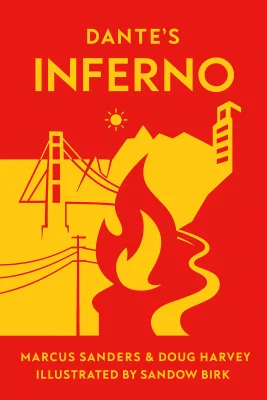
Dante's Inferno
Categories
Philosophy, Fiction, Religion, Classics, Horror, Poetry, Fantasy, Literature, School, Book Club
Content Type
Book
Binding
Paperback
Year
2004
Publisher
Chronicle Books
Language
English
ASIN
0811842134
ISBN
0811842134
ISBN13
9780811842136
File Download
PDF | EPUB
Dante's Inferno Plot Summary
Introduction
The forest pressed in from all sides, its shadows thick as guilt itself. Dante Alighieri found himself lost at thirty-five, stumbling through thorns that caught at his flesh like the memories of choices unmade. Three beasts blocked his path to salvation—a spotted panther of lust, a proud lion of violence, and a gaunt she-wolf whose hunger could never be satisfied. When death seemed certain, a figure emerged from the gloom. Virgil, the ancient Roman poet, spoke with authority that cut through despair. The beasts could not be faced directly, he explained. There was another way—a journey through the very heart of damnation itself. Through the gates of Hell, past the frozen lake where Satan chewed the ultimate traitors, and out the other side of the world. Only by witnessing the full consequence of sin could Dante find his path to redemption. The living man would walk among the damned, guided by one who knew the way.
Chapter 1: Lost in the Dark Wood: The Journey Begins
The gate rose before them like a wound in reality itself. Words carved in stone proclaimed the message that would echo through eternity: "Abandon all hope, ye who enter here." Dante's hands trembled as he read the inscription, but Virgil's steady presence urged him forward. Beyond the threshold, the air filled with screams that had never known mercy. The first souls they encountered were neither good nor evil—the lukewarm who had lived without conviction. They ran naked behind banners, stung by wasps and hornets, their blood and tears feeding the worms beneath their feet. Among them lurked the shade of a pope who had made "the great refusal," choosing cowardice over duty. These wretches had been rejected by both Heaven and Hell, condemned to eternal meaninglessness. At the river Acheron, Charon the ferryman raised his oar in fury. His eyes burned like coals as he shouted at the living man who dared approach his vessel. But Virgil spoke with divine authority, and the demon's rage turned to reluctant submission. As the boat carried souls across the dark waters, an earthquake shook the ground. Lightning split the sky, and Dante fell unconscious, overwhelmed by the transition from life to the realm of the dead. He awakened on the far shore, where the screams had given way to sighs. In Limbo, the unbaptized dwelt in eternal longing—righteous pagans who had lived virtuously but died without Christ's salvation. Here walked the great poets Homer, Horace, Ovid, and Lucan, who welcomed Dante into their company. Philosophers debated in meadows of green light, while heroes and kings from ancient times moved with quiet dignity. These souls felt no physical torment, only the endless ache of knowing they could never reach the paradise that remained forever beyond their grasp.
Chapter 2: Through the Gates of Hell: Circles of Incontinence
The wind never stopped howling in the second circle, where Minos the judge of the damned wrapped his serpentine tail around his body to determine each soul's destination. The hurricane carried the lustful in its eternal dance, spirits who had surrendered reason to passion. Among them flew the tragic figures of history—Semiramis, Cleopatra, Helen of Troy—all swept along by the tempest that mirrored their earthly desires. But one couple caught Dante's attention. Francesca da Rimini and her lover Paolo floated together, still united in their sin and their sorrow. When called, they approached like doves drawn by desire. Francesca's voice carried the music of profound regret as she told their story. She had been married to Paolo's brother, but while reading the romance of Lancelot together, passion overcame them. One kiss led to their doom—murdered by her husband, they were bound forever in this place of endless wind. Her final words struck like a blade: "That day we read no more." Dante fainted from pity, overwhelmed by the beauty and horror of love transformed into damnation. In the third circle, the gluttons wallowed in putrid slush under Cerberus's three-headed guard. The monster's howls split the air until Virgil stuffed his mouths with filth, silencing the beast long enough for them to pass. Here lay Ciacco, a Florentine whose name meant "pig," who prophesied civil war in their city. The rain fell constantly—cold, heavy, eternal—while the souls lay prostrate in their self-made mire. The fourth circle revealed avarice and prodigality locked in their eternal conflict. The miserly and the wasteful pushed great weights with their chests, meeting in violent collision before turning back to repeat their futile cycle. Many were clergy—cardinals and popes whose spiritual calling had been corrupted by material obsession. Virgil explained Fortune's role in human affairs, how she distributed wealth according to divine will, indifferent to mortal complaints. They descended further, reaching the marsh of Styx where the wrathful fought endlessly while the sullen gurgled beneath the surface, unable even to express their rage properly.
Chapter 3: The City of Dis: Confronting Heresy and Violence
The boat of Phlegyas carried them across the Styx, where Filippo Argenti—a proud Florentine—tried to climb aboard. Virgil thrust him back into the marsh, where his fellow damned tore him apart in their fury. Ahead rose the iron walls of Dis, the city of lower Hell, where fallen angels guarded the gates with swords of flame. When they refused entry to the travelers, even Virgil seemed shaken by their defiance. The Furies appeared on the tower—Megaera, Alecto, and Tisiphone—shrieking for Medusa to turn the living man to stone. Virgil pressed his hands over Dante's eyes as divine wind announced the arrival of an angel. The heavenly messenger opened the gates with a simple touch, rebuking the demons for their resistance to divine will. Inside lay a vast cemetery where heretics burned in open tombs, their cries rising like smoke from the flames. From one sepulcher rose Farinata degli Uberti, a Ghibelline leader who had opposed Dante's Guelph party in life. His bearing remained proud even in damnation as he demanded to know the visitor's ancestry. When Dante revealed his lineage, Farinata boasted of twice driving out the Guelphs from Florence. But another shade appeared—Cavalcante de' Cavalcanti, father of Dante's friend Guido. The old man wept, asking why his son was not present for this journey through Hell. His anguish at Dante's evasive answer revealed a father's love that death could not diminish. The heretics possessed a strange gift—they could see the future but not the present. Farinata prophesied Dante's own exile, adding that he would learn how difficult return from banishment could be. When judgment came, even this limited knowledge would end, leaving them in complete ignorance. The tombs would seal shut forever after the final resurrection, trapping these souls who had denied the immortality they ironically now possessed.
Chapter 4: Descending into Malebolge: The Realm of Fraud
Beyond the heretics lay a vast cliff, broken by ancient earthquake. At its edge crouched the Minotaur, the beast of Crete who had been born from unnatural desire. Virgil taunted the monster with memories of its death at Theseus's hands, allowing them to climb down the shattered rocks while the creature raged in futile anger. The very stones seemed to rebel against Dante's living weight, shifting treacherously beneath his feet. In the river of boiling blood, Chiron led his centaurs in their eternal patrol. These creatures who had been half-man, half-beast in life now served as guards over the violent. The blood river held tyrants and murderers submerged to varying depths according to their crimes. Alexander the Great stood with the liquid fire up to his eyes, while highway robbers were covered only to their feet. Nessus, the centaur who had once tried to rape Hercules' wife, now carried Dante across the shallowest part of the stream, his hooves splashing through the blood of the damned. The second ring of violence revealed a forest where no green leaf grew. Every branch was twisted and black, and from the trees came sounds of human anguish. When Dante broke a twig from a great thorn, it bled and spoke with a man's voice. These were the violent against themselves—suicides who had rejected God's gift of life and were now trapped in wooden prisons. Pier della Vigna, once advisor to Emperor Frederick II, told of his fall from grace and desperate choice. Above them flew the Harpies, feeding on the leaves and creating wounds through which the trees could voice their eternal pain. Suddenly, two naked men crashed through the forest—Lano of Siena and Jacopo da Sant' Andrea of Padua—pursued by black mastiffs who tore them apart when caught. Behind a bush cowered another suicide who had made his home into his gibbet, lamenting that his city Florence had abandoned its patron saint Mars for John the Baptist, bringing eternal conflict as the old war-god's revenge.
Chapter 5: Beyond Satan: The Path to Redemption
At the center of Malebolge, the great well of Hell, giants stood like towers around the rim. Nimrod, builder of Babel, babbled in his confusion of tongues. Ephialtes, who had warred against the gods, stood chained with arms bound. But Antaeus, who had not fought in that ancient rebellion, agreed to lower them into the final circle. His massive hands wrapped around both travelers as he bent down into the pit like a ship's mast in a storm. The lake of Cocytus stretched before them, its surface frozen solid with the tears of traitors. In Caina, those who had betrayed their kin were buried to their necks in ice. Camicion de' Pazzi waited for his relative Carlino, whose greater treachery would make his own seem less. The cold was beyond description—it turned breath to crystals and made the souls' teeth chatter like storks' beaks. When Dante accidentally kicked one shade in the face, the violence revealed Bocca degli Abati, whose betrayal at Montaperti had turned victory into disaster for the Florentines. Deeper in Antenora lay those who betrayed their country or cause. Here Count Ugolino gnawed eternally on Archbishop Ruggieri's skull, the two locked together in ice from the chest down. Ugolino raised his bloodied mouth to tell his story—how Ruggieri's false friendship had led to his imprisonment with his young sons in the Tower of Famine. For days they had waited for food that never came, until hunger drove the children to offer their flesh to their father. One by one they died, calling out for help that never arrived, until only the count remained to face the final, unspeakable choice. At the very bottom of creation stood Satan himself, trapped in ice to his chest. Three faces crowned his massive head—the center red with blood, the others pale and black. His three mouths chewed the supreme traitors of human history. In the center hung Judas Iscariot, his back being clawed while his head disappeared between Satan's teeth. To either side, Brutus and Cassius suffered similar punishment for their betrayal of Caesar, the symbol of worldly authority as Christ represented divine. The beating of Satan's wings generated the wind that froze Cocytus, ensuring his own imprisonment in the ice of his tears. Virgil grasped Satan's shaggy sides and began to climb down. At the exact center of the Earth, he suddenly turned, so they were now climbing up Satan's legs instead of down his torso. They had passed through Earth's center and emerged on the opposite hemisphere, where it was morning instead of evening. Through a narrow passage carved by the stream Lethe, they climbed toward a distant opening. Above them, framed in the circular gap, shone the stars of the southern sky—the first light Dante had seen since entering Hell.
Summary
Through thirty-four cantos of descent, Dante had witnessed the full spectrum of human evil and its consequences. From the lukewarm rejected by both Heaven and Hell to Satan himself imprisoned at creation's nadir, each circle revealed sin's progression from weakness to malice to treachery. The lustful who surrendered to passion, the violent who turned God's gifts against themselves and others, the fraudulent who perverted human reason—all found their eternal places in the architecture of divine justice. Yet even in damnation, traces of nobility remained: Farinata's unbroken pride, Francesca's eloquent sorrow, Ugolino's paternal anguish transcending even his monstrous revenge. The journey through Hell had been more than spectacle—it was education in the true nature of sin and redemption. By witnessing the ultimate consequences of wrong choice, Dante had learned to choose correctly. Virgil, representing human reason at its highest, could guide him only so far. Beyond lay Purgatory and Paradise, realms requiring faith as well as understanding. But first came this moment of emergence, climbing from the Earth's frozen heart toward the Southern Cross, those four bright stars unseen by humanity since the Fall. Hell lay behind them now, its lessons carved in memory. Ahead waited the mountain of purification and the promise of stars.
Best Quote
Review Summary
Strengths: The illustrations, which are modern reinterpretations of Gustave Dore's engravings, are highly praised for their quality and creativity. They are considered the standout feature of the book. Weaknesses: The translation is criticized for taking excessive liberties, failing to respect the original's multi-layered meanings, and being overly modernized and tacky. The inclusion of contemporary figures from pop culture is seen as jarring and inappropriate. The adaptation is not recommended as an introduction to Dante's work. Overall: The general sentiment is mixed, with strong appreciation for the illustrations but significant disappointment with the translation. The book is not recommended for first-time readers of "The Divine Comedy," and a more faithful rendition is advised.
About Author

Marcus Sanders
Sanders reflects on the interplay between classical literature and contemporary culture, crafting works that bridge historical texts with modern visual art. His collaborations often illuminate the timeless themes of ancient stories through fresh, relatable lenses. While Marcus Sanders may not have detailed biographical information widely available, his works speak volumes about his approach. The author has skillfully adapted Dante's Divine Comedy, turning its profound narratives into vibrant contemporary adaptations. For instance, his book, "Dante's Inferno," co-created with artist Sandow Birk, reinterprets the Italian epic with a modern twist, appealing to both literature enthusiasts and visual art lovers.\n\nSanders's method involves a seamless blend of text and art, thereby offering a unique reader experience that highlights the enduring relevance of classical themes in today’s world. His contributions to magazines like Surfing and Surfline further demonstrate his ability to contextualize storytelling in diverse formats. Readers who appreciate the convergence of classical and contemporary narratives will find his adaptations insightful and engaging. Moreover, his work serves as an introduction to the possibilities of literary reinterpretation, encouraging audiences to explore classic texts through a fresh perspective.\n\nThis short bio highlights Sanders's focus on transforming classic literature into accessible and visually engaging formats. By doing so, he not only preserves the essence of traditional narratives but also expands their reach to new audiences. Those interested in the fusion of literature and visual art will find Sanders's adaptations both innovative and thought-provoking, proving his ability to resonate with diverse readerships across different mediums.
Read moreDownload PDF & EPUB
To save this Black List summary for later, download the free PDF and EPUB. You can print it out, or read offline at your convenience.
Dante's Inferno
by Marcus Sanders
