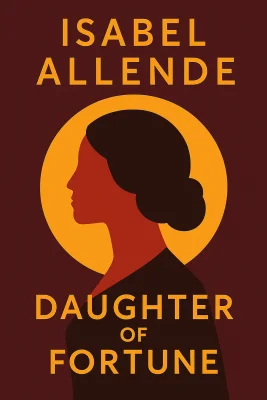
Daughter of Fortune
Categories
Fiction, Classics, Historical Fiction, Romance, Literature, Book Club, Historical, Magical Realism, Novels, Spanish Literature
Content Type
Book
Binding
Paperback
Year
2006
Publisher
Harper Perennial
Language
English
ASIN
0061120251
ISBN
0061120251
ISBN13
9780061120251
File Download
PDF | EPUB
Daughter of Fortune Plot Summary
Introduction
# Daughter of Fortune: A Journey Beyond Love's Golden Illusion The soap crate arrived on a foggy March morning in 1832, but what Jeremy Sommers found inside would shatter the careful order of his Valparaíso household forever. A naked baby girl lay shivering among the wood shavings, her tiny fists clenched against the Pacific cold. Miss Rose, his spinster sister, claimed divine providence had delivered this foundling wrapped in silk and mink, though Mama Fresia, their Mapuche servant, remembered only a child covered in her own filth. They named her Eliza, this mystery child, and raised her in the rigid embrace of British respectability perched high above Chile's chaotic port city. Sixteen years later, that same foundling would abandon everything for love, crossing an ocean in the ship's hold like human cargo, chasing a man who had already vanished into California's golden madness. Her journey from sheltered daughter to independent woman would mirror the transformation of a continent itself, where ordinary people shed their past like snake skins and emerged as something entirely new. In the end, she would discover that the greatest fortune was not the gold that drove men to murder and madness, but the courage to choose her own destiny in a land where the impossible became inevitable.
Chapter 1: The Foundling's Gilded Cage: Origins in Valparaíso
The Sommers house breathed with the rhythm of colonial propriety, each room a monument to Miss Rose's determination to create civilization in the rough port city. Eliza learned to walk with books balanced on her head, the metal rod Miss Rose insisted upon during lessons training more than posture. It forged a spine of steel beneath silk and lace, preparing her for trials she couldn't yet imagine. Jeremy Sommers ruled their small kingdom with ledgers and logic, his love expressed through financial security and unquestioned social standing. He had rescued Rose from scandal years before, though Eliza knew nothing of that story. To her, Uncle Jeremy was simply the man who brought order to chaos, who ensured their place in Valparaíso's British community remained secure as the cliffs beneath their feet. But it was Mama Fresia who filled the spaces between propriety with life. In the kitchen, surrounded by copper pots and the scent of cumin, she taught Eliza the language of spices and the wisdom of indigenous herbs. Her stories painted worlds where women could be warriors, where love conquered death, where the impossible became inevitable. These tales seeped into Eliza's dreams like smoke, preparing her for transformations she couldn't yet comprehend. Captain John Sommers, Jeremy's seafaring brother, brought disruption with every visit. His tales of California gold and men who abandoned everything for dreams of fortune crackled through their ordered evenings like lightning. Eliza listened from doorways, absorbing stories of a land where ordinary people became legends overnight, where the past could be discarded like worn-out clothes. The house itself seemed to hold its breath, waiting. In the garden where bougainvillea climbed white walls, in the parlor where afternoon light filtered through lace curtains, in the corridors that echoed with the measured tick of English clocks, something was stirring. The sheltered girl who had never questioned her gilded cage was about to discover what it meant to want something more than safety.
Chapter 2: Forbidden Fire: Love's Dangerous Awakening
Love struck Eliza like lightning on a clear day when Joaquín Andieta arrived to deliver cargo from Jeremy's company. He stood in their garden like a dark angel, his proud bearing unable to disguise the poverty of his clothes or the revolutionary fire burning in his eyes. The bastard son of a woman ruined by love, he had grown up in Valparaíso's slums, his pride forged in the furnace of humiliation. Their eyes met across the space of a heartbeat, and both their fates were sealed. Joaquín carried revolution in his blood and poetry in his soul. By day he worked as Jeremy's clerk, copying figures with meticulous care. By night he gathered with other young idealists in the Santos Tornero bookshop, plotting the overthrow of conservative government and dreaming of a Chile where birth mattered less than merit. When Eliza's note reached him suggesting they meet at the shrine of the Virgin of Perpetual Succor, he felt destiny calling. The chapel perched on Cerro Alegre like a small beacon, close enough to the Sommers house for clandestine meetings yet isolated enough for lovers' whispers. There, beneath painted wooden crosses and flickering votive candles, they began their dangerous courtship. Their first meetings were exquisite torture. Sitting close but not touching, drowning in each other's presence while fear and desire warred in their hearts. Joaquín spoke of his dreams for Chile's future, his plans to lift his consumptive mother from poverty, his burning need to prove himself worthy of love. His letters became Eliza's most precious possessions, passionate missives that transformed his reserve into mystical devotion. Winter deepened, and so did their need for each other. The night they finally made love in the storage room of the Sommers house, surrounded by rolled carpets and Miss Rose's seasonal wardrobes, marked the point of no return. Their union was clumsy and desperate, shadowed by guilt and the constant fear of discovery. Yet in those stolen hours, wrapped in lengths of flowered cretonne, they found a paradise that would haunt them both forever.
Chapter 3: Following Gold's Siren Call: Flight Across the Pacific
December brought news that shattered their fragile world like glass against stone. Gold had been discovered in California, and the fever spread through Chile like wildfire. Ships crowded Valparaíso's harbor as thousands prepared to abandon everything for the promise of easy wealth. Joaquín, trapped by poverty and burning with ambition, saw his chance for redemption in those distant goldfields. Against Eliza's desperate pleas, he made a choice that would damn them both. He altered shipping records at Jeremy's company, made boxes of revolvers disappear from the warehouse, sold the weapons to his revolutionary friends. The theft would be discovered soon enough, but by then he'd be on the high seas, bound for fortune or damnation. The night before his departure, he held her with the desperation of a drowning man, promising to return rich enough to claim her hand. But Eliza carried a secret that would change everything. She was pregnant, her body harboring the consequence of their stolen paradise. When Joaquín's ship vanished beyond the horizon, she faced a choice that would have been unthinkable for any proper young lady of her time. Miss Rose and Jeremy, sensing scandal brewing, planned to send her to London until the gossip died down. Instead, Eliza chose a path that would transform her from sheltered daughter into something unrecognizable. In the port's red-light district, she found Tao Chi'en, the Chinese cook from Captain John's ship, and struck a desperate bargain. This gentle healer, haunted by the recent death of his beloved wife Lin, agreed to smuggle her aboard the brigantine Emilia in exchange for her pearl necklace. The plan was desperate in its simplicity. She would hide in the ship's hold until they reached San Francisco, then begin her search for the man who had cost her everything. The night she shed her English lady's clothing and donned the rough garments of a Chinese laborer, the transformation began that would carry her far beyond the reach of her former life.
Chapter 4: Transformation in the Ship's Hold: Death and Rebirth
The voyage became a descent into hell that would forge Eliza's spirit in darkness and agony. Crammed into a space barely large enough for a coffin, surrounded by cargo and sharing her prison with a half-mad cat, she began to die. The ship pitched and rolled through Pacific storms while she fought seasickness, pregnancy, and despair that threatened to swallow her whole. Tao Chi'en became her unlikely savior, this Chinese healer whose gentle hands were the only human contact in her world of darkness. Guided by the spirit of his dead wife Lin, he fought to save Eliza's life with herbs and acupuncture, risking discovery with every visit to her fetid prison. The pregnancy ended during the voyage, lost to the trauma of her ordeal in a torrent of blood and agony that nearly claimed her life. For two months she existed between life and death, tended by Tao Chi'en and Azucena Placeres, a Chilean prostitute who had been bribed with a turquoise brooch to help care for the mysterious stowaway. Slowly, painfully, Eliza's body healed while her spirit underwent its own metamorphosis. The sheltered girl who had boarded in Valparaíso was dying, replaced by someone harder and more determined. She could scream as loudly as she wished in that floating tomb. The ocean swallowed every sound, every prayer, every curse she hurled at the darkness. Sometimes she heard the voices of passengers above, speaking of gold and fortune, and wondered if Joaquín was among them, so close yet impossibly distant. The irony cut deeper than any physical pain. When the Emilia finally anchored in San Francisco Bay, the woman who emerged from its hold bore little resemblance to the lovesick child who had fled Chile. Eliza Sommers had died in that darkness, and from her ashes rose someone new. Someone who could survive anything the world might offer, because she had already endured the worst it could deliver.
Chapter 5: Elias Andieta: Surviving California's Golden Wilderness
San Francisco in 1849 resembled the aftermath of an earthquake, a chaotic sprawl of tents and shanties where desperate men pursued impossible dreams. The discovery of gold had transformed the sleepy Mexican settlement into a babel of languages and ambitions, where fortunes were made and lost in a single day. Into this maelstrom stepped Eliza Sommers, reborn as Elias Andieta, a Chinese boy searching for his brother. The disguise was born of necessity and desperation. Tao Chi'en had dressed her in his spare clothes, braided her hair in a queue, and coached her in the art of invisibility. In a land where women were scarce and precious, a young man could travel unmolested. The transformation went deeper than clothing. Without corsets and petticoats, she could breathe, move, think differently. She discovered that masculine garments freed not just her body but her spirit. The pampered girl who had once required help buttoning her boots now learned to shoot, to ride hard, to sleep on the ground with one eye open. California's promise of transformation came with a price written in blood, and she witnessed lynchings, claim-jumping, and the casual brutality that men inflicted on anyone different from themselves. The mining camps sprawled across California's foothills like infected wounds, each one a testament to human desperation and greed. Rivers ran muddy with mining debris, forests had been stripped bare for lumber and fuel, and the earth itself lay torn open in countless wounds. Among this devastation, fifty thousand men labored like ants, some finding fortune, most finding only backbreaking toil and broken dreams. Eliza moved among them with growing confidence, her story of searching for her brother Joaquín opening doors and loosening tongues. She learned to survive in this harsh masculine world by becoming invisible, blending into groups of Hispanic miners where her slight build and smooth face attracted no attention. The trail of her lost love was faint but real, leading ever deeper into the mountains where gold fever had transformed men into something barely human.
Chapter 6: Partnership in Purpose: Tao Chi'en and Shared Redemption
In Sacramento, Eliza reunited with Tao Chi'en, who had established himself as a zhong yi, a traditional Chinese healer whose reputation grew as he combined ancient wisdom with Western medical knowledge. Their partnership deepened into something that transcended friendship, bound together by shared secrets and complementary obsessions. While she searched for Joaquín Andieta, he began his own crusade, rescuing Chinese girls from the brothels of San Francisco's Chinatown. Tao Chi'en's transformation from ship's doctor to American gentleman was as complete as Eliza's gender disguise. He cut his queue, adopted Western dress, and learned to navigate both Chinese and American societies with equal skill. But his heart broke daily as he witnessed the fate of young girls sold into sexual slavery, their lives measured in months rather than years. Eliza became his partner in these rescues, her masculine disguise allowing her to move freely through dangerous neighborhoods. Together they developed an elaborate system. Tao would purchase dying girls from brothel owners under the pretense of using them for medical experiments, then nurse them back to health in secret. The ones who survived faced an impossible choice: disappear into America's vastness or remain forever trapped between worlds. The work was heartbreaking and dangerous. Many girls died despite their efforts, their spirits broken beyond repair. But each life saved felt like a small victory against the vast machinery of human cruelty. Eliza found purpose in this mission that went beyond her personal quest, discovering that love could expand to encompass strangers as well as the memory of a vanished lover. In the strange intimacy of their shared mission, they discovered something neither had expected. A love that transcended the boundaries of race, culture, and circumstance. Their partnership in rescuing the singsong girls created a bond deeper than passion, built on mutual respect and shared purpose. Yet both remained haunted by ghosts from their past, Tao Chi'en by his deceased wife Lin, Eliza by the increasingly mythical figure of Joaquín Andieta.
Chapter 7: The Legend's End: Confronting Joaquín's Ghost
The summer of 1853 brought news that would finally resolve Eliza's long search. Captain Harry Love and his mercenaries claimed to have killed Joaquín Murieta in a shootout, displaying the bandit's severed head in a jar of gin as proof of their victory. The macabre trophy toured California, drawing crowds of the curious and bloodthirsty who wanted to see the face of legend made flesh. Stories had been circulating for months about this bandit whose exploits grew more legendary with each telling. Jacob Freemont, a journalist who had once courted Miss Rose in Valparaíso, was crafting the outlaw into a romantic figure, part Robin Hood, part demon. Eliza read every word, searching for traces of the man she had known, finding instead a mythical figure who bore little resemblance to her gentle revolutionary. Eliza stood in line with thousands of others, her heart pounding with a mixture of dread and anticipation. Four years of searching had led to this moment, staring into a glass jar at the pickled remains of a man who might or might not be her lost love. Tao Chi'en held her hand as they entered the darkened exhibition hall, where funeral music played and candles cast dancing shadows on black-draped walls. The head floating in its alcoholic bath bore some resemblance to Joaquín Andieta, but death and preservation had transformed it into something alien and terrible. Eliza studied the features that had once stirred her to abandon everything, searching for some sign of the gentle revolutionary who had whispered of justice and democracy. Instead, she found only the grotesque trophy of a violent age. Walking out into the California sunshine, Eliza felt a weight lift from her shoulders that she hadn't realized she was carrying. Whether or not the head belonged to Joaquín Andieta, she knew with absolute certainty that her search was over. The man she had loved existed now only in memory and faded letters, if he had ever existed at all outside her romantic imagination.
Chapter 8: Fortune's True Daughter: Choosing Freedom Over Chains
The realization brought not grief but liberation that tasted like morning air in San Francisco, sharp and clean and full of promise. Eliza had spent four years chasing a ghost, allowing the memory of first love to define her entire existence. Now, standing beside Tao Chi'en in the bustling street, she understood that love was not about possession or pursuit but about presence and choice. She began the delicate process of choosing who she wanted to become. The girl who had fled Valparaíso in desperation was gone forever, replaced by a woman who had learned to survive in a man's world without losing her essential self. She wrote to Miss Rose, breaking years of silence with a letter that revealed nothing of her true circumstances but everything of her love for the woman who had raised her. Freedom meant more than discarding her masculine disguise. It meant accepting that the future stretched ahead of them like an unwritten story, full of challenges and possibilities they could barely imagine. Their work continued, each rescued girl a small victory against the vast machinery of human trafficking. But now their mission carried additional meaning as they built something together, creating a life that honored both their individual purposes and their shared commitment to justice. California had promised gold to those who came seeking fortune, but Eliza and Tao Chi'en had found something more precious. The possibility of love without limits, identity without boundaries, purpose beyond personal desire. In a land where people reinvented themselves daily, they had discovered that the most radical transformation was learning to accept love when it appeared in unexpected forms. The house they shared became a refuge not just for broken girls but for their own healing hearts. They would face the future together, two souls who had found each other across impossible distances and learned that sometimes the greatest adventures begin not with departure but with the courage to stay and build something new. In choosing each other, they had chosen freedom itself.
Summary
Eliza's journey from sheltered daughter to independent woman mirrors the transformation of California itself during the Gold Rush, both evolving from innocence through violence into something entirely new. Her search for Joaquín Andieta became a search for herself, leading not to the man she had loved but to the woman she was capable of becoming. In Tao Chi'en, she found a partner who saw her true self beneath every disguise, whose own mission of mercy complemented her quest for meaning beyond romantic obsession. The gold that drew hundreds of thousands to California proved elusive for most, but Eliza discovered riches that couldn't be measured in nuggets or dust. She learned that love was not about possession but about presence, not about finding someone to complete you but about becoming whole enough to choose your companions freely. Her transformation from foundling to fortune's true daughter represents the ultimate promise of the American frontier, where the past could be discarded like worn-out clothes and the future written in whatever hand was bold enough to seize the pen.
Best Quote
“You are my angel and my damnation; in your presence I reach divine ecstasy and in your absence I descent to hell.” ― Isabel Allende, Daughter of Fortune
Review Summary
Strengths: The review highlights the engaging historical context of the California gold rush, emphasizing the diverse influx of people and the opportunities it presented. The character development of Eliza and Tao is praised, showcasing their growth and adaptation in a new society. The novel's exploration of themes such as the American Dream and interracial romance is also noted positively. Overall: The reviewer expresses enjoyment of the historical elements and character arcs, indicating a positive reception. The narrative's ability to weave personal stories with broader societal changes is appreciated, and the reviewer looks forward to the sequel, suggesting a strong recommendation for readers interested in historical fiction.
About Author

Isabel Allende
Allende investigates the intricacies of human resilience through her compelling narratives, drawing from a rich tapestry of personal and cultural history. Born to Chilean parents in Peru, her upbringing amidst political turmoil profoundly influenced her storytelling approach. As an author, she deftly intertwines magical realism with stark realism to explore themes of love, loss, and identity. Her early career as a journalist in Chile during the politically volatile 1960s and 1970s laid the groundwork for her later fictional works, allowing her to engage deeply with social and political issues, which she critiques through her narrative style.\n\nHer body of work often delves into the strength and perseverance of women, crafting multidimensional characters who navigate patriarchal systems with tenacity. For instance, her book "The House of the Spirits" established her international reputation by blending the mythical with the historical, offering a vivid portrayal of family and societal struggles in Latin America. This commitment to highlighting women's experiences is further exemplified in "The Soul of a Woman", where she captures the essence of female empowerment. Allende’s exploration of such themes not only captivates readers but also inspires introspection about gender roles and cultural identity.\n\nReaders benefit from Allende’s bio and body of work, gaining insights into the complex interplay between personal experiences and broader social dynamics. Her narratives resonate deeply with audiences seeking stories that are both emotionally engaging and intellectually stimulating. With numerous accolades, including the Presidential Medal of Freedom, her impact on literature is undeniable, paving the way for future generations of writers, particularly women, who aspire to challenge and redefine narrative conventions.
Read moreDownload PDF & EPUB
To save this Black List summary for later, download the free PDF and EPUB. You can print it out, or read offline at your convenience.

Daughter of Fortune
by Isabel Allende
