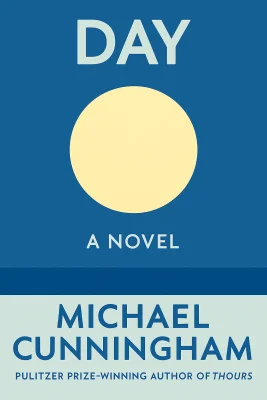
Day
Categories
Fiction, Audiobook, Family, Book Club, Contemporary, Novels, LGBT, Adult Fiction, Literary Fiction, Queer
Content Type
Book
Binding
Hardcover
Year
2023
Publisher
Random House
Language
English
ASIN
0399591346
ISBN
0399591346
ISBN13
9780399591341
File Download
PDF | EPUB
Day Plot Summary
Introduction
In Brooklyn's fading light, Isabel Walker watches a small owl perched on the maple tree outside her window. It's April 5th, 2019, and she doesn't yet know this moment marks the beginning of an unraveling. The owl's golden eyes fix on her with inhuman attention, as if the tree itself has chosen to announce its sentience. When it flies away, it leaves behind a sense of abdication, of something corrected too quickly to understand. This is a story of three April days, separated by years of chaos and loss. On the first, a family begins to fracture as Robbie, Isabel's younger brother, prepares to leave the attic apartment above her Brooklyn home. By the second, the world has locked down, trapping them all in their separate prisons of longing and regret. By the third, the survivors gather in a country house to scatter ashes and confront what remains of their shattered constellation.
Chapter 1: The Family Tapestry Begins to Fray
The morning finds Isabel sleepless at her bedroom window, watching the East River transform from night-black to opaque green. Below, a jogger passes a man in a black dress stumbling home, while a cobbler raises his shop's metal grate. The neon sign reads "SHOE HOSPITAL" and a mechanical raccoon hammers endlessly behind glass. Upstairs, Robbie tends to his Instagram creation, Wolfe, a fictional pediatrician whose perfect life unfolds in carefully curated posts. Wolfe has 3,407 followers who believe in his Brooklyn apartment, his roommate Lyla, their adopted dog Arlette. He's the man they all want to find, the one who saves sick children and waits patiently for love. But Robbie knows the truth. Every photo is stolen, every detail fabricated from the lives of strangers. The family moves through their morning rituals with practiced efficiency. Dan, the former rocker turned house-husband, prepares breakfast with his platinum-bleached hair catching the dim light. His musical comeback lurks perpetually on the horizon, a dream he nurtures with the devotion of a monk. Their children, Nathan and Violet, navigate the apartment's emotional geography with the survival instincts of small animals. Robbie must leave. Isabel and Dan need the space, need Nathan to have his own room, need the fiction that asking Robbie to move represents growth rather than expulsion. He's already viewed apartments in Washington Heights, places with "river views" that reveal themselves as glimpses of Hudson through kitchen windows. At thirty-seven, he faces the prospect of living alone for the first time, teaching middle school to pay rent on spaces designed for disappointment. The fracture lines run deeper than real estate. Dan and Robbie share an intimacy that excludes Isabel, their quick kisses and private jokes forming a marriage of sorts. Isabel loves them both, but increasingly feels like a spectator to her own life. The morning light reveals what they've all known but refused to name: they've built something unsustainable, a domestic arrangement that requires one person to remain forever incomplete.
Chapter 2: Digital Personas and Real-Life Disconnections
By April 2020, the world has collapsed into pixels and isolation. Isabel writes to Robbie from their Brooklyn apartment, now a prison of forced proximity. The Shoe Hospital across the street has been dark for weeks, its mechanical raccoon frozen mid-hammer. Sirens wail constantly, carrying the overflow of overwhelmed hospitals to places no one wants to imagine. Robbie is trapped in Iceland, his six-week vacation stretched indefinitely by travel bans. He posts photos of crystalline bays and volcanic landscapes while Isabel manages her family's slow dissolution from the apartment that was supposed to be temporary. The children adapt with frightening resilience. Violet develops elaborate theories about the malevolence of certain letters, insists windows stay closed against invisible threats. Nathan retreats to the mansard apartment Robbie left behind, rewatching School of Rock endlessly while his body begins its awkward transformation. Dan's musical renaissance arrives like a fever dream. His songs accumulate followers, strangers who find solace in his melancholy ballads about lost love and missed chances. He performs from their bedroom while Isabel works from the kitchen table, their marriage conducted through closed doors and careful scheduling. The intimacy they once shared has curdled into logistics. Meanwhile, Chess, the Columbia literature professor, navigates single motherhood with her seventeen-month-old son Odin. Garth, the baby's father, hovers at the edges of their lives with desperate devotion. He's an artist whose sculptures incorporate roadkill and human teeth, whose gallery openings attract collectors hungry for transgression. But fatherhood has revealed unexpected depths of longing he can't articulate or fulfill. The digital world offers false connections. Isabel monitors Robbie's Instagram obsessively, watching Wolfe explore Iceland's alien beauty. She knows every image is stolen, every caption a fiction, yet she clings to these fragments as if they contain her brother's actual life. The screen becomes a scrying mirror, showing her futures that will never arrive and pasts that slip further from reach with each scroll.
Chapter 3: A World Forced into Isolation
The lockdown transforms familiar spaces into alien territories. Isabel's apartment becomes a battlefield of competing needs and suppressed resentments. Nathan's rage builds like pressure in a sealed container, his adolescent fury at his parents mixing with deeper currents of guilt and shame. He smuggles his friends Chad and Harrison up to the mansard room, violating every safety protocol in a desperate bid for connection. Violet creates her own mythology of protection, leaving notes about open windows and the danger they represent. Her six-year-old mind processes the invisible threat through private languages and color-coded fears. She wears her yellow dress, Robbie's last gift, like armor against a world that has revealed its fundamental hostility. Dan's success feels hollow. His followers multiply, but he performs to empty rooms, his triumph unwitnessed except by family members who've grown tired of his desperate hope. The cocaine helps. Just enough to smooth the edges, to maintain the fiction that he's still the golden boy who once made crowds scream his name. He hides the habit with practiced skill, rationing euphoria in tiny doses. Chess and Garth conduct their relationship through windows, him standing on the sidewalk while she holds Odin up for inspection. The distance reveals the impossibility of their situation. He wants a family that includes him; she wants autonomy that includes his genetic contribution but not his presence. Odin becomes a small tyrant, ruling over games of fetch and forced conversations conducted through his stuffed rabbit. The city empties around them. Streets that once pulsed with human energy become corridors for emergency vehicles. The ordinary world has retreated so far that simple acts like grocery shopping require tactical planning. They're all learning new vocabularies of fear, new measurements of risk, new ways to love people they can't safely touch.
Chapter 4: Letters from a Distant Iceland
Robbie writes letters on paper, a technology that feels simultaneously ancient and revolutionary. His ballpoint pen, purchased at Reykjavik airport, becomes precious cargo in a landscape that offers no replacement. The isolation has stripped away digital mediation, leaving him alone with mountains and silence. The cabin exists at the edge of habitability. Two small windows, a heavy door, walls thick enough to withstand whatever fury the landscape might unleash. He describes the aurora-filled nights, the singing sky that resembles Gregorian chant, the calendar that whispers in languages he doesn't recognize. The boundary between waking and dreaming has dissolved, leaving him suspended in a realm where rocks and water possess their own consciousness. Wolfe exists here too, a companion conjured from loneliness and necessity. They walk together through valleys carpeted in moss and punctuated by thermal pools. The relationship has moved beyond Instagram performance into something approaching reality. In this place where normal categories collapse, an imaginary boyfriend feels no less substantial than the friends who exist only through screens. The letters reveal Robbie's growing illness. A cough that doesn't improve, fatigue that deepens, a heart condition he's hidden from his family. He writes about seeing the Northern Lights reflected in underground rivers, about owls that aren't native to Iceland, about a beauty so severe it threatens to dissolve the self entirely. His handwriting grows shaky, his observations more mystical. He wants Isabel to know about the time she saved him from his childhood fear of dogs, leading him gently to pet a beagle while singing something he can't remember but carries as music. He wants her to know he understands her loneliness, her sense of being trapped by choices that once seemed like freedoms. Most of all, he wants her to know he's not afraid. The landscape has taught him something about endings, about the way consciousness might merge with larger patterns too vast for human comprehension. The final letter arrives posthumously, carried by tourists who found it in the abandoned cabin. The Icelandic police describe a peaceful death, but Isabel knows better. She knows Robbie died as he lived: watching, waiting, trying to make sense of beauty too large for any single heart to contain.
Chapter 5: Navigating Grief and Rebirth
The news arrives like a physical blow. Isabel receives the call while standing in her kitchen, staring at three chickens she can't bring herself to cook. The policeman's English is careful, formal, emptied of everything except essential facts. Robbie's body, the cabin, the arrangements that must be made. The details feel simultaneously urgent and impossible. Nathan believes he's responsible. His secret violation of quarantine rules, the friends smuggled upstairs, the virus he may have introduced to their sealed ecosystem. No amount of rational explanation can dislodge his certainty. He walks through the apartment like a ghost, carrying guilt too large for his eleven-year-old frame. The weight of it changes his posture, ages his face, transforms him from child to mourner in the space between one breath and the next. Dan's reaction surprises everyone, including himself. The loss of Robbie strips away pretense, reveals the depth of an attachment no one fully understood. Their friendship had been the great romance of his life, the pure connection that marriage to Isabel couldn't quite replicate. He stops writing music, stops chasing followers, retreats into a silence that frightens his family more than grief would. Isabel inherits Robbie's Instagram account, discovers the full scope of his digital fiction. Wolfe's followers expect updates, continuity, the ongoing story of a love affair that never existed. She finds herself posting from his phone, maintaining the illusion, creating a mythology where Robbie and Wolfe explore Iceland together, two souls merged in a landscape that transcends ordinary categories of real and imagined. The world begins to reopen, but their inner borders remain sealed. They move through the motions of recovery while carrying permanent alterations. Nathan stops eating properly, spends hours staring at screens, develops the hollow-eyed look of someone much older. Violet's magical thinking intensifies; she sees patterns everywhere, meanings that adults can't perceive or won't acknowledge. Chess finally allows Garth back into their lives, but the terms have shifted. He's no longer a potential partner but a supervised visitor, permitted carefully rationed access to his son. The arrangement satisfies no one and suits everyone's need to avoid larger questions about love, responsibility, and the ways we damage what we can't understand.
Chapter 6: The Scattering of Ashes and Memories
Isabel rents a house in the country, a place where Robbie's spirit might feel welcome. The building is shabby, haunted by previous failures, surrounded by woods that whisper with nocturnal life. She fills it with broken furniture from estate sales, objects that need repair she'll never provide. It becomes a shrine to incompletion, a place where mourning can unfold without schedule or supervision. The family gathers for the ceremony none of them know how to conduct. Dan arrives with the children, his face artificially bright with whatever chemical assistance he's chosen. Chess brings Odin and Garth brings his desperate need to be essential. They stand around the lake Nathan and Violet selected, a perfectly ordinary place that will have to serve as sacred ground. The wooden box contains what remains of someone they loved. The absurdity of reduction hits them all simultaneously. How can a person become this small handful of ash and bone? How can love be measured in tablespoons? They take turns speaking words they've rehearsed and immediately forget, casting handfuls of gray powder into water that accepts the offering without ceremony. Nathan slips away during dinner preparation, drives himself to swim in the dark lake where his uncle's ashes now settle into sediment. The water is shockingly cold, a baptism into mysteries he's too young to understand but old enough to crave. Garth finds him on the roadside, shivering and transformed, and they sit together in silence while moths beat against the windshield. Violet maintains her vigil at the upstairs window, watching shadows move through the forest. She sees Robbie among them, confused but not frightened, gradually merging with the larger darkness that encompasses all things. Her yellow dress catches moonlight, a beacon for the lost. She waves goodbye to a figure that may or may not wave back. Isabel continues posting as Wolfe, creating a digital afterlife where love transcends physical boundaries. The followers don't question the timeline, don't ask why the photos seem increasingly ethereal. They want the story to continue, need proof that somewhere in the world, two people have found perfect happiness. She gives them what they need while learning to live with what she's lost.
Chapter 7: Finding New Constellations in Familiar Skies
The house empties gradually. Dan returns to his teaching job and his modest musical success, his chemical dependence managed but not cured. He's learned to live with diminished expectations, to find satisfaction in small victories. His relationship with Nathan remains fractured, but they're building new ways to exist in the same space without causing mutual damage. Chess accepts the position at Berkeley, packing her life into boxes while Odin learns to walk. Garth will visit, will maintain his awkward claim to fatherhood across the continent, will probably fail them both in ways they can't yet imagine. But he'll also love them with the desperate intensity of someone who understands loss, who knows that being peripheral is still being present. Nathan begins the slow work of forgiving himself, guided by a therapist who understands the weight of imaginary crimes. His guilt will never fully disappear, but he's learning to carry it like a backpack rather than a straitjacket. High school looms with its promise of reinvention, the chance to become someone whose past doesn't define his future. Violet grows into her strangeness, develops the peculiar confidence of children who've seen too much too early. She continues wearing the yellow dress until it no longer fits, then packs it away like a flag from a country that no longer exists. The shadows still visit her windows, but she's less frightened of them now, more curious about what they might reveal. Isabel remains in the country house through one more season, tending a garden that refuses to flourish, repairing what can be fixed and learning to live with what can't. She posts Wolfe's final message, a farewell that thanks his followers for believing in love stories that exist only in digital space. The account falls silent, but the myth persists, shared and reshared by people who need to believe in perfect endings.
Summary
In the end, Day proves that love is not a renewable resource but something that changes form without ever being destroyed. The Walkers learn to navigate a world where absence becomes presence, where digital ghosts offer more comfort than living bodies. Their constellation reshapes itself around an empty center, the missing star whose light still reaches them across impossible distances. The novel's structure mirrors its theme: three days that contain entire lifetimes, moments of ordinary time dilated by crisis until they encompass all of history. Isabel's owl returns in the final pages, perching outside her country window with the same inhuman attention, the same promise of meanings too large for human comprehension. But this time she doesn't turn away. She watches until it flies into the darkness, carrying messages between the world of the living and whatever lies beyond. The owl knows what she's learning: that some departures are really arrivals, that some endings are doorways opening onto mysteries we can only approach through love, loss, and the stubborn human insistence that stories matter more than facts.
Best Quote
“Do you think we ever really survive our childhoods?” ― Michael Cunningham, Day
Review Summary
Strengths: The review highlights the book's beautiful and musical prose, as well as the author's ability to delve into the minds of diverse characters, including a 10-year-old boy, a 5-year-old girl, and various adults. The narrative structure, spanning three years during the COVID-19 pandemic, is also appreciated. Weaknesses: The reviewer criticizes the characters as being overly constructed and lacking authenticity. The intense self-awareness and philosophical musings of the characters are seen as unrealistic and exhausting. The prose, while beautiful, is perceived as lacking substantive impact. Overall: The review presents a mixed sentiment. While the prose and character exploration are praised, the lack of believable character depth and the overwhelming introspection detract from the overall satisfaction. The recommendation level is moderate, appealing to those who appreciate lyrical writing over character realism.
About Author

Michael Cunningham
Cunningham interrogates the intricacies of identity, family, and human consciousness, skillfully weaving modernist influences into his narratives. His acclaimed book, "The Hours", inspired by Virginia Woolf's "Mrs. Dalloway", exemplifies his thematic exploration of emotional depth and psychological complexity. Meanwhile, Cunningham's meticulous attention to private, transformative moments across his works offers readers profound insights into the nuances of personal relationships. \n\nCunningham's method involves blending literary artistry with acute observations, resulting in works that resonate across generations. Readers find themselves immersed in a richly detailed world, where the author's focus on interwoven narratives and emotional authenticity enriches their understanding of the human experience. Notably, his novel "A Home at the End of the World" further exemplifies this approach, providing a deep dive into the complexities of familial bonds and sexual identity.\n\nHis significant impact on contemporary American literature is underscored by prestigious recognitions, including the Pulitzer Prize and the PEN/Faulkner Award. Moreover, Cunningham's teaching roles, notably at Yale University, extend his influence beyond his books, fostering a new generation of writers who appreciate the transformative power of storytelling. This brief bio captures his essence as a novelist committed to exploring and expanding the boundaries of literary themes and emotional exploration.
Read moreDownload PDF & EPUB
To save this Black List summary for later, download the free PDF and EPUB. You can print it out, or read offline at your convenience.
Day
by Michael Cunningham
