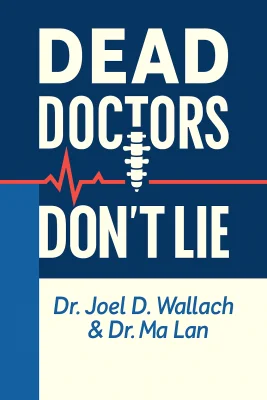
Dead Doctors Don't Lie
Categories
Nonfiction, Health, Medicine
Content Type
Book
Binding
Hardcover
Year
1999
Publisher
Legacy Communications
Language
English
ISBN13
9781880692400
File Download
PDF | EPUB
Dead Doctors Don't Lie Plot Summary
Introduction
# Dead Doctors Don't Lie: A Journey from Veterinary Medicine to Human Longevity In the quiet moments before dawn at a Missouri farm, a fourteen-year-old boy sat at his kitchen table, methodically eating calf pellets from his jacket pockets. His eyelids had been twitching violently for weeks, clicking audibly with each spasm. The eye specialist had prescribed a mascara brush to curl his "overly long" eyelashes. But this farm boy, raised among livestock that received careful mineral supplementation, had a different instinct. Within four days of eating those mineral-rich pellets designed for calves, his symptoms vanished completely. This moment of revelation would spark a lifetime journey that challenged everything the medical establishment believed about human health and longevity. Through decades of comparative pathology research, examining over 17,500 animals across 454 species and thousands of human cases, a startling pattern emerged. The same nutritional deficiencies that killed animals in zoos and farms were silently claiming human lives in hospitals and homes across America. This exploration chronicles that journey of discovery, revealing how the veterinary world's approach to preventing disease through nutrition holds the key to human health and longevity that mainstream medicine has overlooked.
Chapter 1: The Farm Boy's Revelation: When Animal Medicine Heals Humans
Growing up on a Missouri farm in the 1950s, young Joel Wallach lived in a world where the contrast between animal and human healthcare was stark and puzzling. Every morning, he watched his family carefully supplement their livestock with vitamins, minerals, and trace elements. The cattle received precisely formulated pellets containing everything needed to prevent disease, ensure fertility, and promote longevity. Yet the same family that went to such lengths for their animals never considered taking supplements themselves. The irony became personal when Wallach's eyelids began their violent twitching. After the eye specialist's absurd diagnosis about overly long eyelashes, the young farm boy turned to what he knew worked. The calf pellets, rich in calcium and other essential minerals, cured his condition in days. This experience planted a seed of understanding that would grow throughout his academic journey at the University of Missouri, where he studied both agriculture and veterinary medicine simultaneously. During his college years, Wallach learned the scientific foundation behind what he'd observed on the farm. In organic chemistry, he discovered that every biochemical reaction in living organisms required mineral cofactors. In animal husbandry classes, he learned that calcium deficiency alone could cause 147 different diseases in livestock. Professor Boyd Odell's research showed that mineral deficiencies during pregnancy could create birth defects in laboratory animals with stunning predictability. This early awakening revealed a fundamental truth that would guide Wallach's entire career: the livestock industry had solved the puzzle of disease prevention through nutrition because they couldn't afford not to. Without health insurance for animals, farmers had learned that prevention through proper supplementation was far more economical than treatment. The question that would drive decades of research was simple yet profound: if these principles worked so effectively in animals, why weren't they being applied to human health?
Chapter 2: Mineral Depletion Crisis: Why Modern Food Fails Our Bodies
The revelation that minerals were the missing link in human health became crystal clear during Wallach's years as a pathologist at various zoos and research facilities. At the St. Louis Zoo, working alongside the legendary Marlin Perkins, he witnessed firsthand how nutritional deficiencies created a predictable pattern of disease across species. Elephants, bears, and exotic birds all suffered from the same ailments that plagued humans: arthritis, heart disease, osteoporosis, and cancer. One particularly striking case involved a pair of Arctic foxes at the Brookfield Zoo. For five consecutive years, these foxes produced litters with 100 percent fatal birth defects. The zoo's biologists were convinced it was a genetic problem requiring an expensive expedition to the Arctic to capture new breeding stock. But Wallach recognized the telltale signs of nutritional deficiency. The birth defects varied from year to year, cleft palates one season, missing eyes the next, then diaphragmatic hernias. This inconsistency ruled out genetics and pointed directly to maternal malnutrition. When Wallach took control of the foxes' diet, replacing their haphazard vitamin and mineral supplementation with consistent, complete nutrition, the results were dramatic. The next litter contained eleven healthy kits. To prove his point about genetics versus nutrition, he then deliberately inbred the animals, mating mothers with sons and fathers with daughters. If genetic defects had been the problem, this intensive inbreeding would have produced catastrophic results. Instead, every subsequent litter was healthy and normal. The pattern repeated itself across every species Wallach studied. Wild animals in their natural habitats sought out mineral-rich water sources and clay deposits, often traveling great distances to obtain essential elements their regular diet lacked. In Africa, he observed elephants and rhinos breaking apart termite mounds to consume the mineral-rich clay brought up from deep underground. The healthiest animal populations invariably lived in areas with the most mineralized soil and water. This connection between mineral availability and health outcomes would prove to be the golden thread linking animal and human wellness across all species.
Chapter 3: The Cystic Fibrosis Discovery: Challenging Medical Orthodoxy with Science
The discovery that would change everything came in November 1977, when a six-month-old rhesus monkey arrived for autopsy at the Yerkes Regional Primate Research Center. The infant had snow-white hair instead of the normal gray-green, was half the normal size, and suffered from severe anemia. Most telling were the changes in its pancreas, which was round instead of flat, hard as a rock instead of soft, and made a gritty sound when cut, like slicing through sand. Under the microscope, the tissue changes were unmistakable. Every pathologist who examined the slides, from Emory University to Johns Hopkins, confirmed the same diagnosis: cystic fibrosis. The world's leading experts in the disease all agreed, until they learned one crucial detail. This wasn't human tissue at all, but from a rhesus monkey. Suddenly, what had been hailed as a groundbreaking discovery became a career-ending revelation. The monkey had been part of a NASA breeding colony where the females were being given corn oil to address what appeared to be hair loss from essential fatty acid deficiency. But the real problem was male dominance and abuse in cramped cages. The corn oil, soaked into monkey biscuits overnight, created a selenium deficiency in the pregnant and lactating females. Their babies were born with the same selenium deficiency that Wallach would later document in Chinese children with Keshan disease. Within twenty-four hours of presenting his findings at a National Institutes of Health conference, Wallach was fired from his position. The cystic fibrosis establishment couldn't allow anyone to suggest that their "genetic disease" might actually be a preventable nutritional deficiency. The implications were too threatening to careers built on the genetic theory, research grants worth millions, and treatment protocols that managed symptoms rather than addressing causes. The scientific community's violent reaction to this discovery revealed how deeply invested the medical establishment was in maintaining its existing paradigms, regardless of evidence to the contrary.
Chapter 4: Age Beaters of the Mountains: Ancient Wisdom in Glacial Waters
High in the remote mountain valleys of the world, scattered populations routinely live to ages that seem impossible by Western standards. The Hunzas of Pakistan, the Georgians of Russia, the Vilcabambans of Ecuador, and the Tibetans of the Himalayas all share one remarkable characteristic: many of their people live healthy, active lives well past 120 years. Some exceptional individuals reach 140, 150, or even 160 years of age. These "age beaters" accomplish this feat without modern medicine, hospitals, or pharmaceutical interventions. The secret lies not in their genes, their meditation practices, or their simple lifestyles, though these factors contribute to their wellbeing. The real key is found in their water source. All of these long-lived cultures live in high mountain valleys, typically above 8,500 feet, in arid regions with less than two inches of annual rainfall. Their sole source of water comes from glacial runoff, which they call "glacial milk" because of its distinctive white or gray color. This glacial milk carries an extraordinary mineral load. As millions of tons of ice grind against the mountain bedrock, they pulverize the rock into fine flour containing 60 to 72 different minerals. This mineral-rich suspension flows down to the valleys where these cultures have built elaborate canal systems to capture and distribute it. They drink this water and use it to irrigate their crops, creating a complete mineral cycle from soil to plant to human consumption. When researchers analyzed this glacial milk, they found that boiling away a quart left two inches of mineral deposits in the bottom of the container. By contrast, boiling a quart of typical Western bottled water leaves barely enough mineral residue to cover the head of a pin. The plants grown in these mineral-rich soils convert the inorganic rock flour into plant-derived colloidal minerals, which are easily absorbed by the human body. This continuous supply of all essential minerals throughout their lives allows these populations to reach their full genetic potential for longevity, proving that the fountain of youth has been under our feet all along.
Chapter 5: Medical Establishment's Fatal Blind Spot: Why Doctors Die Young
The contrast between veterinary medicine and human medicine reveals a disturbing truth about priorities in healthcare. When Wallach worked as both a veterinarian and a naturopathic physician, he often told patients, "I'll treat you like a dog, but you'll get better." This wasn't just humor; it reflected a fundamental difference in approach. Veterinary medicine focuses on prevention through nutrition because sick animals don't generate profit. Human medicine, protected by insurance systems, profits more from treating disease than preventing it. The statistics tell a sobering story. According to studies by Ralph Nader, Harvard Medical School, and the Centers for Disease Control, doctors kill between 150,000 to 300,000 Americans each year in hospitals alone through medical negligence. An additional 1.3 million are injured annually, and 2 million suffer infections due to poor hygiene practices. This creates 3.5 million casualties per year from the healthcare system itself, yet doctors maintain their revered status in society. Meanwhile, the average American lifespan of 75.5 years ranks only 17th among industrialized nations, despite having the world's most expensive healthcare system. Even more telling, doctors themselves, who should be the healthiest people if their methods worked, live only slightly longer than the general population. The medical establishment's own mortality rates reveal the inadequacy of their approach to health and longevity. The blind spot becomes even more apparent when examining the medical profession's attitude toward nutrition. Despite overwhelming evidence from veterinary medicine about the importance of mineral supplementation, human doctors continue to insist that people can get everything they need from the "four food groups." This advice has killed more Americans than all foreign enemies in the nation's 220-year history, yet it persists because it serves the economic interests of a system that profits from disease rather than health.
Chapter 6: The 90 Essential Nutrients: Your Body's Blueprint for Optimal Health
The transition from research scientist to practical healer began when Wallach entered naturopathic medical school in Portland, Oregon. Here, he could finally apply the veterinary nutritional formulas he'd developed to human patients. The results were remarkable. Arthritis patients who had suffered for years experienced dramatic improvement using what he called "Dr. Wallach's Pig Arthritis Formula," adapted from successful veterinary treatments. The original formula was complex and expensive, requiring patients to take up to 90 pills and capsules daily. This created what patients humorously called "B and F Disease" (belching and farting) and made compliance difficult. The breakthrough came when Wallach discovered plant-derived colloidal minerals at Hospital Santa Monica in Mexico. These liquid minerals, extracted from prehistoric plant deposits, contained 77 minerals in a highly absorbable form. By combining these liquid colloidal minerals with calcium-enriched orange juice and beef gelatin, Wallach created a palatable, effective formula that patients could easily take. The gelatin provided the building blocks for cartilage and bone matrix, while the minerals supplied the cofactors needed for every biochemical reaction in the body. This simplified approach made the benefits of mineral supplementation accessible to ordinary people, not just those who could afford complex supplement regimens. The human body requires 90 essential nutrients to function optimally: 60 minerals, 16 vitamins, 12 amino acids, and 3 essential fatty acids. Each of these nutrients has specific functions, but more importantly, they work synergistically. The absence of even one can compromise the function of all the others. This understanding revolutionized the approach to human nutrition, showing that comprehensive supplementation wasn't luxury but necessity for achieving our genetic potential for health and longevity.
Chapter 7: Building a Revolution: From Suppression to Nutritional Awakening
The success of this practical approach led to the development of network marketing as a distribution method. Traditional medical channels were closed to these concepts, but network marketing allowed people to share their success stories and help others access the same benefits. This grassroots approach bypassed the medical establishment's gatekeeping and put the power of nutritional healing directly into people's hands, creating a true revolution in healthcare from the ground up. The phrase "Dead Doctors Don't Lie" became the rallying cry of this revolution, forcing people to confront an uncomfortable truth. If doctors truly understood health and longevity, they would be the healthiest, longest-lived members of society. Instead, their premature deaths from preventable diseases revealed that medical education had failed to teach the most basic principles of health maintenance. This failure wasn't accidental but the inevitable result of a system that profits from treating disease rather than preventing it. As millions of people heard this revolutionary message and experienced dramatic improvements in their health through mineral supplementation, the medical establishment launched a vicious counterattack. Rather than examining the scientific evidence, they attacked the messenger and tried to discredit the longevity statistics. Their own studies backfired spectacularly, confirming that doctors indeed died younger than average Americans, though they tried to spin the results as somehow acceptable. The resolution of this great debate didn't come through medical journals or academic discussions but through the experiences of millions of Americans who tried the nutritional approach and experienced remarkable recoveries. As people shared their stories of healing from arthritis, heart disease, diabetes, and other "incurable" conditions through mineral supplementation, the truth became undeniable. The medical establishment's attempts to suppress this information only accelerated its spread, as people realized they had been denied access to simple, safe, and effective solutions to their health problems.
Summary
Through the lens of comparative pathology, a profound truth emerges that challenges everything we've been taught about health and medicine. The same nutritional deficiencies that veterinarians prevent and cure in animals with simple mineral supplementation are killing humans by the millions, while the medical establishment profits from treating symptoms rather than addressing root causes. The boy who ate calf pellets to cure his twitching eyelids grew up to discover that the fountain of youth isn't hidden in some distant land, but lies in the essential minerals that every living cell requires to function properly. The path forward requires courage to reject medical orthodoxy that has failed so spectacularly, as evidenced by doctors' own poor health outcomes and the millions of casualties they inflict annually. Instead, we must embrace the wisdom of traditional cultures who lived to extraordinary ages by consuming mineral-rich water and foods, and the practical knowledge of farmers who keep their animals healthy through proper nutrition. By taking personal responsibility for our mineral intake and refusing to accept the medical establishment's dangerous advice, we can reclaim our genetic potential for 120 to 140 years of healthy life. The choice is ours: continue trusting a system that has demonstrably failed, or learn from those who have succeeded in achieving true health and longevity.
Best Quote
About Author

Joel D. Wallach
Wallach explores the intersection of veterinary medicine and nutritional science, advocating for the significant role trace minerals play in health and disease prevention. His bio as a veterinarian and naturopathic physician reflects a career focused on challenging conventional medical wisdom and proposing alternative health solutions. By linking his veterinary discoveries, such as the identification of non-human cystic fibrosis in a selenium-deficient monkey, to broader nutritional insights, Wallach crafts a narrative that emphasizes the potential of mineral supplementation in addressing various health issues.\n\nWhile Wallach's methods often include a critique of traditional medical approaches, he offers readers a unique perspective that combines scientific research with practical advice. His book "Dead Doctors Don’t Lie" illustrates this approach by presenting controversial viewpoints on the efficacy of mainstream medicine, thereby inviting lay audiences to reconsider the foundations of health care. His works, such as "Let’s Play Doctor" and "Rare Earths and Forbidden Cures," encourage readers to explore unconventional remedies and understand the impact of nutrition on well-being.\n\nReaders engaged in alternative health practices and those skeptical of mainstream medical protocols may find Wallach's perspectives particularly compelling. His contributions to liquid vitamin-mineral supplementation and the founding of Youngevity underscore his commitment to expanding the reach of his nutritional philosophies. Despite facing criticism within the scientific community, Wallach’s ideas continue to resonate in alternative health circles, offering a distinct voice in the ongoing conversation about health and nutrition.
Read moreDownload PDF & EPUB
To save this Black List summary for later, download the free PDF and EPUB. You can print it out, or read offline at your convenience.
Dead Doctors Don't Lie
by Joel D. Wallach
