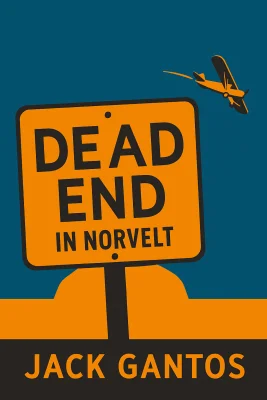
Dead End in Norvelt
Categories
Fiction, Audiobook, Mystery, Historical Fiction, Young Adult, Humor, Historical, Realistic Fiction, Childrens, Middle Grade
Content Type
Book
Binding
Hardcover
Year
2011
Publisher
Farrar, Straus and Giroux (BYR)
Language
English
ASIN
0374379939
ISBN
0374379939
ISBN13
9780374379933
File Download
PDF | EPUB
Dead End in Norvelt Plot Summary
Introduction
The Japanese sniper rifle felt heavier than twelve-year-old Jack Gantos expected as he lifted it in his backyard that June evening in 1962. He aimed at the distant drive-in movie screen, watching American marines battle across the Pacific, never suspecting a bullet waited in the chamber. When the rifle kicked violently from his grip and the gunshot shattered the Pennsylvania twilight, Jack's summer in Norvelt took a deadly turn that would bind his fate to the town's dying secrets. What began as punishment for firing his father's war souvenir became something far more sinister. One by one, the elderly women of Norvelt—the last survivors of Eleanor Roosevelt's model community—started dropping dead under mysterious circumstances. Jack found himself thrust into the role of scribe for Miss Volker, the town's ancient medical examiner, writing obituaries that revealed dark histories while his own nose bled rivers of guilt and fear. In a summer where the past refused to stay buried and death stalked the living, a grounded boy would uncover truths that threatened to destroy everything he thought he knew about his small Pennsylvania town.
Chapter 1: The Accidental Gunshot and Summer Imprisonment
Jack stood on the picnic table in his backyard, Japanese binoculars pressed to his face, watching the distant drive-in screen where marines died in flickering black and white. Around his feet lay his father's war trophies—a bloodstained samurai sword, a sniper rifle, and other deadly souvenirs stripped from buried Japanese soldiers in the Solomon Islands. He shouldn't have touched them. His father had forbidden it, warning that the collection would be worth money someday. But the rifle called to him with its dark wood stock and cold metal barrel. Jack lifted it, aimed at the tiny figures dancing across the movie screen, and squeezed the trigger. The explosion shattered the night. The rifle bucked from his hands, clattering to the ground as Jack's ears rang like air raid sirens. Blood poured from his nose—his chronic curse triggered by shock—while his mother's screams tore through the darkness. "You've been shot!" she shrieked, running toward him through the garden. "There's blood everywhere!" But when she reached him with trembling hands and a dish towel, her panic turned to bitter disappointment. It was just his nose, bleeding as it always did when fear struck. The gunshot had awakened the entire neighborhood. Miss Volker, the ancient medical examiner who lived down the hill, had dropped her hearing aid down the toilet when the blast startled her. An ambulance screamed up the road—not for Jack, but to fish electronic equipment from septic plumbing. His mother's fury burned colder than fear. She had trusted him, and he had violated that trust with explosive consequences. The corn she'd planted to fund charity dinners for elderly women would have to be mowed down for his father's airplane runway—another betrayal that would define his summer of captivity. Jack's punishment descended like a prison sentence: grounded for the entire summer, confined to his room except for chores and bathroom breaks. No baseball, no friends, no freedom. Just the company of history books and the weight of his own guilt, while outside his window, the town of Norvelt began its slow dance with death.
Chapter 2: Miss Volker's Hands and the Duty of Remembrance
The phone call came at dawn, sharp and demanding. Miss Volker's voice crackled through the receiver like dry leaves: "Come down here, boy. I need hands that work." Jack found her standing over a pot of boiling paraffin, her gnarled fingers submerged in the scalding wax. For a terrifying moment, he thought she was melting herself alive—her flesh seeming to drip from her bones in molten streams. When she lifted her hands, hot wax clung to them like golden skin. "Arthritis," she explained matter-of-factly, peeling away the hardened paraffin. "Fifteen minutes of movement, then they seize up again like rusted machinery." Her fingers, freed temporarily from their prison of twisted joints, began to flex with painful determination. Emma Slater had died. The town's last beekeeper, found collapsed beside her hives with honey still sticky on her fingers. Miss Volker needed someone to write, and Jack's young hands would serve as her instruments. "I was appointed by Eleanor Roosevelt herself," Miss Volker declared, pacing her living room like a caged panther. "Chief medical examiner and nurse for this town. My duty is to see every original homesteader to their grave with dignity and proper documentation." Jack sat at the small school desk, pencil poised, as Miss Volker began to dictate. Her voice transformed from the cracked whisper of an old woman into something powerful and resonant. She wove Emma Slater's life into the greater tapestry of human struggle, connecting her death to Wat Tyler's peasant revolt in 1381, making the past speak to the present in urgent, bloody whispers. The needlepoint map on her wall showed Norvelt as it once was—250 houses, 250 families, all seeking Roosevelt's promise of dignity through work. Red pins marked the dead and departed. Only eight houses remained occupied by their original owners. "History," Miss Volker said as her hands began to stiffen again, "is the only thing that lasts forever. And we'll be judged by our history." She stuck another red pin into Emma Slater's house, sealing the beekeeper's fate in fabric and memory.
Chapter 3: Obituaries as Lessons: The Dead Speak to the Living
Death came to Norvelt with increasing frequency, and each corpse brought Jack deeper into Miss Volker's world of typing ribbons and terrible truths. Mrs. Dubicki succumbed to cardiac arrest the day after her grandson's birthday—the woman who had twice sailed to America, once as a lost child hidden in a ship captain's pantry, feasting on stolen food while her parents mourned her disappearance. Jack learned to drive Miss Volker's red Valiant, his twelve-year-old hands barely reaching the pedals as they raced to examine bodies. The ritual was always the same: Miss Volker cooking her arthritic hands in paraffin, Jack preparing his notebook, and then the flow of words that transformed individual deaths into universal lessons. Mrs. Linga died with a carving knife in her hand, blood on the table corner where she'd struck her head. Her house was filled with wooden ducks so lifelike they seemed ready to take flight. Miss Volker's obituary revealed the love story hidden in carved wood—how Mrs. Linga had crafted her future husband's artificial leg, how love had grown from necessity and craft. Each death connected to larger patterns. Mrs. Linga's passing linked to Alexander Berkman and Emma Goldman's failed prison break, another tale of love tested by impossible circumstances. The deaths accumulated like sediment, each one adding weight to Miss Volker's growing certainty that something unnatural was killing Norvelt's elderly women. Jack typed on the ancient Royal typewriter, his fingers learning the rhythm of keys striking paper. He was becoming complicit in something larger than obituaries—a conspiracy of memory against forgetting, where the dead were conscripted to teach the living about justice, equality, and the price of freedom. The town's population of original homesteaders dwindled with each passing week. Red pins multiplied on Miss Volker's needlepoint map like drops of blood on white fabric. And still, she continued her grim accounting, determined to honor her promise to Eleanor Roosevelt even as Norvelt died around her.
Chapter 4: A Town Divided: Preserving the Past or Flying Away
Jack's father had assembled a J-3 Cub in their garage—his escape plan disguised as a hobby. The yellow airplane represented everything Miss Volker despised: abandonment, the casual destruction of community, the American dream reduced to individual flight from collective responsibility. While Jack's mother fought to preserve Norvelt's founding principles through charity dinners and community service, his father prepared to abandon the town entirely. He'd been hired to move empty Norvelt houses to Eleanor, West Virginia, where a more prosperous Roosevelt community was buying up the original's remains. The philosophical war played out at their dinner table. Jack's mother defended the cooperative spirit that built Norvelt, the idea that neighbors should share resources and support each other through hardship. His father saw only economic failure, a Communist experiment that trapped ambitious men in cycles of poverty. "Money is what makes the world go round," his father would sing, counting the cash he earned from dismantling their neighbors' abandoned dreams. Each house he trucked away was another piece of history erased, another victory for pragmatism over idealism. Jack found himself caught between their competing visions. His father's airplane promised adventure and escape from the suffocating atmosphere of a dying town. But Miss Volker's lessons had taught him to see Norvelt's history as sacred, worth preserving even in the face of inevitable decay. Mr. Spizz, the town's self-appointed enforcer, rode his adult tricycle through the streets like a deranged child, issuing citations for overgrown weeds and zoning violations. He wanted Jack's father to destroy his makeshift runway, threatened to fine the family into compliance with his petty regulations. The conflict came to a head when Jack's father test-flew the J-3, buzzing houses and terrifying elderly residents. The sound of the engine was like a war cry, announcing his intention to escape Norvelt's gravitational pull. But for every roar of defiance, another death notice arrived, pulling Jack deeper into Miss Volker's web of historical obligation and community duty.
Chapter 5: The Mysterious Deaths and Whispers of Murder
The Hells Angel danced into Norvelt like a harbinger of doom, gyrating wildly down three miles of country road before a cement truck flattened him against the asphalt. His leather jacket bore the insignia of violence, his skin decorated with demonic tattoos that seemed to writhe even in death. Miss Volker's autopsy revealed no mystery—massive skull fracture, death instantaneous. But her obituary connected the dancing corpse to historical plagues, warning that he might have brought a curse of compulsive movement to their quiet town. The Dancing Death of 1374, the Pied Piper's fatal melody, Salem's convulsive witches—all part of a pattern that stretched across centuries. The Hells Angels returned for their brother's body, fifty leather-clad warriors roaring into Norvelt on motorcycles like mechanized cavalry. They stole a Time Capsule coffin from the Huffer Funeral Parlor and warned that anyone who had killed their comrade would face terrible vengeance. A curse on all who dwelled within the town's borders. Then the real dying began. Mrs. Hamsby, surrounded by thousands of undelivered letters that papered her walls like scales on an ancient fish. Mrs. Vinyl, who'd once had a birthday cake so violently aflame it burned a crater in its own frosting. Mrs. Bloodgood, whose resistance to racial integration had been overcome by Mrs. White's determination to name their integrated town Norvelt. Each death seemed natural—heart failure, stroke, the accumulated weight of eight decades spent breathing and bleeding and remembering. But the timing felt wrong, too convenient, too rapid. Norvelt's original population was being winnowed by an invisible scythe, leaving only Miss Volker and Edwin Spizz as the final witnesses to Eleanor Roosevelt's grand experiment. Mr. Greene at the Norvelt News began asking uncomfortable questions. Why so many deaths in such a short time? Why were all the bodies cremated before proper autopsies could be performed? His editorials demanded investigation, suggesting that something more sinister than old age was claiming Norvelt's elderly residents. The accusations hung in the summer air like smoke from funeral pyres, and Jack found himself wondering if the woman he'd grown to admire might be capable of murder. Miss Volker had access to the victims, opportunity to poison their food, and motive to complete her promise to Eleanor Roosevelt by any means necessary.
Chapter 6: Finding Courage in History's Bloody Truths
Jack dressed as the Grim Reaper and crept through Mrs. Dubicki's darkened house, searching for proof of life or death. The old woman woke from her nap and invited him for tea, scheduling her own demise for two weeks hence with the casual politeness of someone arranging a social visit. The absurdity of death negotiations taught Jack something about courage that Miss Volker's history lessons had only hinted at. Real bravery wasn't charging into battle with sword raised—it was sitting calmly with mortality, acknowledging its presence without panic or denial. His own relationship with blood began to change as Miss Volker performed surgery on his chronically bleeding nose. Using veterinary tools bought at a yard sale, she cauterized his nasal capillaries with a red-hot wire while he held perfectly still, trusting her arthritic hands not to slip and scramble his brains. The operation was a success, but it marked Jack's transition from passive observer to active participant in Norvelt's medical mysteries. He was no longer just Miss Volker's scribe—he was her accomplice, her right-hand man in whatever scheme she was executing. As the elderly women continued to die, Jack learned to see death as a natural process rather than a cosmic horror. He helped collect bodies, signed death certificates, and watched cremations reduce human lives to containers of ash. Each exposure made him slightly more immune to mortality's sting. The town's children began to leave as families sought opportunities elsewhere. Bunny Huffer, his best friend, remained trapped by her father's funeral business, but even she talked of escape. Mertie-Jo sold Girl Scout cookies and planned her family's move to Pittsburgh, leaving Jack increasingly isolated among the dying and the elderly. His mother's charity dinners for the remaining original homesteaders took on the atmosphere of a last supper. Each meal might be someone's final communion with the community that had shaped their lives. Jack delivered casseroles door-to-door, never knowing if he was feeding the living or preparing the soon-to-be-dead for their final journey.
Chapter 7: The Final Original Norvelter and Freedom Reclaimed
The revelation came like a thunderclap: Edwin Spizz had murdered them all. Not from malice, but from twisted love—poisoning the elderly women with compound 1080 to free Miss Volker from her obligation to Eleanor Roosevelt. If all the original homesteaders died, she could finally marry him and escape Norvelt's gravitational pull. Miss Volker had extracted his confession through patient manipulation, playing to his desperate need for her approval. She'd even let him tie her up in the basement with red ribbon from his rejected chocolate gifts, giving him time to flee while she savored her victory over his pathetic schemes. But Spizz's escape was doomed from the start. A grown man couldn't vanish on a tricycle, especially one too ugly to hide in plain sight. He'd stolen Miss Volker's red Valiant, but the county police would track him down within hours. Jack found himself oddly disappointed by the mundane truth. He'd expected something more dramatic—a conspiracy worthy of the history books Miss Volker had taught him to revere. Instead, it was just a lonely man poisoning elderly women to impress his childhood sweetheart. Miss Volker was finally free, the last original Norvelter standing in a town that would soon be completely transformed. The houses would be sold and moved, the land repurposed for shopping centers and subdivisions. Norvelt would become just another failed utopian experiment, remembered only in dusty archives and local history museums. Jack's father completed his J-3 and prepared for his flight to Florida. His runway carved across the former cornfield represented the same impulse that had killed Norvelt—individual ambition trumping collective responsibility, personal dreams destroying community bonds. On the last night before his father's departure, Jack finally got his airplane ride. They dive-bombed the drive-in movie screen with paint balloons, splattering red across black-and-white images of naval warfare. It was vandalism disguised as adventure, destruction masquerading as freedom. But even as they soared above Norvelt's dying streetlights, Jack felt the weight of all those obituaries he'd typed, all those histories he'd helped preserve. Miss Volker's lessons had taken root despite his resistance, teaching him that escape always came at a cost, and that some things were worth preserving even when preservation seemed impossible.
Summary
Jack Gantos spent the summer of 1962 learning that history and death were not abstract concepts confined to textbooks, but living forces that shaped every moment of human existence. What began as punishment for a gunshot accident became an education in the price of community, the weight of memory, and the complex relationship between individual desire and collective responsibility. Miss Volker's obsession with preserving Norvelt's history through obituaries revealed the town's tragic trajectory—from Eleanor Roosevelt's idealistic experiment to Edwin Spizz's murderous scheme to hasten its conclusion. The elderly women died not from natural causes but from poison administered by someone who claimed to love them, a betrayal that embodied everything wrong with a society that had forgotten the value of genuine community care. The red pins on Miss Volker's needlepoint map marked more than individual deaths; they charted the dissolution of a dream that had once promised dignity and prosperity to America's dispossessed. Jack's bloody nose, finally healed by makeshift surgery, symbolized his transition from passive observer to active participant in history's ongoing creation. He learned that growing up meant accepting responsibility for preserving what previous generations had built, even when that preservation required sacrifice and seemed doomed to failure. In Norvelt's dying twilight, a twelve-year-old boy discovered that the past never truly dies—it lives on in the stories we tell and the choices we make, bleeding through time like ink through paper, staining everything it touches with the persistent red of remembered truth.
Best Quote
“...who proved that you don't have to do what your parents want, or what your boyfriend wants, for you to be happy. You just have to be yourself, for there is no love greater than self love” ― Jack Gantos, Dead End in Norvelt
Review Summary
Strengths: The book is described as a hilarious and fun read, particularly appealing to those who enjoy nostalgia, Americana, youthful innocence, and wacky humor. It is recommended for both children and adults, with a specific mention of its suitability for middle-grade readers. The historical fiction aspect is noted as educational, with some historical elements aligning with school curriculums. Weaknesses: The review criticizes the book for its questionable historical accuracy and lazy writing, citing specific errors such as incorrect Girl Scout cookie pricing and the portrayal of cookie sales. The use of the author's name for the main character is seen as potentially egotistical. The book's humor, including fart jokes and baby-talk cursing, is viewed as pandering to a young male audience. Overall: The reader expresses disappointment with the book's selection as a Newbery Award winner, questioning the committee's decision. While some find it entertaining and educational for children, others criticize its execution and historical inaccuracies, leading to mixed recommendations.
About Author

Jack Gantos
Gantos traces the complexities of childhood and adolescence through his vivid portrayals of characters like Joey Pigza, a young boy navigating life with ADHD. His narratives often delve into the unpredictable nature of growing up, highlighting the emotional highs and lows of his characters, which resonate with both young readers and adults. Gantos's method of embedding personal anecdotes into his stories, as seen in works like "Hole in My Life," provides authenticity and depth to his fiction, while also serving as a cautionary tale about the choices one makes and their consequences.\n\nMeanwhile, Gantos employs humor and real-life situations to engage his audience, crafting relatable stories that are both entertaining and educational. This approach not only makes his books accessible to children but also offers insights for educators and parents. His early experiences, from reading his sister’s diary to collecting anecdotes in school, underscore his belief in the power of storytelling as a tool for understanding and empathy. In addition, his creation of a master's degree program in children's book writing at Emerson College reflects his commitment to nurturing new talent in the literary field.\n\nReaders benefit from Gantos's works as they offer a window into the mind of a child, providing both solace and guidance. His ability to blend humor with serious themes makes his stories a valuable resource for those looking to understand the intricacies of childhood. Moreover, his numerous awards, including the Newbery Honor and the Scott O'Dell Award, attest to the impact of his contributions to children's literature. Through his books, Gantos not only entertains but also educates, helping readers to navigate the challenges of growing up with empathy and humor.
Read moreDownload PDF & EPUB
To save this Black List summary for later, download the free PDF and EPUB. You can print it out, or read offline at your convenience.
Dead End in Norvelt
by Jack Gantos
