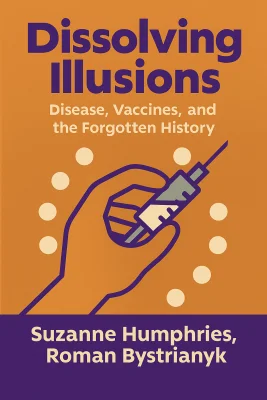
Dissolving Illusions
Disease, Vaccines, and the Forgotten History
Categories
Nonfiction, Health, Science, Parenting, History, Audiobook, Medicine, Medical, Research, Vaccines
Content Type
Book
Binding
Paperback
Year
2013
Publisher
Createspace Independent Publishing Platform
Language
English
ISBN13
9781480216891
File Download
PDF | EPUB
Dissolving Illusions Plot Summary
Introduction
# The Great Vaccine Myth: Historical Evidence Against Medical Orthodoxy The conventional narrative surrounding vaccination presents a story of medical triumph over infectious disease, yet this account requires rigorous historical examination. Through careful analysis of mortality data, governmental policies, and social conditions spanning the 18th through 20th centuries, a fundamentally different picture emerges that challenges core assumptions about what truly drove the decline of epidemic diseases in the Western world. The evidence reveals that dramatic improvements in sanitation, nutrition, housing, and working conditions preceded and often overshadowed the impact of vaccination programs. By examining mortality statistics from England, Wales, and the United States alongside detailed accounts of living conditions, governmental coercion, and alternative public health approaches, we can trace how infectious diseases declined primarily through environmental and social reforms rather than medical interventions. This systematic approach to data interpretation examines not merely what happened, but when it occurred relative to vaccine introduction, and what other factors were simultaneously transforming public health outcomes.
Chapter 1: Disease Decline Preceded Vaccination: The Timeline Evidence
Mortality statistics from England, Wales, and the United States reveal a striking pattern that contradicts standard vaccine narratives. Deaths from major infectious diseases including measles, whooping cough, scarlet fever, diphtheria, and tuberculosis had already declined by 90-99% before the introduction of corresponding vaccines. In England and Wales, measles mortality fell from over 1,200 deaths per million in the 1860s to fewer than 30 per million by the time the measles vaccine was introduced in 1968. The decline began in the mid-1800s and accelerated through the early 1900s, following a consistent downward trajectory that preceded vaccination programs by decades. Whooping cough deaths had dropped by more than 99% before widespread vaccination began in 1957. Diphtheria mortality fell 98% from 1900 to the mid-1940s, with the declining trend actually interrupted temporarily after vaccine introduction rather than accelerated by it. Scarlet fever provides perhaps the most compelling example, as this bacterial disease followed the identical downward mortality pattern as diseases that later received vaccines, yet no vaccine was ever widely implemented. The parallel decline across multiple diseases suggests common underlying factors rather than vaccine-specific interventions. This pattern appears consistently across different countries and time periods, indicating that environmental and social changes, not medical interventions, drove the transformation. Tuberculosis mortality dropped 92% by the late 1930s and over 99% by 1970, occurring through improved nutrition, housing, and working conditions rather than medical treatment. The introduction of streptomycin in 1948 had minimal impact on a decline that was already well underway and accelerating. These patterns repeat across multiple diseases, demonstrating that fundamental changes in human health and environmental conditions drove the great mortality decline of the modern era. The timing evidence is unambiguous: the dramatic reductions in infectious disease mortality occurred during the period when sanitation infrastructure was being built, nutrition was improving, and living conditions were being transformed. When vaccines were eventually introduced, they appeared during the final phase of already declining disease mortality, making it statistically impossible to credit them with reductions that had already occurred through other means.
Chapter 2: Sanitation Revolution: The Real Driver of Health Improvements
The transformation of disease environments through sanitation infrastructure created the foundation for dramatic health improvements that no medical intervention could match. Cities evolved from disease-ridden cesspools to clean environments through the implementation of sewage systems, clean water supplies, and improved housing standards. The construction of London's sewage system between 1859-1865, combined with parliamentary acts regulating water quality and overcrowding, preceded the most dramatic improvements in disease mortality. Clean water eliminated the transmission routes for multiple diseases simultaneously. Cholera, typhoid, and dysentery virtually disappeared from cities that implemented proper water treatment and sewage disposal. Chlorination of water supplies, introduced in America in 1908, eliminated waterborne diseases through a single intervention that addressed the root cause of transmission. This environmental approach proved far more effective than attempting to prevent individual infections through medical procedures. Housing improvements reduced the overcrowding that had facilitated disease spread throughout the industrial revolution. The "dark, desperate" conditions of the 1880s gave way to better ventilation, less crowding, and separation from animal waste that had previously created ideal breeding grounds for infectious agents. Building codes and sanitation regulations transformed the physical environment in which people lived, worked, and raised families. Food safety improvements eliminated major sources of disease transmission and malnutrition. Pasteurization of milk eliminated a primary cause of infant mortality, while food inspection reduced the sale of diseased meat that had previously poisoned working-class families. Better food storage and distribution systems reduced exposure to toxins and pathogens, while more varied diets strengthened immune systems across entire populations. The cumulative effect of these environmental changes was a fundamental shift in the relationship between humans and infectious disease. Rather than accepting disease as inevitable and attempting to create artificial immunity, sanitation reforms addressed the conditions that allowed diseases to spread and flourish. This approach proved sustainable and effective across multiple diseases simultaneously, creating population-level protection that individual medical interventions could not replicate.
Chapter 3: Leicester's Success: Proving Alternatives to Mass Vaccination
Following the devastating smallpox epidemic of 1871-72, the English manufacturing town of Leicester embarked on a radical experiment that challenged the entire foundation of vaccination policy. Despite achieving a 95% vaccination rate, Leicester suffered 3,000 smallpox cases with 358 deaths, shattering public faith in the procedure's protective power and setting the stage for a dramatic confrontation with medical orthodoxy. The Leicester Method replaced vaccination with immediate notification, isolation of cases, and thorough disinfection of homes. When smallpox appeared, patients were quickly transported to hospitals while family members were quarantined in comfortable facilities. Houses underwent complete disinfection, and the entire process was executed within hours of disease detection. This systematic approach proved remarkably effective at containing outbreaks without relying on vaccination. Medical authorities predicted catastrophic consequences for Leicester's "unprotected" population, warning that the town would become a "bag of gunpowder" that could explode into epidemic. These prophecies of doom never materialized. During the 1893 smallpox outbreak, Leicester's death rate was 144 per million while the well-vaccinated district of Mold suffered 3,614 deaths per million—a 25-fold difference favoring the unvaccinated town. The success continued across multiple epidemics. In 1891-1894, Leicester experienced 19 cases and 1 death per 10,000 population compared to Birmingham's 63 cases and 5 deaths per 10,000 despite Birmingham's high vaccination rates. By 1904, Leicester's smallpox death rate had dropped to 1.2 per 100,000, demonstrating that each successive epidemic brought lower mortality rates even as vaccination coverage remained minimal. Dr. C. Killick Millard, Leicester's health minister, initially expected disaster but became convinced that unvaccinated persons faced less risk than commonly supposed when proper sanitary measures were implemented. His observations revealed that vaccinated adults often infected unvaccinated children, contradicting assumptions about vaccine protection. The Leicester experiment provided definitive proof that sanitation, isolation, and hygiene could control smallpox more effectively than vaccination, offering a successful model that challenged the entire rationale for compulsory immunization policies.
Chapter 4: Statistical Manipulation: How Data Was Distorted for Vaccines
The apparent success of vaccination programs often resulted from changes in disease classification and reporting practices rather than actual disease prevention. When vaccines were introduced, diagnostic criteria frequently changed in ways that artificially enhanced their apparent effectiveness. The case of polio provides a clear example: before 1954, any paralysis lasting 24 hours was classified as polio, but after the Salk vaccine's introduction, only cases with paralysis persisting 60 days or longer were counted as paralytic polio. This definitional change alone predetermined a significant reduction in reported cases, regardless of the vaccine's actual impact. Diseases that would have been classified as polio before 1954 were reclassified as aseptic meningitis, Guillain-Barré syndrome, or other conditions after vaccine introduction. The statistical sleight of hand created the appearance of vaccine success while obscuring the true disease patterns. Graphical presentations of disease data systematically minimized pre-vaccine declines while emphasizing post-vaccine periods. Charts often began just before vaccine introduction, obscuring the long-term decline that had already occurred through other means. Logarithmic scales exaggerated small changes during vaccine periods while minimizing the large reductions that had preceded vaccination. These presentation techniques created visual impressions that contradicted the actual historical patterns. The selection of endpoints for statistical analysis further distorted vaccine effectiveness claims. Studies would begin measuring from peak epidemic years rather than examining long-term trends, making temporary fluctuations appear as vaccine-driven improvements. Seasonal variations and natural epidemic cycles were ignored in favor of comparisons that favored vaccination programs. Age-adjusted mortality rates revealed additional statistical manipulation. As diseases naturally shifted to affect different age groups over time, crude mortality rates could appear to improve even when age-specific rates remained constant or worsened. The failure to account for demographic changes and natural disease evolution created false impressions of medical intervention success.
Chapter 5: Contamination and Coercion: The Dark Side of Vaccine Programs
The production methods used for early vaccines created systematic contamination problems that resulted in disease outbreaks, serious injuries, and deaths that were rarely acknowledged or properly investigated. Smallpox vaccines were produced by infecting calves with cowpox virus, harvesting pus from the resulting sores, and either using this material directly or passing it from human to human through "arm-to-arm" vaccination. This process inevitably introduced numerous contaminating microorganisms. The foot-and-mouth disease epidemics of 1902 and 1908 in the United States were directly traced to contaminated smallpox vaccine production. Investigation revealed that vaccine manufacturers had unknowingly used infected animals, spreading foot-and-mouth disease to cattle herds and causing millions of dollars in agricultural damage. The contaminated vaccines were also administered to humans, resulting in cases of severe bullous dermatitis and pemphigus—painful, blistering skin conditions that were sometimes fatal. Dr. James Howe documented ten cases of bullous dermatitis following vaccination in Boston during 1901-1902, with six patients dying from the condition. The symptoms included massive blisters covering the entire body, bloody crusts on the scalp, swollen and crusted eyes, and difficulty swallowing that required rectal feeding. These cases occurred during a period when 230,000 vaccinations were administered, suggesting that serious adverse reactions were far more common than officially acknowledged. The enforcement of vaccination laws revealed the extent to which governments were willing to use police power to override individual autonomy and parental rights. In England, the 1867 Vaccination Act imposed fines on parents who failed to vaccinate their children, and when families could not pay, authorities seized and sold their household goods. The enforcement fell disproportionately on the poor, who faced the choice between vaccinating children they believed had been harmed by previous procedures or losing their basic necessities. In the United States, enforcement took even more aggressive forms. In Passaic, New Jersey, 350 female tobacco workers were locked in their factory while police forced them to submit to vaccination. In Lead, South Dakota, armed deputies accompanied physicians in raids on saloons to forcibly vaccinate miners. These scenes of medical procedures imposed at gunpoint revealed how far authorities were willing to go to enforce compliance with vaccination policies.
Chapter 6: Natural Immunity Versus Artificial Protection: A Critical Comparison
Natural infection typically provides broader, longer-lasting immunity than vaccination because it engages multiple components of the immune system in their proper sequence. The respiratory route of natural infection allows the immune system to mount defenses at mucosal surfaces, while injection bypasses these first-line defenses and may create abnormal immune responses. Natural measles infection provides lifelong immunity in over 99% of cases, while measles vaccination requires multiple boosters and still fails to prevent infection in many recipients. The concept of "original antigenic sin" explains why vaccination can actually impair the immune response to natural infection. When the immune system is first exposed to a pathogen through vaccination, it becomes programmed to respond in a limited way based on the vaccine antigens. Subsequent exposure to the natural pathogen triggers the same limited response rather than the broader, more effective response that would occur in an unvaccinated person. Maternal immunity transfer differs significantly between naturally immune and vaccinated mothers. Naturally immune mothers provide stronger, longer-lasting protection to their infants through both placental antibody transfer and breast milk immunity. Vaccinated mothers provide weaker protection that wanes earlier, leaving infants vulnerable during the period when they are most susceptible to severe disease outcomes. The phenomenon of antibody-dependent enhancement demonstrates that vaccine-induced antibodies can sometimes make disease worse rather than better. This has been observed with respiratory syncytial virus, dengue fever, and other vaccines, where recipients experienced more severe disease upon natural infection than they would have without vaccination. The complexity of immune responses makes it difficult to predict when vaccination will help versus harm. Herd immunity calculations based on vaccine-induced immunity fundamentally differ from natural herd immunity. Natural immunity tends to be more durable and complete, creating stable population-level protection. Vaccine-induced immunity wanes over time and may be incomplete, requiring increasingly high vaccination rates to maintain the appearance of herd protection while potentially creating populations more vulnerable to disease outbreaks than would have existed naturally.
Chapter 7: Scientific Suppression: Censoring Evidence Against Vaccine Orthodoxy
Scientists who questioned vaccine safety or effectiveness faced systematic suppression of their research and professional retaliation. The peer review process became compromised when it came to vaccine research, with journals refusing to publish studies that questioned vaccine safety or effectiveness. Funding for research into vaccine problems dried up, while studies supporting vaccination received generous support. This created a scientific literature that appeared to support vaccination while systematically excluding contradictory evidence. Academic freedom was compromised in institutions dependent on pharmaceutical funding or government grants. Researchers learned that certain topics were off-limits if they wanted to maintain their careers and funding. The threat of professional ostracism was often sufficient to prevent scientists from pursuing research that might challenge vaccine policies, creating a climate of self-censorship that prevented honest evaluation of vaccination programs. The suppression extended beyond individual researchers to entire research programs. Studies comparing vaccinated versus unvaccinated populations were deemed unethical, preventing the most direct assessment of vaccine safety and effectiveness. This convenient ethical barrier protected vaccination programs from the kind of rigorous evaluation that other medical interventions routinely undergo. Media coverage of vaccine issues became increasingly one-sided, with journalists who questioned vaccine safety facing professional consequences similar to those experienced by scientists. The characterization of vaccine skeptics as "anti-science" or dangerous to public health effectively shut down legitimate debate about vaccine policies and their consequences. The intertwining of pharmaceutical companies, government agencies, and academic institutions created what officials themselves described as a "delicate fabric" that needed protection from criticism. This network ensured that vaccine policy served institutional interests rather than objective scientific evaluation. The financial stakes involved in vaccination programs created powerful incentives to suppress evidence of problems while promoting benefits, regardless of the actual risk-benefit ratio.
Summary
The historical evidence demonstrates that the great decline in infectious disease mortality resulted from fundamental improvements in living conditions, sanitation, nutrition, and social reforms rather than vaccination programs. The timing of disease decline consistently preceded vaccine introduction by decades, while the magnitude of improvement—often 95-99% reductions in mortality—occurred during periods when environmental conditions were rapidly improving but vaccines were not yet available. This analysis reveals how statistical manipulation, diagnostic changes, and selective reporting created a false narrative of vaccine triumph that obscured the real factors responsible for improved public health. The Leicester experiment proved that sanitation and isolation could control disease more effectively than vaccination, while the contamination problems and coercive enforcement of vaccine policies demonstrated the human costs of prioritizing medical intervention over environmental reform. Understanding this history provides crucial perspective for evaluating current public health policies and recognizing that sustainable health improvements come from addressing root causes rather than attempting to prevent symptoms through medical procedures.
Best Quote
“I also discovered how science can go horribly wrong. We can easily become captured by a belief system that is built on a shaky and flawed foundation. How often do we believe in something, not because we have done in-depth research on it, but because authority figures tell us it is the truth? What if what we believe is just an illusion?” ― Suzanne Humphries, Dissolving Illusions
Review Summary
Strengths: The review highlights the author's journey from supporting vaccines to questioning them, emphasizing the book's impact on their perspective. The reviewer appreciates the book's critique of Paul Offit and values the enlightenment it provides against fear-driven narratives. Weaknesses: The review lacks a balanced perspective, heavily leaning towards an anti-vaccine stance without thoroughly discussing the book's content or arguments. It also includes personal anecdotes that may detract from an objective analysis of the book itself. Overall: The reader expresses a strong anti-vaccine sentiment, influenced by the book, and recommends it to those questioning vaccine narratives. However, the review is more a personal reflection than a comprehensive evaluation of the book's merits.
About Author

Suzanne Humphries
Humphries challenges conventional medical narratives by intertwining historical analysis with personal experiences. Her work scrutinizes the impacts of medical policies on patient health, highlighting how she identified significant issues within the traditional medical framework. This realization prompted her to transition from a hospital-based career to independent research, allowing her to explore medical literature, vaccines, and immunity from a broader perspective. Through her books, she encourages readers to question established medical doctrines, advocating for a more nuanced understanding of health interventions.\n\nHer book "Rising from the Dead" serves as an autobiographical narrative that delves into her journey from conventional medicine to critical examination of medical policies. Meanwhile, "Dissolving Illusions: Disease, Vaccines, and the Forgotten History," co-authored with Roman Bystrianyk, investigates overlooked historical data to question the sole credit often given to vaccines and antibiotics for improved public health. By presenting alternative views on these topics, Humphries invites readers, particularly those interested in medical history and policy, to consider the broader context of healthcare improvements.\n\nHumphries' bio reveals her dedication to providing alternative insights into medical history, aiming to empower readers to think critically about healthcare. While specific awards are not detailed, her work has attracted attention from figures in alternative medicine and public health discussions, showcasing her influence in these fields. As an author, she combines narrative with rigorous research, offering a distinct perspective that challenges mainstream medical beliefs and encourages deeper inquiry into the historical and contemporary narratives of medicine.
Read moreDownload PDF & EPUB
To save this Black List summary for later, download the free PDF and EPUB. You can print it out, or read offline at your convenience.
Dissolving Illusions
by Suzanne Humphries
