Categories
Nonfiction, Health, Science, History, Politics, Audiobook, Sociology, Medicine, True Crime, Addiction
Content Type
Book
Binding
Hardcover
Year
2018
Publisher
Little, Brown and Company
Language
English
ASIN
0316523178
ISBN
0316523178
ISBN13
9780316523172
File Download
PDF | EPUB
Dopesick Plot Summary
Introduction
# Pills to Heroin: America's Opioid Crisis Through Personal Stories In a small cemetery overlooking a high school football stadium in Strasburg, Virginia, a mother stands beside her son's grave, decorated with his jersey number 55 and the words "Miss You More." Kristi Fernandez visits Jesse Bolstridge's headstone regularly, switching out holiday decorations and searching for signs that might explain how her robust, football-playing son became another casualty in America's deadliest drug epidemic. Jesse's story mirrors thousands of others across the nation, where the opioid crisis has transformed from a rural Appalachian problem into a nationwide catastrophe that spares no community, no family, no social class. This devastating epidemic didn't emerge overnight, nor did it spread randomly. It began with calculated marketing campaigns, regulatory failures, and a perfect storm of economic despair that created fertile ground for addiction. Through the interconnected stories of families, doctors, law enforcement officers, and the addicted themselves, we witness how a single pharmaceutical company's aggressive promotion of a "safe" painkiller unleashed a wave of addiction that would eventually claim more American lives than the Vietnam War. These are not statistics but human stories of love, loss, and the desperate search for hope in the face of an unprecedented public health crisis.
Chapter 1: The Promise of Pain Relief: How OxyContin Sparked a Crisis
In 1997, Lieutenant Richard Stallard was making his usual patrol rounds in Big Stone Gap, Virginia, when an informant approached his cruiser with disturbing news. A new painkiller called "Oxy-something" was hitting the streets, selling for unprecedented prices and creating addicts faster than anything he'd seen before. Within months of OxyContin's introduction, users had discovered they could defeat the drug's time-release mechanism by simply crushing the pills, creating an immediate and intense high comparable to heroin. Dr. Art Van Zee, a country physician in nearby St. Charles, began witnessing the transformation firsthand. Patients who had never shown signs of addiction were suddenly selling their possessions, stealing from family members, and injecting crushed pills with livestock syringes bought from feed stores. The septuagenarian farmer who owned land worth half a million dollars lost everything within six months to feed his OxyContin addiction. Van Zee watched his community unravel as overdose deaths climbed from one in 1997 to sixteen by 1999. Meanwhile, Purdue Pharma was celebrating record profits, training sales representatives to promote OxyContin as safe for routine pain management, not just terminal cancer care. The company's marketing materials claimed addiction rates of less than one percent, based on a single paragraph from a 1980 medical journal that had nothing to do with long-term opioid use. Sales representatives, incentivized with massive bonuses, flooded rural communities with promotional materials, free samples, and the message that undertreating pain was the real medical crisis. Van Zee's early warnings fell on deaf ears. When he wrote to Purdue executives describing injection patterns, overdoses, and rising crime rates, the company sent him blank adverse event forms. Federal health officials dismissed his concerns as a regional problem, failing to recognize that they were witnessing the birth of an epidemic that would eventually spread along Interstate highways to every corner of America, transforming the very nature of drug addiction in the process.
Chapter 2: From Medicine Cabinets to Street Corners: The Suburban Epidemic
By the mid-2000s, the opioid epidemic had begun its inexorable march from rural hollows to suburban cul-de-sacs. In Roanoke, Virginia, the first wake-up call came when two popular television weathermen were found shooting heroin at parties in affluent neighborhoods. The image of educated, well-paid professionals collapsing in bathroom stalls shattered the comfortable assumption that opioid addiction was a problem confined to poor, rural communities. Spencer Mumpower's journey from private school student to federal prisoner illustrated how quickly the epidemic could consume middle-class families. Starting with stolen prescription pills from relatives' medicine cabinets, Spencer progressed to trading his ADHD medication for stronger opioids, then to heroin when pills became too expensive or difficult to obtain. His mother, Ginger, spent hundreds of thousands of dollars on treatment programs, watching helplessly as her son's addiction destroyed his health, his relationships, and eventually led to his involvement in a friend's overdose death. The suburban epidemic spread differently than its rural predecessor. Wealthy teenagers had access to money that allowed them to maintain their addictions without immediately resorting to crime. They sold electronics, raided college funds, and used allowances to buy drugs, keeping their addictions hidden from parents who couldn't imagine their children using heroin. The stigma was so intense that families suffered in isolation, too ashamed to seek help or warn other parents about the dangers lurking in their communities. Scott Roth's death in 2010 marked a turning point in the Roanoke area's understanding of the crisis. The popular young man, known for his cooking skills and infectious personality, died from heroin he bought in an upscale neighborhood, shattering his mother Robin's world and forcing the community to confront the reality that addiction had invaded their safe suburban enclaves. The epidemic's spread from rural to suburban America revealed an uncomfortable truth: no community's wealth, education, or social status could protect it from the power of opioid addiction.
Chapter 3: Failed Systems: Healthcare, Justice, and Regulatory Breakdown
The opioid epidemic exposed fundamental failures across multiple systems meant to protect public health. The Food and Drug Administration approved OxyContin based on limited studies and allowed Purdue Pharma to market it aggressively with minimal oversight. When problems emerged, regulators were slow to respond, often prioritizing pharmaceutical industry concerns over public safety. The agency's top examiner who approved OxyContin, Curtis Wright, later went to work for Purdue Pharma, exemplifying the revolving door between regulators and the companies they were supposed to monitor. Healthcare systems, incentivized to treat pain as the "fifth vital sign," created an environment where prescribing opioids became routine. Doctors faced pressure from patient satisfaction surveys, accreditation bodies, and pharmaceutical representatives who promoted the myth that addiction was rare when opioids were prescribed for legitimate pain. Many physicians, lacking adequate training in addiction medicine, found themselves inadvertently creating addicts while trying to provide compassionate care. The criminal justice system proved equally inadequate, designed to punish rather than treat addiction. Courts sent people to prison for drug-related crimes while the pharmaceutical executives who created the crisis faced minimal consequences. When Purdue Pharma finally pleaded guilty to federal charges in 2007, the company paid $634 million in fines but its executives served no jail time, receiving only probation and community service. The message was clear: corporate crime pays, while individual addiction is punished. Law enforcement agencies found themselves fighting an impossible battle, arresting user-dealers who were immediately replaced by others desperate to avoid withdrawal. The traditional drug war model, focused on supply interdiction and punishment, proved useless against an epidemic driven by legal prescriptions and sustained by physical dependence. The crisis revealed the profound inadequacy of systems designed for a different era and different problems, where institutional failures created a perfect storm that allowed corporate greed to flourish while communities paid the ultimate price.
Chapter 4: Families in Crisis: Love, Loss, and the Fight for Recovery
Behind every overdose statistic lies a family torn apart by addiction's relentless progression. Kristi Fernandez watched her son Jesse transform from a beloved football star into a desperate young man who stole from his own grandmother to buy pills. Despite multiple attempts at treatment, Jesse's addiction proved stronger than his love for his family, his athletic talents, or his dreams for the future. His mother's desperate attempts to save him, including installing locks on bedroom doors and hiding valuables, illustrated the impossible choices families face when addiction invades their homes. The Mumpower family's ordeal spanned nearly a decade, as Ginger sent Spencer to fifteen different treatment facilities while watching him cycle through periods of sobriety and relapse. The financial cost exceeded $300,000, but the emotional toll was immeasurable. Ginger learned to rotate her jewelry between hiding places, lived with doors removed from bathrooms to prevent secret drug use, and eventually had to choose between enabling her son's addiction and potentially watching him die on the streets. Jamie Waldrop and Drenna Banks met at a support group for families affected by addiction, bonding over their shared nightmare of loving children whose brains had been hijacked by opioids. When Drenna's son Colton died of an overdose, she made the difficult decision to hold an open-casket funeral, wanting his friends to see the reality of what addiction could do to someone who "had it all." Her plea to other families to seek help rather than hide in shame became a rallying cry for parents ready to break the silence surrounding addiction. These families discovered that love alone couldn't cure addiction, that good parenting couldn't prevent it, and that shame only made recovery more difficult. Their stories revealed the inadequacy of a healthcare system that treated addiction as a moral failing rather than a chronic disease, and a society that stigmatized families already suffering unimaginable loss. Through their pain, they began to understand that speaking out was not just therapeutic but essential to preventing other families from experiencing similar devastation.
Chapter 5: The Business of Addiction: Corporate Profits and Human Cost
Purdue Pharma's marketing of OxyContin represented one of the most successful and destructive pharmaceutical campaigns in history. The company spent millions training sales representatives to promote the drug for routine pain management, using misleading claims about addiction risk and abuse potential. Internal documents later revealed that executives knew about widespread abuse as early as 1997 but continued aggressive marketing while publicly denying problems. The Sackler family, owners of Purdue Pharma, built a pharmaceutical empire worth billions while their flagship product destroyed communities across America. They funded pain management organizations, medical conferences, and research that supported expanded opioid prescribing, creating an echo chamber that reinforced their marketing messages. When criticism emerged, they hired former New York mayor Rudy Giuliani to provide political cover and credibility. Sales representatives, incentivized with massive bonuses tied to prescription volume, targeted the most vulnerable populations: rural communities with high disability rates, areas with limited economic opportunities, and regions where competing pharmaceutical companies had less presence. They distributed branded promotional items, funded medical education seminars at luxury resorts, and cultivated relationships with high-prescribing doctors through elaborate entertainment and gifts. The human cost of these business practices became clear only after hundreds of thousands of Americans had become addicted or died. When federal prosecutors finally brought criminal charges, the penalties seemed modest compared to the profits generated and lives lost. The case demonstrated how pharmaceutical companies could literally get away with murder by hiding behind corporate structures, regulatory capture, and the revolving door between industry and government that made meaningful oversight nearly impossible.
Chapter 6: Treatment Battles: Access, Stigma, and the Search for Solutions
Recovery from opioid addiction requires comprehensive, long-term treatment that addresses both the physical dependence and underlying psychological issues that contribute to drug use. Medication-assisted treatment, using drugs like methadone, buprenorphine, or naltrexone, has shown the highest success rates, helping 40 to 60 percent of patients achieve sustained recovery. However, access to quality treatment remains limited, with many programs operating as cash-only businesses that exclude those who need help most. The story of Christopher Waldrop illustrates both the challenges and possibilities of recovery. After multiple relapses and treatment failures, he finally achieved sobriety through a combination of wilderness therapy, medication-assisted treatment, and ongoing support. His success required not only his own commitment but also his family's financial resources and emotional support, advantages not available to most people struggling with addiction. Traditional abstinence-only approaches, while successful for some, have proven inadequate for most opioid addicts. The physical nature of opioid dependence, combined with the high risk of fatal overdose, makes medication-assisted treatment a medical necessity rather than a treatment option. Yet stigma within the recovery community, insurance barriers, and regulatory restrictions continue to limit access to evidence-based care. The epidemic has also revealed the importance of harm reduction strategies, including needle exchange programs, overdose reversal training, and safe consumption sites. These approaches, controversial in some communities, have proven effective at keeping people alive until they're ready for treatment. The battle over treatment philosophy reflects deeper questions about the nature of addiction, recovery, and human agency, revealing that the path forward requires abandoning false choices between punishment and treatment, between abstinence and harm reduction, and recognizing that recovery happens in relationship with communities that choose compassion over condemnation.
Chapter 7: Community Response: Grassroots Hope Amid Institutional Failure
As traditional approaches to addiction proved inadequate, communities began experimenting with new models that prioritized keeping people alive over achieving perfect sobriety. The Hope Initiative in Roanoke, Virginia, emerged from the grief of parents who had lost children to overdose and their determination to prevent other families from experiencing similar tragedies. Led by volunteers like Janine Underwood, whose son Bobby died of a fentanyl overdose, and Jamie Waldrop, whose sons had struggled with heroin addiction, the program represented a grassroots response to institutional failures. The Hope Initiative operated on the principle that people couldn't recover if they were dead, focusing on connecting addicted individuals with treatment resources while providing immediate support and harm reduction services. Volunteers made themselves available twenty-four hours a day, responding to crisis calls and accompanying people to detox centers, treatment facilities, and court appearances. They learned to navigate the complex web of insurance requirements, waiting lists, and bureaucratic obstacles that often prevented people from accessing care during the brief windows when they were motivated to seek help. Sister Beth Davies, a Catholic nun who had spent decades fighting for social justice in the region, watched as communities began to wrap their arms around their most vulnerable members. In the mountains of Virginia, nurse practitioner Teresa Tyson drove a converted RV through remote communities, providing healthcare to people who had been abandoned by the traditional medical system. Her Health Wagon served uninsured residents who couldn't afford to see doctors, many of whom were struggling with addiction-related health problems. Despite their limitations, these grassroots efforts represented something new in the American response to addiction: community-based models that combined compassion with practical assistance, that treated addicted individuals as human beings deserving of dignity rather than criminals deserving of punishment. Their work suggested that the solution to America's addiction crisis might ultimately come not from government programs or medical breakthroughs, but from communities that chose to embrace their most vulnerable members and refuse to give up on them, creating networks of care that extended beyond formal treatment systems.
Summary
The opioid epidemic that began in America's medicine cabinets and spread to its streets represents more than a public health crisis—it embodies a fundamental failure of systems, institutions, and communities to protect their most vulnerable members. Through the stories of people like Jesse Bolstridge, Scott Roth, and the countless families who loved them, we see how addiction transforms not just individuals but entire communities, creating ripple effects that extend far beyond the person using drugs. The crisis revealed the inadequacy of approaches that treat addiction as either a moral failing requiring punishment or a simple medical condition requiring only pharmaceutical intervention. The path forward requires abandoning false choices between punishment and treatment, between abstinence and harm reduction, between individual responsibility and systemic change. Communities that have begun to make progress against the epidemic share common characteristics: they treat addiction as a chronic condition requiring long-term support, they prioritize keeping people alive over achieving perfect sobriety, and they create networks of care that extend beyond formal treatment systems. Most importantly, they recognize that recovery happens in relationship—with family members who refuse to give up, with volunteers who provide practical support, and with communities that choose compassion over condemnation. The epidemic's trajectory suggests that healing is possible when we remember that behind every statistic is a human being deserving of dignity, care, and hope.
Best Quote
“America’s approach to its opioid problem is to rely on Battle of Dunkirk strategies—leaving the fight to well-meaning citizens, in their fishing vessels and private boats—when what’s really needed to win the war is a full-on Normandy Invasion.” ― Beth Macy, Dopesick: Dealers, Doctors, and the Drug Company that Addicted America
About Author

Beth Macy
Macy interrogates the profound societal impacts of corporate and political negligence through her focus on rural America and marginalized communities. Her writing delves into how these forces have systematically disadvantaged outsiders and underdogs, drawing from real-life narratives that explore themes such as globalization's fallout, the opioid epidemic, and historical racial injustices. Macy's methodical approach—grounded in trust-building and a human-first philosophy—enables her to unearth stories that resonate on a universal level, thereby fostering a deeper understanding among her readers.\n\nFor those interested in the intersection of societal challenges and human stories, Macy's work provides a compelling exploration. Her book "Factory Man" delves into the battle against offshoring in rural manufacturing, while "Dopesick" provides an in-depth look at the opioid crisis, demonstrating her ability to tackle complex issues with clarity and empathy. Readers benefit from her detailed investigations and narrative style, which not only illuminate pressing social issues but also highlight grassroots efforts for change, as seen in "Raising Lazarus". \n\nMacy's contributions have not gone unnoticed; her work has been recognized with prestigious awards like the J. Anthony Lukas Prize and a Guggenheim Fellowship. Her books, including "Truevine", have made their mark on bestseller lists, affirming her status as a significant voice in non-fiction. This short bio captures her commitment to exploring the nuances of American life, making her a vital author for those seeking to understand the intricate layers of social and economic disparity.
Read moreDownload PDF & EPUB
To save this Black List summary for later, download the free PDF and EPUB. You can print it out, or read offline at your convenience.

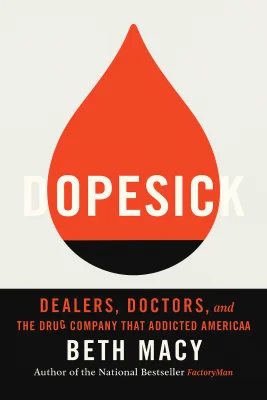
Dopesick
by Beth Macy
