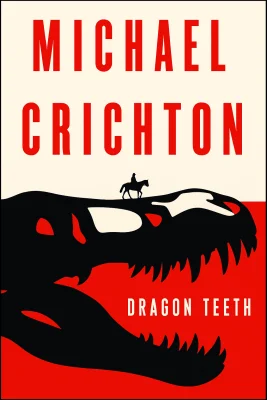
Dragon Teeth
Categories
Fiction, Science Fiction, Audiobook, Historical Fiction, Thriller, Adult, Westerns, Historical, Adventure, Dinosaurs
Content Type
Book
Binding
Paperback
Year
2017
Publisher
HarperCollins Publishers
Language
English
ASIN
0008173060
ISBN
0008173060
ISBN13
9780008173067
File Download
PDF | EPUB
Dragon Teeth Plot Summary
Introduction
The photograph from 1875 shows a young man lounging against a Gothic building at Yale, his crooked smile betraying nothing of the transformation to come. William Johnson appears every inch the spoiled heir to a Philadelphia shipping fortune—indolent, handsome, and utterly unprepared for what the American West would demand of him. By 1876, another photograph captures a different man entirely: weathered, scarred, standing ankle-deep in Cheyenne mud with the confidence of someone who has stared death in the face and lived to tell about it. Between these two images lies a tale of scientific rivalry turned deadly, where the pursuit of ancient bones becomes a battle for survival across the most dangerous territories in America. In the summer of 1876, as Custer rides toward his doom at Little Bighorn, young Johnson finds himself caught between two brilliant paleontologists whose feud will reshape the very foundations of American science—if he can survive long enough to deliver the fossils that may prove the existence of creatures beyond imagination.
Chapter 1: The Wager: A Yale Student's Fateful Bet
The trouble began, as trouble often does, with wounded pride and too much wine. William Johnson sat in the Yale dining hall, enduring another evening of his arch-rival Harold Marlin's insufferable superiority. Marlin had been west, at least as far as Kansas City, and never failed to lord this experience over his fellow students. "Going west is no shakes," Johnson declared, watching Marlin's smug expression. "Any fool can go." "But all fools haven't gone—at least you haven't," Marlin shot back, his voice carrying across the hushed dining room. The other students leaned forward, sensing blood in the water. What followed was inevitable. Marlin's challenge hung in the air like gunpowder smoke: "I have a thousand dollars that says you won't go west with Marsh this summer." The words hit Johnson like a physical blow. A thousand dollars was serious money, even between wealthy young men, but more than that was at stake—his reputation, his standing among his peers. Johnson's throat went dry, but his voice remained steady. "You, sir, have made a wager." The next morning brought the sobering reality of what he'd committed to. Professor Othniel Marsh's office door bore an ominous warning: "Visitors by written appointment only." When Johnson finally gained entry through a mixture of desperation and deception—claiming to be a photographer—he found himself face to face with Yale's formidable paleontology professor. Marsh was a heavy, powerful man who dominated every room he entered. His museum was a cathedral of bones, filled with the skeletons of creatures that had walked the earth millions of years before man drew breath. When Johnson mentioned Philadelphia, something dark flickered across Marsh's features. The professor's paranoia about his rival, Edward Drinker Cope, colored everything—even an innocent student's hometown became suspect. "We depart June 14," Marsh declared after accepting Johnson's fabricated credentials. "Returning no later than September 1. And Johnson—tell your family Colorado. It isn't true, but it doesn't matter." As Johnson left the museum, he realized with growing dread that he'd bound himself to months in the wilderness with a man who saw enemies in every shadow.
Chapter 2: Betrayal in the Badlands: From Marsh to Cope
The journey west began in luxury aboard Commodore Vanderbilt's private railway car, but paradise didn't last. In the grimy frontier town of Cheyenne, Johnson's world collapsed with brutal efficiency. He overslept, and when he stumbled downstairs for breakfast, the hotel clerk delivered the crushing news: "Professor Marsh said not to wake you when they departed. He said you were leaving the expedition here." Abandoned and penniless in a town where life was cheaper than whiskey, Johnson discovered the depth of Marsh's paranoia. The professor had convinced himself that Johnson was a spy for his hated rival. As Johnson sat in the hotel dining room, contemplating his ruin, salvation appeared in an unexpected form. "Mr. Johnson?" The voice was clear and confident. Johnson found himself facing a wiry, fair-haired man with bright, lively eyes—Professor Edward Drinker Cope himself. Where Marsh was heavy and suspicious, Cope radiated energy and enthusiasm. He listened to Johnson's tale with genuine sympathy, then made an offer that would change everything: "I can use a photographer. We're heading to the far West to dig for dinosaur bones. It will be rough going, but you're welcome to come." Cope's expedition was the antithesis of Marsh's military precision. They traveled by stagecoach across brutal terrain, enduring alkali dust, buffalo stampedes, and the constant threat of Indian attack. Johnson learned that they were bound for the Judith River basin in Montana Territory—exactly where General Sheridan had warned against going. At Fort Benton, Captain Ransom was blunt about their chances: "I wouldn't go out with less than five hundred trained cavalry. It's suicide, sir." But Cope's will was indomitable. When military orders forbade civilian travel in disputed territories, he simply waited for the garrison to depart on patrol, then slipped away into the vast emptiness of the Great Plains. The small party that rode west included Charlie Sternberg, a seasoned fossil hunter; Little Wind, their Shoshoni scout; and several students hungry for adventure. They had no idea they were riding toward discoveries that would revolutionize science—if they survived long enough to share them with the world.
Chapter 3: Unearthing Giants: The Discovery of Dragon Teeth
The badlands of Montana stretched before them like an alien landscape—sculpted red rock formations rising from the prairie like ancient monuments. In the shadow of these towering exposures, Cope made his camp and began the patient work of reading stone. "See anything?" Cope asked on their first morning, gesturing toward the cliff face. Johnson saw only bare rock, but Cope's trained eye picked out the subtle differences in color and texture that marked fossil bones embedded in the stone. "Run your eye along that band until you see a roughness," Cope instructed. Suddenly Johnson could see them—bones catching the morning light differently from the surrounding rock, patches of ancient life waiting to be freed from their stone prison. The work was backbreaking. Under the scorching sun and in choking alkaline dust, they chipped fossils from the cliff faces with delicate precision. Each bone had to be mapped, sketched, and carefully extracted without damage. Johnson learned to read the sound of chisel against stone, to feel the subtle boundary between fossil and rock. The discoveries came steadily—duck-billed hadrosaurs, flying reptiles, massive Titanosaurus bones. But nothing prepared them for what Johnson found on that August afternoon when what appeared to be troublesome rocks proved to be something far more extraordinary. Cope scrambled up the cliff face with frenzied energy when he saw what Johnson had uncovered. "Teeth!" he exclaimed, his voice cracking with excitement. "Dinosaur teeth!" The size of the fossils defied imagination. Each tooth was the size of a man's fist, ridged and worn by eons of grinding plant matter. Cope's calculations painted a picture of a creature beyond belief—seventy-five feet long, with a head thirty feet above the ground. He christened it Brontosaurus, the "thunder lizard," for surely the earth shook when such giants walked. As they photographed the precious discovery, neither man could foresee the blood that would be spilled over these dragon teeth, or the desperate flight that lay ahead.
Chapter 4: Blood on the Plains: Survival Against the Sioux
The attack came without warning as they made their final trip to collect the remaining fossils. Johnson and young Toad Davis had volunteered for what should have been a routine supply run, but Cookie and Little Wind had other plans. With Sitting Bull's great war band moving north toward Canada, the plains crawled with danger, and their guides abandoned them at the first sign of smoke on the southern horizon. Stranded with a wagon full of precious bones and no protection save their own courage, Johnson and Toad pressed on. They reached their camp as shadows lengthened, loaded the final crates with desperate haste, and turned toward safety—only to hear the blood-chilling war cries of Sioux warriors echoing across the prairie. The running fight that followed was a nightmare of dust and gunfire. Arrows whistled past their heads as painted warriors closed in from all sides. Johnson whipped the terrified horses toward the badlands, knowing their only hope lay in terrain too treacherous for pursuit. One warrior leaped aboard their wagon, tomahawk raised—the blade that slashed across Johnson's lip left the scar he would carry forever. They plunged into the badlands in complete darkness, Little Wind walking ahead with a stick and handful of rocks, testing for drop-offs that could kill them all. The wagon lurched through invisible canyons while death stalked them from above. It began to snow, and in that bitter cold, young Toad bled out from the arrows in his chest, dying quietly in the wagon bed while Johnson wept for his fallen friend. Little Wind lasted two more days before succumbing to his wounds. Johnson buried him twice—once to hide the fossils beneath his body, then again when discovery forced another desperate flight. Alone, feverish, and half-dead from exhaustion, Johnson somehow kept the wagon moving through a landscape that had become his personal hell. When he finally stumbled into the muddy street of Deadwood Gulch, more dead than alive, he carried with him the preserved remains of creatures that had ruled the earth before man was even a dream. The dragon teeth had survived, but at a cost that would haunt him forever.
Chapter 5: Deadwood Purgatory: A Photographer with Precious Cargo
Deadwood was a town carved from desperation and greed, seventy-five saloons serving a population that lived hard and died young. Here, in this lawless gulch where Wild Bill Hickok had recently met his end, Johnson found himself trapped with a thousand pounds of fossils that everyone assumed were gold. Broke and stranded, he transformed himself into "Foggy" Johnson, photographer of the Black Hills Art Gallery. In a place where men routinely killed each other over card games, Johnson discovered an unexpected hunger for immortality—these rough miners, far from home and family, would pay handsomely to have their images captured on glass plates. But his precious fossils drew unwanted attention. Black Dick Curry, known as the "Miner's Friend" for his habit of robbing gold shipments, became convinced the mysterious crates contained treasure worth killing for. Johnson moved the bones repeatedly—from hotel room to Chinese warehouse to a desperate burial beneath Little Wind's corpse—always one step ahead of men who would murder him for rocks they couldn't understand. The beautiful Emily Williams arrived like an angel of mercy, claiming to search for her lost brother. Johnson fell hard for her delicate charms, never suspecting she was Dick Curry's woman, sent to learn his secrets. When the truth emerged, it only deepened the web of deception surrounding the bones that had already cost so many lives. General Crook's cavalry offered salvation, but a murder investigation trapped Johnson in town just long enough to watch his rescue ride south without him. In the photograph he took of the Grand Central Hotel that afternoon, he unknowingly captured Black Dick strangling a man in broad daylight—evidence that would make him a marked man but also reveal the depths of corruption in this god-forsaken place. When Johnson finally faced Dick Curry in the muddy street of Deadwood, gun in hand and death in his eyes, he discovered that survival had changed him in ways he never expected. The spoiled Yale student was gone forever, replaced by someone harder, colder, and infinitely more dangerous.
Chapter 6: Desperate Escape: Gunfights and Unlikely Alliances
The legendary gunfighter Wyatt Earp arrived in Deadwood looking for opportunity, and Johnson's predicament presented exactly the kind of profitable venture the young lawman preferred. For half the mysterious cargo, Earp agreed to escort Johnson and his fossils to Cheyenne—a bargain that would test both men's mettle against the worst the frontier had to offer. The stagecoach that carried them south was a rolling fortress, defended by Wyatt and his brother Morgan with enough firepower to outfit a small army. Emily, now calling herself by her real name, Miranda Lapham, rode with them—though Johnson was only beginning to understand the true nature of the woman he'd fallen for. The Curry gang's first attack came at Sand Creek Gulch, a running gunfight that left the coach ventilated with bullet holes but still moving. It was a feint, Earp explained—the real assault would come where they couldn't escape. At Spring Creek, with their horses killed and the stage trapped in the middle of the stream, Black Dick and his men closed in for the kill. Earp's solution was characteristically audacious. Instead of cowering behind the coach, he charged straight into the enemy positions, using the thick woods and his opponents' nerves against them. A few well-timed shotgun blasts and theatrical death screams sent the outlaws fleeing in panic, convinced they were being slaughtered by a force they couldn't see. But the most dangerous enemy proved to be Red Canyon, where the renegade Persimmons Bill had left the coach station in ashes and half a dozen scalped bodies buzzing with flies. They pushed through the canyon without stopping, knowing that every mile brought them closer to safety—and to the reckoning that awaited in Laramie. At the iron bridge crossing the Platte, Johnson's past caught up with him in the worst possible way. Professor Marsh stood waiting with his hired gun Navy Joe Benedict, ready to buy or steal the fossils that had cost so much blood to preserve. The civilized professor had become something darker in his obsession, willing to commit any crime to possess the dragon teeth that would secure his scientific immortality.
Chapter 7: Return to Civilization: The Triumph of Scientific Legacy
The confrontation at Fort Laramie revealed the true depth of deception that had shadowed Johnson's journey from the beginning. Wyatt Earp had known of Marsh's presence all along, using Johnson's desperate flight as leverage in a three-way auction for bones that no one but their discoverer truly understood. In a masterpiece of frontier cunning, Johnson substituted rocks coated in rice paste for the precious fossils, allowing Marsh to purchase Earp's share of worthless granite while the real dragon teeth remained hidden. The professor's rage when he discovered the deception was terrible to behold, but by then Johnson was already on the train east, his scientific treasure finally safe. The return to Philadelphia brought its own revelations. Emily—or Miranda—revealed herself as a Washington lobbyist, a woman who traded her charms for political favors among the most powerful men in America. Her parting words stung with the truth: Johnson was already retreating into the civilized world that had shaped him, leaving behind the dangerous man he'd briefly become. At Yale, his confrontation with Harold Marlin demonstrated how completely the West had transformed him. The weakling who'd made a desperate wager was gone, replaced by someone who could lift a grown man off his feet and slam him against a wall without breaking stride. The thousand-dollar debt was paid with interest, but the real victory was deeper—Johnson had found himself in the crucible of the frontier. Professor Cope received his fossils with tears of joy, understanding their significance in ways that Marsh, for all his learning, never could. The dragon teeth would anchor discoveries that reshaped paleontology, proving the existence of creatures beyond imagination. But for Johnson, the greater discovery was himself—a man forged in alkali dust and gunpowder, tempered by loss and hardened by survival.
Summary
The bones of Brontosaurus took their place in Cope's museum, silent witnesses to an age when giants ruled the earth. But the human drama that delivered them from Montana's badlands to Philadelphia's drawing rooms revealed truths about courage, ambition, and the price of knowledge that no fossil could teach. Cope died penniless in 1897, his fortune spent in the war with Marsh, but his legacy lived on in the creatures he'd named and the young men he'd inspired. William Johnson returned to his privileged world transformed, carrying scars both visible and hidden from his journey through America's most dangerous territories. The dragon teeth survived because men were willing to die for them, and in their preservation lay a deeper truth about the human spirit—that some discoveries are worth any sacrifice, and some journeys change us in ways we can never undo. The West that had shaped him was already vanishing, swept away by railroads and civilization, but in the stone bones of ancient giants, it would live forever.
Best Quote
“You would think that people who had experienced injustice would be loath to inflict it on others, and yet they do so with alacrity. The victims become victimizers with a chilling righteousness. This is the nature of fanaticism, to attract and provoke extremes of behavior. And this is why fanatics are all the same, whatever specific form their fanaticism takes.” ― Michael Crichton, Dragon Teeth
Review Summary
Strengths: The book offers a unique blend of Western and paleontological themes, featuring gunfights, saloons, and historical figures alongside the discovery of dinosaur bones. It provides an intriguing historical context of paleontologists working in the American West during the 1870s. Weaknesses: The novel is described as a rough early draft, lacking the polish expected from a finished work. The narrative is criticized for being monotonous, particularly in the latter part, where the protagonist's misfortunes and the logistics of transporting bones are detailed excessively. Overall: The review presents a mixed sentiment. While the concept is intriguing, the execution is seen as lacking. The book may appeal to fans of Crichton, Westerns, or paleontology, but others might find it skippable.
About Author

Michael Crichton
Crichton extends the boundaries of storytelling through meticulous scientific research and a fast-paced narrative style, drawing readers into worlds where science and suspense intertwine. His dedication to scientific accuracy and engaging plots is evident in his diverse body of work, including novels written under pseudonyms like John Lange and Michael Douglas. His early book, "A Case of Need", showcases this blend of medical expertise and thrilling plotlines, earning him the Edgar Award and setting the stage for a prolific career. Crichton's writing consistently challenges readers to explore complex themes of technology, ethics, and human nature.\n\nFor Crichton, the method of embedding factual scientific elements within his narratives not only heightened the realism but also educated his audience, making his novels both entertaining and informative. He leveraged his medical background, having graduated from Harvard Medical School, to craft stories that were both credible and compelling. Readers benefit from his ability to simplify intricate scientific concepts without diluting their complexity, fostering a deeper understanding of the possible implications of scientific advancements. Therefore, his work remains highly relevant to readers interested in science fiction and thriller genres.\n\nCrichton's impact on literature is undeniable, with over 200 million books sold globally and translations in thirty-eight languages. His narratives have transcended the written word, with thirteen of his books adapted into films, expanding his reach and influence. The author’s unique approach to weaving science into fiction has left a lasting legacy, appealing to a wide range of audiences who appreciate the fusion of factual science with imaginative storytelling. This short bio underscores Crichton's role in shaping the modern landscape of science fiction and thriller novels, illustrating why his works continue to captivate and inform readers worldwide.
Read moreDownload PDF & EPUB
To save this Black List summary for later, download the free PDF and EPUB. You can print it out, or read offline at your convenience.
Dragon Teeth
by Michael Crichton
