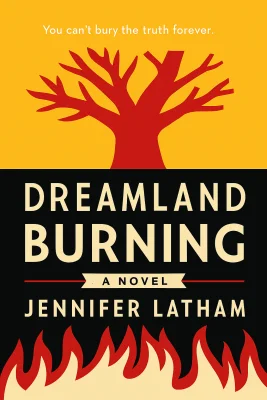
Dreamland Burning
Categories
Fiction, Audiobook, Mystery, Historical Fiction, Young Adult, Book Club, Historical, Contemporary, Realistic Fiction, Mystery Thriller
Content Type
Book
Binding
Hardcover
Year
2017
Publisher
Little, Brown Books for Young Readers
Language
English
ASIN
0316384933
ISBN
0316384933
ISBN13
9780316384933
File Download
PDF | EPUB
Dreamland Burning Plot Summary
Introduction
The construction saw stopped abruptly that Monday morning, followed by urgent Spanish voices and the sound of men fleeing. Seventeen-year-old Rowan Chase found herself staring into a hole beneath her family's servants' quarters, where a skeleton lay wrapped in oilcloth, its skull shattered by violence that had waited nearly a century to be discovered. Two timelines collide in this story of buried secrets. In 1921 Tulsa, William Tillman—a mixed-race teenager caught between his white father's expectations and his Osage mother's heritage—witnesses the racial tensions that will explode into one of America's deadliest race riots. A century later, Rowan's discovery of the skeleton sets her on a collision course with both past and present injustice, as she struggles to identify the victim while confronting the murder of Arvin Brightwater, a homeless black man killed in front of her eyes by a white driver's racist rage.
Chapter 1: Unearthed Secrets: A Skeleton Beneath the Floorboards
The hammering woke Rowan at seven sharp, construction workers arriving to renovate the servants' quarters behind her family's Maple Ridge mansion. She'd planned to sleep late on her first day of summer vacation, but the crew's sudden departure two minutes after starting work sent her padding outside in her pajamas to investigate. The hole they'd cut in the floor was small but revelatory. A human skull protruded from stiff oilcloth wrapping, turned sideways so she could see the empty eye socket and nasal cavity. Matted brownish hair clung to the bone, and patches of white substance—lime, she realized—crusted the fabric and surrounding dirt. Someone had tried to hide this body, to erase it completely. Her best friend James arrived within minutes of her panicked phone call, his usual pristine appearance abandoned for once. Together they peeled back the tarp, revealing a skeleton in bloodstained clothing with a pistol beside it. The gun bore eight carved notches on one side and the name "Maybelle" etched into the barrel. More disturbing was the brick they found nearby, its edge darkened with what looked suspiciously like hair and blood—a perfect match for the crater in the skull. When the police arrived with Rowan's mother, criminal defense attorney Isis Chase, the detectives seemed more interested in bureaucracy than investigation. The skeleton was old, they explained, probably dating back decades. Cold cases like this rarely merited serious resources. But forensic anthropologist Geneva Roop saw something they missed. After examining the remains, she delivered news that changed everything: the skeleton belonged to a young black man, murdered sometime around 1921. The same year Tulsa's Greenwood district had burned in one of America's worst race riots.
Chapter 2: Crossing Paths: William, Joseph, and the Birth of an Unlikely Alliance
In spring 1921, seventeen-year-old William Tillman worked in his father's Victory Victrola Shop on Main Street, caught between worlds in a segregated city. His white father Stanley served white customers in the front showroom while conducting secret after-hours business with black customers from Greenwood. William's mixed heritage—his mother Kathryn was Osage with valuable oil headrights—made him an outsider in both communities. The shop's most intriguing customer was eighteen-year-old Joseph Goodhope, a graduating senior from Booker T. Washington High School who appeared daily to admire the Model 110 Victrola in the window. When William finally approached him, Joseph revealed his plan to purchase the machine for his mother. What followed was a masterful negotiation where Joseph, armed with inside knowledge of wholesale pricing, talked Stanley into selling him a top-tier Victrola for less than cost—with payment terms no white customer would have received. Joseph's ten-year-old sister Ruby began visiting William during his Tuesday afternoon cleaning duties, slipping through the back door with roller skates slung over her shoulder and mischief in her eyes. She peppered him with questions about the receipt William had written to track Joseph's payments, worried their father would cheat her brother. Through Ruby's stories, William learned about Joseph's kindness, his failed prom invitation to Eliza Clark, and their mother's legendary peach pies at the Nut-n-Honey Café in Greenwood. These secret friendships flourished in the shadows of a city crackling with racial tension. Vernon Fish, the cigar shop owner next door, recruited for the newly arrived Ku Klux Klan while carrying a notched pistol he called Maybelle. He'd already used it to kill three black men, he boasted to William, and was eager to add more notches. As Joseph made his final payment on May 27th, just days before the riot, none of them knew how quickly their carefully built trust would be tested by fire and blood.
Chapter 3: Modern Wounds: Arvin's Death and Rowan's Awakening
Rowan's summer took an unexpected turn when her medical internship fell through and she ended up working reception at the Jackson Clinic in North Tulsa. The neighborhood felt foreign to her sheltered experience—poor, predominantly black, the kind of place her privileged classmates whispered about. But the clinic's tattooed receptionist Truman Atwell and compassionate Dr. Marguerite Woods welcomed her into a world where healthcare meant dignity for the forgotten. She met Arvin Brightwater on her first day, a homeless veteran with emphysema and diabetes who treated the clinic like a second home. His wheezy singing of "I Can't Get No Satisfaction" and gentle humor endeared him to staff and patients alike. When Rowan encountered him on a downtown street corner days later, surrounded by other rough-looking men, she felt a stab of fear and drove past without stopping—a moment of prejudice that would haunt her forever. The collision came on a Saturday morning as Rowan drove to pick up property records for her house. Swerving to avoid a cat, she stopped abruptly in the middle of the street. The pickup truck behind her slammed into her car, and its driver—Jerry Randall—exploded from his cab screaming about "you people" and their driving. When Arvin appeared and tried to help Rowan, Randall's anger turned murderous. "Goddamned nigger," he snarled, shoving Arvin backward into traffic. The Suburban hit Arvin with a sickening crunch, his body flying over the hood before crashing to the pavement. As sirens wailed and Rowan fought through her concussion, she watched Randall stare at Arvin's motionless form without a trace of remorse. When police arrived, Rowan told them exactly what she'd witnessed—Randall's racial slur, his deliberate push, the hate that had turned a traffic accident into murder. But she already sensed, from Detective Bland's skeptical expression, that her testimony might not matter. Some stories, it seemed, were easier to bury than others.
Chapter 4: Rising Tensions: Tulsa on the Edge of Violence
Memorial Day 1921 found William visiting family in Pawhuska while tension simmered in Tulsa's streets. The next morning brought news of an alleged assault in the Drexel Building elevator—nineteen-year-old Dick Rowland, a black shoe-shiner, accused of attacking white elevator operator Sarah Page. The Tulsa Tribune's inflammatory coverage fanned the flames, and by evening a lynch mob gathered at the courthouse where Sheriff McCullough held Rowland in protective custody. Vernon Fish arrived at the Victrola shop blazing with violent excitement, Maybelle prominent in his holster. He'd joined other Klansmen planning to "neuter" Rowland before hanging him, he declared, and demanded William join the hunt. When William hesitated, Vernon destroyed the shop's demonstration phonograph and threatened worse unless the boy fell in line. Cornered, William agreed to come—then fled to the back room where Joseph Goodhope waited in hiding. Joseph had been searching for Ruby since noon, when she'd vanished from school. Armed black men had gathered at the Dreamland Theatre to decide whether to protect Rowland themselves, and the streets were no place for a young girl. Despite the danger, William agreed to help find her. They loaded the injured Tylers—elderly neighbors beaten by white rioters—into William's truck along with a dead body they'd found dragged through the streets. At a roadblock manned by Klansmen, William spun desperate lies to save Joseph's life, claiming he was delivering prisoners to Vernon Fish for five dollars each. The deception worked, but barely. As they drove through burning Greenwood searching for Ruby, both boys understood they were witnessing the destruction of an entire community. The Goodhope house on Jasper Street was already ash and rubble, and Mrs. Goodhope had vanished into the chaos. They found Ruby safe in a church basement, but their reunion was brief. Vernon Fish had discovered their location through a party-line telephone conversation, and he was coming with murder on his mind.
Chapter 5: Connecting the Dots: The Search for J. Goodhope
A century later, Rowan channeled her grief over Arvin's death into solving the skeleton mystery. The district attorney had refused to prosecute Jerry Randall, ruling his actions self-defense despite Rowan's eyewitness testimony. Frustrated by a justice system that seemed to value some lives more than others, she threw herself into uncovering the identity of J. Goodhope, whose name appeared on the Victrola receipt found in the dead man's wallet. Property records revealed that William's parents, Stanley and Kathryn Tillman, had built Rowan's house in 1921 before selling it to her great-great-grandparents the following year. William himself had vanished from public records after the riot, his whereabouts unknown even when his father died in 1937. The 1921 Polk Directory listed Della Goodhope as a cook at the Nut-n-Honey Café on Greenwood Avenue, but no J. Goodhope appeared anywhere. Geneva's analysis of the pistol provided new leads. The weapon was a military-issue Colt M1911 originally assigned to Raymond Fisher of Decatur, Georgia, who'd gone AWOL in 1919 and never been found. His draft registration described him as a tall, light-skinned black man with blue eyes—someone who might have passed for white in the right circumstances. The holster bore initials "V.F." that appeared to have been altered from an original "R." James discovered Joseph Goodhope's picture in the 1921 Booker T. Washington High School yearbook, confirming he'd been a real person. But tracking down living descendants proved easier than expected. In Pawhuska, they found ninety-three-year-old Joe Tillman—William's son—dying in a nursing home but still sharp enough to recognize the Victrola receipt. Yes, he confirmed, he'd been named after Joseph Goodhope. Yes, his father had known both Joseph and Ruby well. And yes, someone had finally found the body his father had helped hide beneath the floorboards, carrying the secret to his deathbed as he'd sworn to do. Some truths, Joe explained, were too dangerous to tell. Even now.
Chapter 6: Night of Fire: Greenwood Burns as William Makes a Choice
The final confrontation came in the unfinished servants' quarters of the Tillmans' new Maple Ridge mansion. Vernon Fish had found Joseph and Ruby's hiding place, shooting Joseph in the shoulder and threatening worse. When William arrived, Vernon held Ruby at gunpoint while taunting her wounded brother, promising to rape the girl before killing them both. William's only weapon was desperation and a brick from the construction pile outside. Vernon's twisted psychology became clear as he boasted about his kills—not just the three notches on Maybelle, but his own mixed-race heritage that had driven him to prove his whiteness through violence. He was actually Virgil Fisher, a light-skinned man passing for white who'd murdered his darker brother back in Georgia rather than face the truth of his bloodline. His hatred of blacks was hatred of himself, projected onto anyone who reminded him of what he really was. William played to Vernon's ego, spinning lies about wanting to join the Junior Klan and learning to "handle Negroes properly." When Vernon demanded William prove himself by assaulting Ruby, the boy stalled desperately until Joseph, bleeding and barely conscious, managed to crawl close enough to pass him the brick. Together, they brought it down on Vernon's skull with enough force to shatter bone and silence his poison forever. As Vernon's body twitched its last, Ruby kicked free from beneath his weight while William held her close. Outside, Greenwood continued burning through the night—thirty-five blocks of homes, businesses, churches, and dreams reduced to ash. Mount Zion Baptist Church collapsed into flames. The Dreamland Theatre's marquee went dark. And in the servants' quarters of an unfinished mansion, three young people sat in stunned silence, knowing they'd killed a monster but changed nothing about the world that had created him. By morning, hundreds would be dead and thousands homeless, while the city began its decades-long campaign to forget the nightmare had ever happened.
Chapter 7: Truth's Legacy: Facing the Past to Change the Present
William Tillman's voice emerged from the wax cylinders Opal Johnson played for Rowan, telling his story in his own words across nearly a century of silence. After the riot, he'd moved to Kansas City and changed his name to Daniel, building a successful business selling Victrolas to customers of all races. He'd married Claire, the brave girl from the church basement, and lived a quiet life haunted by memories of that terrible night. Joseph Goodhope had survived his gunshot wound and gone on to medical school in Buffalo, where he drowned in 1926 trying to save a drowning child. Ruby lived to ninety-seven, working as a nurse and bringing peach pies to William's mother every June 1st—the anniversary of the riot—until Kathryn's death in 1976. She'd never spoken publicly about Vernon Fish's murder, keeping her promise to take the secret to her grave. The recordings revealed Vernon's true identity as Virgil Fisher, a mixed-race man whose self-hatred had turned him into the very monster he claimed to fight against. His body had been buried beneath the servants' quarters floor, quicklimed and forgotten, just another casualty of a night when white Tulsa had shown its true face. The skeleton Rowan found belonged to Raymond Fisher—Virgil's younger brother, whose dark skin had cost him his life when Vernon discovered the truth about their family. Armed with this knowledge and still grieving Arvin's death, Rowan made her choice. She convinced her mother to challenge the district attorney's decision, testifying about Jerry Randall's racial slur and deliberate violence despite knowing it would make her a target for harassment. Some stories demanded telling, no matter the cost. As she walked into the courthouse to face prosecutors and cameras, Rowan carried with her the weight of two murders a century apart—and the hope that speaking truth might finally break the cycle of buried shame and unpunished hate.
Summary
In the end, both timelines converge on the same hard truth: justice delayed is justice denied, but silence serves only those who benefit from buried secrets. William Tillman's courage in 1921 saved two lives but couldn't save a community from flames fueled by willful blindness. Rowan's determination in the present day to honor both Arvin's memory and the unknown victim beneath her floorboards represents a new generation's refusal to let history's wounds fester in darkness. The real power of these buried whispers lies not in the bones they leave behind, but in the voices they inspire to speak. Vernon Fish may have died believing his hatred made him white, but his true legacy is the courage he inadvertently fostered in those who refused to let evil have the last word. Some graves demand to be opened. Some stories insist on being told. And sometimes, when yesterday's bones finally speak to today's justice, the dead can teach the living how to break the chains that bind them both.
Best Quote
“I understand now that history only moves forward in a straight line when we learn from it. Otherwise it loops past the same mistakes over and over again,” ― Jennifer Latham, Dreamland Burning
Review Summary
Strengths: The book is praised for its exceptional writing style, which combines classic and contemporary elements with heart and humor. It effectively addresses heavy themes, particularly racial discrimination, and provides an eye-opening depiction of historical events like the 1921 Tulsa race riot. The narrative's ability to connect past and present through mystery is also highlighted. Weaknesses: Some parts of the story are described as unbelievable or exaggerated. Additionally, the book's point of view changes are criticized for being choppy and detracting from the reader's engagement with the characters. Overall: The book receives mixed reviews. While it is highly recommended for its informative and relevant content on racial issues, some readers found the narrative structure and character development lacking.
About Author

Jennifer Latham
Latham interrogates the complexities of human experience through young adult fiction that combines historical events with contemporary issues. Her work often revolves around characters facing significant social challenges, highlighting themes such as race and identity. This approach is evident in "Dreamland Burning", which explores the Tulsa Race Massacre of 1921 while intertwining a modern mystery. Latham's ability to build layered narratives comes from her diverse background, which includes roles as a school psychologist and autopsy assistant, contributing to her nuanced understanding of human psychology.\n\nHer writing method involves extensive research and a dedication to portraying flawed, compelling characters who navigate intricate storylines. Latham's commitment to accuracy and depth ensures that her books resonate with readers interested in exploring complex societal issues. This method is further reflected in "Scarlett Undercover", where a young detective unravels a tapestry of crime and family secrets in Tulsa. By incorporating elements of mystery and historical context, Latham invites readers to engage with the material on multiple levels, offering both entertainment and insight.\n\nThe impact of Latham's work is recognized through various awards and honors, reflecting her ability to connect with a wide audience. Readers who appreciate rich historical detail and strong character development will find her books particularly engaging. Her literary contributions offer more than just stories; they provide a framework for understanding the interplay between past and present, making her bio a testament to her influence as an author in the young adult genre.
Read moreDownload PDF & EPUB
To save this Black List summary for later, download the free PDF and EPUB. You can print it out, or read offline at your convenience.
Dreamland Burning
by Jennifer Latham
