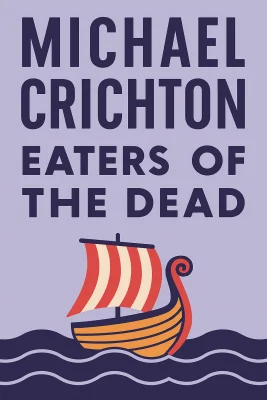
Eaters of the Dead
Categories
Fiction, Science Fiction, Horror, Historical Fiction, Thriller, Fantasy, Mythology, Historical, Novels, Adventure
Content Type
Book
Binding
Paperback
Year
2005
Publisher
Avon Books
Language
English
ASIN
B001VESA56
ISBN
0060891564
ISBN13
9780060891565
File Download
PDF | EPUB
Eaters of the Dead Plot Summary
Introduction
The year was 921 A.D. when Ahmad Ibn Fadlan, an Arab ambassador from Baghdad, found himself dragged into a nightmare that would haunt the frozen lands of the North. What began as a diplomatic mission to the Bulgars became something far darker when he encountered a band of Norse warriors led by the formidable Buliwyf. The Vikings needed thirteen men for a sacred quest, and by the cruel mathematics of fate, Ibn Fadlan became the thirteenth—the only one who was not a Northman. In the mist-shrouded kingdoms beyond civilization's reach, an ancient terror had awakened. The wendol—the eaters of the dead—emerged from their caves to feast on human flesh and leave behind only scattered bones and the stench of death. These creatures moved like shadows in the fog, striking at night and vanishing before dawn. King Rothgar's great hall stood besieged, his warriors dying one by one against an enemy that seemed more beast than man. Only Buliwyf and his chosen warriors dared face the darkness, carrying with them an Arab scribe who would bear witness to horrors beyond imagination.
Chapter 1: The Ambassador's Abduction: Ibn Fadlan Joins the Northmen
The cold bit through Ibn Fadlan's robes like a living thing as he stood among the giants of the North. These Norsemen towered above him, pale as winter snow, their bodies marked with intricate tattoos that told stories of violence and glory. Their leader, Buliwyf, possessed the bearing of a king and the eyes of a killer. When he spoke, his voice carried the weight of destiny. The angel of death, a withered crone with the beard of a man, cast her bones upon the frozen ground. Her ancient fingers traced patterns in the dirt as she muttered incantations to gods whose names made strong men tremble. The bones spoke of danger, of a quest that would demand thirteen warriors. Twelve Northmen stepped forward without hesitation, but the prophecy required one more—one who was not of their blood. Ibn Fadlan protested his unfitness for war, his obligations to the Caliph, his complete lack of martial skill. The Vikings laughed at his pleas. Herger, the youngest of the warriors and the only one who spoke Latin, clapped the Arab on the shoulder with enough force to rattle his bones. "The gods have chosen," he said with dark amusement. "You are the thirteenth man, whether you will it or not." As their ship pulled away from the riverbank, Ibn Fadlan watched his own mission disappear behind them. The delegation to the Bulgar king would continue without him, while he sailed north into lands where the sun barely set and ancient evils stirred in the mist. Buliwyf stood at the prow like a carved figurehead, his great sword Runding gleaming in the pale light. Behind them lay civilization; ahead waited only darkness and the promise of death.
Chapter 2: Journey to the North: Sailing Through Unknown Realms
The ship cut through waters dark as blood, carrying them past settlements that grew smaller and more primitive with each passing day. Ibn Fadlan huddled in his furs, his breath forming clouds in the bitter air. The Northmen seemed immune to the cold, their voices rising in songs of battle and glory even as ice formed on the rigging. Herger taught him words in the Norse tongue, laughing as the Arab's civilized tongue struggled with the harsh consonants. "You speak like a woman," he said without malice. "But women can kill too, when pressed." The lessons came with stories—tales of sea monsters and dragons, of warriors who died laughing and gods who demanded blood sacrifice. When the great whales surfaced around their vessel, Ibn Fadlan nearly fainted with terror. The creatures rose from the depths like living islands, their massive forms dwarfing the ship. Water spouted from their blowholes in fountains that caught the sunlight like liquid silver. The Northmen shouted prayers to Odin, not in fear but in greeting. They recognized the whales as omens, signs that they sailed in waters where the old powers still held sway. The coastline changed as they traveled north, becoming a wall of gray cliffs that seemed to scratch at the belly of the sky. Forests of pine stretched inland, dark and impenetrable, while mist clung to the valleys like the breath of sleeping giants. This was the edge of the world, where maps ended and nightmares began. Buliwyf stood silent at the bow, his pale eyes fixed on the horizon, already seeing the battles that lay ahead.
Chapter 3: Kingdom Under Siege: The Horror of the Wendol
King Rothgar's great hall of Hurot perched on the cliffs like a golden jewel, its carved beams gleaming in the weak northern sun. But the splendor was an illusion. As Ibn Fadlan climbed the stone-paved road, he saw the first signs of horror—an ox head mounted on a stake, its dead eyes staring blindly at the sky. The Northmen fell silent at the sight, their hands moving instinctively to their weapons. The farmstead beyond the hall told a story written in blood and torn flesh. Inside the crude dwelling, Ibn Fadlan discovered carnage that sent him retching into the mud. Bodies lay scattered like discarded toys, limbs separated from torsos with surgical precision. Worse still, the soft flesh had been gnawed by teeth that seemed too large for any human mouth. The heads were missing entirely, carried off like trophies by creatures that moved in the darkness. King Rothgar received them in his magnificent hall, but the old man's eyes held the hollow stare of the defeated. His warriors were gray-bearded ancients or crippled veterans, the young and strong long since devoured by the mist. Only his son Wiglif remained, a fox-faced youth whose loyalty seemed as thin as morning frost. The king's voice cracked as he described the terror that had befallen his lands. The wendol came with the fog, he explained, creatures from the oldest nightmares of his people. They struck without warning, leaving behind only blood and bones. No blade seemed to bite them, no fire drive them away. They took the heads for reasons known only to themselves, and the living flesh for their unholy feast. Buliwyf listened in silence, his massive frame tense as a drawn bowstring. When the king finished speaking, the Northman's reply was simple: "We shall meet them in battle."
Chapter 4: Battles in Darkness: Confronting the Mist Monsters
The mist rolled down from the hills like a living thing, fingers of vapor reaching between the buildings with supernatural purpose. In the great hall of Hurot, Buliwyf and his warriors made their preparations as the fog thickened outside. They extinguished the torches, letting only the faintest firelight flicker across the stone floor. Ibn Fadlan gripped his sword with sweating palms, listening to the terrible sounds that began to echo through the night. First came the grunting, low and bestial, like the rooting of giant swine. The stench followed—a reek of rotting meat and ancient death that made his eyes water. The sounds circled the hall, growing louder and more excited, until Ibn Fadlan felt certain they were surrounded by an army of demons. Still the warriors waited, lying motionless among the sleeping forms of Rothgar's men. The attack, when it came, shattered the great doors like kindling. Black shapes poured through the breach, man-like but wrong in every proportion. They moved with inhuman speed, their bodies covered in coarse hair that glistened with moisture. Their eyes burned like coals in skulls too large for mortal men, and their teeth gleamed white in the darkness. Ibn Fadlan found himself face to face with nightmare made flesh—a wendol warrior whose breath reeked of human meat. The battle raged in chaos and shadow, warrior cries mixing with bestial howls. Buliwyf's great sword Runding sang through the air, cleaving through fur and flesh with each mighty stroke. When the mist finally retreated, three of his warriors lay dead, their heads taken by the enemy. But Buliwyf held aloft a trophy of his own—a severed arm, black with hair and ending in claws like iron spikes. The wendol had been wounded, but they lived still. The real war was just beginning.
Chapter 5: The Mother of Monsters: Descent into the Thunder Caves
The cliffs plunged into the sea like the edge of the world, waves crashing against rocks hundreds of feet below with the sound of constant thunder. Buliwyf stood at the precipice, holding the sealskin ropes that would carry them into the abyss. The thunder caves lay somewhere in that maze of stone and spray, hidden chambers where the wendol mother held court over her cannibal children. Ibn Fadlan's hands shook as the Norse warriors lowered him down the cliff face. The rope burned through his gloves while the wind tried to dash him against the rocks. Below, the ocean waited like a hungry mouth, its waves tall as houses and white with foam. When he finally reached the narrow ledge at the bottom, Buliwyf was already preparing for the next horror—swimming through the surf into the caves themselves. The water was so cold it stopped his heart for a moment, then sent fire through his veins as they fought the crushing waves. Buliwyf led them through passages carved by centuries of tidal action, holding his breath until his lungs burned while the current tried to sweep them out to sea. When they finally surfaced in the breathing chamber of the caves, Ibn Fadlan gasped air that tasted of blood and ancient darkness. The wendol mother sat in her throne of carved bone, surrounded by the skulls of her victims. Serpents writhed around her withered form like living jewelry, their scales catching the firelight as they tasted the air with forked tongues. She was ancient beyond measure, her face a map of cruelties that stretched back to the dawn of time. When Buliwyf charged, ignoring the snakes that struck at his flesh, she screamed with a voice that seemed to shake the very stones. The dagger that finally pierced her heart ended a reign of terror older than memory itself.
Chapter 6: Buliwyf's Last Stand: The Hero's Sacrifice
The silver pin protruding from Buliwyf's belly gleamed with each labored breath. The wendol mother's final gift was working its poison through his veins, turning his skin gray and filling his eyes with the fever-light of approaching death. Yet he stood before his warriors and smiled, insisting on one last celebration in the hall of King Rothgar. The mead flowed like water, and the great warrior laughed as if death were merely another guest at the feast. But the wendol were not finished. Their mother's death scream had summoned them from every corner of the darklands, and they came riding through the mist like the Wild Hunt itself. Horses thundered across the plain while their riders carried torches that burned with unnatural flame. The glowworm dragon had come for its final vengeance, and Rothgar's weakened defenses could not hold against such fury. As dawn approached, Buliwyf rose from his deathbed like a revenant. Two ravens perched upon his shoulders—the messengers of Odin come to claim their chosen warrior. He walked past the broken fortifications with measured steps, his great sword Runding held ready for one last battle. The sight of him struck fear into the hearts of his enemies and lit fire in the souls of his men. The final battle was a symphony of steel and blood, fought in the growing light of morning. Buliwyf carved through the wendol ranks like a force of nature, his blade never pausing, never faltering. When at last he fell, it was with a dozen enemy wounds upon his body and the satisfaction of victory in his dying eyes. The sun broke through the mist, and the wendol were no more. Their reign of terror had ended with the death of their greatest enemy, a hero who chose to die as he had lived—sword in hand and fear unknown.
Chapter 7: Legacy of the Warriors: Return from the Land of Terror
The funeral pyre burned like a second sun against the gray northern sky. Buliwyf lay upon his ship of the dead, surrounded by treasures and weapons for his journey to Valhalla. Beside him rested the slave girl who had chosen to die with her master, her face peaceful in death as she dreamed of reunion in the halls of the gods. Ibn Fadlan helped pull the cord that ended her earthly suffering, no longer the soft ambassador who had been dragged unwilling into this adventure. King Rothgar aged a decade in the space of that final battle. His son Wiglif had shown his cowardice for all to see, running from the fight when brave men made their stand. The shame of it broke the old king's spirit as surely as any blade. He offered Ibn Fadlan land, gold, slaves—anything to make him stay and help rebuild the kingdom. But the Arab's heart yearned for the warm lands of his birth, for the civilization he had learned to appreciate only after witnessing its absence. Herger stood upon the cliffs as they prepared the ship for departure, his battle-scarred face showing an emotion the Northmen rarely revealed. "We shall pray to our gods for your safe journey," he promised, and Ibn Fadlan knew the words were meant with all the sincerity of a warrior's heart. They had shared blood and battle, terror and triumph. The bond between them transcended the differences of faith and culture that had once seemed insurmountable. As the black ship carried him away from the shores of Venden, Ibn Fadlan looked back one last time at the gleaming roof of Hurot Hall. The land was at peace now, the ancient evil driven back into the darkness where it belonged. But he carried with him memories that would never fade—of mist-wrapped horrors and heroes who faced them without flinching, of friendship forged in the crucible of shared terror, and of his own transformation from civilized observer to hardened survivor.
Summary
The saga of the wendol ended as such tales always do—with heroes dead and evil banished, leaving only scars and stories to mark their passing. Ibn Fadlan returned to his world of books and diplomacy, but he was no longer the soft courtier who had first encountered the giants of the North. The ice and blood of that terrible journey had forged something harder in him, a core of steel that would serve him well in whatever trials lay ahead. In the end, the greatest monsters are not the ones that lurk in caves or prowl through mist-shrouded forests. They are the fears we carry within ourselves, the doubts that whisper we are not strong enough, brave enough, worthy enough to face the darkness. Buliwyf and his warriors knew this truth, and in their knowing found the strength to stand against odds that would have broken lesser men. Their legacy lives not in gold or monuments, but in the simple fact that evil, no matter how ancient or terrible, can be defeated by those willing to pay the ultimate price. The mist may return someday, but it will find the light of courage waiting to drive it back into the shadows where all nightmares belong.
Best Quote
“Praise not the day until evening has come, a woman until she is burnt, a sword until it is tried, a maiden until she is married, ice until it has been crossed, beer until it has been drunk.” ― Michael Crichton, Eaters of the Dead
Review Summary
Strengths: The review highlights Michael Crichton's storytelling prowess, particularly his ability to transform the epic "Beowulf" into an engaging narrative. The book is praised for its unique format, resembling a travel journal, and for making the original epic more accessible and entertaining. The use of a historical figure, Ibn Fadlan, as the narrator adds authenticity and depth. Weaknesses: The review notes a lack of a conclusive ending, which may leave readers unsatisfied. Additionally, it suggests that fans of Crichton's mainstream works might find this book different in style and content. Overall: The review conveys a positive sentiment, recommending the book to lovers of historical fiction and those interested in a fresh take on "Beowulf." However, it advises potential readers to be aware of its distinct narrative style and abrupt ending.
About Author

Michael Crichton
Crichton extends the boundaries of storytelling through meticulous scientific research and a fast-paced narrative style, drawing readers into worlds where science and suspense intertwine. His dedication to scientific accuracy and engaging plots is evident in his diverse body of work, including novels written under pseudonyms like John Lange and Michael Douglas. His early book, "A Case of Need", showcases this blend of medical expertise and thrilling plotlines, earning him the Edgar Award and setting the stage for a prolific career. Crichton's writing consistently challenges readers to explore complex themes of technology, ethics, and human nature.\n\nFor Crichton, the method of embedding factual scientific elements within his narratives not only heightened the realism but also educated his audience, making his novels both entertaining and informative. He leveraged his medical background, having graduated from Harvard Medical School, to craft stories that were both credible and compelling. Readers benefit from his ability to simplify intricate scientific concepts without diluting their complexity, fostering a deeper understanding of the possible implications of scientific advancements. Therefore, his work remains highly relevant to readers interested in science fiction and thriller genres.\n\nCrichton's impact on literature is undeniable, with over 200 million books sold globally and translations in thirty-eight languages. His narratives have transcended the written word, with thirteen of his books adapted into films, expanding his reach and influence. The author’s unique approach to weaving science into fiction has left a lasting legacy, appealing to a wide range of audiences who appreciate the fusion of factual science with imaginative storytelling. This short bio underscores Crichton's role in shaping the modern landscape of science fiction and thriller novels, illustrating why his works continue to captivate and inform readers worldwide.
Read moreDownload PDF & EPUB
To save this Black List summary for later, download the free PDF and EPUB. You can print it out, or read offline at your convenience.
Eaters of the Dead
by Michael Crichton
