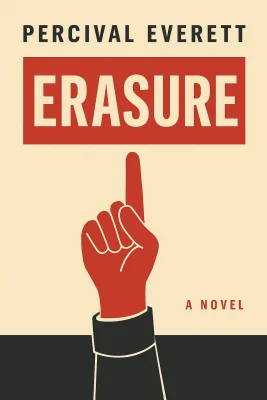
Erasure
Categories
Fiction, Audiobook, Humor, Book Club, African American, Contemporary, Novels, Race, Literary Fiction, Satire
Content Type
Book
Binding
Paperback
Year
2002
Publisher
Hyperion
Language
English
ASIN
0786888156
ISBN
0786888156
ISBN13
9780786888153
File Download
PDF | EPUB
Erasure Plot Summary
Introduction
In the stifling heat of a Washington summer, Thelonious "Monk" Ellison sat before his father's old typewriter, his hands trembling with rage and desperation. The accomplished novelist, who had spent years crafting experimental fiction that nobody read, was about to commit an act of literary suicide that would make him rich beyond his wildest dreams. On the desk beside him lay a copy of "We's Lives In Da Ghetto," a bestselling novel written in crude dialect that made his stomach turn. The book's success represented everything wrong with American publishing's expectations of Black literature. As sweat beaded on his forehead, Monk began typing the words that would create his most successful and most shameful work: "My Pafology" by Stagg R. Leigh. He wrote in a fury, channeling every stereotype, every offensive caricature, every degrading expectation that publishers had of African American writers. What began as an angry parody would soon spiral into a nightmare of identity, forcing Monk to confront the impossible choice between artistic integrity and financial survival, all while his family crumbled around him and his mother's mind slowly disappeared into the fog of dementia.
Chapter 1: The Intellectual Adrift: Monk's Struggle with Literary Identity
The rejection letter arrived on the same day Monk discovered his latest novel gathering dust in the African American Studies section of a chain bookstore. Standing in the fluorescent-lit aisle, he stared at his experimental retelling of Aeschylus' "The Persians" shelved between street fiction and memoirs of urban struggle. The placement felt like a physical blow—his complex literary work reduced to nothing more than the color of his author photo. Monk Ellison lived in the suffocating space between worlds. Harvard-educated, erudite, and devoted to high literary art, he found himself constantly defending his blackness to some and his intellectualism to others. His novels, dense with philosophical inquiry and formal innovation, earned critical respect but sold poorly. Publishers wanted something "more authentic," editors suggested he write about "the real Black experience," and readers seemed confused by his refusal to conform to expected narratives. At a party in New York, a literary agent had cornered him near the wine table. "You could sell many books if you'd forget about writing retellings of Euripides and settle down to write the true, gritty real stories of black life," the man said, his breath reeking of ambition and alcohol. The agent's words echoed in Monk's mind as he returned home to his teaching position at UCLA, where he lectured on Russian formalism to students who seemed more interested in their phones than literature. The irony was inescapable: the more seriously Monk took his craft, the less seriously the literary world took him. His experimental fiction was praised as "challenging" and "intellectually rigorous" but dismissed as commercially unviable. Meanwhile, books like "We's Lives In Da Ghetto" topped bestseller lists, their authors hailed as authentic voices speaking truth about the African American experience. Monk saw only exploitation dressed up as social consciousness, and his anger grew with each passing day.
Chapter 2: Creating the Monster: Birth of Stagg R. Leigh and 'My Pafology'
The typewriter keys clicked with violent precision as Monk channeled his rage into the most offensive piece of writing he could imagine. He created Van Go Jenkins, a nineteen-year-old with four children by four different women, no job, no ambition, and no redeeming qualities beyond his capacity for violence and sexual exploitation. The character spoke in an exaggerated dialect that made Monk wince with every sentence, but he pressed on, driven by fury at a publishing industry that seemed to crave such degrading portrayals. "Mama look at me and Tardreece and she call us 'human slough,'" Monk typed, his fingers moving faster as the story took shape. Van Go would stab his mother in a dream, rape his baby's mother, murder a Korean shopkeeper, and end up as the protagonist of a media spectacle. Every page dripped with the kind of urban pathology that white readers seemed to expect from Black authors, every scene calculated to confirm their worst stereotypes while providing them with the comfortable distance of literary consumption. Monk wrote under the pseudonym Stagg R. Leigh, crafting a biography for his fictional alter ego: a recently released ex-convict living alone in Washington, D.C., too dangerous and unpredictable for public appearances. The character of Stagg became a shield behind which Monk could hide his shame, a mask that would allow him to profit from his own self-destruction. He told his agent Yul to submit the manuscript without any qualifiers, to let it stand or fall on its own grotesque merits. Within days, the response came: Random House offered six hundred thousand dollars. The editor called it "magnificently raw and honest," predicting it would be read in high schools thirty years hence. Monk felt simultaneously vindicated and destroyed. His parody had succeeded too well, revealing not just the bankruptcy of publishing expectations but his own willingness to profit from them. Stagg R. Leigh was born, and with him, Monk began to die.
Chapter 3: Family Fractures: Losing Mother to Dementia, Sister to Violence
The phone call came in the morning, Lorraine's voice trembling with words Monk couldn't initially process: "Dr. Lisa is dead." His sister, the dedicated physician who ran a women's clinic in Southeast Washington, had been shot by an anti-abortion zealot while treating patients. The bullet found her through a window, ending a life devoted to caring for women who had nowhere else to turn. Monk drove from California to D.C. in a haze of grief, arriving to find his family fragmenting like glass hit by a hammer. His mother Agnes had always been the family's center of gravity, but now she was slipping away into the fog of early-stage dementia. One morning he found her standing in a boat in the middle of their tidal pond, arms at her sides, staring into space with vacant eyes. She had rowed herself out during the night and couldn't remember how or why. When Monk swam out to retrieve her, she swung an oar at his head, not recognizing her youngest son in the dawn light. The episodes multiplied with terrifying frequency. Agnes would lock herself in rooms, forget Lorraine's name after sixty years of service, point his father's loaded pistol at imagined intruders. The doctor's diagnosis was matter-of-fact and merciless: early-onset Alzheimer's, progressing rapidly, with no treatment available. Agnes would need constant supervision, then institutional care, then would simply fade away until nothing remained but a body that had forgotten how to die. Meanwhile, his brother Bill called from Arizona with his own catastrophic news. After years of hiding his sexuality behind a facade of heterosexual marriage, he had finally admitted the truth to his wife. She responded by taking their children, the house, and most of his money, leaving him professionally and personally destroyed in a state that offered little tolerance for gay men. Monk found himself alone with his mother and Lorraine, the last functioning member of a family that seemed determined to tear itself apart. The money from "My Pafology" would at least ensure Agnes received proper care, even if it came at the cost of his soul.
Chapter 4: The Parody's Triumph: When Mockery Becomes Celebrated Truth
The book that was supposed to be called "My Pafology" hit the shelves as "Fuck" after Monk insisted on the more provocative title, his final act of literary terrorism against a system he despised. The novel shot to number one on bestseller lists, was selected for Kenya Dunston's book club, and earned praise from critics who called it "the most important African American novel in years." Movie rights sold for three million dollars to a Hollywood producer who saw dollar signs in the story of urban decay and violence. Monk watched in horror as his parody was embraced as authentic art. Reviewers praised its "haunting verisimilitude" and "raw honesty," comparing it favorably to Richard Wright and Ralph Ellison. Book clubs across the country selected it for discussion, white readers nodding sagely as they consumed what they believed to be genuine insights into "the black experience." The more successful the book became, the more Monk felt like he was suffocating under the weight of his own creation. Academic conferences dissected the novel's social significance while Monk sat in faculty meetings listening to colleagues praise Stagg R. Leigh's unflinching portrayal of urban pathology. The book appeared on syllabi, was translated into multiple languages, and spawned countless think pieces about authenticity in literature. Critics who had dismissed Monk's previous work as "too intellectual" celebrated Fuck as a masterpiece of street-level realism, proof that great art could emerge from society's most marginalized voices. The irony was so complete it felt scripted by a malevolent god. Monk's career-long struggle against the pigeonholing of Black literature had culminated in the creation of the most pigeonholed Black novel imaginable, and it was making him rich beyond his wildest dreams. Every dollar earned felt like blood money, every positive review like a nail in the coffin of his artistic integrity. He had set out to expose the racism of literary expectations and instead had fed it with the most successful work of his career.
Chapter 5: Dual Existence: Living Between Monk and Stagg
Maintaining the fiction of Stagg R. Leigh became a full-time performance that threatened to consume Monk's identity entirely. He spoke to his editor in character, adopting the voice of a recently released ex-convict who was "painfully, pathologically shy" and communicated only through his agent. When Hollywood producer Wiley Morgenstein insisted on a meeting, Monk donned dark sunglasses and a fake beard, speaking in monosyllables while letting the man's imagination fill in the gaps about his dangerous past. The performance required constant vigilance. Monk had to remember Stagg's supposed biography, his prison record, his violent tendencies, his isolation from mainstream society. During lunch with Morgenstein, he claimed to have killed a man with "the leather awl of a Swiss army knife," watching the producer's face shift from skepticism to fear to barely contained excitement. The more dangerous Stagg seemed, the more authentic his novel appeared, and the more money everyone made. At home, Monk struggled with the psychological toll of his double life. He visited his mother daily at the nursing home, watching her fade into confusion while his alter ego conquered the literary world. Agnes sometimes recognized him, sometimes called him by his father's name, sometimes stared through him as if he were invisible. The contrast between his real life—caring for a dying woman, grieving his murdered sister, worrying about mounting medical bills—and his fictional success felt like living in two different universes simultaneously. The most surreal moment came when he was selected as a judge for the National Book Award, putting him in the position of potentially giving his own pseudonymous work the most prestigious prize in American literature. Sitting in committee meetings, listening to his fellow judges praise Fuck's "gritty authenticity" and "important social message," Monk felt like he was trapped in an elaborate practical joke with no punchline, only escalating absurdity that threatened to expose him as both fraud and victim of his own success.
Chapter 6: Blood Ties: Discovering Father's Hidden Legacy
In his father's study, Monk discovered a gray box containing letters that would shatter his understanding of his family's history. The correspondence revealed a decades-long love affair between Dr. Benjamin Ellison and Fiona, a British nurse he had met during the Korean War. The relationship had produced a daughter, Gretchen, who had been living somewhere in America while Monk grew up believing he had only two siblings. The letters painted a picture of impossible love constrained by social taboos of the 1950s. Benjamin, already married with children, had maintained a secret correspondence with Fiona until she disappeared to protect his reputation and family. Her final letter announced the birth of their daughter and her decision to vanish forever, leaving Benjamin with only memories and the hope that someday he might find his lost child. The discovery explained years of subtle tension in his parents' marriage, his mother's occasional melancholy, his father's mysterious trips to New York. Using clues from the correspondence, Monk tracked down Gretchen Hanley in a run-down Manhattan apartment where she lived in poverty with her granddaughter. The meeting was awkward and painful—she was bitter about a lifetime of abandonment, suspicious of his motives, resentful of the privileges his legitimate status had afforded him. When he offered her a check for one hundred thousand dollars from his "My Pafology" earnings, she accepted it with the same mixture of gratitude and contempt that seemed to define all his relationships. The discovery of his half-sister added another layer of guilt to Monk's already complicated existence. Here was a woman whose father had loved her but never acknowledged her, whose existence had been erased from family history, whose struggles with poverty and marginalization made her more authentically "street" than any of the characters in his bestselling novel. The money he gave her was stained with the same ethical compromises that had made it possible, another transaction in a life that seemed increasingly defined by moral ambiguity and self-loathing.
Chapter 7: The Final Performance: Confronting the Mirror at the Award Ceremony
The National Book Award ceremony became Monk's moment of reckoning, the culmination of months of living as both judge and judged, creator and creation, artist and fraud. Seated among corporate executives and literary luminaries, he watched his fellow judges prepare to crown Fuck as the year's best work of fiction. Their praise for the novel's "important social message" and "authentic voice" rang in his ears as he contemplated the final act of his elaborate deception. When Wilson Harnet announced Stagg R. Leigh as the winner, the audience erupted in applause, cameras flashed, and everyone waited for the mysterious author to appear. Instead, Monk stood and began walking through what seemed like sand toward the podium, his legs heavy with the weight of his accumulated lies. The room around him filled with faces from his past and present—his dead sister, his dying mother, the literary critics who had dismissed his earlier work, the publishers who had pigeonholed him based on his skin color. At the microphone, with television cameras broadcasting to millions, Monk found himself unable to maintain the performance any longer. The words that came from his mouth were fragments of literature he loved, quotations from novels that had shaped his understanding of art and life, confessions that made no sense to his bewildered audience. He stared directly into the camera lens and spoke his truth to a world that had forced him to lie: "The roses will forever smell beautiful." The breakdown was both liberation and destruction, the moment when the mask finally slipped and revealed the man beneath. Monk had spent his career fighting against literary stereotypes only to create the most successful stereotype of all, and now he stood exposed as both perpetrator and victim of a system that reduced human complexity to marketable categories. His final words to the television audience were perfectly chosen: "Egads, I'm on television"—a phrase that captured both his sophisticated education and his complete alienation from the world that had created him.
Summary
Monk's journey from respected but ignored literary artist to bestselling pseudonymous author represents more than personal tragedy—it reveals the impossible choices facing creative people in a culture that values marketability over truth. His creation of Stagg R. Leigh and the novel "Fuck" was simultaneously an act of rebellion and submission, a protest against literary racism that ended up feeding the very system it was meant to expose. The success of his parody demonstrated how readily the publishing world would embrace the most degrading stereotypes if they were packaged as authentic art. The disintegration of his family—his sister's murder, his mother's dementia, his brother's exile—paralleled the erosion of his artistic identity until he became a stranger to himself. In trying to expose the masks that society forced upon him, Monk created the most successful mask of all, one that trapped him in a performance he could never escape. His story suggests that in a world determined to reduce human complexity to simple categories, the only authentic act may be the acknowledgment of one's own complicity in the lies that sustain us all. The roses will forever smell beautiful, even in a garden built on graves.
Best Quote
“The world demands that you introduce yourself twice, first as you are, and second as you are told to be.” ― Percival Everett, Erasure
Review Summary
Strengths: The review provides a critical examination of cultural prejudices, highlighting the underlying fear of difference and the societal tendency to marginalize those who do not fit into predefined categories. It challenges the notion that such biases are natural or acceptable, offering a thought-provoking perspective on the nature of prejudice. Weaknesses: The review does not explicitly mention any weaknesses in the book itself, focusing instead on the broader societal issues it addresses. There is a lack of specific examples or references to the book's content, which might limit the reader's understanding of its arguments. Overall: The review presents a compelling critique of societal prejudices, emphasizing the fear of non-conformity. It suggests that the book offers valuable insights into these issues, making it a recommended read for those interested in cultural and social dynamics.
About Author

Percival Everett
Everett delves into the complexities of human experience through a diverse and experimental lens, reflecting a commitment to exploring themes that intrigue him. His work often addresses issues of race, identity, and societal norms, employing satire and irony to critique expectations and challenge conventional narratives. With more than 30 books, including "Suder" and "Erasure," Everett frequently bends genres, ranging from philosophical explorations to sharp satires of the publishing industry. This approach underlines his view that writing should mirror the vastness of human interests, therefore allowing him to weave intricate stories that engage readers on multiple levels.\n\nReaders benefit from Everett's work through its philosophical depth and humor-infused social commentary, which offers both entertainment and introspection. His teaching philosophy parallels his writing; as a professor of English and Distinguished Professor at the University of Southern California, Everett emphasizes learning as a two-way street, gaining insights from his students as much as they gain from him. This mutual learning enriches his literary output, making his books particularly valuable for readers interested in narratives that push the boundaries of traditional storytelling while delving into the moral ambiguities of life.\n\nHis contribution to literature has not gone unnoticed, earning significant recognition such as the Pulitzer Prize for Fiction for his book "James" and the Hurston/Wright Legacy Award for "Erasure." Such accolades reflect Everett’s status as a dynamic force in American fiction, celebrated for both his innovative style and his ability to tackle profound subjects with wit and wisdom. His impact extends beyond individual works, as his career and methods continue to influence new generations of writers and readers alike.
Read moreDownload PDF & EPUB
To save this Black List summary for later, download the free PDF and EPUB. You can print it out, or read offline at your convenience.
Erasure
by Percival Everett
