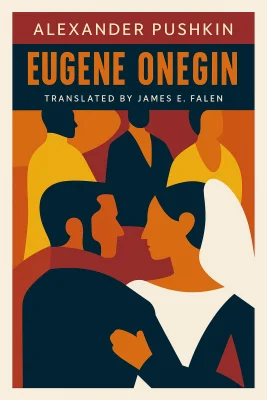
Eugene Onegin
Categories
Fiction, Classics, Poetry, Romance, Literature, School, 19th Century, Russia, Novels, Russian Literature
Content Type
Book
Binding
Paperback
Year
1998
Publisher
Oxford University Press
Language
English
File Download
PDF | EPUB
Eugene Onegin Plot Summary
Introduction
# Eugene Onegin: A Tale of Hearts Out of Time In the frost-bitten drawing rooms of nineteenth-century Russia, where crystal chandeliers cast shadows on powdered faces and silk gowns rustle with whispered secrets, a young nobleman named Eugene Onegin moves through society like a ghost among the living. Bored by endless soirées and cynical about love before his twenty-sixth birthday, he flees St. Petersburg's glittering cage for his uncle's country estate, seeking escape from a life that has already exhausted its pleasures. But the provinces hold their own dangers. There, fate weaves a web that will entangle him with the Larin family—particularly Tatyana, a dreamy seventeen-year-old who reads French novels by candlelight and believes in love's transformative power. What begins as a simple friendship with the romantic poet Vladimir Lensky spirals into tragedy when hearts collide with pride, passion meets cold rejection, and honor demands blood in the snow. Years later, when the players meet again in Moscow's high society, the roles have reversed—but some wounds cut too deep for redemption, and some chances, once lost, exist only in the realm of what might have been.
Chapter 1: The Jaded Aristocrat's Escape to Rural Russia
Eugene Onegin had perfected the art of appearing fascinated while feeling nothing at all. In St. Petersburg's salons, he could discuss philosophy with ministers and fashion with their wives, all while his mind wandered to more pressing concerns—the cut of his coat, the quality of his manicure, whether his English saddles needed polishing. At twenty-four, he had already drained society's cup to its dregs: theater boxes, gambling tables, and the fleeting affections of married women who whispered his name behind painted fans. The letter announcing his uncle's death arrived like salvation wrapped in black-bordered paper. An inheritance meant escape—from creditors, from tedious obligations, from the suffocating routine of balls and conquests that had consumed his youth. He packed his French novels and English riding gear, bid farewell to his debts, and set off for the countryside with the weary satisfaction of a man fleeing his own shadow. The estate sprawled across endless fields of grain, populated by peasants who bowed and scraped with practiced servility. Onegin installed himself in his uncle's study, surrounded by dusty books and faded portraits of ancestors who stared down with disapproving eyes. He attempted reforms—replacing forced labor with lighter rents—but even this gesture toward enlightenment failed to lift the weight pressing on his chest. Rural boredom proved no improvement over urban ennui. Days blurred into weeks as Onegin wandered his property like a prisoner in an elegant jail. The local gentry bored him with their provincial concerns, their daughters simpered when he appeared at social gatherings, and their sons treated him with the mixture of envy and resentment reserved for those who possessed everything they desired. It was during one of his solitary walks along the river that salvation appeared in an unexpected form. Vladimir Lensky emerged from the morning mist like a figure from a romantic painting—young, passionate, his dark curls falling to his shoulders as he recited German poetry to the indifferent sky. Here was someone who still believed in the very things that had once stirred Onegin's heart before cynicism claimed him: honor, friendship, the redemptive power of pure love.
Chapter 2: Unlikely Bonds: Friendship with the Romantic Poet Lensky
Despite their fundamental differences, the two men forged an unlikely friendship. Lensky, barely eighteen and fresh from German universities, spoke of Kant and Schiller with the fervor of a true believer. His eyes burned with inspiration as he shared his verses, his voice trembling with emotion as he described his beloved Olga Larin. Onegin listened with the indulgent smile of one who had loved and lost faith in love itself, finding in his friend's enthusiasm a bittersweet reminder of his own vanished youth. They spent long summer evenings by the water, Lensky reciting poetry while Onegin observed the young man with a mixture of envy and pity. Here was someone who still saw beauty where Onegin perceived only mechanical human folly, who found meaning in gestures that struck his older friend as merely conventional. In Lensky's presence, Onegin glimpsed the ghost of his former self—the man he might have been had disillusionment not claimed him so early. Through Lensky, Onegin learned of the Larin household—a widow and her two daughters living on a neighboring estate. Olga, the younger daughter, embodied everything conventional about feminine beauty: golden hair, blue eyes, rosy cheeks, and a disposition as sunny as a spring morning. She was Lensky's goddess, the inspiration for his verses and the object of his pure devotion. But it was the elder sister who intrigued Onegin, though he would not admit it even to himself. Tatyana remained a mystery wrapped in melancholy—pale, serious, preferring books to company and solitude to social gatherings. While Olga chattered gaily about local gossip, Tatyana lost herself in novels, dreaming of passionate heroes who bore no resemblance to the provincial young men who courted her sister. When Lensky finally convinced his friend to visit the Larin drawing room, Onegin went with the resigned air of a man fulfilling a tedious social obligation. He expected to find the usual provincial scene—heavy furniture, family portraits, and conversation as bland as the tea they would inevitably serve. What he found instead would change the course of three lives forever.
Chapter 3: Tatyana's Confession: A Heart Laid Bare and Rejected
The Larin household buzzed with nervous preparation for their distinguished visitor. Madame Larina, once beautiful but now grown comfortable in middle age, fussed over the tea service while her daughters prepared for inspection. Olga hummed as she arranged her curls, confident in her power to charm, while Tatyana retreated to her room with a volume of Richardson, preferring fictional company to the prospect of meeting another tedious neighbor. When Onegin entered the drawing room beside Lensky, he surveyed the domestic scene with detached interest. The furnishings matched his expectations—provincial but respectable, with the lingering scent of preserves drifting from the kitchen. Olga sparkled as she served tea, chattering about the latest regimental gossip while her mother beamed with maternal pride. But Tatyana sat apart, her dark eyes fixed on some distant point beyond the window, as if listening to music only she could hear. She responded to direct questions with polite monosyllables before retreating into her private world. Onegin found himself studying her pale face and serious expression, wondering what thoughts occupied a mind so clearly elsewhere. Here was a creature untouched by society's corrupting influence, still capable of the deep feeling he had lost years ago—and therefore, he told himself firmly, beneath his notice. But Tatyana had noticed him with an intensity that would have alarmed him had he recognized it. That night, alone in her candlelit room, she paced like a caged animal, her heart racing with emotions she had previously encountered only in novels. This was the hero she had been waiting for without knowing it—worldly, mysterious, carrying himself with the casual elegance of one who had seen everything and found it wanting. By dawn, she had made a decision that scandalized every convention of her upbringing. She would write to him directly, laying bare her heart with the reckless honesty that only youth and inexperience could muster. The letter poured from her pen like blood from a wound—a confession of love without reservation, an offer of herself without conditions, a plea for either acceptance or merciful destruction. When she sealed the pages with trembling hands and sent them via her old nurse, she felt as if she were dispatching her very soul across the morning fields to await judgment.
Chapter 4: The Fatal Ball: Pride, Jealousy, and a Challenge to Honor
Onegin received the letter in his study, surrounded by books he no longer read and luxuries that no longer pleased him. As he absorbed Tatyana's passionate confession, something stirred in the depths of his jaded heart—a flicker of the man he had once been, capable of being moved by such pure devotion. For a moment, he was tempted to respond with equal honesty, to tell her that she had touched something in him he thought had died years ago. But the moment passed. Onegin had learned too well the lessons of his dissolute youth. Love was an illusion, passion a temporary madness that inevitably led to boredom and betrayal. He would not destroy this innocent girl by encouraging feelings he could not return with the same intensity. Better to wound her now than to ruin her slowly through the inevitable decay of his interest. He found her the next evening in the garden, pale and trembling like a deer caught in torchlight. With a gentleness that surprised even himself, he delivered his rejection. He spoke of his unworthiness, of the impossibility of their union, of the certain misery that would follow if she bound herself to a man incapable of sustained feeling. His words were kind, even tender, but they fell upon her heart like stones. Winter arrived early that year, blanketing the countryside in snow that seemed to mock the darkness in Tatyana's heart. She had grown thin and pale, moving through the house like a specter while her family attributed her decline to natural melancholy. They could not know she was slowly dying of unrequited love. Tatyana's name-day celebration filled the house with forced gaiety. Neighbors arrived through the snow, eager to eat, drink, and gossip about their betters. Onegin attended reluctantly, dragged there by Lensky's enthusiasm and his own inability to find a graceful excuse. The moment he entered the crowded parlor, irritation seized him. The provincial society that had once merely bored him now actively grated with its pretensions and petty concerns. In a moment of cruel whimsy, perhaps motivated by boredom or revenge against Lensky for forcing him into this tedious gathering, Onegin decided to amuse himself at his friend's expense. He approached Olga and monopolized her attention for the entire evening, dancing with her, whispering in her ear, treating her with the focused charm that should have belonged to her fiancé. Lensky watched in growing horror as his beloved seemed to forget his very existence, responding to the sophisticated stranger with giggles and blushes that drove daggers into her lover's heart.
Chapter 5: Blood in the Snow: The Duel That Changed Everything
The betrayal was more than Lensky's romantic soul could bear. Nurtured on German poetry and idealistic notions of love and honor, he could not comprehend such casual cruelty. He saw in Onegin's behavior not mere thoughtless flirtation but a deliberate attempt to steal the woman he loved. Without a word to anyone, he stormed from the ball and rode through the night to his estate, his heart burning with rage and wounded pride. By morning, his fury had crystallized into a single, terrible resolution. Honor demanded satisfaction, and satisfaction could only be achieved through the ancient ritual of the duel. He dispatched his second, a retired officer named Zaretsky, to deliver his challenge to Onegin. The note was brief and formal, couched in the polite language that civilized men used when preparing to kill each other. Onegin received the challenge with a mixture of surprise and self-disgust. He had not intended for his petty revenge to escalate to such extremes, but now that it had, he found himself trapped by the same code of honor that had ensnared his friend. To refuse would brand him a coward in society's eyes—a fate worse than death for a man of his class. With a heavy heart, he accepted. The duel was set for dawn at a secluded spot near an old mill, far from prying eyes but close enough to civilization that the survivor could claim self-defense if questioned. Both men spent their final night differently—Lensky writing poetry and dreaming of Olga, Onegin drinking alone and contemplating the absurdity of dying for a moment's thoughtless cruelty. As the first light broke over the snow-covered field, the two friends faced each other across twenty paces of frozen ground. Lensky's face was pale but determined, his young features set in lines of tragic nobility. Onegin appeared calm, almost bored, but his hands trembled slightly as he checked his pistol. At Zaretsky's signal, they began their slow walk toward each other, each step bringing them closer to an ending neither truly wanted but both felt powerless to prevent. The shot rang out across the silent morning like the crack of doom itself. Lensky crumpled to the snow, his young life extinguished in an instant, his dreams of love and poetry dying with him. Onegin stood over his friend's body, the smoking pistol heavy in his hand, and felt something break inside his chest that would never heal.
Chapter 6: Years of Transformation: From Innocence to Worldly Wisdom
The aftermath was swift and brutal. Society, which had created the conditions that made the duel inevitable, now turned its back on the survivor. Onegin found himself shunned by the very people whose opinion had once mattered to him. The Larin household closed its doors, and even his servants began to look at him with fear and suspicion. He had become what he had always claimed to be—a man apart from ordinary human feeling—but the isolation was more bitter than he had ever imagined. Unable to bear the weight of his guilt and the hostility of his neighbors, Onegin abandoned his estate and began a restless journey across Russia and Europe. He sought in travel what he had failed to find in love or friendship—some meaning, some purpose that might justify his existence. But everywhere he went, he carried with him the image of Lensky falling in the snow, and the memory of Tatyana's tears in the garden. Meanwhile, Tatyana struggled with her own transformation. Lensky's death had cast a shadow over the countryside, and Olga's quick recovery—her marriage to a young officer and departure for distant garrison towns—left her more isolated than ever. The girl who had once poured her heart into passionate letters now moved through her days like a sleepwalker, tending to her duties with mechanical precision while her inner life withered. Her mother, alarmed by her daughter's pallor and silence, made the decision that would transform both their lives. Moscow beckoned with its promise of society, suitable marriages, and escape from the ghosts that haunted their provincial drawing room. Despite Tatyana's protests, preparations began for their removal to the capital, where distant relatives waited to introduce the country mouse to the glittering world of the ton. The journey to Moscow was a passage not just through space but through time itself. The girl who had climbed into the family carriage was left somewhere on the muddy roads between provinces, and the woman who emerged in the capital bore only a superficial resemblance to her former self. Tatyana's natural dignity, refined by suffering and polished by necessity, transformed her from a provincial nobody into something far more dangerous—a woman of mystery. Her aunt took charge of her social education with military precision. Tatyana learned to move through ballrooms with serene grace, to converse without revealing her thoughts, and to accept homage without appearing either grateful or disdainful. The passionate girl who had once wept over novels became a woman who could listen to declarations of love with perfect composure.
Chapter 7: Tables Turned: Onegin's Desperate Pursuit of the Lost
Years of wandering had failed to heal Onegin's wounds or silence the voice that whispered in his dreams. He returned to St. Petersburg like a man emerging from a long illness, blinking in the light of a world that had continued without him. His travels had taken him through the length and breadth of Russia, but he had found no peace in movement, no cure for the restlessness that gnawed at his soul. Society welcomed him back with casual indifference. He was older, quieter, marked by experiences that showed in the lines around his eyes and the silver threading his dark hair. The young dandies who had once competed for his attention now barely acknowledged his presence, while the older men nodded with the recognition of shared disillusionment. It was at a grand soirée that fate chose to complete its cruel jest. Onegin stood at the crowd's edge, observing the familiar rituals with weary detachment, when a stir near the entrance caught his attention. A woman entered on a distinguished general's arm, moving with such natural authority that conversations paused and heads turned in her wake. She was beautiful, but it was not her beauty that stopped his breath. It was the perfect composure of her face, the way she acknowledged greetings without warmth or coldness, the sense that she moved through the world protected by an invisible barrier that nothing could penetrate. Here was a woman who had mastered the art he had once practiced—the ability to be present while remaining fundamentally untouchable. When he learned her identity, the shock nearly staggered him. Princess N, the former Tatyana Larina, the girl who had once offered him her heart with trembling hands. The transformation was so complete that he might have doubted his own recognition, but her eyes, when they briefly met his across the room, held a flicker of the old fire before cooling to polite indifference. For the first time in years, Onegin felt the stirring of genuine desire. Not the casual appetite that had driven his earlier conquests, but something deeper and more desperate—the need to break through that perfect composure and find the passionate girl he had once rejected. The irony was not lost on him that he now found himself in the position she had once occupied, burning with unrequited longing while she remained serenely beyond his reach.
Chapter 8: Final Reckoning: Love Acknowledged But Forever Denied
The letters Onegin wrote to Princess N were masterpieces of desperate eloquence, each one a confession of the love that had awakened too late and the regret that consumed his days. He poured onto paper all the passion he had been incapable of feeling in his youth, begging for a chance to prove that he had finally learned to value what he had once scorned. The letters went unanswered, disappearing into the void of her perfect indifference like stones dropped into still water. When they met at social gatherings, she treated him with the same polite courtesy she showed every other gentleman of her acquaintance—no more, no less. Her composure never cracked, her voice never wavered, and her eyes never lingered on his face with anything warmer than mild recognition. She had become everything he had once been, and the punishment was exquisite in its precision. Driven by desperation, Onegin began to haunt her daily routine like a lovesick boy. He positioned himself outside her home to catch glimpses of her carriage, attended every social function where she might appear, and manufactured excuses to visit mutual acquaintances in hopes of encountering her. The sophisticated man of the world had been reduced to the same pathetic stratagems he had once mocked in others. The final confrontation came on a spring morning when he found her alone in her drawing room, reading a letter that had moved her to tears. For the first time since his return, her perfect mask had slipped, revealing the woman beneath the princess. He fell to his knees before her, pouring out his heart with the same desperate honesty she had once shown him. She listened in silence, her tears drying as he spoke, until the passionate girl he had once known seemed to flicker behind her eyes like candlelight in a window. When he finished, she spoke with quiet dignity about the past they shared and the choices that had brought them to this moment. She acknowledged his love, even admitted that some part of her still felt the old attraction, but her duty was clear. "I loved you once," she said, her voice steady despite the emotion threatening to break through. "But I am another's wife now, and I will be faithful to that bond until death." The words fell between them like a final curtain, and Onegin understood that some chances, once lost, could never be reclaimed. As her husband's footsteps echoed in the hall, she rose and walked away, leaving him alone with the ashes of his belated awakening.
Summary
Eugene Onegin learned the cruelest lesson that life can teach—that love and timing are rarely aligned, and that the heart's deepest truths often reveal themselves only when it is too late to act upon them. The bored young aristocrat who had rejected Tatyana's innocent passion became a man haunted by his own emotional awakening, forever reaching for what he had carelessly discarded in his youth. Tatyana, transformed by suffering into a woman of unshakeable dignity, found her revenge not in cruelty but in the very composure that had once been his trademark. Their story serves as a mirror to the human condition itself—our endless capacity for self-deception, our tendency to value most what we cannot have, and our tragic inability to recognize love when it first appears in our lives. In the glittering ballrooms where passion masquerades as politeness and hearts break behind perfect smiles, Onegin and Tatyana played out the eternal dance of desire and regret, each becoming what the other had once been, each learning too late the true cost of emotional blindness. Their tale ends not with resolution but with recognition—the bitter understanding that some wounds are too deep to heal, and some chances, once lost, exist only in the realm of what might have been.
Best Quote
“My whole life has been pledged to this meeting with you...” ― Alexander Pushkin, Eugene Onegin
Review Summary
Strengths: The review highlights the cultural significance of "Evgeniy Onegin" in Russian society, noting its integration into education and its influence on language and arts. The reviewer appreciates the novel's effortless readability despite its complex structure and acknowledges the literary achievement of the "Pushkin sonnet." Weaknesses: The review suggests that many Russians have only superficial recollections of the novel, implying that its depth may not be fully appreciated when read at a young age. Overall: The reviewer expresses a positive sentiment towards "Evgeniy Onegin," particularly after a re-read, discovering its literary gems and appreciating its cultural impact. The recommendation is implicit, encouraging a deeper exploration of the novel beyond initial readings.
About Author

Alexander Pushkin
Pushkin delves into the depths of Russian society through a unique blend of drama, romance, and satire, creating literature that remains timeless. His works such as the verse novel "Eugene Onegin" offer a complex portrayal of aristocratic life, blending realism with lyrical poetry. Meanwhile, his historical drama "Boris Godunov" explores themes of power and legitimacy, showcasing his skill in merging Russian speech patterns with European literary forms. Pushkin’s method of integrating vernacular speech into his writings allows him to engage with themes of social reform and individualism, making him a pivotal figure in Russian literature.\n\nBeyond his narrative prowess, Pushkin's career was marked by political tensions, as seen in his exile and later scrutiny by Tsar Nicholas I. His personal life, too, was fraught with drama, culminating in a fatal duel. These experiences are reflected in his works, which often grapple with ideas of freedom and social justice. Readers of Pushkin's books benefit from his incisive commentary on society and his ability to connect personal experiences with broader societal issues, making his bio a testament to the enduring power of literature to inspire and provoke thought.\n\nPushkin's influence extends far beyond his lifetime, earning him the title of the father of modern Russian literature. His election to the Russian Academy shortly before his death underscores his literary significance. Through his pioneering use of Russian language and exploration of universal themes, Pushkin has left an indelible mark on the literary world, shaping future generations of writers and readers alike.
Read moreDownload PDF & EPUB
To save this Black List summary for later, download the free PDF and EPUB. You can print it out, or read offline at your convenience.
Eugene Onegin
by Alexander Pushkin
