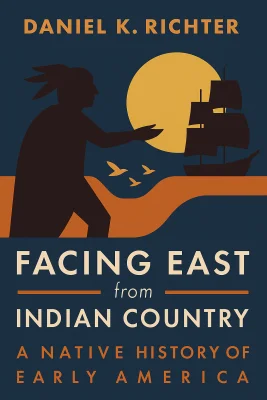
Facing East from Indian Country
A Native History of Early America
Categories
Nonfiction, History, Anthropology, American, American History, Grad School, Indigenous, Native American, Native Americans, Native American History
Content Type
Book
Binding
Paperback
Year
2003
Publisher
Harvard University Press
Language
English
ASIN
0674011171
ISBN
0674011171
ISBN13
9780674011175
File Download
PDF | EPUB
Facing East from Indian Country Plot Summary
Introduction
# Facing East from Indian Country: A Native History of Early America In the autumn of 1621, as Wampanoag sachems gathered around council fires to debate their relationship with the Plymouth colonists, they faced a decision that would echo through centuries of American history. These Native leaders were not encountering European civilization for the first time—they had been observing, trading with, and carefully managing relationships with various European visitors for decades. What made this moment different was the permanence of these particular newcomers and the devastating epidemic diseases that had already reduced the Wampanoag population by nearly ninety percent. This scene captures a fundamental shift in perspective that transforms our understanding of early American history. Rather than viewing the colonial period as a story of European expansion into an empty wilderness, we discover a complex drama of Native peoples grappling with the arrival of strangers from across the sea. When we face east from Indian country, looking toward the Atlantic where European ships first appeared on the horizon, an entirely different narrative emerges—one of sophisticated indigenous societies adapting their ancient political systems to unprecedented challenges, developing creative strategies for survival, and ultimately confronting forces that would reshape the continent forever. This alternative view reveals not conquest by a superior civilization, but a tragic collision between different ways of understanding land, community, and the proper relationships between peoples.
Chapter 1: First Contact: Native Discovery of Europeans (1500s-1600s)
The sixteenth century marked not the European discovery of America, but rather the Native American discovery of Europe. Long before most Indians ever encountered Europeans face to face, strange objects and disturbing rumors filtered through ancient trade networks that connected communities across thousands of miles. Iron axes became sacred amulets, glass beads joined traditional shell ornaments in ceremonial regalia, and stories spread of floating islands inhabited by peculiar beings who offered mysterious substances they claimed were food and drink. When flesh-and-blood Europeans finally appeared in substantial numbers, Native peoples initially attempted to incorporate these newcomers into familiar categories of understanding. The Spanish expedition of Hernando de Soto, which carved a path of destruction through the Southeast from 1539 to 1542, encountered sophisticated Mississippian chiefdoms whose leaders tried to establish traditional diplomatic relationships even as the conquistadors pillaged their towns. Similarly, when Jacques Cartier arrived in the St. Lawrence Valley, Iroquoian-speaking peoples at Stadacona and Hochelaga sought to create kinship bonds and trading partnerships with the French through elaborate ceremonial exchanges. The failure of these early accommodation attempts stemmed not from Native hostility to change, but from European inability or unwillingness to accept incorporation into indigenous political systems. De Soto's brutal quest for gold left behind not merely death and destruction, but a profound disruption of the spiritual and political foundations that held Mississippian societies together. Cartier's kidnapping of prominent leaders and his violation of diplomatic protocols similarly poisoned relationships that had begun with mutual curiosity and ceremonial gift-giving. These initial encounters established patterns that would echo through subsequent centuries. Most significantly, contact with Europeans intensified conflicts among Native groups themselves, as communities competed for access to European trade goods and sought to direct European violence toward their traditional enemies. The discovery of Europe thus became as much about internal Native American politics as about relationships with overseas newcomers, setting the stage for the complex alliances and conflicts that would define the colonial period.
Chapter 2: Material Transformations: Trade, Disease, and Ecological Change
The seventeenth century brought three interconnected forces that fundamentally reshaped Native American life across the continent: expanded trade networks, ecological transformation, and epidemic disease. These largely impersonal forces often had more profound effects than the conscious policies of European colonists, creating what scholars have termed "the Indians' New World"—a transformed environment that demanded entirely new strategies for survival and cultural continuity. European trade goods initially fit seamlessly into existing Native patterns of exchange and meaning-making. Brass kettles were cut apart to create traditional ornaments, iron tools were reforged into familiar implements, and glass beads enabled unprecedented artistic expression in clothing and ceremonial objects. But as colonial settlements expanded and trade relationships became more predictable, imported goods began replacing Native manufactures entirely. Iron axes proved superior to stone tools for clearing fields, brass kettles outlasted ceramic vessels, and woolen cloth provided warmth and status that traditional materials could not match. The ecological impact of European settlement proved equally transformative and far more destructive. European livestock, especially free-roaming pigs, destroyed Native food sources and invaded carefully tended agricultural fields. European farming practices, with their emphasis on permanent settlements and intensive cultivation of single crops, could not coexist with Native systems that required seasonal mobility and diverse land use patterns. The near-extinction of beaver populations in many regions disrupted entire ecosystems, eliminating the wetlands and meadows that had supported complex wildlife communities for millennia. Most devastating of all were the epidemic diseases that accompanied European settlement and trade. Smallpox, measles, typhus, and other common ailments of the Old World struck Native communities with apocalyptic force, often killing seventy-five percent or more of a village's population within months. The social and cultural disruption proved as catastrophic as the demographic collapse, as traditional knowledge died with elders and survivors struggled to maintain community life with decimated populations. These epidemics sparked mourning wars as communities raided neighbors for captives to replace the dead, creating new cycles of violence that further destabilized Native societies across vast regions.
Chapter 3: Cultural Adaptation: Indians Living with Europeans
The experiences of three remarkable individuals illuminate the complex ways Native Americans navigated cultural change while maintaining their essential identities and community loyalties. Pocahontas, the Virginia Algonquian woman whose marriage to English colonist John Rolfe has been mythologized as willing conversion to European civilization, actually represents sophisticated diplomatic maneuvering within traditional frameworks. Her father, the paramount chief Powhatan, used adoption and marriage ceremonies to incorporate the struggling Jamestown colony into his political network, following ancient protocols for managing relationships with potentially useful but dangerous outsiders. Kateri Tekakwitha, the young Mohawk woman who converted to Catholicism and later became the first Native American saint, similarly demonstrates creative adaptation rather than cultural abandonment. Her migration to the mission village of Kahnawake reflected broader patterns of community formation in an era when epidemic diseases and warfare were forcing Native peoples to reinvent themselves constantly. At Kahnawake, she and hundreds of other Native converts created new forms of identity that were simultaneously indigenous and Catholic, maintaining traditional values of reciprocity and community while adopting Christian spiritual practices. Even Metacom, known to the English as King Philip, whose war against New England colonists in 1675-76 has been portrayed as the desperate last stand of untamed savagery, actually represents sophisticated cultural adaptation. The Wampanoag leader had grown up in a world shaped by English presence, employed Christian Indians as advisors and interpreters, and even maintained livestock according to European agricultural practices. His war was not a rejection of coexistence but a desperate attempt to preserve the kind of mutually beneficial relationship his grandfather Massasoit had originally established with Plymouth Colony. These three lives demonstrate that violent conflict was not inevitable in Indian-European relations. Each represents a different strategy for maintaining Native identity and community while adapting to European presence. Their ultimate failures stemmed not from cultural incompatibility but from European unwillingness to accept relationships based on reciprocity and mutual respect rather than domination and subordination. Their stories reveal alternative possibilities that remained available throughout the colonial period, paths not taken that might have led to very different outcomes.
Chapter 4: Native Voices: Conversion Narratives and Diplomatic Speech
Two remarkable collections of documents preserve authentic Native American voices from the colonial period: the conversion narratives recorded in New England's "praying towns" and the diplomatic speeches transcribed at treaty conferences throughout eastern North America. Both reveal Native peoples adapting European forms of discourse to express distinctly indigenous concerns and values, creating hybrid forms of communication that bridged cultural differences while maintaining essential Native perspectives. The conversion narratives collected by Puritan missionary John Eliot at Natick and other praying towns in the 1650s show Christian converts like Monequassun and Waban struggling to express their spiritual experiences in an alien theological vocabulary. While these narratives follow the prescribed stages of Puritan conversion, they consistently emphasize relationships among people rather than abstract doctrinal beliefs, proper behavior toward neighbors rather than individual salvation, and the importance of community harmony over personal spiritual achievement. These Native Christians treasured their religious communities not primarily for theological reasons but for the networks of mutual support and cultural continuity they provided. Diplomatic speeches recorded at treaty conferences reveal Native orators like the unnamed Mohawk spokesman at Albany in 1679 educating European officials in proper protocols for international relations. These speeches had to teach colonial representatives the ceremonial requirements for meaningful negotiation: ritually cleaning the council house, offering formal condolences for the hardships of travel, and presenting appropriate gifts to verify the speaker's sincerity and authority. The elaborate rituals of treaty-making reflected Native understanding that lasting peace required addressing the emotional and spiritual dimensions of conflict, not merely negotiating specific territorial or trade agreements. Both types of documents reveal Native peoples working to maintain traditional values of reciprocity, ceremony, and mutual respect in their relationships with Europeans. Whether in Christian churches or diplomatic councils, Native Americans insisted that meaningful relationships required ongoing attention to proper forms, gift exchange, and the emotional bonds that held communities together. Their voices, preserved in translation by European scribes, offer glimpses of alternative visions for how Indians and Europeans might have created lasting partnerships based on mutual benefit rather than domination.
Chapter 5: From Resistance to Accommodation: Indigenous Strategies
By the late seventeenth century, Native Americans throughout eastern North America faced increasingly constrained options as European colonial populations exploded and imperial competition intensified. The catastrophic wars of the 1670s—King Philip's War in New England, Bacon's Rebellion in Virginia, and similar conflicts elsewhere—marked crucial turning points after which accommodation became more important than armed resistance for most Native communities seeking to preserve their independence and cultural integrity. The Iroquois Five Nations emerged as the most successful practitioners of this new diplomacy, developing sophisticated strategies for playing European empires against each other while maintaining their own sovereignty. Through the Covenant Chain alliance with New York and careful neutrality in conflicts between French and English interests, the Iroquois created diplomatic space for their own territorial expansion and cultural survival. Their elaborate protocols for international relations became the standard for Indian-European diplomacy throughout the region, establishing principles of mutual respect and ceremonial renewal that maintained peace for generations. Other Native communities pursued different but equally creative strategies of accommodation. Christian Indians in New England and New France sought security through religious conversion and cultural adaptation while maintaining distinct Native identities and community structures. The Cherokee and Creek confederacies of the Southeast rebuilt their political systems around trade relationships with European colonies, using their strategic geographic positions to maintain autonomy even as they became economically dependent on European manufactured goods. The most successful Native communities proved to be those that could adapt their traditional values of reciprocity, kinship, and ceremonial exchange to new circumstances while retaining enough military and economic leverage to demand respectful treatment from European neighbors. These communities understood that cultural survival required not the preservation of unchanging traditions but the creative adaptation of core values to rapidly changing realities. Their diplomatic and cultural innovations provided models for Native survival that would prove crucial during the even greater challenges that lay ahead in the eighteenth century.
Chapter 6: Imperial Competition: Native Peoples Between Empires
The eighteenth century created unprecedented opportunities for Native American diplomacy as European empires competed for indigenous allies in their struggles for continental dominance. The long period of imperial warfare between 1689 and 1763 allowed Native peoples to exploit European rivalries, playing French, British, and Spanish colonial powers against each other while maintaining their own independence and territorial integrity. This era represented perhaps the golden age of Native American political influence in North America. The Iroquois Confederacy perfected the art of balance-of-power diplomacy, simultaneously maintaining the Covenant Chain alliance with Britain while negotiating separately with French officials who treated them as sovereign allies rather than subordinate subjects. When British officials claimed the Six Nations as subjects of the crown, Iroquois diplomats could point to their simultaneous relationships with New France as evidence of their continued independence. This diplomatic balancing act allowed them to control vast territories, dominate lucrative trade networks, and exercise political influence far beyond what their population numbers alone would have warranted. Similar patterns emerged throughout eastern North America as Native leaders learned to exploit European competition for their own benefit. Creek diplomats in the Southeast maintained relationships with British, French, and Spanish colonies simultaneously, using their strategic position to extract favorable trade terms and military protection from all three imperial powers. Cherokee leaders traveled to London to negotiate directly with British officials while maintaining back-channel communications with French agents from Louisiana. Even smaller Native communities learned to threaten relocation or alliance-switching whenever colonial pressure became too intense. This imperial world also transformed Native societies in profound and sometimes troubling ways. European trade goods became essential to daily life, creating new forms of wealth and status while making indigenous communities increasingly dependent on intercultural commerce. The consumer revolution that swept through eighteenth-century British America had its counterpart in Indian country, where Native peoples eagerly adopted European textiles, metal tools, firearms, and luxury items while adapting them to their own cultural purposes. Yet this integration into transatlantic economic networks came at the cost of growing vulnerability to market forces and imperial policies beyond Native control.
Chapter 7: Revolutionary Crisis: The Collapse of Accommodation
The Seven Years' War fundamentally altered the balance of power in North America, eliminating French competition and removing the strategic necessity that had made European powers court Native alliances for over a century. Britain's decisive victory in 1763 ushered in a new era of imperial confidence and territorial expansion that left little room for the kind of diplomatic accommodation that had previously allowed Native peoples to maintain their independence while adapting to European presence. The crisis erupted immediately after the war with two parallel movements of racial extremism that shattered the foundations of intercultural cooperation. In the Ohio Country and Great Lakes region, the Ottawa leader Pontiac and the Delaware prophet Neolin preached a message of pan-Indian unity and violent resistance to British rule. Their nativist vision called for the complete rejection of European ways and the creation of a racially pure Indian country from which all whites would be permanently expelled. Simultaneously, in Pennsylvania and other frontier regions, vigilante groups like the Paxton Boys launched their own campaign of racial violence, massacring peaceful Native communities and demanding the elimination of all indigenous peoples from colonial territory. Both movements failed in their immediate objectives, but they established an ideological framework that would dominate Indian-white relations for the remainder of the colonial period and beyond. The doctrine of separate creations—the belief that Indians and Europeans were fundamentally different kinds of people who could never peacefully coexist—gained adherents on both sides of the racial divide. Where earlier generations had sought accommodation, mutual benefit, and cultural exchange, increasing numbers of people now viewed the relationship in zero-sum terms: one race or the other would ultimately inherit the continent. The American Revolution intensified these racial divisions while temporarily recreating the conditions that had previously allowed for Native diplomatic maneuvering. Most indigenous leaders initially sought to remain neutral in what they correctly perceived as a civil war among Europeans, but the revolutionaries' identification of Indians as natural enemies of American liberty made neutrality increasingly impossible. The Declaration of Independence's denunciation of "merciless Indian savages" reflected and reinforced popular attitudes that left no room for the kind of diplomatic relationships that had sustained peace for generations.
Chapter 8: Racial Division: From Coexistence to Separate Nations
The triumph of the American Revolution marked the definitive end of the accommodation that had allowed Native peoples and European colonists to coexist in eastern North America for over two centuries. The new United States, born partly from white Americans' resentment of British policies that had protected Indian land rights, was committed to a vision of continental expansion that left no room for indigenous sovereignty or the diplomatic protocols that had previously governed intercultural relations. The conquest theory adopted by early American policymakers treated Native peoples as defeated enemies whose lands could be seized without compensation or meaningful negotiation. This represented a fundamental departure from European colonial practices, which had generally recognized Native peoples as sovereign nations capable of making binding treaties and maintaining diplomatic relationships. American officials rejected these precedents, arguing that the Revolution had swept away all previous agreements and established American sovereignty over the entire continent. Yet Native resistance continued long after the British surrender at Yorktown, demonstrating that the outcome of the Revolution had not been as decisive as American leaders claimed. In the Ohio Country, a Western Confederacy of indigenous nations fought a series of wars against American expansion, winning stunning victories over federal armies in 1790 and 1791 before finally succumbing to Anthony Wayne's forces at Fallen Timbers in 1794. In the Southeast, Creek and Cherokee leaders struggled to maintain their peoples' independence through various combinations of military resistance, diplomatic negotiation, and cultural adaptation to American demands for "civilization." The final phase of this long struggle came in the early nineteenth century with the rise of new nativist movements led by figures like the Shawnee prophet Tenskwatawa and his brother Tecumseh, and the Creek prophet Hillis Hadjo. These leaders preached messages of spiritual renewal and pan-Indian unity that echoed earlier prophetic movements, but their efforts to create unified Native resistance ultimately failed in the face of American military superiority and the internal divisions that continued to plague indigenous communities. The policy of Indian Removal, implemented by Andrew Jackson in the 1830s, represented the final victory of the racial vision that had emerged during the Revolutionary crisis, completing the work of ethnic cleansing that had begun decades earlier and relegating the surviving eastern tribes to territories west of the Mississippi River.
Summary
The history revealed by facing east from Indian country fundamentally challenges conventional narratives of American origins and development. Rather than a story of inevitable progress and westward expansion, this perspective reveals a complex drama of cultural encounter, creative adaptation, and ultimately tragic transformation. For nearly three centuries, Native peoples and European colonists found ways to coexist in eastern North America, creating new forms of community, commerce, and political relationship that transcended the boundaries of race and culture that would later seem so natural and permanent. The collapse of this intercultural world resulted not from natural forces or historical inevitability, but from specific human choices made during moments of crisis and opportunity. The racial ideologies that emerged in the 1760s, the revolutionary rhetoric that identified Indians as enemies of American liberty, and the policies of removal and ethnic cleansing that followed were all products of particular historical circumstances and could have developed differently. Understanding this history reminds us that the categories of race and nation that seem so fixed and permanent are actually human constructions that can be challenged, modified, and potentially transcended. The voices from Indian country that this alternative history recovers continue to speak to anyone willing to listen with an open mind and heart, offering insights into both the tragic costs of cultural collision and the creative possibilities that emerge when different peoples encounter each other with mutual respect rather than fear and prejudice.
Best Quote
“it is likely that his looting of mortuary temples, his planting of crosses on sacred mounds, and his humiliation of chiefs whose claims to divine status were literally brought to ground when he displaced them from the shoulders of their retainers and made them walk powerlessly through their domains, all dealt severe blows to the religious beliefs that held together Mississippian cultures and chiefdoms.43” ― Daniel K. Richter, Facing East from Indian Country: A Native History of Early America
Review Summary
Strengths: The book offers a unique perspective by focusing on Native American experiences and their adaptation to European settlers, using specific examples to support its narrative. It successfully reorients familiar historical stories with new insights and has influenced subsequent historical analyses. The work is praised for its strong conclusion and innovative viewpoint. Weaknesses: The book relies on fictional anecdotes to fill gaps in historical documentation, which may detract from its factual accuracy. The opening is considered weaker, and the narrative ends prematurely with Indian Removal, missing further developments beyond the Mississippi. Overall: The review reflects a positive sentiment towards the book's innovative perspective and its contribution to historical discourse. It is recommended for those interested in early Native American history, despite some reliance on conjecture and a limited historical scope.
About Author

Daniel K. Richter
Richter interrogates the complex interactions between Native American societies and European colonists in colonial North America, a focus that challenges traditional Eurocentric historical narratives. By centering his research on the Eastern Woodland peoples and their transformation through European contact, Richter provides a nuanced perspective that highlights the agency and resilience of Native communities. His book, "Facing East from Indian Country: A Native History of Early America", exemplifies this approach by presenting early American history from a Native American viewpoint, therefore broadening our understanding of the era.\n\nA key method in Richter’s work is his meticulous research combined with narrative clarity, which he uses to integrate Native voices into the broader historical narrative. This approach not only enriches historical scholarship but also serves to dismantle one-dimensional portrayals of Native American history. Meanwhile, his contributions, such as "The Ordeal of the Longhouse: The Peoples of the Iroquois League in the Era of European Colonization", earned significant accolades, including the Ray Allen Billington Award. His forthcoming book, "The Lords Proprietors: Feudal Dreams in English America, 1660–1689", is expected to continue this tradition of innovative scholarship.\n\nReaders benefit from Richter's work by gaining a more comprehensive and inclusive view of early American history. His emphasis on the mutual transformations experienced by both Native and settler societies invites readers to reconsider preconceived notions about historical narratives. Students, scholars, and anyone interested in a deeper understanding of early American history will find Richter's contributions particularly valuable, as they offer a more complete and balanced portrayal of the past. This bio underscores the significance of his scholarship and his role in reshaping historical discourse.
Read moreDownload PDF & EPUB
To save this Black List summary for later, download the free PDF and EPUB. You can print it out, or read offline at your convenience.
Facing East from Indian Country
by Daniel K. Richter
