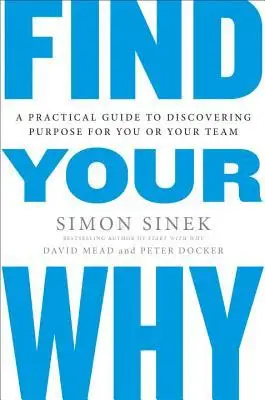
Find Your Why
A Practical Guide to Discovering Purpose for You and Your Team
Categories
Business, Nonfiction, Self Help, Psychology, Philosophy, Leadership, Audiobook, Management, Personal Development, Buisness
Content Type
Book
Binding
Paperback
Year
2017
Publisher
Portfolio
Language
English
ASIN
0143111728
ISBN
0143111728
ISBN13
9780143111726
File Download
PDF | EPUB
Find Your Why Plot Summary
Introduction
Why do you do what you do? Why do you get out of bed in the morning? And why should anyone care? These aren't just philosophical questions—they're the keys to unlocking a life of profound fulfillment and impact. Most of us navigate our careers and relationships by focusing on what we do and how we do it, yet we struggle to articulate the deeper purpose that drives us. We chase external markers of success while feeling an inexplicable emptiness, a sense that something fundamental is missing. The journey to discovering your why isn't about adding another layer of complexity to your already busy life. It's about stripping away the noise to reveal the golden thread that has been weaving through your most meaningful moments all along. When you can clearly articulate your purpose, cause, or belief, everything changes. You make better decisions, build stronger relationships, and create work that truly matters. Most importantly, you wake up each morning with a clear sense of why the day matters—why every day matters.
Chapter 1: Unveiling the Golden Circle: Start with Why
At the heart of purposeful living lies a simple yet revolutionary concept: the Golden Circle. This framework reveals why some individuals and organizations inspire loyalty and achieve lasting success while others, despite equal talent and resources, struggle to create meaningful impact. The Golden Circle consists of three concentric rings, moving from the outside in: What, How, and Why. Consider the story of Steve, a steel salesman who had been selling the same product for twenty-three years. When asked about his work, Steve would launch into detailed explanations about the purity of his steel, its technical advantages, and how it created lighter, more efficient machine parts. Yet despite his expertise and passion, something was missing from his pitch—until a chance airplane conversation changed everything. When pushed to dig deeper beyond the technical specifications, Steve discovered that his true motivation wasn't about steel at all. He was driven by a desire to keep the planet healthy for his children and future generations, contributing to sustainability through responsible resource use. This revelation transformed how Steve understood and communicated his work. Instead of leading with product features, he began with his belief in environmental responsibility and sustainable resource use. His company, based in Sweden, had developed a way to help engineers create lighter, more efficient, greener products—and their particular path to sustainability happened to be through lightweight steel. By starting with why, Steve's work suddenly had deeper meaning, not just for him but for everyone who heard his story. The power of starting with why isn't just philosophical—it's biological. The outer ring of the Golden Circle, representing what we do, corresponds to the neocortex in our brain, responsible for rational thought and language. The inner rings, representing how and why, connect to our limbic brain, which drives behavior and emotions but has no capacity for language. This is why we sometimes struggle to explain our gut feelings or justify decisions that simply "felt right." To begin unveiling your own Golden Circle, start paying attention to the moments when you feel most energized and fulfilled in your work. Notice when time seems to fly by, when challenges feel like opportunities rather than obstacles, and when you naturally find yourself going above and beyond. These moments are clues pointing toward your deeper why. Practice articulating not just what you do, but the impact it has on others and the belief that drives you to do it. The goal isn't to create a perfect elevator pitch overnight. Instead, begin experimenting with sharing your deeper motivations in casual conversations. Notice how people respond differently when you start with purpose rather than process. The more you practice connecting your daily actions to your deeper beliefs, the more natural and powerful your ability to inspire others becomes.
Chapter 2: Identifying Your Core Stories and Meaningful Moments
Your why isn't something you create or invent—it's something you discover by excavating the meaningful moments that have shaped who you are. Like panning for gold in the river of your past, you must sift through experiences to find the golden nuggets that reveal your deepest motivations and values. These stories aren't necessarily your biggest achievements or most dramatic moments; they're the experiences that made you who you are at your natural best. Take Todd's transformation story, which began during one of the darkest periods of his life. After losing his basketball scholarship due to addiction, Todd was working at a bar, battling personal demons, and contemplating suicide. One Saturday morning, driving home from work, he passed a little girl selling lemonade. On any other day, he would have driven past, but something compelled him to stop. He bought a cup for twenty-five cents, then emptied all his tip money—about forty dollars in quarters—into her small palms, watching her eyes light up with each handful. What happened next surprised Todd completely. As he drove away, he was overwhelmed with emotion and had to pull over, crying uncontrollably. For the first time in his life, he felt like he had done something for someone else without putting himself first. This moment lit his soul on fire and made him feel like he mattered. More importantly, it sparked a desire to help others feel like they mattered too, to help them see what was possible in their own lives. This seemingly simple story became the key to understanding Todd's deeper purpose: to ignite people's imaginations about what's possible so they can find the motivation to do more with their lives. The pattern of service that began with a lemonade stand ran through all of Todd's most significant experiences, revealing a consistent thread of inspiring others to believe in themselves. To identify your own core stories, begin with the peaks and valleys method. Draw a horizontal line across a piece of paper, placing your happiest, most fulfilling memories above the line and your most challenging or difficult experiences below the line. The stories that sit at the highest highs and lowest lows often carry the most emotional weight and therefore the most insight into your fundamental values and motivations. As you gather these memories, focus on specificity. Instead of general statements like "I enjoyed helping my team," dig into particular moments: "I remember the afternoon when Sarah was struggling with her presentation, and I stayed late to help her practice. When she nailed it the next day and got promoted, I felt more fulfilled than if I had received the promotion myself." The more specific the memory, the stronger the emotional connection and the clearer the insight into your deeper purpose. Don't overlook painful or difficult experiences. Sometimes our most profound purpose emerges from our struggles. The person who experienced bullying might discover their why involves creating safe spaces for others. Someone who overcame addiction might find their purpose in helping others break free from destructive patterns. Every experience, positive or challenging, offers potential insights into what drives you at your core.
Chapter 3: Discovering Themes That Define Your Purpose
Once you've gathered your most significant stories, the next crucial step involves identifying the recurring themes that weave through these experiences like a golden thread. These patterns often remain invisible to us because we're too close to see them clearly—like trying to read a book with your nose pressed against the page. This is why the discovery process works best with a partner who can offer objective perspective and help you see the forest through the trees. The themes that emerge from your stories represent more than just personality traits or preferences; they reveal the fundamental ways you create value for others when you're operating at your natural best. These themes might include concepts like "creating connection," "fostering growth," "protecting the vulnerable," "inspiring possibility," or "building trust." What makes them significant isn't their uniqueness—many people share similar themes—but rather how they specifically manifest through your personal experiences and stories. Consider how themes emerged from La Marzocco's organizational discovery process. This Italian espresso machine company initially seemed to be about crafting high-quality coffee equipment. However, as team members shared their stories, deeper patterns emerged. They talked about their "Out of the Box" events that brought together coffee lovers from around the world to celebrate life and build relationships. They described exhibitions featuring coffee farm workers in Tanzania, using proceeds to support the farming community while creating connections between consumers and producers. One employee shared meeting a customer at an airport who had owned the same La Marzocco machine for twenty years—it still worked perfectly. Another discussed their hiring philosophy in Mexico, choosing candidates based on passion rather than credentials, which led to many rising to senior positions and transforming their lives. Through these diverse stories, a clear theme emerged: bringing people together to savor life, building relationships that enriched everyone involved. The key to identifying your themes lies in looking beyond the surface details of your stories to uncover the emotional core of each experience. Ask yourself: What was I contributing to others in this moment? What impact did my actions have on the people involved? How did this experience reflect what I value most deeply? The answers often reveal consistent patterns across seemingly unrelated experiences. Working with a trusted partner during this process proves invaluable because they can spot connections you might miss. They can ask probing questions like "What is it about that story that still gives you energy years later?" or "I notice you light up every time you talk about moments when people feel safe to be themselves—tell me more about that." Their outside perspective helps illuminate the threads that bind your experiences together. Remember that identifying themes isn't about finding what sounds impressive or marketable. It's about discovering authentic patterns that emerge naturally from your lived experiences. The themes that truly define your purpose will feel both surprising and inevitable—surprising because you may never have articulated them before, yet inevitable because they capture something you've always known about yourself at a deep level.
Chapter 4: Crafting Your Why Statement That Resonates
Transforming your identified themes into a clear, actionable Why Statement requires distilling years of experiences and insights into a single, powerful sentence. This isn't about creating marketing copy or an inspirational poster; it's about capturing the essence of your contribution to the world in language that moves you to action. The most effective Why Statements follow a simple structure: "To [contribution] so that [impact]." The contribution element describes what you actively do for others—not just your job title or function, but the deeper value you create. The impact element captures what becomes possible when you make that contribution effectively. Simon Sinek's Why Statement exemplifies this structure: "To inspire people to do the things that inspire them so that, together, we can change our world." His contribution is inspiring others, and the impact is collective positive change. During a job interview, Emily demonstrated how a clear Why Statement can transform ordinary interactions into powerful connections. When the HR director asked what she could bring to their company, instead of listing qualifications, Emily shared her purpose: "Before I talk about what I might be able to bring to your company, let me first give the reason I get out of bed every day. I strive to help people be the best version of themselves. That's what inspires me." This thirty-second exchange, speaking directly to the interviewers' decision-making centers, convinced them to hire her before the traditional part of the interview even began. The crafting process requires patience and iteration. Your first draft likely won't be perfect, and that's completely normal. David's Why Statement evolved from "To propel positive change so that people can live a more fulfilled life" to "To propel people forward so that they can make their mark on the world." The revision came from deeper reflection on what "fulfilled life" actually meant to him—helping people become slightly better versions of themselves so they could have greater positive impact on others. When refining your statement, test it against your core stories. Does it capture the essence of why those experiences were meaningful to you? Can you connect each significant moment back to this central purpose? The Why Statement should feel like coming home—both familiar and energizing. You should be able to imagine having those words tattooed on your body because they represent something so fundamental about who you are. Avoid language that focuses primarily on yourself or your own success. A Why Statement like "To constantly improve ourselves so that we may be well equipped to overcome challenges" misses the mark because it's internally focused. Similarly, statements that are overly complex or filled with jargon lose their power to inspire and guide action. The goal is simplicity and clarity that resonates at an emotional level. Remember that your Why Statement isn't set in stone forever. While the core feeling and purpose typically remain constant, the specific words may evolve as you gain deeper understanding of yourself and more experience living your purpose. The key is having language that feels authentic and actionable right now, knowing you can refine it as you grow.
Chapter 5: Living Your Why Through Actionable HOWs
Discovering your why represents just the beginning of the journey—the real transformation happens when you begin living it intentionally through your daily actions and decisions. Your HOWs are the guiding principles and behaviors that bring your why to life, serving as the bridge between purpose and practice. These aren't aspirational values you hope to embody someday; they're the specific ways you naturally operate when you're at your absolute best. Your HOWs emerge from the same stories that revealed your why, but they represent the behavioral patterns that made those meaningful moments possible. If your core stories consistently show you creating safe spaces for others to be vulnerable, one of your HOWs might be "Create psychological safety." If you repeatedly find yourself helping people see new perspectives, a HOW could be "Challenge assumptions with curiosity." Consider how David and Peter leverage their complementary HOWs to tackle seemingly impossible challenges. When a client requested they facilitate a workshop for 150 people instead of their usual 40, all within a shortened four-hour timeframe, their initial reaction was that it couldn't be done. However, their shared commitment to helping people become their best selves (aligned with their whys) motivated them to find a solution. They began by utilizing both David's "see the big picture" and Peter's "get up on the balcony" strengths to understand the full scope of the challenge. David's ability to "explore alternative perspectives" became crucial for reimagining their familiar content in completely unconventional ways. When they developed their complex solution, Peter's strength in "making things simple" ensured everyone could understand and support the plan. The result was a successful workshop that brought fulfillment to both facilitators and participants. This collaboration illustrates how HOWs function as filters for decision-making and partnership. When Simon was approached about helping an organization create a people-first culture, he was initially excited about the potential impact. However, when the leader presented a complex diagram and emphasized the need for "quick results," Simon's HOWs revealed potential misalignment. The complexity conflicted with his "keep it simple" principle, the short timeline challenged his "focus on the long term" approach, and the leader's resistance to unconventional methods clashed with Simon's "take the unconventional perspective" HOW. To identify your HOWs, return to the themes that didn't make it into your Why Statement. Transform these themes into actionable principles by converting them from nouns or adjectives into active verbs. Instead of "optimism," try "Find the positive in everything." Rather than "connection," consider "Build meaningful relationships." Each HOW should suggest specific behaviors you can practice. Once you've articulated your HOWs, add brief descriptions that clarify what each one looks like in practice. For "Find the positive in everything," you might add: "When things look like they're going wrong, look for what's going right." This additional context helps you and others understand how to apply these principles in real situations. Begin using your HOWs as filters for important decisions. When considering new opportunities, relationships, or projects, assess how well they align with your natural operating principles. While perfect alignment isn't always possible, understanding potential areas of tension allows you to address them proactively or make informed choices about where to invest your energy.
Chapter 6: Aligning Decisions with Your Purpose Daily
The true test of knowing your why comes in the countless small decisions you make every day. When your purpose becomes a living filter rather than an inspiring poster on the wall, it transforms how you approach everything from career choices to daily interactions. This alignment isn't about perfection; it's about increasingly choosing paths that allow you to be your most authentic and impactful self. Consider Ultimate Software's approach to preventing what's called "the split"—the point where growing organizations lose connection to their founding purpose. As companies scale, new employees become further removed from the founder's original vision, and the focus often shifts from why the company exists to simply what it does. Ultimate Software, with their why of "To provide for people so that they thrive and feel empowered to always do the right thing," actively guards against this drift. They use their why as a filter for every major decision, from hiring practices to product development to internal policies. When designing leadership training, they ask: "Will this help our leaders provide for people in a way that empowers them to do the right thing?" This conscious, continuous alignment between their daily operations and their deeper purpose has earned them recognition as one of Fortune's 100 Best Companies to Work For and a spot on People magazine's Companies That Care list. The split can happen to individuals just as easily as organizations. You might start a career aligned with your purpose but gradually drift toward activities that feel more like obligations than opportunities. The warning signs include increased stress, decreased passion, and a growing sense that work is just about the paycheck. When you notice these symptoms, your why and HOWs can serve as a compass to guide you back to alignment. Daily alignment begins with small, conscious choices. When someone asks for your help, consider whether saying yes allows you to live your why or simply adds another task to your list. In meetings, look for opportunities to contribute in ways that reflect your natural strengths. When facing conflicts or challenges, ask yourself: "How would I handle this if I were fully living my purpose?" Steve, the steel salesman, discovered that his technical expertise was never the real source of his passion. Once he understood his deeper why—contributing to environmental sustainability for future generations—he could make career decisions with greater clarity. If his company were acquired by one focused solely on profit rather than environmental responsibility, he would know to seek opportunities elsewhere rather than wondering why his enthusiasm had vanished. This alignment extends beyond work into all areas of life. Your why influences how you choose to spend your free time, the relationships you cultivate, and the causes you support. It's not about becoming rigid or turning down everything that doesn't perfectly match your purpose; it's about making increasingly intentional choices that honor who you are at your core. Start each day by asking yourself: "What's one way I can live my why today?" End each day by reflecting: "When did I feel most aligned with my purpose, and what made those moments possible?" These simple practices gradually rewire your awareness and decision-making to favor choices that bring out your best self and create the impact that matters most to you.
Chapter 7: Sharing Your Why to Inspire Others
Your why becomes exponentially more powerful when you share it authentically with others. Like learning to ride a bike, communicating your purpose feels awkward at first, but with practice it becomes as natural as breathing. The goal isn't to deliver perfect speeches but to create genuine connections with people who share your values and beliefs, while respectfully acknowledging those who don't. The process of sharing your why serves as a filter, attracting people who believe what you believe and allowing others to self-select out. This isn't rejection; it's alignment. When you start conversations by expressing your deeper purpose rather than just your job title, you immediately connect with those who resonate with your message while saving time with those who don't share your values. At Southwest Airlines, this principle plays out daily through actions that reflect their why of caring for employees who then care for customers. When Peter witnessed a captain climb out of the flight deck to help a flight attendant label passenger bags for loading, he saw their purpose in action. The captain wasn't required to help; there's typically a clear line between flight crew and cabin crew. Yet his immediate response to help a teammate demonstrated the company's belief that everyone succeeds when everyone cares for each other. These authentic expressions of purpose inspire others far more effectively than mission statements or corporate slogans. The captain's actions communicated Southwest's values more powerfully than any marketing campaign could. Similarly, when you live your why in daily interactions, you give others permission to do the same. Practice sharing your why in low-stakes situations first. When strangers ask what you do, experiment with leading with your purpose before describing your job. Instead of "I'm an accountant," try "I help people make sense of complex financial information so they can make confident decisions about their future. I work as an accountant." Notice how the conversation shifts when you start with why rather than what. For organizations wanting to share their newly discovered why with team members who weren't part of the discovery process, create opportunities for storytelling rather than presentations. Have those who participated in the discovery share not just the final Why Statement but the experience of uncovering it. Let them describe the stories that emerged, the emotions they felt, and the insights that surprised them. This approach helps others take ownership of the why rather than simply receiving it as information. The most effective sharing happens through consistent action rather than grand announcements. When people see you making decisions based on your stated values, they begin to trust that your purpose is genuine. When they witness you prioritizing meaning over convenience or choosing impact over immediate gain, they understand what you stand for without needing detailed explanations. Remember that sharing your why isn't about convincing everyone to adopt your perspective. It's about being authentic enough to attract the right people and relationships while maintaining respect for different viewpoints. The goal is to build communities of believers—people who share your fundamental assumptions about what matters—who can work together to create the change you all want to see in the world.
Summary
The journey to discovering and living your why transforms not just how you see yourself, but how you show up in the world. When you can clearly articulate your purpose, cause, or belief, every decision becomes easier, every relationship deepens, and every day holds the promise of meaningful contribution. As the pages of this exploration have revealed, fulfillment isn't a privilege reserved for the lucky few—it's a right that belongs to anyone willing to do the inner work of understanding what drives them at their core. "It is one of life's greatest joys to wake up in the morning—every morning—with a clear sense of why the day matters. Why every day matters." This profound truth becomes your reality when you align your daily actions with your deeper purpose. The stories you've gathered, the themes you've identified, and the why you've articulated aren't just intellectual exercises—they're the foundation for a life of intention, impact, and genuine fulfillment. Start today by sharing your why with one person who matters to you. Whether it's a colleague, friend, or family member, practice articulating what drives you beyond the surface level of tasks and responsibilities. Notice how the conversation shifts when you speak from your deeper truth, and watch how your authenticity gives others permission to share their own purpose. This simple act of vulnerability and connection begins the ripple effect that transforms not just your life, but the lives of everyone your purpose touches.
Best Quote
“The goal is not simply for you to cross the finish line, but to see how many people you can inspire to run with you.” ― Simon Sinek, Find Your Why: A Practical Guide to Discovering Purpose for You and Your Team
About Author

Simon Sinek
Sinek probes the core principles of leadership and human motivation, articulating a vision where purpose-driven leadership fosters environments in which individuals and organizations can thrive. Through his influential book, "Start with Why," he proposes that the most inspiring leaders and companies focus on their underlying purpose before addressing how they operate or what they produce. This concept, known as the "Golden Circle," has reshaped how many perceive leadership, emphasizing the critical role of purpose in driving meaningful action.\n\nCentral to Sinek's philosophy is the belief that trust and cooperation are fundamental to effective teamwork. In "Leaders Eat Last," he explores how leaders who prioritize these elements create resilient teams capable of achieving collective success. Meanwhile, "The Infinite Game" challenges traditional business paradigms, urging leaders to adopt a mindset that values long-term vision over short-term gains. These ideas encourage readers to rethink their leadership approaches, ultimately leading to more sustainable and fulfilling outcomes.\n\nHis books and insights have impacted various sectors, including business, military, and social movements, making them relevant to a broad audience. Sinek’s eloquent narrative style and motivational clarity ensure that complex concepts are accessible, inspiring a generation to prioritize purpose and trust in their endeavors. His work has garnered critical acclaim and widespread recognition, affirming his status as a prominent voice in leadership thought.
Read moreDownload PDF & EPUB
To save this Black List summary for later, download the free PDF and EPUB. You can print it out, or read offline at your convenience.
Find Your Why
by Simon Sinek
