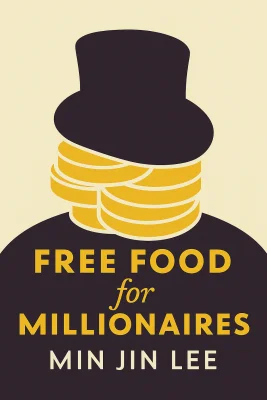
Free Food for Millionaires
Categories
Fiction, Audiobook, Historical Fiction, Adult, Book Club, Contemporary, Novels, Asian Literature, New York, Literary Fiction
Content Type
Book
Binding
Kindle Edition
Year
2007
Publisher
Grand Central Publishing
Language
English
ASIN
B000U0NSSQ
File Download
PDF | EPUB
Free Food for Millionaires Plot Summary
Introduction
# Free Food for Millionaires: The Price of Dreams Between Two Worlds The slap echoed through the cramped Queens kitchen like a gunshot, sending Casey Han's glasses skittering across the linoleum floor. Her father Joseph stood over her, his weathered face twisted with rage, while her mother Leah pressed herself against the counter, hymns dying on her lips. Twenty-two years old, Princeton diploma gathering dust, Casey had finally said what she'd been thinking for months—that her immigrant parents would never understand the world she was trying to enter. The response was swift and brutal: a fist to her face and three words that would haunt her for years. "Get out. Leave." With blood on her white linen suit and nowhere to go, Casey stumbled into the Manhattan night carrying everything she owned in a duffel bag. Behind her lay the suffocating expectations of Korean tradition and parental sacrifice. Ahead waited the glittering promises of American success—Wall Street jobs, designer clothes, and the kind of belonging that money could buy. But between these two worlds stretched a chasm that would test everything she thought she knew about identity, love, and the true cost of making it in America. This is the story of a young woman caught between the dreams her parents had for her and the dreams she was only beginning to discover for herself.
Chapter 1: Severed Ties: A Daughter's Exile from the American Dream
The Carlyle Hotel lobby gleamed with the kind of understated luxury that whispered rather than shouted its price tag. Casey sat in a leather chair that cost more than her parents made in a month, her face a map of purple bruises, pretending to be someone she wasn't. The concierge had believed her story about being Virginia Craft's granddaughter—white girls with trust funds were always losing their identification, after all. In the marble bathroom of her suite, Casey stared at her reflection and saw a stranger. The Korean girl who had eaten dinner with her family just hours earlier was gone, replaced by someone harder, more desperate. Her father's words echoed in the silence: "I sold my mother's jade brooch to buy medicine. I ate garbage during the war. And you lecture me about money?" The irony wasn't lost on her. Joseph Han had sacrificed everything to give his daughters opportunities he'd never had, working sixteen-hour days at a dry cleaner so they could attend Princeton and medical school. But Casey had learned something dangerous at college—that there were different kinds of poverty, and hers was the kind that money couldn't fix. She was poor in connections, poor in cultural capital, poor in the invisible currency that opened doors in America's elite circles. Her phone buzzed with a text from her boyfriend Jay Currie, the tall, handsome WASP she'd been secretly dating for three years. "Where are you? We need to talk." But when she arrived at his apartment near campus, she found two naked sorority girls from LSU sprawled across his bed, their blonde hair catching the lamplight like spun gold. They smiled at her with the casual cruelty of women who had never doubted their place in the world. "Casey, I can explain," Jay stammered, but she was already backing toward the door. The explanation would come later—how he'd been drunk, how it didn't mean anything, how sorry he was. But in that moment, Casey understood with crystalline clarity that she truly had nowhere to go. Her family had disowned her, her boyfriend had betrayed her, and the American dream she'd been chasing had revealed itself to be as fragile as tissue paper in the rain. She spent the night walking through Manhattan, her designer heels clicking against concrete, her Princeton education worthless as currency for a taxi ride home to a family that no longer wanted her.
Chapter 2: Borrowed Lives: Survival Among Manhattan's Golden Elite
Ella Shim appeared at Bendel's department store like an angel of mercy, her Chanel suit immaculate and her smile warm with genuine concern. She was everything Casey had always envied—beautiful, wealthy, engaged to Ted Kim, a Harvard MBA who represented the pinnacle of Korean-American success. More importantly, she was kind enough to offer Casey her spare bedroom when she had nowhere else to go. "You can stay as long as you need," Ella said, and Casey felt the first stirring of hope since leaving her parents' house. But charity, even well-intentioned charity, came with its own weight. Ella's Upper East Side apartment was a monument to everything Casey lacked—family money, parental approval, a clear path forward. The refrigerator was stocked with expensive organic food, the closets filled with clothes that cost more than Casey's college textbooks. At Kearn Davis, the investment bank where she'd landed a job as a sales assistant, Casey learned the brutal mathematics of Wall Street hierarchy. She fetched coffee for men who made her father's annual salary in quarterly bonuses, booked travel for traders who spoke in the casual shorthand of inherited privilege. The work was mind-numbing, but it paid enough to keep her afloat while she figured out what came next. Her real education happened at Sabine Gottesman's boutique, where she worked weekends selling thousand-dollar handbags to women who collected beautiful things like trophies. Sabine, a Korean immigrant who had married into American wealth, saw something of herself in Casey's desperate ambition. She became mentor and tormentor both, pushing Casey to want more while warning her about the cost of getting it. "Every minute matters," Sabine lectured over lunch, her manicured fingers gesturing at the Rolex she'd given Casey as a gift. "Every second you waste watching television or feeling sorry for yourself is a second you could be building something." The watch felt heavy on Casey's wrist, a golden reminder that even generosity came with expectations. At night, alone in Ella's guest room, Casey made hats. Delicate, impractical creations that served no purpose except beauty. Her hands moved with practiced precision, shaping silk and wire into something that existed purely because she willed it into being. In a world where everything had a price, these moments of creation felt like the only things that truly belonged to her.
Chapter 3: Fractured Foundations: When Love Becomes Another Currency
The wedding invitation arrived on cream paper thick as cardboard, announcing the union of Ella Shim and Ted Kim with the kind of formal language reserved for mergers between dynasties. Casey stood as maid of honor in flame-colored silk, watching her friend promise to love and honor a man who had already begun to betray her. Ted Kim was the golden boy of their generation—Harvard MBA, managing director at Kearn Davis, the kind of Korean-American success story that made immigrant parents weep with pride. But Casey had seen the way his eyes lingered on other women, the casual cruelty with which he dismissed anyone he considered beneath him. During the reception, she watched him charm Ella's parents while texting someone else, his thumb moving across the screen with practiced discretion. "He's perfect," Ella whispered during the bouquet toss, her face radiant with the kind of happiness that comes from believing fairy tales can come true. Casey caught the flowers and felt their weight like a burden. She couldn't see herself in a wedding dress, couldn't imagine promising forever to anyone when her own future remained so uncertain. Jay Currie appeared at the church like a ghost from her past, his blue eyes desperate with the kind of regret that comes too late. "I made a mistake," he said, cornering her during the reception. "Those girls meant nothing. You're the one I want to marry." But Casey had learned something important about herself in the months since leaving her parents' house—she would rather be alone than settle for someone else's version of love. "I can't see the picture," she told him, referring to the flashes of future she sometimes got, glimpses of what might be. When she tried to imagine herself as Mrs. Jay Currie, living in Connecticut and raising children who would never understand where they came from, she saw only darkness. The confrontation with her father happened in the church parking lot, a collision of old wounds and fresh anger. Joseph Han looked older, more fragile than she remembered, but his fury was unchanged. When Jay tried to introduce himself, her father shoved him so hard he stumbled, and Casey felt the last bridge to her family burn behind her. Some distances, she realized, were too wide to cross with good intentions alone.
Chapter 4: Hidden Wounds: Secrets That Destroy From Within
The herpes diagnosis hit Ella like a physical blow, the doctor's words echoing in the sterile examination room long after she'd stopped listening. Six months married, three months pregnant, and her perfect life was crumbling with the efficiency of a controlled demolition. Ted's betrayal wasn't just emotional—it was written in her blood, coded in her DNA, a gift that would keep giving for the rest of her life. "Most people carry some form of the virus," Dr. Reeson explained with clinical detachment, but Ella barely heard her. All she could think about was the baby growing inside her, the innocent life that might pay the price for her husband's infidelity. The affair with Delia Shannon, the red-haired sales assistant at Kearn Davis, had been captured on security cameras—Ted's Harvard MBA and managing director title reduced to pornographic footage that would end his career and destroy their marriage. Casey found her cousin sobbing in the bathroom of the law office where their divorce was being negotiated, mascara streaming down her cheeks like black rain. "I never loved anyone but Ted," Ella whispered. "How am I supposed to raise a daughter alone?" The question hung between them like smoke, carrying the weight of generations of women who had made impossible choices between love and survival. At Kearn Davis, the scandal rippled through the trading floor with the speed of insider information. Ted Kim, once untouchable, became a cautionary tale about the dangers of mixing business with pleasure. His resignation was swift and final, but the damage was already done. Ella would spend years in court fighting for custody of their daughter, while Ted rebuilt his life with the woman who had helped destroy his first one. Casey watched her cousin's world collapse and felt the familiar tightness in her chest that came with witnessing other people's pain. She had escaped one kind of destruction only to watch another unfold, and the pattern felt as inevitable as gravity. In her family, love seemed to be just another currency that could be devalued without warning, leaving everyone poorer than they'd started. The security footage that ended Ted's career played on loop in Casey's mind—not because she'd seen it, but because she could imagine it with perfect clarity. The desperate hunger for something more, the reckless pursuit of desire, the moment when everything you'd built came crashing down. She recognized the impulse because she felt it herself, the constant temptation to risk everything for the promise of something better.
Chapter 5: Dangerous Games: The Gamble of Identity and Desire
Unu Shim moved through the Foxwoods casino like a man possessed, his preppy exterior masking the compulsion that had consumed his life since losing his job at the investment firm. Casey watched her new boyfriend transform at the blackjack table, his warm personality freezing into calculating coldness as he played hand after hand with the focused intensity of an addict chasing his next fix. "You're my lucky charm," he whispered, kissing her cheek as his chips multiplied, but Casey felt anything but fortunate. The other gamblers around them wore the hollow expressions of people who had lost more than money—their dignity, their families, their futures fed to the insatiable machine of chance. When Unu won nine thousand dollars in less than two hours, she expected celebration. Instead, he grew more desperate, more convinced that the next hand would solve all his problems. Their relationship had begun at a golf tournament in Miami, two damaged people recognizing something familiar in each other's carefully constructed facades. Unu was recently divorced, charming in the effortless way of men who had never doubted their place in the world. Casey was drawn to his easy confidence, the way he moved through elite circles without the constant calculation that exhausted her. For eighteen months, they had built something that felt like love, sharing an Upper East Side apartment and the kind of life that looked successful from the outside. But success, Casey was learning, was often just another form of performance. Unu's gambling had started as entertainment—weekend trips to Atlantic City, friendly poker games with college friends. After his divorce, the stakes had gradually increased until what began as recreation became compulsion. He told himself he could stop anytime, that he was different from the desperate men he saw at the casino tables. The ninety thousand dollars in debt suggested otherwise. The night Casey discovered the extent of his losses, she didn't scream or cry. She simply sat on their couch, staring at the pile of bills and past-due notices he'd been hiding, and asked the only question that mattered: "How much?" His answer—sixty thousand, which was a lie—hung between them like a death sentence. She was drowning in her own debt, working eighteen-hour days at Kearn Davis while selling hats on weekends, and now the man she loved had gambled away their future without telling her. The irony was bitter as medicine. She had fought so hard to escape the limitations of her parents' world, only to find herself trapped in a different kind of prison—one built from credit card debt, impossible expectations, and the crushing weight of trying to belong in a world that would never fully accept her.
Chapter 6: Reckoning: Confronting Truth in the Ruins of Expectation
The golf trip to Vermont was supposed to be networking, a chance for Casey to prove herself outside the testosterone-fueled chaos of the Kearn Davis trading floor. Instead, it became the night she destroyed everything she'd built with Unu, her body betraying her heart in a hotel room that smelled of expensive cologne and poor decisions. Hugh Underhill had been circling her for months, the kind of predatory patience that came naturally to men who had never been denied anything they wanted. Tall, devastatingly handsome, and born into the kind of old money that whispered rather than shouted, he represented everything Casey both envied and distrusted about American privilege. The sex was nothing like what she shared with Unu—mechanical, almost violent, driven by stress and loneliness rather than love. She told Unu the truth as soon as she returned to New York, unable to live with the deception. His reaction was swift and final—he threw her out that same night, her belongings hastily packed into suitcases that felt like coffins for the life they'd built together. Within a month, he had lost his job, his apartment, and what remained of his savings to his gambling addiction, the dominoes of their shared destruction falling with mathematical precision. Casey moved in with Sabine Gottesman, her mentor and tormentor, carrying her guilt like a stone in her chest. Sabine's Tribeca loft was a monument to successful reinvention—a Korean immigrant who had married American wealth and built a fashion empire from nothing. But even Sabine's success felt hollow, built on the bones of relationships sacrificed to ambition. "You think you're the first woman to make this mistake?" Sabine asked over dinner, her voice carrying the weight of experience. "The question is what you do next. Do you learn from it, or do you let it destroy you?" The choice felt impossible—Casey had spent her entire adult life trying to build something stable, only to watch it crumble every time she got close to success. At Kearn Davis, the summer internship program had become a gladiatorial arena where twenty-one business school students competed for sixteen permanent positions. Casey worked weekends, stayed late, raised her hand for more punishment, all in service of a dream that felt increasingly hollow. The investment bankers who had once seemed like gods now revealed themselves as prisoners of their own success, chained to desks by golden handcuffs, measuring their worth in bonus checks and billable hours. The offer letter arrived on a Friday morning, crisp white paper bearing the promise of everything she had thought she wanted. Six figures, signing bonus, the kind of financial security that would let her pay off her student loans and help her parents and never worry about money again. She stared at it for a long time, thinking about the cost of getting it—the eighteen-hour days, the constant competition, the way the work had slowly drained something essential from her soul.
Chapter 7: Authentic Choices: Building Life on Your Own Terms
The decision came to Casey like a revelation, sudden and undeniable as sunrise. She walked into Charlie Seedham's office at Kearn Davis and declined the offer that would have solved all her financial problems, watching his face cycle through confusion, disappointment, and finally a grudging respect for her courage. "You're making a mistake," he said, genuinely puzzled by her choice. "This is what you've worked for." "No," Casey replied, and realized it was true. "This is what I thought I was supposed to work for." She cleaned out her desk, threw away the research reports and financial models that had consumed her life for months, and walked out of the gleaming tower for the last time. On the street, she called Columbia Law School and withdrew her deferred application, burning the last bridge to the future her parents had mapped out for her. For the first time in years, she had no plan, no clear path forward. The uncertainty was terrifying and exhilarating in equal measure. The memorial service for Joseph McReed was held at the Society Library on a crisp autumn morning. Casey sat in the back, listening to strangers tell stories about the elderly man who had given her beautiful books and vintage hats during their brief conversations at bus stops. After the service, his sister-in-law approached her with an unexpected inheritance—Hazel McReed's entire collection of hats, more than a hundred pieces spanning decades of exquisite craftsmanship. "Joseph said you were a born designer," Lucy Griswold told her. "He wanted you to have them." Casey spent the weekend going through the collection, each hat telling the story of a woman who had lived fully, loved deeply, and never apologized for taking up space in the world. They were inspiration and inheritance both, a reminder that beauty mattered even when—especially when—it served no practical purpose. At Ella's house in Queens, Casey found Unu living in the guest room, slowly putting his life back together with the methodical patience of someone who had lost everything and was learning to build again. They sat in the garden while Ella's daughter Irene played nearby, drawing flowers in chalk on the slate patio and talking about the future with the tentative hope of people who had learned that second chances were rare and precious. "Why don't you make hats?" Unu asked, and Casey realized it was the first time anyone had suggested she do something simply because she loved it. The idea felt revolutionary—choosing passion over profit, beauty over practicality, her own voice over the chorus of expectations that had shaped her life. It would be difficult, uncertain, probably financially disastrous. But for the first time in her adult life, Casey felt like she was moving toward something rather than running away from it.
Summary
In the end, the American dream revealed itself to be more complex than any of them had imagined. Casey's journey from Princeton graduate to Wall Street survivor to independent artist showed that success without authenticity was just another form of failure. Her relationship with Unu, rebuilt on the foundation of shared mistakes and mutual forgiveness, proved that love could survive even the worst betrayals if both people were willing to do the work of becoming better. Ella's divorce from Ted became not just the end of a marriage but the beginning of a new understanding of her own worth. In choosing her daughter over financial security, in refusing to let her ex-husband's betrayal define her future, she discovered a strength she had never known she possessed. The herpes diagnosis that had once seemed like a scarlet letter became simply another fact of life, no more defining than her height or the color of her eyes. The three women—Casey, Ella, and Casey's mother Leah—had each learned that the most important journeys were not toward success as others defined it, but toward the courage to define it for themselves. Their stories reminded them that sometimes the most radical act was choosing authenticity over approval, even when that path led through darkness, uncertainty, and the terrifying freedom of deciding who they wanted to become.
Best Quote
“Clothing was magic. Casey believed this. She would never admit this to her classmates in any of her women's studies courses, but she felt that an article of clothing could change a person... Each skirt, blouse, necklace, or humble shoe said something - certain pieces screamed, and others whispered seductively, but no matter, she experienced each item's expression keenly, and she loved this world. every article suggested an image, a life, a kind of woman, and Casey felt drawn to them." (Free Food For Millionaires, p.41).” ― Min Jin Lee, Free Food for Millionaires
Review Summary
Strengths: The review highlights the book's engaging core theme of socio-economic disparities and the insightful portrayal of the "1st generation Asian" experience. The author effectively captures the class and cultural clashes within the Korean-American community, providing relatable insights into male-female relationships. Weaknesses: The book is described as overly lengthy, with an omniscient narrative that follows too many characters, leading to repetitiveness and a sense of disorientation. The abrupt ending leaves the reader feeling unsatisfied after investing in the characters. Overall: The reader finds the book to be very good despite its imperfections, appreciating its thematic depth and character insights. It is recommended, particularly for those interested in cultural narratives, though it may require patience due to its length and complexity.
About Author

Min Jin Lee
Lee charts the intricate landscapes of identity, survival, and displacement, with a focus on the Korean diaspora. Through her novels, including "Free Food for Millionaires" and "Pachinko," she delves into the lives of immigrants and marginalized communities with empathy and authenticity. Her method involves deep anthropological research and compelling characterization, ensuring her stories resonate with a wide audience. For instance, "Pachinko," which took nearly three decades to develop, weaves a multigenerational saga of a Korean family in Japan, offering readers a profound exploration of resilience and belonging.\n\nBy connecting historical contexts with personal narratives, Lee's work allows readers to engage with complex cultural dynamics. Her dedication to portraying "the disgraced, the poor and the earnest strivers" speaks to her own experiences growing up in a working-class immigrant neighborhood. This perspective informs her writing, offering insights that resonate across diverse reader demographics. Additionally, her essays and contributions to various publications broaden her impact, extending beyond fiction to influence cultural discourse.\n\nMin Jin Lee's literary achievements are not just limited to storytelling; she has been recognized with numerous accolades, including the Manhae Grand Prize for Literature. Her unique voice in the literary world offers an engaging exploration of themes that challenge and expand our understanding of identity and belonging. Her ongoing projects and engagements, such as her forthcoming nonfiction memoir, continue to enrich her evolving authorial bio, drawing new readers into her explorations of visibility and voice.
Read moreDownload PDF & EPUB
To save this Black List summary for later, download the free PDF and EPUB. You can print it out, or read offline at your convenience.
Free Food for Millionaires
by Min Jin Lee
