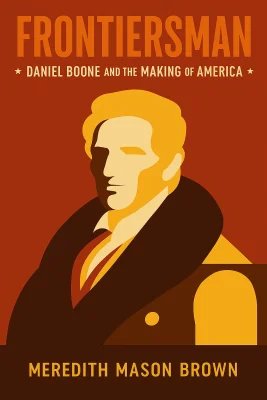
Frontiersman
Daniel Boone and the Making of America
Categories
Nonfiction, Biography, History, American History
Content Type
Book
Binding
Hardcover
Year
2008
Publisher
Louisiana State Univ Pr
Language
English
ASIN
0807133566
ISBN
0807133566
ISBN13
9780807133569
File Download
PDF | EPUB
Frontiersman Plot Summary
Introduction
# Daniel Boone: Pioneer, Explorer, and Bridge Between Worlds In the flickering candlelight of a Shawnee longhouse in 1778, a remarkable scene unfolded that would epitomize one of America's most extraordinary lives. Daniel Boone, his hair braided in Native fashion and speaking fluent Shawnee, sat across from Chief Blackfish—not as prisoner and captor, but as adopted son and father. This moment of cultural convergence, occurring at the height of frontier warfare, reveals the profound complexity of a man who has too often been reduced to simple legend. Here was neither the coonskin-capped caricature of popular imagination nor the ruthless Indian fighter of dime novels, but a nuanced leader who navigated the treacherous boundaries between civilizations with unprecedented skill and humanity. Boone's life spanned the most transformative era in American history, from his birth in Quaker Pennsylvania in 1734 to his death on the Missouri frontier in 1820. Through his extraordinary journey, we witness the birth of a continental nation and the profound human costs of its expansion. His story illuminates the delicate art of frontier diplomacy, where survival often depended on understanding rather than conquest, and where the greatest leaders were those who could build bridges across seemingly insurmountable cultural divides. From Boone's experiences, we discover timeless lessons about leadership under pressure, the courage required to venture into the unknown, and the wisdom that comes from seeing the world through others' eyes while never losing sight of one's own moral compass.
Chapter 1: Quaker Roots and Early Wilderness Training
Daniel Boone's character was forged in the religious and cultural crucible of colonial Pennsylvania, where his Quaker upbringing instilled values that would distinguish him throughout his frontier career. Born in 1734 to Squire and Sarah Boone in the rolling hills of Berks County, young Daniel absorbed the Friends' emphasis on inner light, peaceful resolution of conflicts, and the fundamental equality of all human beings. These principles, seemingly at odds with frontier violence, would prove crucial to his later success in navigating relationships with both white settlers and Native American leaders. The Boone household buzzed with the energy of eleven children, but Daniel stood apart for his restless spirit and natural affinity for the wilderness. While his siblings attended to domestic duties and formal education, Daniel preferred exploring the forests surrounding their farm, developing an almost supernatural ability to read tracks, weather patterns, and the subtle signs that meant the difference between life and death in the wild. His parents, recognizing his exceptional talents, granted him unusual freedom to roam, understanding that such skills were becoming essential for survival on the expanding frontier. When Daniel was sixteen, a family crisis reshaped their destiny forever. His older siblings had begun marrying outside the Quaker faith, bringing censure from their religious community. Rather than submit to church discipline, Squire Boone made the bold decision to sell their Pennsylvania farm and relocate to North Carolina's Yadkin Valley. This migration placed the family on the very edge of colonial civilization, where Daniel's woodcraft would evolve from childhood hobby to essential survival skill. The move to North Carolina completed Daniel's transformation from Pennsylvania farm boy to seasoned frontiersman. The Yadkin Valley offered abundant game and fertile soil, but it also presented constant dangers from wild animals, hostile Native tribes, and the simple challenges of wilderness survival. Here, Daniel learned to hunt not just for sport but for survival, to track both game and enemies, and to navigate vast stretches of unmarked territory using only natural landmarks and celestial navigation. These formative experiences created the foundation for his later achievements as explorer, military leader, and cultural mediator. The Quaker influence remained embedded in Boone's character even as he adapted to frontier realities. His later ability to see Native Americans as fellow human beings rather than savage enemies, his preference for negotiation over violence when possible, and his reputation for fair dealing with all people reflected the religious principles absorbed in his youth. This unique combination of Quaker values and frontier skills would prove invaluable as he ventured into territories where cultural sensitivity often mattered more than marksmanship.
Chapter 2: Kentucky Expeditions: Opening the Gateway West
The turning point in Boone's life came through his encounter with John Findlay, a trader whose tales of Kentucky's abundant hunting grounds ignited an obsession that would drive the rest of Boone's career. Findlay's descriptions of vast buffalo herds, pristine rivers teeming with beaver, and endless forests filled with game painted a picture of paradise that captured Boone's imagination and awakened his deepest ambitions. Here was not merely another hunting ground, but a land that promised prosperity, adventure, and the freedom that came with unlimited space. In May 1769, Boone organized his first major Kentucky expedition, leading a carefully selected party of hunters through the Cumberland Gap into what he would later describe as the most beautiful country on earth. The journey required months of preparation, gathering supplies, weapons, and the specialized equipment needed for an extended hunting expedition in unknown territory. As they emerged from the mountain passes into Kentucky's bluegrass region, Boone experienced what he called one of the most sublime moments of his life, witnessing a landscape that exceeded even Findlay's glowing descriptions. For months, the expedition enjoyed unprecedented success, accumulating valuable furs and exploring the geography of this new Eden. Boone mapped rivers and valleys, located salt licks where game congregated, and began to envision Kentucky not merely as a hunting ground but as a potential home for thousands of settlers. However, paradise came with a price that Boone learned in December 1769 when Shawnee warriors captured him and John Stewart, confiscated their entire season's worth of furs, and warned them never to return to lands the Shawnees considered their own. Most men would have retreated to the safety of established settlements after such a devastating setback, but Boone possessed an almost mystical connection to Kentucky that transcended mere economic calculation. He spent the winter of 1769-1770 alone in the wilderness, surviving on his hunting skills while developing an intimate knowledge of the territory that would prove invaluable in years to come. These solitary months tested his psychological endurance as much as his physical abilities, but they also deepened his understanding of the land's rhythms and secrets. During subsequent expeditions, Boone continued mapping Kentucky's rivers and valleys, establishing relationships with various Native tribes, and refining his vision of the region's potential for large-scale settlement. His detailed knowledge of terrain, combined with his ability to navigate by stars and read natural signs, made him the ideal guide for the great migration that was soon to come. These early expeditions established Boone as more than just an exceptional hunter; he had become the key to unlocking an entire continent for American expansion.
Chapter 3: Cultural Bridge: Life and Captivity Among the Shawnees
In February 1778, while leading a salt-making expedition near the Licking River, Boone found himself surrounded by over one hundred Shawnee warriors led by Chief Blackfish. Rather than resist and see his men slaughtered, Boone made a calculated decision that revealed his sophisticated understanding of frontier diplomacy. He surrendered peacefully and convinced Blackfish to spare his companions' lives, demonstrating the kind of pragmatic leadership that often meant the difference between survival and massacre in frontier conflicts. What followed was a four-month captivity that provided Boone with unprecedented insights into Shawnee culture and transformed him into one of the few white men of his era who truly understood Native American perspectives. Adopted by Chief Blackfish as a son and given the name Sheltowee, meaning "Big Turtle," Boone immersed himself in Shawnee daily life with remarkable thoroughness. He learned their language, participated in their ceremonies, and accompanied hunting parties, all while carefully observing their military capabilities and political structures. Boone's integration into Shawnee society was genuine enough that Blackfish trusted him to hunt alone and treated him with paternal affection. This relationship provided Boone with invaluable intelligence about Native American perspectives on the escalating conflict over Kentucky, revealing their sophisticated political organization, their deep spiritual connection to the land, and their growing desperation as white settlement threatened their traditional way of life. His ability to see the conflict through Shawnee eyes gave him a nuanced understanding that was rare among his contemporaries. The decision to escape came when Boone learned of an impending large-scale attack on Boonesborough, the settlement he had helped establish. His dramatic flight through 160 miles of wilderness in just four days became legendary, but it also placed him in an impossible position between two worlds he had come to understand and respect. Many settlers questioned his loyalty, wondering how he had survived so long among the Shawnees and whether his escape was genuine or part of an elaborate deception. Boone's time among the Shawnees revealed his extraordinary capacity for cultural adaptation without losing his essential identity. He had learned to see the world through Native American eyes while remaining committed to his own people's survival and prosperity. This experience made him uniquely qualified to serve as a mediator between cultures, understanding both sides' motivations and fears in ways that few of his contemporaries could match. The knowledge and relationships he developed during his captivity would prove crucial in subsequent negotiations and conflicts.
Chapter 4: Military Leader: Defending the Frontier During Revolution
The siege of Boonesborough in September 1778 represented the ultimate test of Boone's transformation from explorer to military commander, as he faced the complex challenge of defending his community against warriors led by his own adoptive father. When Chief Blackfish arrived with over 400 Shawnee and Cherokee warriors demanding the fort's surrender, Boone found himself in the psychologically impossible position of preparing to fight people who had treated him as family while simultaneously proving his loyalty to neighbors who questioned his allegiances. Boone's strategy during the nine-day siege demonstrated his evolution into a sophisticated military tactician who understood that frontier warfare required more than simple courage. Rather than merely manning the walls, he engaged in elaborate negotiations that bought precious time for the fort's defenses to be strengthened while gathering intelligence about enemy intentions. His intimate knowledge of Shawnee psychology and tactics, gained during his captivity, allowed him to anticipate their moves and counter their strategies effectively. The successful defense of Boonesborough became a turning point in Kentucky's survival during the Revolutionary War, as the fort's fall would likely have triggered a general evacuation of American settlements south of the Ohio River. Boone's leadership kept the small garrison of fewer than fifty defenders organized and motivated against overwhelming odds, demonstrating how effective command could multiply the effectiveness of limited resources. His ability to maintain morale while rationing ammunition and supplies showed his understanding of the psychological dimensions of siege warfare. However, victory came at significant personal cost when Boone faced a court-martial on charges of treason, as some settlers remained convinced that his long captivity and his negotiations with Blackfish indicated divided loyalties. The trial revealed the complex tensions within frontier communities, where survival often required pragmatic accommodations that could be misinterpreted by those who hadn't faced similar challenges. Boone's acquittal and promotion to major vindicated his actions but left him with a deeper understanding of how quickly heroism could transform into suspicion in times of crisis. The siege and its aftermath established Boone's reputation as a military leader whose success stemmed not from conventional tactics but from his unique ability to understand and anticipate his enemies' thinking. His approach to frontier warfare emphasized intelligence gathering, psychological manipulation, and the strategic use of limited resources rather than simple firepower. These skills made him invaluable to frontier communities throughout the Revolutionary period and beyond.
Chapter 5: Missouri Years: Final Frontier and Lasting Legacy
In 1799, at age sixty-four, when most men would be contemplating retirement, Daniel Boone embarked on his final great adventure by leading his extended family across the Mississippi River to Spanish-controlled Missouri. This decision reflected both his restless nature and his practical concerns about mounting debts and legal troubles in Kentucky, where changing land laws had stripped him of most of his property despite his years of service. Spanish authorities, eager to populate their territory with experienced American settlers, welcomed Boone with a substantial land grant and appointed him as a local magistrate. Missouri represented a return to the frontier conditions that had always brought out the best in Boone's character and abilities. Despite his advanced age, he continued hunting and exploring with remarkable vigor, often spending months in the wilderness with Native American companions or his son Nathan. These expeditions took him as far as the Yellowstone River region, making him among the first Americans to explore those distant territories. His ability to maintain friendships with various tribes, including former enemies like the Shawnees who had also relocated west of the Mississippi, demonstrated the diplomatic skills he had developed over decades of frontier life. The final years of Boone's life were marked by a series of disappointments that tested his resilience and adaptability once again. When the United States acquired Missouri through the Louisiana Purchase in 1803, American land commissioners invalidated his Spanish land grants, leaving him landless despite his contributions to westward expansion. Only through congressional intervention, which granted him 850 acres in recognition of his services, did Boone achieve some measure of financial security in his final years. Boone's death on September 26, 1820, at his daughter's home in Missouri marked the end of an era in American expansion. He had lived to see the transformation of America from a collection of coastal colonies to a continental nation stretching from the Atlantic to the Pacific. His passing was mourned across the nation, with newspapers publishing lengthy obituaries celebrating his contributions to American development and the Missouri legislature adjourning in his honor. The Missouri years revealed Boone's continued capacity for adaptation and growth even in old age. He successfully navigated the transition from Spanish to American rule, maintained his reputation as a fair and effective local official, and served as a living link to the heroic age of frontier expansion. His final decades demonstrated that his greatest achievements lay not in any single dramatic exploit but in his consistent ability to build bridges between different cultures and communities while maintaining his integrity and principles under the most challenging circumstances.
Chapter 6: Cross-Cultural Diplomat: Navigating Between Two Worlds
Throughout his extraordinary life, Daniel Boone developed an unparalleled ability to navigate the complex cultural boundaries that defined the American frontier, serving as a bridge between white settlers and Native American communities at a time when such relationships were rare and often dangerous. His success in this role stemmed not from any formal diplomatic training but from his genuine respect for other cultures and his practical understanding that survival often depended on cooperation rather than conflict. Boone's approach to cross-cultural relations was shaped by his Quaker upbringing, which emphasized the fundamental equality of all human beings and the possibility of peaceful coexistence between different peoples. Unlike many of his contemporaries who viewed Native Americans as savage enemies to be eliminated, Boone saw them as fellow inhabitants of the continent with legitimate claims to the land and sophisticated cultures worthy of respect. This perspective enabled him to establish relationships that transcended the usual boundaries of race and ethnicity. His adoption by the Shawnees represented the most dramatic example of his cultural adaptability, but it was far from unique in his experience. Throughout his career, Boone maintained friendships with members of various tribes, employed Native Americans as hunting companions and guides, and consistently advocated for fair treatment of indigenous peoples. His ability to speak several Native languages and understand their customs made him invaluable as a negotiator and mediator in conflicts that might otherwise have escalated into full-scale warfare. Boone's diplomatic skills proved particularly valuable during his later years in Missouri, where he helped mediate between Spanish authorities, French settlers, American immigrants, and various Native tribes. His reputation for honesty and fair dealing made him trusted by all parties, enabling him to resolve disputes that might have led to violence. This role as cultural mediator represented perhaps his most significant contribution to American development, demonstrating that expansion could occur through negotiation and mutual accommodation rather than simple conquest. The complexity of Boone's position required him to maintain multiple loyalties without betraying any of them, a balancing act that few men could have sustained over decades of frontier life. His success in this role reflected not just his diplomatic skills but his fundamental integrity and his ability to see beyond the simple categories of friend and enemy that dominated frontier thinking. This aspect of his character, often overlooked in popular accounts of his adventures, may represent his most lasting contribution to American culture.
Chapter 7: Continental Transformation: From Wilderness to Nation
Daniel Boone's life coincided with and contributed to one of the most dramatic transformations in human history: the conversion of the North American wilderness into a continental nation. When he was born in 1734, the American frontier lay just beyond the Appalachian Mountains, and vast regions of the continent remained unmapped and unexplored by Europeans. By his death in 1820, American settlers had crossed the Mississippi River and were pushing toward the Pacific Ocean, fundamentally altering the demographic and political landscape of North America. Boone's role in this transformation extended far beyond his personal adventures and explorations, encompassing his contributions to the infrastructure that made large-scale settlement possible. As one of the primary blazers of the Wilderness Road through the Cumberland Gap, he literally opened the gateway through which hundreds of thousands of settlers would pass into Kentucky and beyond. His detailed knowledge of the region's geography, combined with his ability to negotiate with Native tribes and establish defensive positions, made settlement possible in areas that had previously been accessible only to the most experienced woodsmen. The economic implications of Boone's activities were equally significant, as his hunting and trapping expeditions helped establish the fur trade networks that connected the frontier to global markets. His surveying work laid the legal foundation for land ownership and development, while his military leadership protected vulnerable settlements during their most dangerous early years. Though Boone himself rarely profited from these activities, his efforts created the infrastructure that enabled others to build fortunes and establish permanent communities in the wilderness. Perhaps most importantly, Boone embodied the psychological transformation that enabled Americans to see themselves as a continental people rather than merely coastal colonists. His willingness to venture into unknown territories, adapt to new circumstances, and persevere through seemingly impossible challenges provided a model for the national character that would drive American expansion for generations. The stories of his adventures, widely circulated through books and newspapers, inspired countless others to follow his example and seek their fortunes on the frontier. Boone's legacy in this continental transformation was complex and sometimes contradictory, as his success in opening new territories inevitably contributed to the displacement of Native American peoples who had inhabited those lands for centuries. Yet his approach to expansion, emphasizing negotiation and cultural understanding over simple conquest, offered a more humane model for American development than the racial warfare that characterized many frontier regions. His life demonstrated that expansion could occur through accommodation and mutual respect rather than elimination of indigenous peoples.
Summary
Daniel Boone's extraordinary life reveals that true leadership emerges not from dominating others but from building bridges between different worlds, demonstrating that the greatest pioneers are those who can navigate cultural boundaries with integrity while opening new possibilities for human cooperation and understanding. His transformation from Pennsylvania Quaker to Kentucky frontiersman to Missouri elder statesman embodied the adaptability and moral courage required to shape a continent, showing that lasting achievements come through persistent effort to understand and respect others rather than simple conquest or exploitation. From Boone's remarkable journey, we learn that effective leadership requires the wisdom to see conflicts from multiple perspectives, the courage to venture into unknown territories both geographical and cultural, and the integrity to maintain one's principles while adapting to changing circumstances. His story reminds us that the most significant contributions often come from those who can serve as bridges between different communities, and that true success lies not in defeating others but in finding ways for different peoples to coexist and prosper together. For anyone facing the challenges of leadership in a diverse world, Boone's life offers timeless lessons about the power of empathy, the importance of cultural understanding, and the enduring value of treating all people with dignity and respect.
Best Quote
Review Summary
Strengths: The review highlights the book's comprehensive and chronological structure, covering Daniel Boone's life in detail across 22 chapters. It praises the author's fair-minded and explanatory approach to Boone's life, emphasizing themes relevant to both historical and contemporary contexts, such as property rights and Boone's impact on American history. Overall: The reader expresses a strong personal connection and appreciation for the book, noting its insightful exploration of Daniel Boone's life and legacy. The review suggests a high recommendation level, particularly for those interested in American history and the complexities of Boone's era.
About Author

Meredith Mason Brown
Brown reframes American history through the lens of personal and family artifacts, offering readers a unique approach to understanding the past. His work delves into the depths of historical narratives by connecting individual objects to significant national events. For instance, his book "Touching America's History: From the Pequot War through WWII" employs a methodology that utilizes family heirlooms to illuminate key developments in American history. This innovative approach allows readers to view history as a tapestry woven from both personal and collective experiences.\n\nHis dedication to exploring historical themes is evident in his major works, where he traces the intricacies of influential figures and moments. In "Frontiersman: Daniel Boone and the Making of America," Brown corrects historical records by detailing the Quaker roots of the Boone family, providing readers with a revised understanding of this iconic American frontiersman. Brown's literary career, therefore, is marked by a commitment to using personal narratives to enrich the broader historical discourse.\n\nReaders gain a profound sense of history as a living narrative, deeply intertwined with personal stories and artifacts. This approach not only captivates history enthusiasts but also engages a wider audience interested in how individual lives shape and are shaped by historical events. By offering a fresh perspective, Brown's books encourage readers to consider how history is both personal and universal, making his contributions to historical literature both innovative and invaluable.
Read moreDownload PDF & EPUB
To save this Black List summary for later, download the free PDF and EPUB. You can print it out, or read offline at your convenience.
Frontiersman
by Meredith Mason Brown
