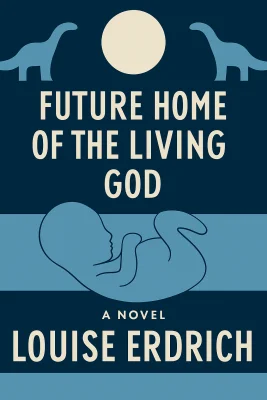
Future Home of the Living God
Categories
Fiction, Science Fiction, Audiobook, Fantasy, Book Club, Indigenous, Literary Fiction, Speculative Fiction, Dystopia, Native American
Content Type
Book
Binding
Hardcover
Year
2017
Publisher
Harper
Language
English
ASIN
0062694057
ISBN
0062694057
ISBN13
9780062694058
File Download
PDF | EPUB
Future Home of the Living God Plot Summary
Introduction
Cedar Hawk Songmaker stares at the positive pregnancy test in her Minneapolis bathroom, unaware that the world is about to unravel. Outside, scientists are discovering something impossible: evolution has reversed. Every living thing on Earth is regressing to earlier forms, and pregnant women are disappearing into government facilities. Cedar, adopted by liberal white parents but biologically Ojibwe, carries what might be humanity's last normal child—or something else entirely. As society collapses and a theocratic government begins hunting pregnant women, Cedar must navigate a world where her unborn baby represents either salvation or damnation. She writes letters to her child, documenting their flight through underground networks, hidden caves, and ultimately into the sterile horror of a prison disguised as a birthing center. In this strange new world where birds grow teeth and flowers turn carnivorous, Cedar's pregnancy becomes both a blessing and a death sentence.
Chapter 1: Seeds of Change: Pregnancy in a World Unraveling
The morning Cedar discovers she's pregnant, the news breaks that evolution has stopped—and reversed. She sits in her South Minneapolis bungalow, one hand on her belly, watching scientists on television struggle to explain the impossible. Chickens are laying eggs that hatch into feathered reptiles. Houseplants are growing teeth. The quantum structure of reality itself seems to be unwinding. Cedar's adoptive parents, Glen and Sera Songmaker, call frantically. Buddhist environmentalists with trust funds and impeccable liberal credentials, they beg her to come home. But Cedar has other plans. A year ago, she received a letter from her biological mother, Mary Potts, living on an Ojibwe reservation in northern Minnesota. Cedar had filed it away, labeled with bitter disappointment—her birth family ran a gas station, not the romantic tragedy she'd imagined. Now, carrying a child into an uncertain world, she needs answers about her genetic heritage. The pregnancy feels different from the abortion she'd had years earlier. This time, the positive test fills her with yes. She edits a Catholic magazine called Zeal and finds herself contemplating the Incarnation with new understanding. As her body builds a container for human spirit, the world outside grows stranger. Reports flood in of animals reverting to ancient forms, of DNA sequences activating after millions of years of dormancy. Phil, the father, is an angel in their church Christmas play—literally. A liberation theology Catholic with kind eyes and careful hands, he fell in love with Cedar among the costume racks and dusty props. Their relationship bloomed in the church basement, surrounded by shepherds' robes and wise men's crowns. Now, as Cedar grapples with pregnancy in a collapsing world, she keeps the news from him, unsure whether she loves him or simply needs him. Outside her window, a bird with a beakless, lizard-like head feeds on mulberries, its slate-blue feathers gleaming in the dying light of their old reality.
Chapter 2: Roots of Identity: Seeking Origin as Chaos Spreads
Cedar drives north through a Minnesota she no longer recognizes. Church billboards proclaim "Endtime at Last!" and "Future Home of the Living God" marks empty fields. The familiar landscape holds its breath between what was and what might come. She's looking for the Superpumper where her biological family works, following directions that lead her in circles through reservation back roads. When she finally finds the yellow house with its wheelchair ramp and Virgin Mary shrine, Sweetie Potts emerges like a character from Cedar's abandoned fantasies. Short and curved with gleaming white teeth, Sweetie wields a garden hose like a weapon against dusty couch cushions. Her shifted black eyes hold both wariness and desperate hope. Inside, ancient Grandma Virginia wheels herself forward—over a hundred years old and still fierce, her thin white braid wound into a bun, her dark eyes sharp as obsidian. The reunion fractures along fault lines of expectation. Cedar's sister, Little Mary, arrives in five-inch heels and black lipstick, her hair spiked purple, radiating contempt for the privileged adopted sister who "thinks she's smart as hell." The girl is sixteen and claims to be the only sober person in her class, a burden that's driving her toward pharmaceutical crime at their family business. But it's Eddy, Sweetie's husband, who provides the anchor Cedar needs. Eddy is writing a three-thousand-page manuscript about reasons not to kill himself, adding a page each day he chooses to live. Harvard-educated but broken by failed attempts to reform reservation schools, he finds unexpected joy in cataloguing small pleasures: gas station cappuccino foam, the marriage of salt and hydrogenated grease in nachos, the elegant machinery of despair unwinding. When Cedar confesses her pregnancy, his eyes fill with tears of recognition. Here, finally, is today's reason to stay alive. They sit in the casino restaurant sharing submarine sandwiches while he shows her pages from his endless book, and Cedar feels the click of true connection—someone who listens, who sees her not as a symbol but as herself.
Chapter 3: Flight and Capture: A Pregnant Woman on the Run
The world reshapes itself around pregnant women. Congress passes new powers allowing the government to identify and sequester them "for their own safety." Cedar learns this from Phil, who arrives at her house wild-eyed and scarred, carrying duffel bags full of weapons he's bought from fellow parishioners. The basement of their church had sheltered three women; all were captured when a neighbor noticed too many deliveries of industrial-sized bean cans. Phil's body tells the story of his interrogation in careful burns and welts. Truth seminars, he calls them, conducted by ordained ministers under military oversight. His voice cracks when he admits he gave them Cedar's name, but she can see the price he paid written in scabs and newly broken teeth. They spend their last night together in their house, holding each other among the shadows of their former life. When Bernice arrives, she brings a cheerful basket and a hidden gun. Round and honey-brown with Betty Crocker hair, she radiates false maternal warmth as she coaxes Cedar into her silver Camry with automatically locking seatbelts. The hospital feels like sanctuary at first—golden walls, white cotton sheets, food that tastes better than anything Cedar has eaten in months. Her roommate Agnes Starr, claiming descent from the outlaw Belle Starr, plans escape with single-minded determination. The drugs they give as vitamins create a blissful haze that makes everything seem manageable. But Agnes warns her to hide the pills, to flush them away, to stay alert. Reality crashes back in waves: the deteriorating food, the blank-faced nurses, the wall of photographs showing smiling women with dates of birth and death below their names. Each photo ends with "She served the future." Agnes attempts her break during Cedar's ultrasound, bowls over doctors and nurses with an IV stand turned weapon, but she never makes it past the lobby. They find her portrait on the wall the next day, her bleached hair roots dark, her expression peaceful in death.
Chapter 4: Sanctuary Among the Potts: Finding Family in Collapse
Cedar wakes in the recycling facility surrounded by mountains of sorted waste, saved by an underground network she never knew existed. Sera had infiltrated the hospital as food service, enduring the horror of serving mystery meat to pregnant prisoners. The rescue unfolds through careful timing—a diversion, a rope braided from hospital blankets, a descent down the hospital's brick face while guards pound on their barricaded door. Shawn, their skeletal savior with tragic brown eyes, drives them through predawn darkness in a truck that smells of feet and rubber. At the reservation, Eddy has transformed from depressive intellectual to tribal war chief. His maps show the return of ancestral lands, colored purple to mark territory reclaimed as federal authority collapses. Veterans have organized militias, casino cash funds expansion, and Eddy's depression has lifted into something resembling joy. He sees the reversal not as catastrophe but as revelation—the chance to witness design at work, to understand the elegant machinery of biological unwinding. But sanctuary comes with complications. Cedar learns that Phil betrayed her under torture, information that cuts deeper than physical pain. Glen, her adoptive father, is revealed to be her biological father—the result of an affair with Sweetie during a land rights case years ago. The truth explodes her understanding of family, love, and identity. Sera's decades-long deception was meant to protect them both, to keep Glen from being the "real" parent, but it left Cedar searching for connections that were always there. As winter approaches, the reservation becomes a fortress. Drones patrol the skies like mechanical insects, and underground caves provide shelter when raids threaten. Cedar finds peace in Grandma Virginia's stories of devil lovers and fat man races, tales that seem to predict the chaos now surrounding them. Little Mary abandons her Goth persona for preppy rebellion, coloring Eddy's maps while he explains their expanding sovereignty. In this strange interregnum, Cedar grows huge with child, protected by people who claim her as their own while the outside world burns.
Chapter 5: Betrayal and Revelation: The Truth Behind Cedar's Birth
Phil returns like a broken angel, his body a geography of torture scars, his mind rewired by pain into something Cedar no longer recognizes. He speaks of founding dynasties if their baby proves "normal," of seizing power in a world where genetic lottery tickets are more precious than gold. His damaged smile reveals missing teeth and dreams that horrify more than his physical wounds. When Cedar calls for help, he disappears into the night, leaving behind only the certainty that her past assumptions about love and loyalty were naive. The revelation of Glen as her biological father reshapes Cedar's understanding of herself. Sera's bitter confession—"You're not adopted"—comes in a moment of anger but explains decades of resemblances Cedar had dismissed. Glen's absence during this crisis makes sense now; he cannot face Sweetie without confronting the lie that structured Cedar's entire childhood. The truth about her conception emerges through Sera's reluctant admissions: Glen representing the tribe in a land case, an affair that produced Cedar, then years of careful fiction to protect everyone involved. Grandma Virginia's stories take on new meaning as Cedar processes these revelations. The ancient woman speaks of blue devils who visit in dreams, of children born with mysterious marks, of the thin line between blessing and curse that runs through their bloodline. Her tales of supernatural inheritance—rugaroo shapeshifters, medicine power gone dark—no longer seem like folklore but genetic memory surfacing in a world where DNA itself has become unstable. As Cedar's pregnancy advances, the outside world grows more dangerous. Reports filter through their communication networks of hospitals that are really prisons, of survival rates dropping toward zero, of babies taken for purposes no one will name. Drones patrol with increasing frequency, and even the reservation's sovereignty cannot guarantee protection. Phil's brief return has exposed their location; bounty hunters track pregnant women like escaped slaves, and the rewards increase as normal births become rarer. Cedar practices with the ornamental Custer rifle Eddy insists she carry, her hands learning the weight of weapons while her body prepares for birth.
Chapter 6: Final Confinement: The Prison of Mothers
Betrayal comes from unexpected quarters—desperate pilgrims at Saint Kateri's shrine who need bounty money more than salvation. Cedar wakes zip-tied in a van, watching the statue of her patron saint dwindle behind them as she's transported to what the painted sign calls "Stillwater Birthing Center." The facility is actually a converted prison where pregnant women are processed like cattle, photographed by Miguel the makeup artist who gives them Virgin Mary faces before their portraits join the wall of the dead. The prison operates with bureaucratic horror disguised as maternal care. Women wear neon jumpsuits and clean their own cells while staff members—many of them prisoners themselves—maintain systems designed for maximum psychological torment. The dining hall wall displays hundreds of portraits, each woman's face glowing with artificial sanctity, each caption reading "She served the future" below dates that mark birth and death as the same day. Cedar's roommate Estrella, forced into pregnancy through repeated insemination, explains the brutal mathematics: fifteen to twenty percent chance of survival for both mother and child. Mother, the grotesque television personality with dough-white skin and lipless smile, broadcasts mandatory programming about divine obligation and patriotic duty. Her husband Papa joins her occasionally, his sunken eyes and artificial teeth creating a nightmarish parody of parental authority. The programming mixes religious rhetoric with medical misinformation, creating a theology where women's deaths in childbirth become martyrdom for species survival. Guards distribute vitamin supplements that are actually sedatives, keeping the women docile until labor begins and chemical euphoria wears off into stark terror. Jessie, the "dweeb" nurse from Cedar's first hospital, has infiltrated this facility as an obstetrician, disguising herself with fashionable glasses and professional competence. She provides Cedar with fragments of hope—information about Agnes Starr's successful escape in a body bag, promises to track any surviving babies, confirmation that the horror is real but not absolute. Plants grow wild throughout the prison as evolution reverses, creating jungle undergrowth in stairwells and corridors, while giant dragonflies hover outside shatterproof windows like prehistoric ghosts. The building itself seems to rebel against its purpose, life asserting itself in every crack and corner.
Chapter 7: Birth in Darkness: Separation and Survival
Cedar's labor begins on Christmas Eve with the precision of divine timing. The delivery room fills with spirits only she can see—thousands of saints and ancestors gathering to witness what might be the last normal birth on Earth. Pain becomes transcendence as her body opens to release the child she has carried through collapse and flight. The room transforms into ocean, then cosmos, waves of agony lifting her toward stars that burn in patterns of blessing and curse. When her son emerges, blue-tinged and perfect, his eyes hold intelligence that seems older than his minutes of life. Copper fuzz covers his skin like precious metal, and his grip on her finger carries the strength of someone who already understands what survival requires. For moments that stretch into eternity, Cedar looks into what she recognizes as the soul of the world itself, concentrated in this small being who chose to be born now, in this place, against all odds. The needle's sting steals consciousness before she can memorize his face completely. They pry apart his tiny fist to take him from her arms, and Cedar falls into darkness knowing she may never see him again. When she wakes days later, her heart damaged by the trauma of birth, she learns she is being prepared for the next pregnancy. The facility operates on industrial principles: each woman's body a factory for potential futures, each successful birth a victory against the dying of the light. Jessie may have spirited her son to safety—Cedar can only hope, can only sing the lullaby Eddy composed, can only trust in connections that run deeper than policy or prison walls. Her cell contains a bulletin board covered with baby pictures, a mockery of maternal longing that guards update regularly with new photographs of the potentially saved. She writes in her journal, creates art from recycling scraps, and remembers snow—the last snowfall she witnessed as a child, when winter still meant winter and the future seemed as infinite as falling flakes.
Summary
Cedar's story ends where it began—with waiting, with hope maintained against crushing evidence, with the stubborn insistence that love transcends biological destiny. Her son exists somewhere beyond the prison walls, carried by networks of resistance that operate in shadows and silence. The world continues its backward slide toward simpler forms, but consciousness persists in acts of rebellion: plants that grow toward light, women who sing together in darkness, children born who grasp with more than instinct. The future Cedar imagined—a normal childhood for her son, family gatherings, the simple continuity of generations—has dissolved into something unrecognizable. Yet her letters to him continue, scratched onto whatever paper survives, maintained like prayer or curse against forgetting. In this place where mothers come to die and babies disappear into custody, she preserves the story of their brief time together, when her body was his world and his existence was her reason for surviving whatever came next. Her final question echoes through the manuscript like prophecy: where will her son be when it snows on Earth for the last time? The query contains its own answer—wherever he is, whenever that moment comes, he will carry within him the memory of her voice, the strength of her defiance, and the knowledge that he was loved before he was born, while the world was ending, by someone who chose hope over evidence and faith over despair.
Best Quote
“The first thing that happens at the end of the world is that we don’t know what is happening.” ― Louise Erdrich, Future Home of the Living God
About Author

Louise Erdrich
Erdrich explores the intricate tapestry of cultural identity and heritage through her profound narratives, reflecting her mixed German American and Ojibwe roots. Her writing purpose delves into the complexities of Native American life, presenting stories that weave together the historical and the contemporary. By examining themes of family, identity, and survival, Erdrich invites readers to ponder the multifaceted nature of belonging and tradition. Her works resonate deeply because they not only highlight the struggles and resilience of Native communities but also invite broader reflections on the universal human condition.\n\nIn her novels, such as "Love Medicine" and "The Beet Queen," Erdrich combines elements of her own experiences and cultural background, crafting stories that speak to both personal and collective histories. Her method often involves layered storytelling and interconnected characters, creating a rich narrative texture that reflects the interconnectedness of community and family. This approach benefits readers by offering them a window into the lives of characters who navigate complex cultural landscapes, fostering empathy and understanding. Moreover, her children's book, "Grandmother's Pigeon," extends her exploration of identity to younger audiences, emphasizing the importance of heritage and storytelling.\n\nErdrich's contributions to literature have been recognized with prestigious awards, such as the National Book Critics Circle Award, underscoring her impact as a significant voice in contemporary fiction. Her unique perspective as an enrolled member of the Anishinaabe nation enriches the literary landscape, offering insights that challenge and inspire readers. Through her bio and body of work, Erdrich's storytelling remains an essential exploration of identity, history, and the enduring power of narrative.
Read moreDownload PDF & EPUB
To save this Black List summary for later, download the free PDF and EPUB. You can print it out, or read offline at your convenience.
Future Home of the Living God
by Louise Erdrich
