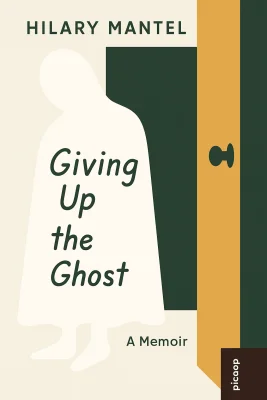
Giving Up the Ghost
Categories
Nonfiction, Biography, Memoir, Writing, Audiobook, Womens, Autobiography, Biography Memoir, Book Club, British Literature
Content Type
Book
Binding
Paperback
Year
2004
Publisher
Picador
Language
English
ASIN
0312423624
ISBN
0312423624
ISBN13
9780312423629
File Download
PDF | EPUB
Giving Up the Ghost Plot Summary
Introduction
In the annals of contemporary literature, few voices have captured the intersection of physical suffering and artistic triumph with such unflinching honesty as Hilary Mantel. Born into working-class England in the 1950s, Mantel would rise from humble beginnings to become one of Britain's most celebrated novelists, winning the Man Booker Prize twice for her groundbreaking historical fiction. Yet her path to literary greatness was marked by a decades-long battle with chronic illness, medical misdiagnosis, and the profound personal costs of creativity pursued against overwhelming odds. This memoir offers readers an intimate portrait of resilience forged in the crucible of adversity. Through Mantel's piercing prose, we witness how a sickly child with an extraordinary imagination transformed pain into artistic vision, how a young woman dismissed by doctors as neurotic fought to reclaim her narrative, and how a writer learned to inhabit the liminal space between memory and invention. Her story illuminates the complex relationship between bodily experience and literary creation, revealing how physical suffering can paradoxically become the foundation for transcendent art. In these pages, we encounter not just the making of a writer, but the profound human capacity to create meaning from the fragments of a shattered life.
Chapter 1: Childhood Ghosts: Growing Up in Working-Class England
Hilary Mantel's earliest memories are steeped in the industrial grit and familial warmth of 1950s Derbyshire. Born into a Catholic household where her grandmother's wisdom mingled with her grandfather's tales of railway work and distant wars, young Hilary inhabited a world where storytelling was both entertainment and survival strategy. The cramped terraced houses of Hadfield, with their shared outdoor lavatories and coal-fired ranges, formed the backdrop of her formative years. Here, among relatives who spoke in whispers of dead babies and family secrets, she learned that reality was layered with the unseen and the unspoken. The texture of working-class life in post-war England permeates Mantel's recollections with vivid sensory detail. She remembers the taste of her grandmother's sponge cake, warm from the oven, and the complex scent of her grandfather's clothes infused with machine oil and foreign soil from his military service. These early years were marked by an unusual freedom of imagination that allowed her to believe herself variously a knight errant, a Red Indian brave, and a future railway guard, untroubled by conventional gender expectations. Yet beneath this seemingly idyllic childhood lay currents of instability that would shape her entire life. The sudden appearance of Jack, who would become her stepfather, disrupted the settled rhythms of her grandmother's household. The family's move to Brosscroft introduced an element of gothic uncertainty into her young world, complete with phantom footsteps, missing keys that mysteriously reappeared, and an atmosphere thick with unacknowledged tensions. Most significantly, it was during these early years that Mantel first encountered what she would later recognize as supernatural experiences. The incident in the "secret garden" at age seven, where she sensed an malevolent presence that seemed to invade her very being, marked a turning point in her spiritual development. This encounter with inexplicable evil left her feeling that grace had abandoned her, initiating a crisis of faith that would influence her relationship with Catholicism for the rest of her life. The child who emerged from these experiences was precociously observant, fiercely intelligent, and already marked by a sense of being somehow different from her peers. Her ability to see through adult deceptions, combined with her gift for narrative, would serve her well in later life, but it also isolated her from the simple certainties that sustained other children.
Chapter 2: The Unquiet Mind: Early Education and Religious Disillusionment
Mantel's formal education began at St. Charles Borromeo, a Catholic primary school that embodied all the rigid authoritarianism and casual cruelty of post-war religious education. Under the reign of Mother Malachy, a nun whose violence was matched only by her intellectual limitations, young Hilary learned her first lessons in institutional oppression. The classrooms, reeking of carbolic and fear, became battlegrounds where independent thought was systematically crushed and conformity enforced through physical punishment. The arrival of Mrs Stevens, a Protestant supply teacher, introduced a new form of educational trauma. This ginger-haired martinet imposed arbitrary rules and administered punishment with seemingly sadistic pleasure, leaving lasting impressions on a sensitive child already struggling with physical ailments and family disruption. The experience taught Mantel early lessons about the abuse of power and the vulnerability of the young and defenseless. Despite these adversities, education also provided Mantel with tools for resistance and eventual escape. Her voracious reading habit, nurtured by her grandfather's hidden cache of books in the garret, opened windows to other worlds and ways of being. She devoured everything from King Arthur legends to extracts from Don Quixote and Julius Caesar, developing a precocious literary sensibility that would sustain her through years of institutional oppression. The transition to the Convent of the Nativity marked a significant improvement in her educational circumstances. This more genteel institution, populated by Protestant girls whose parents paid for the privilege of a "good" education, provided Mantel with her first taste of social mobility. Here, she encountered nuns who, while strict, were not casually violent, and teachers who recognized her exceptional abilities. Yet even in this improved environment, Mantel's religious faith continued to erode. The mechanical recitation of prayers and the gap between Christian ideals and institutional reality deepened her skepticism. Her early ambition to become a priest gave way to a more complex relationship with Catholic doctrine, one that acknowledged the poetry of religious language while rejecting its literal truth claims. The seeds of her future success were planted during these years of educational struggle. Her ability to excel academically despite personal turmoil, her gift for seeing through hypocrisy and pretense, and her growing mastery of language all emerged from the crucible of an education system that sought to diminish rather than develop her potential.
Chapter 3: Corporeal Betrayal: The Medical System's Failings
The intersection of Mantel's physical suffering and medical neglect forms one of the most harrowing threads in her narrative. From adolescence onward, her body became a source of inexplicable pain that would be systematically dismissed, misdiagnosed, and maltreated by a medical establishment incapable of seeing beyond its own prejudices. What began as mysterious leg pains and crushing fatigue would eventually be revealed as endometriosis, a condition that went unrecognized for over a decade. The pattern of medical dismissal began early and intensified as Mantel entered young adulthood. Doctors, confronted with a articulate young woman reporting complex symptoms, defaulted to psychiatric explanations rather than investigating physical causes. The assumption that her pain was "psychosomatic" reflected not just medical ignorance but deeply ingrained gender bias that pathologized female experience and dismissed women's own understanding of their bodies. Her encounter with the psychiatric system during her university years represents perhaps the most devastating chapter in this medical odyssey. Prescribed powerful psychotropic drugs for symptoms that were fundamentally physical, Mantel experienced the terrifying phenomenon of akathisia, a drug-induced condition that mimics severe mental illness. The irony was cruel: medications given to treat supposed psychological distress created actual psychological torment more severe than anything she had previously experienced. The prohibition against writing imposed by her psychiatrist reveals the medical establishment's profound misunderstanding of creativity and its relationship to mental health. Rather than recognizing her literary aspirations as a source of meaning and identity, the psychiatric system sought to strip away the very activities that gave her life purpose and structure. This attempt to silence her voice would prove prophetic of later struggles to be heard and believed. The eventual diagnosis of endometriosis, when it finally came, arrived too late to preserve her fertility but vindicated years of insistence that her pain was real and physical. The radical surgery that followed represented both salvation and loss, relieving her suffering while foreclosing possibilities for the biological motherhood she had not yet decided she wanted. The experience left her with profound questions about medical authority and the nature of advocacy for one's own health. Through these trials, Mantel developed a hard-won expertise in navigating medical bureaucracy and a fierce commitment to trusting her own bodily experience over professional dismissal. Her ordeal illuminates broader questions about how society treats chronic illness, particularly in women, and the courage required to persist in seeking answers when the system fails.
Chapter 4: The Writing Life: Finding Voice Through Adversity
Against the backdrop of chronic illness and personal upheaval, Mantel's emergence as a writer represents a triumph of will over circumstance. Her literary vocation developed not despite her suffering but because of it, as writing became both refuge and weapon in her struggle to make sense of an often hostile world. The connection between her physical experience and her artistic vision would prove fundamental to her eventual success as a novelist. Her earliest writing emerged from the need to process experiences that seemed to exceed normal categories of understanding. The story about the changeling that so disturbed her psychiatrist revealed an already sophisticated grasp of how narrative could explore the boundaries between reality and fantasy, normal and abnormal. Her subsequent prohibition from writing only intensified her commitment to the craft, making it a form of forbidden knowledge that was all the more precious for being denied. The decision to write about the French Revolution while living in Botswana demonstrated Mantel's ability to find her subjects in unlikely places and to pursue them with encyclopedic thoroughness. Her methodical approach to research, creating elaborate card indexes and charts to map the complexity of historical events, reflected both her natural scholarly inclinations and her determination to master her material completely. This attention to detail would become a hallmark of her historical fiction. The physical act of writing became increasingly challenging as her illness progressed, yet she persisted in developing her craft under the most difficult circumstances. Working at kitchen tables in inadequate lighting, using unreliable equipment, and fighting against brain fog and chronic pain, she learned to write with whatever resources were available. This experience of limitation paradoxically strengthened her voice, forcing her to achieve maximum impact with minimal means. Her breakthrough came not through conventional literary channels but through the vindication of her own judgment about her work's worth. When her French Revolution novel was finally published after years of rejection, it proved that her faith in her own abilities had been justified. The success demonstrated that perseverance and self-belief could overcome even the most discouraging obstacles. The writing life that Mantel ultimately created for herself reflects hard-won lessons about the relationship between art and adversity. Her ability to transform personal suffering into compelling fiction, to find universal themes in particular experiences, and to write with authority about power and powerlessness all stem from her early struggles with systems that sought to silence or diminish her.
Chapter 5: Lost Futures: Illness, Infertility, and Phantom Children
The devastating surgery that ended Mantel's reproductive capacity at age twenty-seven represents more than medical intervention; it symbolizes the foreclosure of imagined futures and the necessity of creating new forms of meaning from loss. Her hysterectomy, performed as treatment for advanced endometriosis, removed not just diseased organs but possibilities she had not yet fully considered. The child she might have had, whom she named Catriona after a Robert Louis Stevenson character, became a perpetual absence that haunted her subsequent life. The social context of involuntary childlessness added layers of complexity to Mantel's grief. In Saudi Arabia, where she lived for several years, the assumption that all women were destined for motherhood made her situation particularly awkward. Well-meaning expatriate wives constantly inquired about her family plans, unable to comprehend that some women had no choice in the matter. Their assumptions about fertility drugs and adoption attempts revealed how thoroughly society expected women to define themselves through their reproductive capacity. The psychological work of accepting infertility proved more complex than the physical recovery from surgery. Mantel describes the strange phenomenon of continuing to plan for children who would never exist, accumulating household goods and living space as though preparing for a family that remained forever just out of reach. This unconscious preparation for phantom children reflected the difficulty of fully accepting a reality that contradicted such fundamental expectations about women's lives. Her relationship to the unborn took on almost spectral qualities, as she wrestled with dreams of failing as a midwife and visions of malformed creatures that seemed to represent her own creative failures. The boundary between literal and metaphorical children became permeable in her imagination, with her books taking on some of the emotional weight that biological offspring might have carried. The hormonal treatments that followed her surgery created additional challenges, transforming her body in ways that made her unrecognizable to herself. The dramatic weight gain and other side effects represented another form of loss, as the person she had been physically disappeared beneath medical intervention. This experience of radical bodily change deepened her understanding of identity's fragility and the complex relationship between physical and psychological selfhood. Yet from this loss emerged unexpected freedoms and new forms of creativity. Without the possibility of biological children, Mantel could pursue her writing career with single-minded devotion. Her phantom children found expression in her novels, particularly in her ability to imagine and inhabit the consciousness of historical figures who had been dead for centuries.
Chapter 6: Haunted Houses: Physical and Metaphysical Dwellings
Throughout Mantel's life, houses served as more than mere shelter; they became repositories of memory, stages for family drama, and locations where the boundary between the living and the dead grew permeable. From her grandmother's terraced house in Hadfield to the converted asylum where she would eventually make her home, each dwelling in her story carries its own atmosphere and its own ghosts, both literal and metaphorical. The house at Brosscroft stands as perhaps the most significant location in her early development, a place where family secrets took physical form in unexplained phenomena. The mysterious movement of objects, the appearance and disappearance of keys, and the general sense of invisible presence created an atmosphere in which a sensitive child learned to expect the impossible. The house became a character in its own right, reflecting and amplifying the tensions that existed between its human inhabitants. Her adult homes continued this pattern of mysterious occurrences, suggesting either that Mantel possessed some unusual sensitivity to supernatural phenomena or that psychological stress could manifest in apparently physical ways. The cottage in Norfolk, with its own resident ghost, provided a sanctuary that connected her to literary tradition while offering respite from the pressures of contemporary life. The regular weekend retreats to this rural refuge became essential to her creative process and emotional well-being. The executive home in Surrey, with its fake Tudor facade and modern conveniences, represented both achievement and compromise. Despite its material comforts, the house never felt entirely real to Mantel, perhaps because it embodied a suburban ideal that bore no relationship to her own history or authentic preferences. The rapid sale of this property reflected her recognition that physical comfort without emotional resonance could not provide lasting satisfaction. The converted asylum that became her final home in this narrative represents a kind of culmination, a place where the association with madness and confinement could be transformed into creative opportunity. Living among the architectural remnants of Victorian attitudes toward mental illness, Mantel found a setting that acknowledged the reality of psychological suffering while asserting the possibility of recovery and productivity. The recurring presence of supernatural phenomena in her various homes might be understood as expressions of unresolved psychological conflicts, manifestations of creative sensitivity, or simply acknowledgments that reality contains elements that resist rational explanation. Whatever their ultimate nature, these ghostly encounters became part of Mantel's understanding of how the past persists into the present and how creative individuals might be particularly susceptible to such visitations.
Chapter 7: Reclaiming the Narrative: The Power of Memory
In the final movement of her memoir, Mantel confronts the fundamental challenge of all autobiographical writing: how to create coherent meaning from the fragments of a life that often seemed chaotic and painful. Her decision to write this memoir represents an act of reclamation, an assertion of her right to tell her own story after years of having others interpret her experience through their own lenses. The very act of writing becomes a form of resistance against the forces that sought to silence or diminish her. The process of excavating memory proves both rewarding and dangerous, as Mantel discovers that the past remains alive in ways that can still inflict wounds. Her metaphor of memory as a vast plain where all experiences exist simultaneously, rather than buried at different archaeological levels, suggests a nonlinear understanding of how the past operates in consciousness. This conception allows her to move freely between different periods of her life, finding connections and patterns that linear chronology might obscure. Her struggle with the reliability of memory reflects broader questions about the nature of truth in autobiographical writing. Rather than claiming perfect recall, Mantel acknowledges the ways in which memory can be shaped by subsequent experience and the stories we tell ourselves about our past. This honest uncertainty paradoxically increases rather than diminishes the authority of her account, as readers trust a narrator who admits the limitations of her own perspective. The metaphor of creating oneself from whatever materials are available resonates throughout the memoir's conclusion. Like someone constructing a party dress from old rags, Mantel has fashioned a coherent identity from the scattered elements of a difficult childhood, chronic illness, and literary ambition. The result may not conform to conventional patterns of success or happiness, but it represents an authentic achievement born from honest engagement with challenging circumstances. Her final image of herself as a ghostly figure carrying wrapped bundles of future books across uncertain terrain captures both the precariousness and the determination that have characterized her career. The uncertainty about whether God is willing to allow these books to be written acknowledges the element of grace or fortune that influences creative success, while her persistence in carrying them forward demonstrates the human responsibility to keep working despite uncertainty. The memoir ultimately argues for the transformative power of narrative itself. By telling her story with such unflinching honesty and literary skill, Mantel demonstrates how even the most painful experiences can be transformed into art that illuminates universal truths about resilience, creativity, and the complex relationship between body and mind.
Summary
Hilary Mantel's memoir stands as a testament to the transformative power of pain consciously engaged and artistically rendered, proving that our deepest wounds can become the source of our greatest strengths when met with courage and creative vision. Her journey from a chronically ill child dismissed by authority figures to a celebrated novelist who commands international respect illustrates how authentic success often emerges not from privilege or ease, but from the determined refusal to accept others' definitions of our worth and potential. The enduring value of Mantel's story lies in its demonstration that healing is not always about returning to a previous state of wholeness, but about creating new forms of meaning and identity from whatever materials life provides. Her example encourages readers facing their own struggles with chronic illness, family dysfunction, or creative ambition to trust their own perceptions and persist in their efforts to be understood. For anyone seeking to transform personal suffering into something of broader value, Mantel's memoir offers both inspiration and practical wisdom about the long apprenticeship required to master one's craft and find one's authentic voice in a world often hostile to difference.
Best Quote
“You come to this place, mid-life. You don’t know how you got here, but suddenly you’re staring fifty in the face. When you turn and look back down the years, you glimpse the ghosts of other lives you might have led; all houses are haunted. The wraiths and phantoms creep under your carpets and between the warp and weft of fabric, they lurk in wardrobes and lie flat under drawer-liners. You think of the children you might have had but didn’t. When the midwife says, ‘It’s a boy,’ where does the girl go? When you think you’re pregnant, and you’re not, what happens to the child that has already formed in your mind? You keep it filed in a drawer of your consciousness, like a short story that never worked after the opening lines.” ― Hilary Mantel, Giving Up the Ghost
Review Summary
Strengths: The review acknowledges the book's infrequent moments of lucidity and excellent advice on writing. It appreciates the author's brutal honesty and unapologetic approach to adversity, which resonates with the reviewer’s own perspective on life’s challenges. Weaknesses: The reviewer expresses strong negative emotions towards the book, describing it as disturbing and likening it to a "memoir of madness" or a "spellbook." The tone suggests a visceral discomfort with the content, implying it is unsettling and haunting. Overall: The reader exhibits a conflicted sentiment, recognizing some value in the writing but largely feeling disturbed and unsettled by the book's content. The recommendation is ambiguous, as the reviewer seems to appreciate the honesty but is overwhelmed by the book's intensity.
About Author

Hilary Mantel
Mantel investigates the complexities of power and personal identity through historical narratives, providing a fresh perspective on well-trodden events. Her purpose is not merely to recount history but to breathe new life into it, using her novels to explore the moral ambiguities and intricate human motivations behind historical figures. This method is exemplified in the "Wolf Hall" trilogy, where she delves into the life of Thomas Cromwell, earning her the Man Booker Prize for both "Wolf Hall" and "Bring Up the Bodies". Mantel's narrative approach is marked by meticulous research and rich character development, allowing readers to engage with the past in a deeply personal way.\n\nIn addition to her acclaimed historical fiction, Mantel's diverse range of books reflects her ability to traverse different genres and themes. In "Beyond Black", she crafts a darkly humorous tale that interrogates the boundaries between the living and the supernatural. Meanwhile, "A Place of Greater Safety" offers a gripping portrayal of the French Revolution, demonstrating her skill in dramatizing complex political landscapes. Mantel's bio reveals her as a prolific author whose work not only entertains but also challenges readers to reflect on the ethical dimensions of power and history.\n\nReaders of Mantel's work benefit from her insightful exploration of the human condition and the forces that shape history. Her novels provide a rich tapestry of narrative and character, making them ideal for those interested in historical fiction that is both intellectually stimulating and emotionally engaging. As a winner of prestigious awards like the Man Booker Prize and the National Book Critics Circle Award, Mantel has firmly established her place in contemporary literature, with her works serving as essential reading for anyone seeking a deeper understanding of the interplay between history and narrative.
Read moreDownload PDF & EPUB
To save this Black List summary for later, download the free PDF and EPUB. You can print it out, or read offline at your convenience.
Giving Up the Ghost
by Hilary Mantel
