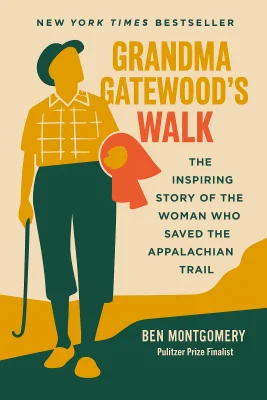
Grandma Gatewood's Walk
The Inspiring Story of the Woman Who Saved the Appalachian Trail
Categories
Nonfiction, Biography, History, Memoir, Nature, Audiobook, Travel, Biography Memoir, Book Club, Adventure
Content Type
Book
Binding
Hardcover
Year
2014
Publisher
Chicago Review Press
Language
English
ISBN13
9781613747186
File Download
PDF | EPUB
Grandma Gatewood's Walk Plot Summary
Introduction
In September 1955, a 67-year-old grandmother from rural Ohio stood atop Mount Katahdin in Maine, having walked 2,050 miles through fourteen states along the Appalachian Trail. Emma Gatewood had just become the first woman to hike the entire trail alone, carrying nothing but a homemade denim sack containing basic supplies. What makes her achievement even more remarkable is that she would go on to repeat this extraordinary feat two more times, becoming the first person of either gender to complete the trail three times. Emma's story transcends mere physical accomplishment. Through her unprecedented journeys, readers discover the profound courage required to escape decades of domestic abuse, the transformative power of nature as a source of healing and independence, and the extraordinary strength that can emerge when someone finally decides to live life on their own terms. Her adventures reveal not just the rugged beauty of America's wilderness, but the indomitable spirit of a woman who refused to let age, gender expectations, or past trauma define the boundaries of her existence.
Chapter 1: Early Life and Marriage: Roots of Resilience
Emma Rowena Caldwell was born in October 1887 in rural Ohio, the third of fifteen children in a hardscrabble farming family. Her father, Hugh Caldwell, was a Civil War veteran who had lost a leg in battle, while her mother, Evelyn Esther Trowbridge, descended from Revolutionary War stock. The Caldwell household operated on the harsh realities of farm life, where children worked from dawn to dusk and attended school only sporadically when their labor wasn't needed in the fields. From an early age, Emma learned the value of self-reliance and hard work. The family moved frequently, following farming opportunities across Ohio, and Emma developed an intimate relationship with the natural world that surrounded their various homesteads. She learned to identify edible plants, track weather patterns, and find her way through dense forests. These skills, acquired out of necessity rather than leisure, would later prove invaluable during her trail adventures. At eighteen, Emma met Perry Clayton Gatewood, a college-educated teacher who seemed to represent security and social advancement. P.C., as he was known, came from a prominent local family and possessed the kind of respectability that was rare in Emma's world. When he proposed after a brief courtship, Emma accepted, perhaps seeing an escape from the grinding poverty of her childhood. They married on May 5, 1907, when Emma was nineteen years old. What began as a hopeful union quickly revealed itself as a trap. P.C.'s respectable exterior masked a violent and controlling nature. Within months of their wedding, he began physically abusing Emma, a pattern that would continue for over three decades. Despite bearing eleven children and managing a large farm, Emma found herself subject to increasingly brutal treatment. P.C. controlled every aspect of her life, demanded her presence for all farm work, and isolated her from potential sources of help or comfort. The early years of marriage taught Emma that survival required both physical endurance and mental fortitude. She learned to absorb punishment without breaking, to protect her children while maintaining the facade of a functioning household, and to find moments of peace in the only place P.C. couldn't follow her completely: the woods and hills surrounding their farm. These formative experiences in powerlessness and resilience would later fuel her determination to claim her independence through walking.
Chapter 2: Breaking Free: Escape from Domestic Abuse
For thirty-two years, Emma endured systematic abuse that included regular beatings, psychological torment, and complete financial control. P.C.'s violence escalated during her pregnancies, and he once threw her to the floor so violently that she suffered broken ribs and a cracked mole above her ear. The abuse was so severe that Emma later wrote she couldn't rest her head on a pillow for two weeks after one particularly brutal attack. The breaking point came in September 1939, when fifteen-year-old Nelson found his father beating his mother and physically intervened, lifting P.C. off Emma and telling her to run. When P.C. returned with a local official to have Emma arrested on fabricated charges, she threw a five-pound sack of flour in his face before being taken to jail. This moment of defiance marked the end of her willingness to accept victimization. Emma's escape from her marriage was neither simple nor immediate. After being released from jail through the intervention of a sympathetic mayor, she hired a lawyer and filed for divorce, finally winning her freedom in February 1941. The legal victory came at great cost—she was awarded custody of her three youngest children and a small monthly alimony, but P.C. continued to harass and intimidate her for years afterward. Freedom from marriage didn't immediately translate to freedom from hardship. Emma worked a series of menial jobs to support herself and her remaining dependents, often moving between states to find employment. She worked in hospitals, private homes, and boarding schools, always maintaining her independence while slowly building a new life based on her own choices rather than someone else's control. The years following her divorce were marked by Emma's gradual discovery of her own strength and preferences. She began taking longer walks, sometimes disappearing into the woods for entire days. These excursions served both as physical conditioning and psychological healing, allowing her to reclaim the relationship with nature that had sustained her during the darkest years of her marriage. By the early 1950s, with all her children grown and independent, Emma finally had both the freedom and the motivation to contemplate larger adventures.
Chapter 3: The Appalachian Trail: An Unexpected Challenge
In 1954, while working at a county hospital, Emma encountered a National Geographic article about the Appalachian Trail that would change her life forever. The piece described a well-maintained footpath stretching 2,050 miles from Georgia to Maine, complete with regular shelters and clear markings. The article made the journey sound almost leisurely, describing it as suitable for "anyone in normal good health" and requiring no special training or equipment. At sixty-six, Emma decided to attempt the trail, seeing it as the perfect adventure for someone finally free to pursue her own interests. Her first attempt in July 1954 nearly ended in disaster when she became lost in the Maine wilderness just thirty miles from her starting point. Rescue came only after park rangers launched a search, and they advised her to give up her ambitious plan. "Go home, grandma," one ranger told her, but Emma was far from discouraged. Emma's successful 1955 thru-hike began on May 3 at Mount Oglethorpe in Georgia. She carried a homemade denim sack containing Vienna sausage, raisins, Band-Aids, a raincoat, and a few changes of clothes. Her "equipment" was laughably minimal by hiking standards—no tent, sleeping bag, map, or compass. She wore ordinary canvas sneakers rather than hiking boots and relied entirely on her farm-bred toughness and woodland skills. The trail proved far more challenging than the magazine article had suggested. Much of it was overgrown, poorly marked, or damaged by storms and logging operations. Shelters were often destroyed or filthy, forcing Emma to sleep outdoors on beds of leaves or in abandoned buildings. She faced rattlesnakes, thunderstorms, freezing nights, and dangerous river crossings. Her feet swelled so badly that she had to switch to men's shoes partway through the journey. What sustained Emma through these hardships was the profound sense of freedom she experienced in the wilderness. Away from civilization's constraints and expectations, she found herself truly independent for the first time in her life. The trail offered not just physical challenge but spiritual renewal, allowing her to heal from decades of abuse while proving to herself that she could accomplish anything she set her mind to. When she finally reached Mount Katahdin on September 25, 1955, Emma had not only completed an unprecedented feat but had also completed her own transformation from victim to hero.
Chapter 4: Becoming Grandma Gatewood: Fame and Public Persona
Emma's successful completion of the Appalachian Trail thrust her into an unprecedented spotlight. When reporters first discovered her along the trail in Virginia, they were fascinated by the story of an elderly grandmother attempting such a feat alone. By the time she reached Mount Katahdin, her journey was front-page news across America, with headlines like "Ohio Woman, 67, Hiking 2,050 Miles" capturing the public imagination. The media dubbed her "Grandma Gatewood," a name that simultaneously honored her achievement while emphasizing the incongruity of an elderly woman undertaking such adventures. Emma embraced this public persona while carefully controlling what information she revealed. She presented herself as a widow seeking adventure, never mentioning her history of domestic abuse or the deeper motivations behind her need for independence and escape. Television appearances on shows like "Today with Dave Garroway" and "You Bet Your Life with Groucho Marx" brought Emma into American living rooms, where her plainspoken manner and dry humor charmed audiences. She deflected personal questions with folksy sayings and simple explanations—"I thought it would be a nice lark"—while maintaining an air of mystery about her true motivations. This carefully crafted public image made her both accessible and intriguing to the American public. Emma's celebrity status opened doors to experiences she had never imagined. She was invited to the White House, honored by governors, and featured in major magazines like Sports Illustrated. Corporate sponsors offered equipment endorsements, though she famously stuck with her simple tennis shoes and homemade pack. The attention brought both opportunities and burdens, as reporters constantly sought her out and fans expected her to maintain her adventurous lifestyle. Behind the public persona, Emma remained remarkably grounded. She returned to her small Ohio hometown between adventures, living simply and maintaining her independence. She used her fame strategically, advocating for trail maintenance and inspiring others to explore the outdoors. The "Grandma Gatewood" persona became a powerful symbol of what was possible when someone refused to accept society's limitations based on age or gender, though few understood the personal battles that had forged her extraordinary determination.
Chapter 5: Walking Against Odds: Age, Gender, and Equipment
Emma Gatewood's hiking achievements were remarkable not just for their scope but for how thoroughly they defied conventional wisdom about wilderness travel. At an age when most women were expected to settle into quiet domesticity, she embarked on journeys that challenged experienced male hikers half her age. Her success proved that determination and practical wisdom could triumph over youth and expensive equipment. Her unconventional approach to hiking equipment became legendary among trail enthusiasts. While other hikers carried heavy packs filled with specialized gear, Emma's homemade denim sack typically weighed less than twenty pounds and contained only absolute necessities. She slept under the stars or in her shower curtain rather than carrying a tent, heated rocks over fires for warmth instead of using a sleeping bag, and navigated by instinct rather than maps or compasses. Emma's choice of clothing was equally practical and unconventional. She hiked in ordinary dungarees and button-up shirts, switching to Bermuda shorts in hot weather. Her famous canvas sneakers, which she replaced every few hundred miles, provided far less protection than hiking boots but allowed her feet to breathe and dry quickly when wet. She carried a simple wooden walking stick cut from a wild fruit tree, and her only luxury was often a plastic umbrella for sun and rain protection. Gender expectations of the 1950s made Emma's adventures even more groundbreaking. Women were expected to travel with male protection and to avoid situations that might compromise their safety or reputation. Emma's willingness to sleep in strangers' homes, hitchhike when necessary, and camp alone in the wilderness challenged every conventional notion of proper feminine behavior. Her success demonstrated that women possessed far more physical and mental capability than society acknowledged. The physical challenges Emma overcame were extraordinary by any standard. She completed her first thru-hike with undiagnosed bunions that caused her feet to swell out of women's shoes, forcing her to wear men's footwear. She navigated hurricane-swollen rivers, climbed ice-covered peaks with broken glasses, and continued hiking on sprained ankles and injured knees. Her ability to endure hardship without complaint while maintaining an optimistic outlook inspired countless others to reconsider their own perceived limitations.
Chapter 6: Legacy: Transforming Hiking Culture and Trail Preservation
Emma Gatewood's impact on American hiking culture extended far beyond her personal achievements. Her vocal criticism of trail conditions during her 1955 hike sparked a nationwide effort to improve maintenance and infrastructure along the Appalachian Trail. When she complained about overgrown paths, missing blazes, and inadequate shelters, hiking clubs and government agencies took notice and began systematic improvements that likely saved the trail from abandonment. Her unprecedented media coverage introduced millions of Americans to the concept of long-distance hiking at a time when such activities were virtually unknown to the general public. Before Emma, the Appalachian Trail was familiar only to a small community of outdoor enthusiasts. Her story appeared in major newspapers, magazines, and television programs, inspiring countless people to explore hiking and wilderness experiences they had never previously considered. Emma's demonstration that extensive outdoor adventures required neither expensive equipment nor extensive training revolutionized hiking culture. Her minimalist approach proved that common sense, physical conditioning, and determination were more valuable than the latest gear. This philosophy influenced the development of "ultralight" hiking techniques that remain popular today, and her homemade denim pack inspired modern lightweight hiking equipment designs. After completing the trail three times, Emma dedicated herself to trail development and preservation in her home state of Ohio. She spent years marking and clearing a hiking trail through Gallia County, negotiating with farmers for permission to cross private property and building stiles for fence crossings. Her work contributed to the development of the Buckeye Trail, a circuit route around Ohio that now spans over 1,400 miles. Emma's legacy continues to inspire new generations of hikers and outdoor enthusiasts. The annual winter hike at Hocking Hills State Park, which she led for many years, now attracts thousands of participants who gather to honor her memory and experience the natural beauty she championed. Her story demonstrates that extraordinary achievements are possible at any age and that the wilderness remains accessible to anyone willing to approach it with respect, preparation, and determination. Modern hikers still invoke "Grandma Gatewood" when facing difficult challenges on the trail, using her example as motivation to persevere through hardship and self-doubt.
Chapter 7: The Inner Journey: Finding Freedom Through Nature
Emma Gatewood's trail adventures represented far more than physical achievements; they were profound spiritual journeys that transformed her understanding of herself and her place in the world. After decades of living under another person's control, the wilderness offered her complete autonomy for the first time in her adult life. Every decision—when to start walking, where to sleep, what to eat—was entirely her own, creating a sense of empowerment that had been systematically denied to her for most of her life. The solitude Emma found in nature provided essential healing from the trauma of domestic abuse. In the quiet forests and on mountain peaks, away from human judgment and expectation, she could process decades of pain while discovering her own strength and resilience. She often spoke of finding "an aloneness more complete than ever," describing a state of peaceful solitude that allowed her to reconnect with the person she had been before marriage and motherhood consumed her identity. Emma's relationship with nature was both practical and mystical. Her childhood on various farms had taught her to read weather patterns, identify edible plants, and navigate by natural landmarks, but her trail experiences deepened these skills into something approaching communion with the natural world. She could predict storms, find shelter in seemingly barren landscapes, and survive comfortably with minimal resources because she had learned to work with rather than against natural forces. The physical challenges of long-distance hiking served as a form of meditation for Emma, providing rhythm and purpose that helped organize her thoughts and emotions. The repetitive motion of walking, the focus required to navigate difficult terrain, and the immediate demands of survival in the wilderness created a state of mindfulness that allowed her to process her past while planning her future. Each step forward represented progress not just toward a geographical destination but toward personal wholeness. Emma's trail experiences taught her that true security came not from depending on others for protection and provision but from developing her own capabilities and trusting her own judgment. The confidence she gained through successfully completing increasingly difficult adventures carried over into all aspects of her life, transforming her from someone who had been afraid to speak up for herself into a woman who commanded respect and attention wherever she went. Her wilderness journeys became a source of spiritual strength that sustained her long after she stopped hiking, proving that the most important discoveries are often made not in comfortable surroundings but in the challenging spaces where we must rely entirely on ourselves.
Summary
Emma Gatewood's extraordinary life demonstrates that it is never too late to reclaim one's freedom and pursue dreams that others consider impossible. Her transformation from an abused farm wife into America's most celebrated female hiker proves that personal liberation often requires the courage to walk away from limiting circumstances and the determination to keep moving forward despite obstacles and criticism. Emma's legacy offers two powerful lessons for anyone feeling trapped by circumstances or societal expectations. First, that independence and self-discovery often require stepping outside conventional boundaries and comfort zones, trusting in one's own capabilities rather than accepting others' definitions of what is possible. Second, that nature provides not just physical challenge and beauty but profound healing and perspective, offering solitude and freedom that can restore the human spirit and reveal hidden strengths. Her story continues to inspire those who need reminding that extraordinary achievements remain possible at any stage of life, and that the trail toward personal fulfillment, however long and difficult, always begins with a single step forward.
Best Quote
“I would never have started this trip if I had known how tough it was, but I couldn't and wouldn't quit.” ― Ben Montgomery, Grandma Gatewood's Walk: The Inspiring Story of the Woman Who Saved the Appalachian Trail
Review Summary
Strengths: The review highlights the inspiring nature of the book, particularly emphasizing the protagonist's determination and pioneering spirit. The narrative of a 67-year-old woman completing a 2,050-mile thru-hike on the Appalachian Trail is portrayed as remarkable and motivational. The review also appreciates the historical and geographical references that resonate personally with the reviewer. Overall: The reader expresses a highly positive sentiment towards the book, finding it both inspirational and engaging. The story of Emma's resilience and achievements is compelling, and the reviewer strongly recommends it, especially for those interested in tales of adventure and personal triumph.
About Author

Ben Montgomery
Montgomery explores narratives of resilience and social justice, intertwining historical events with personal stories to highlight overlooked societal issues. As an author, he employs narrative nonfiction to make complex histories accessible, ensuring readers are not only informed but also engaged. His writing often reflects on themes such as racial justice and human endurance, seen in works like "A Shot in the Moonlight," which delves into the story of George Dinning's resistance against a lynch mob.\n\nMontgomery's investigative journalism career provides a solid foundation for his literary pursuits. He works as an enterprise reporter for the Tampa Bay Times, where he applies rigorous investigative methods to his storytelling. Beyond journalism, he founded Gangrey.com and co-founded the Auburn Chautauqua, emphasizing the importance of community and narrative craft. Readers benefit from his deep commitment to unveiling historical truths, gaining insights into the societal impacts of past injustices. His book "Grandma Gatewood’s Walk" is a testament to this, chronicling Emma Gatewood's pioneering journey on the Appalachian Trail and highlighting the transformative power of individual resilience.\n\nThe recognition Montgomery has received, including being a Pulitzer Prize finalist, underscores the impact of his work in both the journalistic and literary fields. His approach to storytelling not only educates but also inspires readers to reflect on the narratives that shape our world, making his contributions invaluable to those interested in social justice and historical exploration. This short bio underscores how his dual focus on investigative journalism and narrative nonfiction creates a rich tapestry of storytelling that resonates with diverse audiences.
Read moreDownload PDF & EPUB
To save this Black List summary for later, download the free PDF and EPUB. You can print it out, or read offline at your convenience.
Grandma Gatewood's Walk
by Ben Montgomery
