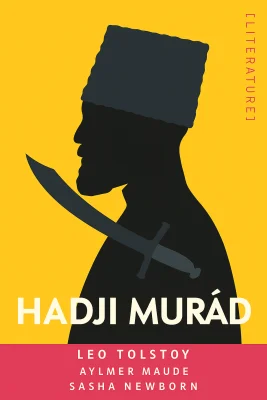
Hadji Murád
Categories
Fiction, Short Stories, Classics, Historical Fiction, Literature, 19th Century, Russia, Novels, War, Russian Literature
Content Type
Book
Binding
Paperback
Year
2006
Publisher
Cosimo Classics
Language
English
ISBN13
9781602060135
File Download
PDF | EPUB
Hadji Murád Plot Summary
Introduction
A crushed thistle in a plowed field—its stem broken yet refusing to surrender—becomes the perfect metaphor for Hadji Murád, the legendary Avar chieftain who defected from Shamil to the Russians in 1851. Like that resilient plant, torn between opposing forces, Hadji Murád found himself trapped in an impossible position: hunted by his former allies, mistrusted by his new protectors, and desperate to save his family held hostage in the mountains. This is the story of a warrior caught between two worlds, neither of which would truly accept him. In the brutal landscape of the Caucasus, where Russian forces clash endlessly with mountain tribes, Hadji Murád's fate becomes a mirror reflecting the senseless cruelty of war itself. His journey from celebrated naïb to hunted fugitive reveals the terrible price of loyalty betrayed and the tragic futility of seeking honor in a conflict that devours everything it touches.
Chapter 1: The Resilient Warrior: Hadji Murád's Defection
On a cold November evening in 1851, the legendary Avar chieftain Hadji Murád rode alone into the hostile Chechen village of Makhket. Once, he had traveled with banners flying and dozens of murids performing feats of horsemanship in his honor. Now, wrapped in his búrka with only one faithful follower, he moved like a shadow through the smoke-filled streets, seeking refuge among his own people. The villagers recognized him instantly—Shamil's most feared lieutenant, the scourge of Russian forces for over a decade. But Hadji Murád's presence brought danger. Shamil had issued orders for his capture, dead or alive, after their bitter falling-out. The village elder Sado welcomed him despite the risk, honoring the ancient law of hospitality that demanded protection for any guest under his roof. In the flickering firelight of Sado's clay house, Hadji Murád revealed his desperate plan. He would surrender to the Russians, offering his services against Shamil in exchange for protection and help rescuing his family. Sado's young son watched with wide eyes as this living legend prepared letters for the enemy camp, his face carved in stone, revealing nothing of the turmoil within. As dawn approached, the village stirred with whispers. The elders had gathered in the mosque, debating whether to honor Shamil's command or respect their guest-right. Hadji Murád and his companion slipped away before the sun rose, riding hard toward Russian territory while shots cracked behind them in the morning mist. The die was cast. The greatest warrior of the Caucasus had chosen his path, though he could not yet know where it would lead.
Chapter 2: Between Two Worlds: A Precarious Alliance
At Fort Vozdvizhensk, the arrival of Hadji Murád's envoys created a sensation. Prince Vorontsóv, the young Russian commander, could barely contain his excitement—capturing Shamil's most valuable lieutenant alive would be the achievement of his career. The negotiations moved swiftly, and within days, Hadji Murád himself appeared at the fortress gates. The meeting between the two men crackled with unspoken tension. Vorontsóv, elegant in his European uniform, faced the legendary mountain warrior whose exploits had terrorized Russian forces for years. Hadji Murád's piercing eyes, set wide apart beneath black brows, seemed to look straight through his new host. Each man understood exactly what the other was thinking—neither trust nor genuine alliance, but a marriage of convenience born from desperate necessity. Princess Mary Vasilevna received their unexpected guest with grace, though she couldn't hide her fascination with this exotic warrior who blushed when she extended her hand. Her young son climbed onto Hadji Murád's lap, receiving a beautiful silver dagger as a gift according to mountain custom. The domestic scene felt surreal—a family dinner shared with one of Russia's most wanted enemies. But beneath the civilized veneer, both sides remained wary. Hadji Murád submitted to their hospitality while calculating every move, every exit. The Russians treated him as an honored prisoner while posting guards and limiting his movements. The famous naïb had crossed into enemy territory, but he remained very much alone. When asked about his family, Hadji Murád's composed mask slipped for just a moment. His wife, mother, and son remained in Shamil's hands—living guarantees of his silence. Until they were free, he was bound, powerless to serve his new masters as they wished.
Chapter 3: Hostages of Fate: The Family's Shadow
In the fortress of Vedeno, high in the Daghestan mountains, Hadji Murád's family awaited Shamil's judgment. His elderly mother Patimát sat in stony silence, her scorching black eyes fixed on the dying embers in the hearth. She had always hated Shamil, and now her hatred burned even fiercer. His two wives huddled with their children in the quarters of Ibrahim Raschid, the officer assigned to guard them. But it was Yusúf, Hadji Murád's eighteen-year-old son, who suffered most cruelly. The handsome youth who had once been groomed for greatness now languished in a fetid pit with seven other prisoners, surrounded by despair and filth. Above ground, he could hear the singing and shooting of murids celebrating Shamil's latest campaign, but for him there was only darkness and uncertainty. When Shamil finally returned to Vedeno after his battles with the Russians, the entire village erupted in celebration. The Imam rode through the crowd on his white stallion, his pale face carved from stone, accepting the adulation as his due. But behind his stony expression lay the knowledge that the war was going badly—too many villages burned, too many wavering loyalties. The loss of Hadji Murád stung particularly deep. Without his most brilliant lieutenant, Shamil had suffered setbacks that might have been victories. Now he faced a choice: try to win back his former naïb, or eliminate him forever. The answer came to him during his ritual meditation, as if whispered by the Prophet himself. Yusúf was dragged from his pit and brought before the Imam. The young man's proud bearing impressed even Shamil's counselors, but it would not save him. He was ordered to write to his father with a simple message: return before the Feast of Bairam, and all would be forgiven. Refuse, and watch his family destroyed and his son's eyes put out as punishment for treason.
Chapter 4: Calculated Hospitality: Life Among the Russians
At the fort, Hadji Murád settled into an strange existence suspended between captivity and honor. Major Petrov, a career soldier fond of vodka and simple pleasures, treated him with wary respect. Mary Dmitrievna, the major's common-law wife, found herself unexpectedly charmed by their dangerous guest's quiet dignity and exotic courtesy. Young Lieutenant Butler became Hadji Murád's unlikely friend, drawn to the warrior's aura of authentic danger in contrast to his own romantic notions of military glory. They communicated through gestures and smiles when the interpreter wasn't present, finding common ground in their shared understanding of horses and weapons. The mountain warrior's daily routine revealed the discipline that had made him legendary. He rose before dawn for prayers, maintained his weapons with ritual care, and received a steady stream of spies bringing news from the highlands. Each messenger brought fresh disappointment—his supporters were too few, too frightened of Shamil's revenge to attempt a rescue. Butler watched with fascination as Hadji Murád told the story of his life to the official interpreter. The tale began in childhood—a mother's fierce love, a grandfather's skilled hands working silver, the fountain where he drew water as a boy. But it turned dark with betrayal and blood, the murder of his foster-brothers by Hamzád, his own terrible vengeance in the mosque, and the long spiral of violence that brought him to this moment. Through it all, Hadji Murád's composure never cracked. He spoke of massacre and friendship, of loyalty and betrayal, in the same measured tones. Only when he mentioned his family did something flicker behind his eyes—a glimpse of the desperate love that drove all his calculations.
Chapter 5: Bonds Formed in Foreign Lands
Life at the fort developed its own peculiar rhythms. Hadji Murád's retainers—the devoted Eldár, the cheerful rogue Khan Mahomá, the grim one-eyed Gamzálo, and the faithful Khanéfi—adapted to their strange captivity with varying degrees of success. They cleaned weapons, tended horses, and waited for word from the mountains that never seemed to come. Mary Dmitrievna overcame her initial fear and began to see their guest as simply another man far from home. She fussed over his meals and worried about his family like any mother might. Her uncomplicated kindness touched something in Hadji Murád that years of warfare had not entirely hardened. When military protocol demanded his transfer to another post, she wept openly at his departure. Butler threw himself into the fantasy of mountain life, acquiring Circassian dress and imagining himself a true warrior. But his romantic notions collided brutally with reality during a raid on a Chechen village. While he saw only the poetry of battle—the singing soldiers, the beautiful horses, the camaraderie of shared danger—he carefully avoided looking at the corpses left behind. The raid destroyed the very village where Hadji Murád had spent his last night of freedom. Sado's young son, the bright-eyed boy who had watched the famous naïb with such awe, lay dead from a Russian bayonet. The old man who had risked everything to honor the law of hospitality now surveyed the ruins of his burned home, his face empty of everything but exhausted grief. In the fort, news of successful operations brought celebration. Officers toasted their victories while their famous prisoner sat silent, calculating the cost in lives he had known since childhood. Each Russian triumph made his own position more precarious—and his family's fate more desperate.
Chapter 6: The Impossible Choice: Loyalty vs. Family
Weeks passed without progress on exchanging prisoners for Hadji Murád's family. The Russian bureaucracy moved slowly, each decision requiring approval from distant Petersburg. Prince Vorontsóv made vague promises but seemed more interested in extracting military intelligence than arranging humanitarian exchanges. Hadji Murád found himself caught between growing impatience and the helpless knowledge that pushing too hard might destroy his only hope. The letter from his son finally arrived, carried by one of the mountain spies. Yusúf's words were carefully neutral, but Hadji Murád could read the threat between the lines. Shamil offered forgiveness and restoration to his former position—but only if he returned immediately, abandoning his new Russian protectors. The alternative was made brutally clear: his mother, wives, and children scattered to different villages as slaves, his son blinded as a traitor. Sitting alone in his quarters, Hadji Murád weighed impossible choices. Return to Shamil, and face almost certain death—the Imam was cunning enough to eliminate a potential rival even while offering forgiveness. Stay with the Russians, and watch his family pay the ultimate price for his defection. The mountain fable of the falcon haunted his thoughts: the bird that lived among men could never truly return to its own kind, marked forever by the jesses and silver bells of captivity. The spies brought increasingly desperate messages. His remaining supporters in the mountains were too few and too frightened to attempt a rescue. Shamil's network of informants made any organized resistance impossible. The window for saving his family was closing rapidly, and Hadji Murád faced the realization that the Russians—despite their promises—either could not or would not help him in time. In the quiet hours before dawn, listening to the nightingales in the fort's garden, Hadji Murád made his final decision. If he could not save his family through negotiation, he would have to try force. It meant abandoning the safety of Russian protection and riding into almost certain death—but honor demanded he make the attempt. Better to die fighting for those he loved than to live safely while they suffered for his choices.
Chapter 7: Flight and Final Stand: The Warrior's Last Battle
On April 25th, Hadji Murád requested permission for his usual morning ride. The routine had become so familiar that the commander allowed him to take all his retainers, reducing the Cossack escort to just five men. Led by the young and capable Nazárov, the guards had grown comfortable with their famous prisoner's apparent docility. The morning mist hung over the rice fields as the small cavalcade rode out from Nukhá at a gentle pace. But once clear of the town, Hadji Murád gradually increased his speed. Nazárov called warnings that were politely ignored. The white Kabardá horse beneath the mountain warrior began to stretch into a gallop, forcing the Cossacks to race after him. When Nazárov reached out to grab Hadji Murád's bridle, the prisoner turned and fired point-blank into the young soldier's chest. The shock lasted only seconds before the other murids opened fire, cutting down the remaining guards with savage efficiency. Only one Cossack escaped to raise the alarm, spurring his horse desperately back toward the fort as bullets whistled around him. But the escape was doomed from the start. The flooded rice fields turned into treacherous marshes that trapped the horses and slowed their flight. By evening, hundreds of pursuers had surrounded the small grove where Hadji Murád and his men had taken shelter. The old ditch they fortified became their final stronghold, surrounded by enemies who had once been allies. As dawn broke, the calls for surrender echoed across the marsh. Hadji Murád's answer came in the form of rifle fire that dropped the first militiaman's horse. The battle that followed was hopeless but magnificent—five men against two hundred, fighting with the desperate courage of those who have nothing left to lose. One by one, Hadji Murád watched his faithful companions fall: brave Eldár with his beautiful eyes, loyal Khanéfi still loading weapons to the end, cheerful Khan Mahomá singing prayers between shots. Wounded twice and dying, Hadji Murád performed one last act of defiance. Rising from the ditch, he charged straight at his enemies with only a dagger, falling at last under a volley that finally stilled the warrior's heart. His head was severed and carried to all the forts as proof that the legendary Hadji Murád would trouble the Russians no more.
Summary
The broken thistle in the field had fallen, but its destruction revealed truths that transcended any single life or death. Hadji Murád's fate became a mirror reflecting the savage futility of the Caucasian war—a conflict that devoured heroes and villains alike, leaving only grief and emptiness in its wake. His family's ultimate fate remained unknown, lost in the mist of history like so many other casualties of imperial ambition and tribal pride. In the end, the mountain warrior achieved a different kind of victory than any he had sought. His story became legend, passed down through generations as a testament to the cost of living caught between worlds that would never accept compromise. Like the thistle that refused to yield even when crushed, Hadji Murád's defiance in the face of impossible choices revealed something essential about the human spirit—its capacity for loyalty, sacrifice, and the tragic dignity of those who choose honor over survival. The nightingales continued singing in the gardens of the fort, indifferent to human suffering, their music a reminder that beauty persists even in the darkest moments of our endless, inexplicable wars.
Best Quote
“What energy!' I thought. 'Man has conquered everything, and destroyed millions of plants, yet this one won't submit.” ― Leo Tolstoy, Hadji Murád
Review Summary
Strengths: The review highlights Tolstoy's reputation as a masterful writer, emphasizing the historical relevance and depth of "Hadji Murad." The narrative's exploration of complex themes such as loyalty, cultural clash, and the human condition is noted. The review appreciates Tolstoy's firsthand war experience, which enriches the novel's authenticity and depth. Weaknesses: The review does not explicitly mention any weaknesses of the book. It focuses primarily on the strengths and the significance of the narrative in the context of historical and contemporary conflicts. Overall: The reader expresses a highly positive sentiment towards "Hadji Murad," recommending it for those seeking both entertainment and profound insights into life and death. The review suggests that the novel is a compelling read for those interested in excellence in literature.
About Author
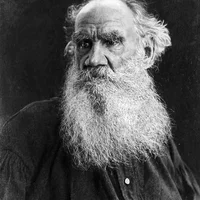
Leo Tolstoy
Tolstoy probes the human condition with a focus on moral and philosophical inquiry, capturing the struggles of existence and the search for meaning in his writing. By interrogating societal structures and human emotions, his works transcend individual narratives to address universal concerns, as seen in the epic "War and Peace" and the intimate "Anna Karenina." Whereas "War and Peace" offers a panoramic view of Russian society during the Napoleonic era, "Anna Karenina" delves into personal and societal conflicts. Beyond fiction, Tolstoy's later works, such as "The Kingdom of God Is Within You," reflect his commitment to nonviolence and spiritual reflection, aligning his literary pursuits with a profound ethical stance.\n\nIn parallel, Tolstoy's method involves a blend of realism and psychological depth, engaging readers with meticulously detailed characters whose inner lives are as compelling as the external events they navigate. This approach not only invites readers to explore complex themes of love, death, and morality but also fosters a deeper understanding of societal and existential dilemmas. Meanwhile, his philosophical writings challenge conventional norms, advocating for a life rooted in personal conscience and social justice, which had a lasting influence on global figures like Mahatma Gandhi and Martin Luther King Jr.\n\nFor readers, Tolstoy's works offer a rich tapestry of ideas that resonate with those interested in the intersection of literature and moral philosophy. His novels serve as both an exploration of human experience and a critique of societal norms, providing valuable insights for anyone seeking to understand the complexities of life and the pursuit of meaning. This short bio captures the essence of an author whose contributions continue to inspire and provoke thought across diverse fields, making his legacy an enduring part of literary and ethical discourse.
Read moreDownload PDF & EPUB
To save this Black List summary for later, download the free PDF and EPUB. You can print it out, or read offline at your convenience.
Hadji Murád
by Leo Tolstoy
