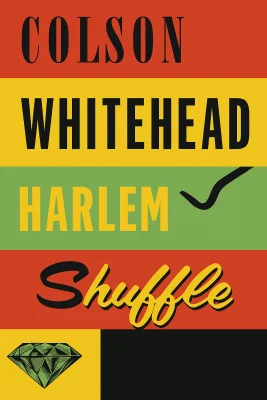
Harlem Shuffle
Categories
Fiction, Audiobook, Mystery, Historical Fiction, Thriller, Book Club, Historical, New York, Crime, Literary Fiction
Content Type
Book
Binding
Hardcover
Year
2021
Publisher
Doubleday
Language
English
ASIN
0385545134
ISBN
0385545134
ISBN13
9780385545136
File Download
PDF | EPUB
Harlem Shuffle Plot Summary
Introduction
# Between Two Worlds: A Harlem Merchant's Double Life The summer heat pressed down on Harlem like a heavy hand, and Ray Carney stood behind the counter of his furniture store, watching the sweat bead on his forehead in the reflection of a chrome lamp. To his customers and neighbors on 125th Street, he was simply a respectable furniture salesman trying to make an honest living. His wife Elizabeth was pregnant with their second child, and though they lived in a cramped apartment too close to the subway tracks, he had achieved something. He was content. What few people knew was that Ray came from a lineage of gangsters and thieves, and his respectable middle-class existence was beginning to show cracks. Cracks that grew wider thanks to his shady, unfortunate cousin Freddie, who gratefully exploited Ray's clean facade while gradually dragging him deeper into Harlem's underworld. As Ray struggled with his double life, he began to see more clearly who really pulled the strings in Harlem. The question wasn't whether he could maintain his reputation—it was whether he'd survive long enough to decide who he really wanted to be.
Chapter 1: The Respectable Fence: Carney's Precarious Balance
The knock came at three in the morning, sharp and insistent against the back door of Carney's Furniture. Ray pulled on his robe and descended the stairs, knowing that legitimate customers didn't conduct business at this hour. Through the peephole, he saw Freddie's familiar grin and two other men he didn't recognize, their faces hard with the particular tension of recent violence. "Just need to store some merchandise for a few days," Freddie said as they filed into the showroom. The men carried leather satchels that clinked softly with each step, the sound of metal against metal that could only mean jewelry. Ray's stomach tightened as he recognized the signs of a fresh heist—the nervous energy, the expensive watches on wrists that couldn't afford them, the way they kept glancing at the windows. By day, Carney sold Collins-Hathaway sofas and Argent dining sets to Harlem's working families. His customers saw a clean store, pressed shirts, and honest dealing. They didn't see the hidden safe behind the false wall, or the careful ledger that tracked a different kind of inventory. For three years, he'd walked the line between legitimate businessman and criminal fence, using his respectable front to launder stolen goods through a network of corrupt cops and underground dealers. The arrangement had served him well. Detective Munson collected his weekly envelope and ensured police protection. Chink Montague's men provided muscle when negotiations turned ugly. The stolen radios and lifted jewelry that flowed through his back room funded the expansion of his legitimate business, allowing him to move his family to a better apartment and dream of true respectability. But as Freddie's associates counted out bills on his showroom floor, Ray felt the careful balance he'd maintained beginning to shift. These weren't small-time thieves with hot televisions—they carried themselves like professionals, and professionals attracted the kind of attention that could destroy everything he'd built. The Hotel Theresa job they'd just pulled wasn't some neighborhood score. It was an attack on Harlem's crown jewel, and someone would demand blood in return.
Chapter 2: Blood Ties and Bad Decisions: When Family Calls
The news hit the streets like wildfire: Arthur, the safe-cracker from the Theresa job, had been found dead in his boarding house room, three bullets in his chest and his share of the money gone. Ray read the story in the Amsterdam News while his coffee grew cold, understanding that the killing spree had begun. Someone was eliminating the crew, and his name was somewhere on that list. Freddie appeared at the store that afternoon, his usual swagger replaced by twitchy paranoia. "Miami Joe's gone crazy," he whispered, checking the windows for watchers. "Thinks we're all trying to cut him out of his share." The purple-suited killer had been the job's organizer, a man whose reputation for violence was matched only by his appetite for drugs and paranoia. Now he was hunting his own crew like a rabid dog. Ray wanted to throw his cousin out, to sever the family ties that kept dragging him deeper into the criminal world. But Freddie was blood, the only connection to his father's memory that didn't end in violence and early death. Big Mike Carney had been shot down by police while robbing a drugstore, leaving behind only bitter lessons about survival in a world that offered black men few honest paths to prosperity. "I can't protect you from this," Ray said, but even as he spoke the words, he was calculating angles and exit strategies. The furniture store provided perfect cover, but it also made him a sitting target. Miami Joe knew where to find him, knew about his family, knew exactly how to apply pressure until something broke. The phone rang, shrill in the afternoon quiet. When Ray answered, Miami Joe's voice came through like silk wrapped around a razor blade. "I know you got my money," the killer said, his words slurred with whatever chemicals were eating his brain. "And I know where your pretty wife works." The line went dead, leaving Ray staring at his reflection in the darkened storefront window, wondering if he'd ever see Elizabeth and May alive again.
Chapter 3: The Hotel Theresa Heist: Crossing the Line
The Hotel Theresa rose from the intersection of Seventh Avenue and 125th Street like a monument to black achievement, its brick facade and elegant marquee proclaiming that Harlem had its own version of luxury. When downtown hotels refused service to Negro guests, the Theresa welcomed celebrities, politicians, and anyone with enough money to afford its rates. To rob it was like spitting on the dreams of an entire community. But Miami Joe had seen only opportunity in the hotel's reputation. The guest safe deposit boxes held jewelry, cash, and valuables from Harlem's elite—doctors, lawyers, numbers runners, and entertainers who couldn't trust white banks with their wealth. Arthur had studied the building's layout for weeks, mapping guard rotations and identifying vulnerabilities with the methodical precision of a scholar. The job unfolded like a nightmare ballet in the pre-dawn hours of Juneteenth. Freddie drove the getaway car while Arthur, disguised as a drunk hotel guest, gained entry through the lobby. Miami Joe emerged from the stairwell like a purple-suited specter of greed, his gun already drawn and his eyes bright with chemical courage. Twenty minutes of controlled chaos yielded two bags full of cash and jewelry, though half the gems would later prove to be paste. The hotel's night staff, caught off guard, offered no resistance until the very end, when the desk clerk tried to trigger a silent alarm. Miami Joe's response was swift and brutal—a pistol-whipping that left the man unconscious and bleeding on the marble floor. They should have been celebrating their success, dividing the money and disappearing into the city's vast anonymity. Instead, they'd painted targets on their backs. Chink Montague, the local crime boss who collected protection money from the hotel, wanted blood. His girlfriend Lucinda Cole had kept her jewelry in one of the robbed boxes, and his reputation demanded vengeance. Within hours, his enforcers were canvassing Harlem's underworld, asking questions that came with implicit threats.
Chapter 4: Chasing Legitimacy: The Dumas Club Deception
Two years had passed since the Hotel Theresa job, and Carney had used his share of the profits to expand his store and move his family to a better apartment. The criminal world seemed like a distant nightmare until Wilfred Duke, the ambitious banker and pillar of Harlem society, made him an offer that seemed too good to be true. The Dumas Club occupied an elegant brownstone on Strivers' Row, its brass nameplate polished to mirror brightness and its windows glowing with the warm light of exclusivity. Named after the French author whose mixed-race heritage made him a symbol of achievement against the odds, the club was Harlem's most prestigious organization. Membership meant access to the power brokers who controlled permits, loans, and political favors. Duke's proposition was simple: five hundred dollars for membership, a one-time payment that would open doors throughout black New York. At the club's monthly gathering, Carney mingled with judges, politicians, and business leaders, men who had climbed from humble beginnings to positions of influence. They wore their success like armor, their club rings like badges of honor earned through decades of careful networking and strategic compromise. But respectability came with its own form of corruption. Duke's smile was as cold as his handshake, and his promises proved as worthless as Confederate currency. When Carney's membership application was rejected despite his payment, he realized he'd been played by a master manipulator who collected bribes with the same casual efficiency as a bank teller counting deposits. The confrontation in Duke's office was brief but illuminating. The banker's threat to call the police revealed the true nature of their relationship—Carney was still seen as a criminal, someone whose money was good enough to take but whose presence would contaminate their exclusive circle. The five hundred dollars disappeared into Duke's pocket like water into sand, another lesson in the price of trying to buy respectability. Some doors remained forever closed, no matter how much money you threw at them.
Chapter 5: The Van Wyck Emeralds: Deadly Inheritance
The briefcase arrived with Freddie and his new partner, a pale, wealthy junkie named Linus Van Wyck who'd traded his Park Avenue privilege for the thrill of Harlem's underworld. Linus was everything Freddie wasn't—educated, connected, and drowning in family money—but drugs and rebellion had led him to seek authenticity in the criminal margins of black Manhattan. Inside the briefcase lay the largest emerald necklace Carney had ever seen, its central stone blazing with green fire and surrounded by smaller gems that caught the office light like captured stars. But the jewelry was only part of the story. Among Linus's personal effects, Carney found documents that painted a picture of family dysfunction and corporate greed—legal papers, construction blueprints, and a list of numbers that looked suspiciously like foreign bank account codes. The Van Wyck family wasn't just wealthy—they were Manhattan royalty, descendants of the city's first mayor and owners of a real estate empire that stretched across the borough. Their VWR plaques marked half the buildings in midtown, monuments to generations of calculated acquisition and ruthless development. Linus had been the black sheep, a drug-addicted embarrassment to a family that valued control above all else. The theft hadn't been random. Linus knew exactly what he was taking—not just his grandmother's jewelry, but evidence of his family's hidden dealings and offshore accounts. It was blackmail material, leverage against a father who'd spent years trying to erase his son's existence through psychiatric commitments and legal maneuvering. Within days, Linus was found dead in a Harlem flophouse, a needle in his arm and the look of a man who'd finally run out of luck. Whether it was an overdose or something more sinister, his death had left Carney holding evidence that could destroy one of New York's most powerful families. The emerald necklace wasn't just stolen goods—it was a declaration of war against people who had the resources to fight back with overwhelming force.
Chapter 6: Powers That Be: When Rich Men Hunt
The white men who cornered Carney outside the jewelry district moved with the casual confidence of predators who'd never known fear. Ed Bench introduced himself as a lawyer for the Van Wyck family, his voice carrying the cultured menace of someone accustomed to solving problems through intimidation and influence. His companion Lloyd kept one hand in his jacket pocket, the outline of a gun clearly visible beneath expensive fabric. "We'd like our property back," Bench said, as if discussing a simple business transaction. But there was nothing simple about the way Lloyd's eyes tracked every movement, or the casual mention of Carney's family that made it clear the stakes extended far beyond stolen jewelry. They'd been watching him, following his movements, cataloging his vulnerabilities with the methodical precision of professional hunters. The lawyer's words painted a picture of absolute control. The Van Wyck family didn't just own buildings—they owned politicians, judges, and police commissioners. They could make evidence disappear, witnesses relocate, and investigations conclude with predetermined results. A furniture dealer from Harlem was less than an insect to people who reshaped the city according to their whims. But Carney had learned survival in a harder school than Park Avenue drawing rooms. When the moment came, he ran—not with the panic of a cornered animal, but with the calculated desperation of a man who understood that his only chance lay in changing the rules of engagement. The crowded streets of midtown became his ally as he disappeared into the human river of Manhattan, leaving the lawyer and his gunman behind. The message was clear: they wanted more than just the necklace. The briefcase contained secrets worth killing for, and the Van Wyck family would use every resource at their disposal to retrieve them. Carney was no longer just a fence caught with stolen goods—he was a target in a war between worlds, where the weapons were money and influence, and the casualties were anyone who got in the way.
Chapter 7: The Final Reckoning: Blood on Park Avenue
Pepper emerged from Carney's past like a ghost made flesh, the aging gunman who'd been Big Mike's partner in the old days. His reputation was built on bodies scattered across three decades of Harlem's criminal history, but something in his eyes suggested he understood the bonds that made abandoning family impossible. When Carney explained the situation, Pepper's response was simple: "Your father would have told you to let the boy burn. But I ain't your father." The attack came at the furniture store, two professional killers disguised as gas company workers who moved with military precision. They'd brought cutting equipment to open Carney's safe, confident that their employer's influence would protect them from consequences. But they hadn't counted on Pepper, who turned their careful plan into a blood-soaked disaster with the ruthless efficiency of a man who'd survived forty years in a business where mistakes meant death. The gunfight shattered more than windows—it destroyed the careful separation Carney had maintained between his two lives. The respectable furniture dealer was gone, replaced by someone who hired killers and stored stolen goods behind a facade of legitimate business. There was no going back to the comfortable illusion of respectability. The final confrontation took place in an unfinished skyscraper on Park Avenue, thirty-four floors of steel and glass that rose into the night sky like a monument to unfinished ambitions. Ed Bench waited in the empty conference room with two new gunmen, replacements for the ones Pepper had killed. The lawyer's composure had cracked slightly, his cultured veneer showing stress fractures from the escalating violence. When Pepper opened fire, turning the conference room into a slaughterhouse, any hope of peaceful resolution died with the Van Wyck gunmen. They left Bench alive but traumatized, surrounded by the corpses of his employer's hired killers. The briefcase remained on the conference table, its contents now irrelevant compared to the message written in blood across the expensive carpet. Some people couldn't be intimidated, regardless of how much money stood behind the threats.
Chapter 8: Aftermath: Embracing the Contradictions
The hospital corridors smelled of disinfectant and despair as Carney sat beside Freddie's bed, watching machines monitor the thin thread that connected his cousin to life. Two months passed in a haze of medical consultations and police interviews, each day bringing the possibility that Freddie might wake up or that the Van Wyck family might decide to finish what they'd started. When the end came, it was quiet—a gradual fading rather than a dramatic conclusion. Freddie never regained consciousness, never had the chance to apologize again for dragging Carney into his final, fatal scheme. He died as he'd lived, leaving chaos and regret in his wake, but also leaving behind the complicated love that bound families together despite everything. The official story was neat and contained: a drug deal gone wrong, a junkie from Park Avenue who'd overdosed in a Harlem flophouse, and a cousin who'd tried to help but arrived too late. The Van Wyck family's influence ensured that uncomfortable questions remained unasked, that certain evidence disappeared, and that the whole affair was filed away as just another tragedy in the city's endless catalog of violence and loss. Carney's furniture store reopened, its windows replaced and its reputation somehow intact. The criminal network continued to operate, though more carefully now, with a deeper understanding of the forces that moved through the city's shadows. Detective Munson still collected his envelopes, and the delicate ecosystem of corruption continued to function. The difference was in Carney himself. The careful separation between his two worlds had been destroyed, replaced by a harder wisdom about the nature of power and the price of survival. He'd learned that respectability was a luxury that could be stripped away in an instant, that family loyalty could be both salvation and damnation, and that in a city built on ambition and greed, everyone was just one mistake away from discovering what they were really capable of becoming.
Summary
Ray Carney's journey from reluctant fence to hardened survivor reveals the impossible mathematics of moral compromise in a world where legitimate opportunities remain scarce and criminal ones abundant. His evolution from furniture salesman to sophisticated operator in both legal and illegal markets reflects the limited options available to ambitious black men in a society that offered them few paths to prosperity without corruption. The Hotel Theresa heist and its violent aftermath taught Carney that in the criminal world, loyalty was a luxury few could afford and trust was often fatal. His rejection by the Dumas Club showed him that respectability couldn't be bought, only earned through generations of careful cultivation or stolen through superior cunning. Between these two worlds, he found his niche as a man who understood both languages: the polite discourse of legitimate business and the brutal arithmetic of criminal enterprise. His success came not from choosing one side or the other, but from mastering the art of living in the shadows between worlds, where moral compromises were the price of survival and prosperity was always tinged with the knowledge of its true cost.
Best Quote
“Crooked world, straight world, same rules - everybody had a hand out for the envelope.” ― Colson Whitehead, Harlem Shuffle
About Author

Colson Whitehead
Whitehead delves into the complexities of American life through the lenses of race and history, crafting narratives that challenge readers to reflect on societal structures. His writing intertwines historical events with fictional elements, creating a rich tapestry that allows readers to engage with the past while contemplating the present. By employing meticulous research and vivid storytelling, he invites readers to understand how historical injustices continue to echo in contemporary society, as seen in works like "The Underground Railroad" and "The Nickel Boys." These books delve into the brutal realities of racial injustice and the resilience of the human spirit, themes that resonate deeply with audiences seeking to understand and confront these issues.\n\nIn his narrative approach, Whitehead extends beyond mere storytelling to offer a critical examination of American history and its impact on individual lives. He uses parallel timelines and complex character development to weave stories that are both enlightening and engaging. This method not only provides historical context but also fosters empathy and insight, making his work accessible and relevant to a wide audience. As a two-time Pulitzer Prize winner, Whitehead's contributions to literature have earned him critical acclaim, and his innovative narratives continue to influence both readers and writers.\n\nReaders gain from Whitehead's work not just a compelling story but a deeper understanding of the intricacies of race and history in America. His ability to connect the past with the present provides a platform for reflection and discussion, making his books essential for those interested in the socio-political landscape of the United States. Meanwhile, his forthcoming titles, such as "Crook Manifesto," promise to continue this exploration, further solidifying his position as a pivotal voice in contemporary literature.
Read moreDownload PDF & EPUB
To save this Black List summary for later, download the free PDF and EPUB. You can print it out, or read offline at your convenience.
Harlem Shuffle
by Colson Whitehead
