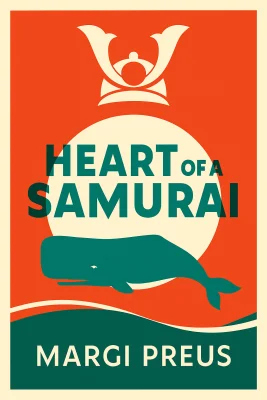
Heart of a Samurai
Categories
Fiction, Historical Fiction, Young Adult, Asia, Japan, Historical, Adventure, Childrens, Middle Grade, Juvenile
Content Type
Book
Binding
Hardcover
Year
2010
Publisher
Amulet Books
Language
English
ASIN
0810989816
ISBN
0810989816
ISBN13
9780810989818
File Download
PDF | EPUB
Heart of a Samurai Plot Summary
Introduction
The storm struck without warning. Fourteen-year-old Manjiro gripped the sides of the fishing boat as waves towered above them like liquid mountains, each one threatening to crush their fragile vessel. When the wind finally died three days later, five Japanese fishermen found themselves adrift in the vast Pacific, carried by the black current toward waters no Japanese had ever returned from alive. Their homeland's laws were absolute: leave Japan's shores and face death upon return. Yet ahead lay something even more terrifying—the unknown realm of foreign devils with blue eyes and hairy faces. When rescue finally came, it arrived in the form of everything Manjiro had been taught to fear. The American whaling ship John Howland plucked them from certain death on a barren island, but salvation came with a price. Captain William Whitfield, a one-eyed whaler with surprising kindness, would offer young Manjiro a choice that would change two nations forever. In an era when East and West regarded each other as monsters, one shipwrecked boy would build the first bridge between worlds—carrying the heart of a samurai into the American frontier, and bringing Western knowledge back to a Japan on the brink of transformation.
Chapter 1: Adrift: The Storm That Changed Everything
The sea had been their livelihood for generations, but now it became their prison. Manjiro watched his fellow fishermen—Denzo, the eldest and their leader; hot-tempered Toraemon; gentle Jusuke; and his friend Goemon—huddle in the bottom of their broken vessel as the Kuroshio current dragged them steadily away from everything they knew. Days blurred into a nightmare of hunger and thirst. The fish they had caught were swept away by waves that crashed over their boat's sides. Jusuke's leg, injured when their vessel splintered against the rocks, festered in the salt spray. They took turns bailing water with buckets and their bare hands, fighting to keep their small craft afloat. When land finally appeared through the morning mist, it offered little hope. Bird Island rose from the sea like a fortress of black rock, its slopes alive with thousands of albatross. The birds were so numerous they seemed to make the very island breathe, lifting and settling in great clouds of white wings. But the island held no water, no shelter except a shallow cave, and no way home. For five months, they survived on raw bird meat and rainwater caught in eggshells. The albatross, foolishly trusting, were easy prey during nesting season. But as summer faded, the birds grew strong enough to fly away, leaving the castaways with nothing but empty nests and gnawing hunger. Manjiro found himself tracing the shoreline daily, staring at the horizon where he knew his homeland lay, wondering if his mother thought him dead. The graves they discovered on the island's highest point told them everything they needed to know about their chances. Two mounds of carefully stacked stones marked where previous castaways had perished. Yet someone had survived long enough to bury the dead—and perhaps, Manjiro dared hope, someone had been rescued.
Chapter 2: Rescue and Decision: Choosing the Unknown Path
The ship appeared like a vision from another world. The John Howland's white sails caught the morning light as she rode the swells beyond the reef, her three masts reaching toward heaven like the pillars of a great temple. But this temple belonged to the foreign devils Manjiro had heard about in whispered stories—the pale demons who ate human flesh and sailed in vessels powered by captured storms. Captain William Whitfield squinted down at the rescued castaways with his one good eye, the other permanently closed in a permanent wink. His weathered face, framed by dark whiskers, should have terrified them. Instead, something in his expression—a mixture of authority and unexpected kindness—made Manjiro feel safer than he had in months. The ship itself was a floating city of wonders. Manjiro marveled at the buttons on his new clothes, the pockets that could hold small treasures, and the strange metal implements called forks that the sailors used to eat rice. Everything was wrong according to Japanese custom, yet nothing felt evil. The foreign devils proved to be ordinary men who laughed, sang, and showed kindness to strangers. But it was Captain Whitfield who changed everything. During quiet conversations on deck, he shared poetry and spoke of dreams rather than conquest. He asked questions about Japan not as an enemy seeking weakness, but as a friend trying to understand. When he invited Manjiro to come to America as his adopted son, the boy faced an impossible choice. Denzo, their leader, left the decision to Manjiro alone. Stay with his countrymen and perhaps find passage back to Japan, or follow the captain into the unknown realm beyond the sunset. On that final night before the John Howland departed Honolulu, Manjiro stood on the beach watching American ships load supplies. Each vessel represented a doorway into mystery, and he could not resist stepping through.
Chapter 3: American Shores: A Fisherman in a Foreign Land
New Bedford harbor struck Manjiro's senses like a physical blow. The stench of whale oil soaked into every plank and rope, while thousands of barrels lined the waterfront like an army of wooden soldiers. Ships from around the world crowded the harbor, their forest of masts swaying against a sky filled with smoke from tryworks and foundries. This was America—loud, bustling, reeking of ambition and whale oil. Captain Whitfield's house in Fairhaven sat empty and overgrown, a painful reminder of the wife who had died while he was at sea. But the Aken family welcomed them both, and soon the captain had found new purpose. He married Albertina, a round-faced woman whose eyes crinkled with laughter, and purchased a farm where Manjiro could learn to be American. The transformation was jarring. Manjiro, once a poor fisherman's son, now had his own room with glass windows, carpeted floors, and a horse named Plum Duff. He fell off that horse regularly, tumbling into streams, fields, and mud puddles with spectacular consistency. Each fall taught him something new about this strange land where even common people could own horses and dream of becoming more than their birth had decreed. School presented its own challenges. At sixteen, Manjiro sat with children half his age, learning to read English letters that seemed as foreign as bird tracks in sand. His teacher was patient, but some of his classmates were not. They stared at his face, pulled their eyes into slits behind his back, and whispered about the strange boy who had appeared from across the sea. Yet slowly, America began to reveal its possibilities. Unlike Japan, where birth determined everything, this was a land where a man could reinvent himself. Captain Whitfield spoke of former slaves who had become ship captains, of immigrants who built fortunes from nothing. For the first time in his life, Manjiro began to understand what it meant to have choices.
Chapter 4: Navigating Prejudice and Opportunity
The stone struck the ground near Manjiro's feet with deliberate force. Tom Higgins stood twenty yards away, hefting another rock with practiced ease, his older classmates flanked behind him like wolves waiting for permission to strike. The Navigation School's courtyard, usually filled with the ordered chaos of boys discussing mathematics and seamanship, had fallen silent. "We don't want your kind here," Tom called out, loud enough for every student to hear. "This school is for Americans, not foreign spies." Manjiro had faced storms that could crush ships, but something about this sixteen-year-old boy's hatred chilled him more than any gale. He remembered Captain Whitfield's warnings about staying out of trouble, about proving himself worthy of the opportunities he'd been given. Violence would solve nothing and might cost him everything. Instead, he pulled out a coin and performed the magic trick Itch had taught him aboard the John Howland. The silver piece danced between his fingers, vanished, and reappeared behind the ear of Catherine, a girl whose brown hair caught sunlight like spun gold. Her laughter broke the tension, and several boys gathered around demanding to see the trick again. But Tom's hostility only deepened as Manjiro excelled in his studies. Navigation came naturally to someone who had spent years studying the sea's moods and the stars' guidance. Mathematics, once foreign as bird song, began revealing the universal language that governed wind and tide. Each success was a small victory against those who believed he didn't belong. The real test came during the horse race Tom challenged him to. Manjiro's mare Duffy was a farm horse, sturdy but slow, facing Tom's Lightning, the fastest horse in the county. Yet as they thundered across the countryside, something changed in Manjiro's understanding. This was not about winning or losing—it was about refusing to be defeated by fear. Even coming in second, he had proven something important to himself about the courage required to compete.
Chapter 5: The Return Journey: Gold and Determination
The California gold fields stretched across river valleys like scars in the earth, crawling with thousands of men bent over pans and shovels, each one believing he was inches away from fortune. Manjiro stood knee-deep in icy mountain water, his back aching from months of the same repetitive motion: scoop, swirl, sift, dump. Scoop, swirl, sift, dump. The rhythm had become as automatic as breathing. Terry, his American friend who had talked him into this adventure, worked a claim downstream, his initial enthusiasm dampened by the brutal reality of mining life. They lived on beans and hardtack when they could afford it, sleeping in a canvas tent that leaked with every rain. Around them, other dreamers came and went like shadows, some striking it rich, most leaving poorer and wiser. The gold, when it finally revealed itself, looked nothing like Manjiro had imagined. Not the glittering treasure of children's stories, but a dull, heavy lump sitting in the bottom of his pan like a piece of the earth's bone. Yet this unprepossessing metal represented everything he had worked toward—passage home to Japan, and enough money to bring his stranded friends with him. With his hard-won fortune secured, Manjiro made his way to Honolulu where Denzo and Goemon waited on their island sanctuary. The reunion was joyful but sobering. Jusuke had died of illness, and Toraemon refused to risk the dangerous journey home. Only three of the original five castaways would attempt to return to the land that had branded them as outcasts. They purchased a small whaleboat and convinced the captain of the Sarah Boyd to carry them as far as Japanese waters. The final approach would have to be made alone, rowing toward shores they had last seen as desperate boys. None of them spoke of the obvious truth: they were sailing toward either homecoming or execution, with no middle ground possible.
Chapter 6: Between Two Worlds: Prisoner in His Homeland
The storm that welcomed them home seemed fitting—as if Japan itself was trying to drive them back into the sea. Manjiro pulled at the oars of their small boat, feeling every muscle in his back strain against waves that wanted to dash them against the rocks. After ten years away, this was how he returned: battered by wind and rain, no longer certain which shore he truly called home. The villagers who found them brought sweet potatoes and rice, their faces mixing curiosity with fear. These fishermen had returned from the realm of foreign devils, speaking strange words, wearing strange clothes, carrying strange objects. Were they still Japanese, or had they become something else entirely? The question followed them as officials arrived to escort them away from their families, away from the life they had dreamed of reclaiming. Prison in Japan was more subtle than chains and bars. They were housed in comfortable rooms, fed adequate meals, questioned politely by educated men who treated them like dangerous puzzles to be solved. Day after day, they told their story to new interrogators: the storm, the rescue, the years in America. Each telling felt like losing another piece of themselves, as if their experiences were being dissected and catalogued by minds that could never truly understand. Manjiro found himself caught between translations that could never capture the whole truth. How could he explain the feeling of standing at the helm of a whaling ship, or the sound of Albertina Whitfield's laughter, or the weight of possibility that pressed on every American's shoulders? These things had no words in his native tongue, just as his homesickness had no words in English. Months passed in this strange captivity. Outside their windows, Japan continued its ancient rhythms while the world beyond its shores raced toward changes that would sweep away everything these islands had known for centuries. Manjiro watched cherry blossoms bloom and fade, feeling like a ghost haunting his own life.
Chapter 7: The Bridge Builder: From Fisherman to Samurai
Lord Nariakira studied the world map spread across his floor with the intensity of a general planning battle. The daimyo's silk robes rustled as he leaned forward, tracing the vast Pacific with one finger while Manjiro knelt beside him, no longer a prisoner but an advisor to power he had never imagined approaching. "Tell me about their weapons," the lord commanded, his voice carrying the authority of generations of warriors. Manjiro drew sketches of the harbor fortifications he had seen in Boston, describing cannons that could shatter stone walls and ships that moved without wind. But he emphasized something else: American strength came not from desire for conquest but from the need to protect commerce. These were not the monsters of Japanese nightmares, but practical people seeking trade and resupply stations for their vessels. The interrogation lasted hours, covering everything from American government to railroad technology. Lord Nariakira absorbed each detail with scholarly precision, understanding what Manjiro had grasped during his years abroad: change was coming whether Japan welcomed it or not. The only choice was whether to meet it as a friend or face it as an enemy. When the black ships of Commodore Perry appeared in Edo Bay months later, Manjiro's unique knowledge suddenly transformed him from suspected traitor to essential counselor. The shogun's advisors, who had dismissed him as a contaminated outcast, now sought his every word about American intentions and capabilities. In an unprecedented move, the government elevated this fisherman's son to samurai rank, granting him the right to carry swords and serve the realm's highest authority. The honor felt surreal. Manjiro, who had once dreamed foolishly of becoming a samurai, now found himself wearing the hakama and haori of the warrior class, his childhood fantasy made manifest through a journey no one could have imagined. Yet the swords felt awkward on his hip, symbols of a role he had earned not through noble birth but through the courage to cross between worlds and return bearing gifts of understanding. Standing before the shogun's council as they debated Japan's response to Perry's demands, Manjiro realized his true purpose had never been to become American or to remain purely Japanese. He was meant to be a bridge, carrying knowledge and compassion across the vast ocean that had once seemed impossible to cross. The heart of a samurai, he had learned, beat not just for one lord or one land, but for the larger service of bringing light to darkness and building connections where only fear had existed before.
Summary
Manjiro's journey from shipwrecked fisherman to samurai advisor became the bridge that would connect two nations destined to transform each other. His testimony helped shape Japan's decision to end 250 years of isolation, opening doors that would bring both opportunity and upheaval to his homeland. Yet the boy who had once dreamed impossible dreams discovered that the greatest honor was not the rank he achieved, but the understanding he carried between worlds that had spent centuries fearing each other. The waves that had carried him away as a desperate teenager brought him home as a man whose heart belonged to no single shore but to the vast ocean connecting all lands. In learning to navigate between East and West, Manjiro discovered that courage was not the absence of fear but the willingness to sail toward unknown horizons when the world needed bridges more than barriers. His story reminds us that sometimes the greatest adventures begin with the most terrible storms, and that one person willing to cross impossible distances can change the course of history itself.
Best Quote
“Look at this world! So vast! So wide! Huge masses of land spread across it; multitudes of green and brown islands dotted the blue expanse of the oceans. He felt like a bird contemplating the sky.” ― Margi Preus, Heart of a Samurai
Review Summary
Strengths: The review highlights the book's educational value, offering insights into both American and Japanese history. It praises the novel's historical accuracy and its ability to motivate readers. The narrative is commended for exploring themes of prejudice, curiosity, and cultural exchange. The character development of Manjiro, based on a real person, is noted as engaging and inspiring. Overall: The reader expresses a positive sentiment towards "Heart of A Samurai," appreciating its historical depth and motivational impact. The book is recommended for its engaging storytelling and educational benefits, particularly for those interested in historical fiction and cultural exploration.
About Author

Margi Preus
Preus reframes historical narratives for young readers by skillfully integrating vivid historical details with engaging storytelling. Her work focuses on themes like cultural encounters and perseverance, making history accessible and compelling. The author’s dedication to these themes is evident in her acclaimed book "Heart of a Samurai", which earned both the Newbery Honor and the Asian/Pacific American Award for Literature, showcasing her ability to illuminate historical events through a youthful lens.\n\nMargi Preus employs narrative techniques that bring history to life, therefore capturing the imagination of her audience. Her books such as "Shadow on the Mountain" and "West of the Moon" offer rich tapestries of historical events, often highlighting the challenges of immigration and the resilience required to overcome them. This method allows young readers to connect with the past in meaningful ways, while also understanding the complexities of cultural exchanges and historical contexts.\n\nReaders benefit greatly from Preus's literary approach, as her works serve not only as entertaining stories but also as educational tools that foster a deeper understanding of history. Those engaged with her stories find themselves transported to different times and places, gaining insights into the human condition across various cultures. By weaving historical facts with immersive narratives, Preus provides a bio of history that is both informative and inspiring, reinforcing her respected status in children's literature.
Read moreDownload PDF & EPUB
To save this Black List summary for later, download the free PDF and EPUB. You can print it out, or read offline at your convenience.

Heart of a Samurai
by Margi Preus
