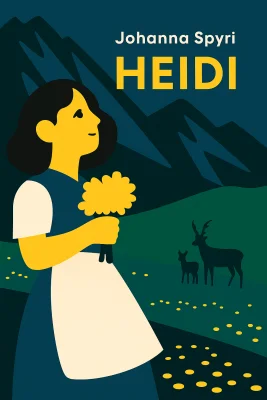
Heidi
Categories
Fiction, Classics, Audiobook, Historical Fiction, Young Adult, Historical, Childrens, Middle Grade, Juvenile, Childrens Classics
Content Type
Book
Binding
Paperback
Year
2002
Publisher
Kingfisher
Language
English
ASIN
0753454947
ISBN
0753454947
ISBN13
9780753454947
File Download
PDF | EPUB
Heidi Plot Summary
Introduction
# Mountain Whispers: A Child's Journey Between Two Worlds The mountain path carved itself into stone like a scar, winding upward through pine forests where shadows held secrets older than memory. Eight-year-old Heidi stumbled behind her aunt Deta, small boots slipping on loose rocks as they climbed toward the hermit's hut that clung to the mountainside like a barnacle to a ship's hull. The villagers below whispered dark stories about the Alm-Uncle who lived in that weathered wooden structure—a man who'd turned his back on God and civilization, who spoke to no one and trusted nothing but the wind through ancient pines. Deta's grip tightened on the child's wrist as they approached the hut where smoke curled from a stone chimney. She had a position waiting in Frankfurt, a chance at a better life that wouldn't accommodate an orphaned niece. The old man emerged from his doorway like a specter, wild white hair and beard framing eyes pale as winter ice. This was where Heidi's story would truly begin—not in the suffocating valleys below, but in this high place where eagles soared and broken souls learned to heal. The mountain was about to claim another lost child, and in return, it would offer gifts that no city could provide.
Chapter 1: Abandoned on Sacred Ground: The Hermit's Unexpected Gift
The hut squatted against the mountainside like something grown from the rock itself. Alm-Uncle stood six feet tall in the doorway, his weathered face carved by decades of solitude and grief. The villagers' whispers followed him even here—stories of blood on his hands, of a man who'd abandoned his faith after losing everything that mattered. Deta's explanation tumbled out in nervous bursts. The child needed care. She'd found employment in Frankfurt. Surely blood was thicker than water, and Heidi was his son's daughter after all. The old man's gaze shifted to the small figure beside her, this eight-year-old girl in her too-large dress who stood perfectly still while adults decided her fate. "What's your name, child?" "Heidi." "And you're not afraid?" She considered this with the gravity of someone who'd learned early that fear was a luxury she couldn't afford. "Should I be?" Something flickered in those pale eyes—surprise, perhaps, or the ghost of recognition. Without another word to Deta, he turned and walked back into the hut. Deta kissed Heidi's forehead hastily, pressed a small bundle into her hands, and fled down the mountain path as if demons pursued her. The hut's interior was sparse but clean. A massive stone fireplace dominated one wall, its warmth reaching into every corner. Simple wooden furniture, worn smooth by years of use, spoke of a man who'd stripped his life down to essentials. He cut thick slices of bread, spread them with fresh cheese, and poured creamy goat's milk into a wooden cup. "The loft is where you'll sleep," he said, pointing to a ladder. "There's fresh hay up there." Heidi climbed and found herself in a small space under the eaves. Through a round window, the entire valley spread below like a green sea dotted with toy villages. The hay smelled sweet and clean, better than any bed she'd known. When she climbed back down, her grandfather was carving a wooden spoon, his hands moving with surprising delicacy. "Tomorrow you'll meet Peter," he said without looking up. "He tends the goats. You can go with him if you like." That night, as wind sang through the pines, Heidi felt something she couldn't name—a sense of belonging, of being exactly where she was meant to be. The mountain had claimed her, and she had claimed it in return.
Chapter 2: Wild Freedom: Learning the Mountain's Ancient Language
Dawn painted the peaks rose-gold before the sun cleared the eastern ridges. Heidi woke to the sound of bells—dozens of them, creating a symphony that echoed off surrounding cliffs. Peter appeared with his goat herd like something from a fairy tale, eleven years old, barefoot, and brown as a nut from the mountain sun. "So you're the new girl," he said, examining her with frank curiosity. "Grandfather says you can come with us today." The goats surged around them—Daisy and Dusky, her grandfather's milking goats, along with Peter's charges from the village below. Each animal had its own personality, its own place in the herd's complex hierarchy. Little Snowdrop, white as her name suggested, stayed close to Heidi's side as if sensing a kindred spirit. They climbed higher than Heidi had ever been, following paths that seemed to exist only in Peter's mind. The air grew thinner, the sky deeper blue. Alpine flowers carpeted the meadows in impossible profusion—gentians blue as sapphires, primroses yellow as butter, entire hillsides painted in colors that had no names. "This is the best pasture," Peter explained as they reached a broad meadow surrounded by towering peaks. "The grass here makes the sweetest milk." Heidi ran through the flowers, arms spread wide, laughing with pure joy. The mountain wind caught her voice and threw it back from the cliffs in a dozen echoes. She'd never known such freedom existed. The goats scattered across the slopes, each following its own ancient wisdom, while high above, a golden eagle circled on thermal currents. But it was Peter's grandmother who truly captured Heidi's heart. The old woman lived in a tiny cottage halfway down the mountain, her world shrunk to the dimensions of a single room by blindness and age. When Peter brought Heidi to visit, the grandmother's face lit up at the sound of a new voice. "Child," she whispered, reaching out with trembling hands. "What a sweet voice you have." The cottage was painfully poor—hard dark bread, thin blankets, a woman whose spirit blazed bright despite her circumstances. She told stories of the old days when she could see the peaks change color with the seasons, when she could read the weather in the flight of birds. "I had a book once," she said wistfully. "Hymns and prayers. But it's been so long since anyone could read to me." Heidi filed this away in her heart, along with the image of gentle hands that moved constantly, searching for something lost. That evening, she asked her grandfather about sharing their bread, their milk, anything that might ease the old woman's poverty. The next day, they brought gifts—fresh bread, warm milk, a shawl that had belonged to Heidi's mother. The grandmother wept with gratitude. "You've brought sunshine into this old woman's winter."
Chapter 3: Urban Captivity: A Spirit Caged in Silk and Sorrow
The letter arrived on a morning when first snow dusted the highest peaks. Aunt Deta climbed the mountain path with determined stride, her city clothes incongruous against the wild landscape. She'd found Heidi a position in Frankfurt—companion to a wealthy family's invalid daughter. Alm-Uncle's face darkened like a storm cloud. "The child stays here." "She needs education, proper clothes, a chance at a real life. What can you offer her up here? Goat's milk and fairy tales?" The argument raged while Heidi stood frozen between them. Adult decisions, once made, were immutable as avalanches. Within hours, she found herself in a carriage rolling away from everything she'd ever loved, watching the mountains shrink to blue shadows on the horizon. Frankfurt assaulted her senses. Streets teemed with people and horses and carriages, all moving with urgent purpose. Buildings rose like cliffs on either side, blocking out the sun. The air tasted of smoke and dust and a thousand unfamiliar scents. The Sesemann house stood four stories tall, its windows gleaming like watchful eyes. Sebastian, the butler, led her through rooms designed to intimidate—vast spaces filled with furniture too fine to touch, paintings of stern-faced ancestors, carpets that muffled every footstep. Clara Sesemann sat in a wheelchair by the window, her pale face turned toward the street below. Twelve years old, with golden hair and enormous blue eyes, she looked like a porcelain doll that might shatter at a touch. Illness had claimed the use of her legs years ago, leaving her trapped in a world of books and embroidery and careful, measured days. "You must be Heidi," Clara said, her voice soft as silk. "I'm so glad you've come. It gets terribly lonely here." Miss Rottenmeier, the governess, appeared like a black-clad specter. Tall, angular, with a face permanently set in disapproval, she examined Heidi as if inspecting damaged goods. "This is what they sent us? A mountain peasant who probably can't even read?" The lessons began immediately. Reading, writing, arithmetic, deportment—an endless parade of subjects designed to transform a wild mountain child into a proper young lady. Heidi struggled with letters that danced on the page, numbers that made no sense, rules of behavior that felt like chains around her spirit. But Clara was different. In the evenings, when the governess retired, the two girls would sit together and Heidi would tell stories of the mountains—of Peter and his goats, of her grandfather's hut, of meadows carpeted with flowers and peaks that touched the sky. "It sounds like paradise," Clara whispered. "I dream sometimes that I can walk again, that I'm running through those meadows you describe." The city was killing Heidi by degrees, and everyone could see it except those who refused to look.
Chapter 4: The Call of Stone and Sky: Homesickness as Sacred Wound
Winter in Frankfurt stretched endlessly, each day identical to the last. Heidi learned to read, slowly and painfully, but the words on pages seemed lifeless compared to stories her grandfather used to tell by firelight. She grew thin and pale, a ghost of the vibrant child who'd run through mountain meadows. The homesickness grew like a physical pain in her chest. She saved white rolls from each meal, hiding them in her wardrobe for the grandmother she'd left behind—the blind old woman who treasured every crumb of soft bread. When Miss Rottenmeier discovered this hoard, her outrage echoed through the house. "Bread in the wardrobe! Among the fine dresses! What manner of creature are you?" Heidi wept for the first time since arriving, great silent sobs that shook her thin frame. The rolls were gone, thrown away like garbage, and with them her only connection to the world she'd lost. The sleepwalking began in March. Sebastian found her one night standing by the front door in her nightgown, her eyes open but unseeing. She had no memory of leaving her bed, only vague dreams of wind in the pines and the sound of goat bells. "It's happening every night now," Sebastian reported to Miss Rottenmeier. "She opens the door and stands there like she's waiting for something." Miss Rottenmeier was convinced the house was haunted. She wrote frantic letters to Mr. Sesemann, demanding his immediate return. When he arrived, he found his household in chaos and his daughter's companion wasting away before his eyes. Dr. Classen, the family physician, examined Heidi with gentle thoroughness. His diagnosis was swift and certain. "Homesickness," he said simply. "The child is dying of it. She must return to her mountains immediately, or we'll lose her entirely." "But surely there's some treatment—" Mr. Sesemann began. "The only treatment is the one thing she needs most—home. Send her back, and she'll recover. Keep her here, and..." The doctor's shrug said everything. Night after night, Heidi's spirit searched desperately for the mountain home that haunted her dreams. Her body wasted away while her soul wandered the high meadows, calling to peaks that couldn't hear her across the vast distance of stone and steel that separated her from everything she loved. The decision, when it came, felt like resurrection. Within days, she would be going home.
Chapter 5: Homeward Bound: Return to the Healing Heights
The journey home passed like a fever dream. Heidi sat rigid in the train, clutching her basket of white rolls for the grandmother, afraid to believe this wasn't another cruel dream. Sebastian, her escort, watched nervously as the mountains grew larger with each mile, their peaks sharp as broken glass against the sky. At Mayenfeld station, a local baker agreed to drive them partway up the mountain path. His cart jolted and swayed over stones worn smooth by centuries of weather, while Heidi's eyes devoured every familiar landmark—the twisted pine that marked the halfway point, the waterfall that sang its eternal song, the meadow where she'd first learned the names of wildflowers. She left Sebastian at the village and climbed the final stretch alone, her legs remembering the rhythm of stone and grass. The cottage appeared around a bend like something from a fairy tale—the blind grandmother sitting in her corner, hands folded, waiting as she had waited every day for two long years. "Is it you?" the old woman whispered, reaching out with trembling fingers. "Is it really you?" Heidi fell to her knees beside the chair, pressing the soft rolls into those work-worn hands. "I brought you white bread, Grandmother. Twelve whole rolls, fresh and soft." Tears streamed down the sightless face. "Child, child, you are the greatest gift. But tell me—can you read now? Can you read the old hymnal?" Heidi's voice, clear and strong, filled the dim cottage as she read the words that had waited so long to be spoken aloud. The grandmother's face glowed with joy that transformed her completely, erasing years of sorrow and loneliness. As evening approached, Heidi climbed the last steep path to her grandfather's hut. The sun set the peaks ablaze—Falknis burning like a torch, the Scesaplana crowned with fire. She stopped to watch the nightly miracle, tears of pure happiness streaming down her cheeks. The old man waited on his bench, pipe smoke curling around his weathered face. When she threw herself into his arms, his own eyes filled with tears he thought had dried up forever. "So you've come back to me," he murmured, holding her close. "My little Heidi has come home." The mountain air filled her lungs like medicine. The city's weight lifted from her shoulders with each breath. She was where she belonged, and nothing would ever take her away again.
Chapter 6: Circles of Grace: When Broken Souls Learn to Fly
The mountain reclaimed its child with fierce tenderness. Heidi's hollow cheeks filled out within days, her step grew light and sure on the rocky paths. She rose with the sun to tend the goats, her laughter echoing across meadows that had waited too long in silence. Peter greeted her return with his usual stoic manner, but his eyes shone with relief. The goats remembered her voice, clustering around her with soft bleats of welcome. Even the cantankerous old billy goat seemed gentler in her presence. But the city had left its mark. Heidi could read now, and this gift transformed the grandmother's world. Each afternoon, she sat beside the old woman's chair, reading from the ancient hymnal until the cottage filled with words of comfort and hope. The grandmother's face grew younger with each verse, as if the songs were washing away accumulated sorrows. "I never thought to hear these words again," she whispered. "God has been good to send you back to me." The grandfather, too, began to change. The village pastor climbed the mountain path one crisp morning, finding the hermit splitting wood behind his hut. Their conversation was brief but significant—old wounds acknowledged, if not yet healed. "The child should go to school," the pastor said gently. "When winter comes, we'll move down to the village," the old man replied, and the words surprised them both. The transformation wasn't sudden or dramatic. It came like spring to the high country—slowly, quietly, but with irresistible force. The grandfather began to smile again, to speak of the future instead of dwelling in the past. He carved toys for Heidi, built her a proper bed, taught her the names of every peak and valley spread below their mountain home. The wheel of seasons turned, carrying them through autumn's gold and winter's silver silence. They moved to the village when snow blocked the high passes, the grandfather taking work as a carpenter while Heidi attended school. The other children stared at first—this wild mountain girl who spoke of eagles as friends—but her gentle nature soon won their acceptance. The grandfather, once shunned and feared, found himself welcomed back into the community he'd abandoned so long ago. His skill with wood and metal made him valuable, but it was his granddaughter's joy that truly opened doors. How could they condemn a man who had raised such a child? Spring returned as it always did, calling them back to the high country where healing lived in every breath of wind-scoured air.
Chapter 7: Mountain Magic: Love's Power to Transform the Lost
Summer brought unexpected visitors to the mountain. A procession wound its way up the steep path—porters carrying a sedan chair, a lady on horseback, provisions loaded on pack mules. Heidi ran to meet them, her heart soaring as she recognized the pale face in the sedan chair. "Clara! You came!" Clara Sesemann looked around in wonder at the vast landscape spreading below them. After months of city walls and closed rooms, the mountain's immensity was almost overwhelming. Her grandmother, a spirited woman in her seventies, dismounted with surprising agility and embraced Heidi warmly. "So this is where our Heidi belongs," she said approvingly. "I can see why she pined for it." Alm-Uncle emerged from the hut, his usual wariness tempered by curiosity. The sight of the frail girl in her wheeled chair stirred something protective in his nature. He lifted Clara from her chair with surprising gentleness, settling her on soft cushions where she could see the entire valley spread below. The visit was planned for just a day, but as hours passed, Clara's cheeks began to show the first hint of color they'd had in years. The mountain air, thin and pure, seemed to breathe life into her weakened lungs. She drank goat's milk with genuine appetite and laughed at the antics of Peter's herd. "I feel different here," she confided to Heidi as they sat watching sunset paint the peaks in shades of fire. "Stronger somehow." Grandmother Sesemann noticed it too. When time came to leave, she made an unexpected decision. "What if Clara stayed for a few weeks? The mountain air seems to agree with her." And so Clara remained, sleeping in Heidi's loft on a bed of sweet-smelling hay, waking each morning to views that took her breath away. The days fell into peaceful rhythm—breakfast of fresh bread and creamy milk, hours spent in the meadow watching goats graze, afternoons listening to Heidi's stories of mountain life. Clara grew stronger with each passing day. The mountain's magic worked slowly but surely, building muscle and bone, bringing color to pale cheeks, putting light back in tired eyes. She began to take tentative steps with Heidi's support, her legs trembling but determined. "I feel like I'm waking up from a long sleep," she told Heidi one evening as they lay watching stars appear in the darkening sky. "As if I've been half-alive all these years." The mountain was working its ancient healing, as it had for Heidi, as it would for anyone who came to it with an open heart and courage to be transformed.
Chapter 8: Eternal Bonds: Where Two Worlds Become One
The morning dawned clear and bright, with that crystalline quality that only mountain air possesses. Clara woke with unusual energy, as if something in the atmosphere itself was calling to her. Her wheelchair had mysteriously vanished during the night—apparently blown off the mountain by strong winds. "No matter," Alm-Uncle said calmly. "We'll manage without it." He fashioned a comfortable seat from blankets and cushions, then carried Clara to the high pasture where flowers bloomed in wild profusion. The meadow was a painter's dream—carpets of blue gentians, yellow primroses, white alpine roses nodding in the breeze. As the day wore on, Clara felt a restlessness she couldn't name. "I wish I could walk among them," she said wistfully. "Just once, to feel the flowers brush against my legs." "Why don't you try?" Heidi suggested impulsively. "Just a few steps. Peter and I will help you." Together, they helped Clara to her feet, supporting her on either side as she swayed uncertainly. Step by agonizing step, they moved across the meadow. Clara's legs shook with effort, but gradually the pain began to ease. Her steps grew more confident, her breathing steadier. "I'm doing it," she whispered in amazement. "I'm actually walking." By the time Alm-Uncle arrived to check on them, Clara was taking tentative steps on her own, her face radiant with joy and triumph. The old man's eyes filled with tears as he watched the miracle unfold. When Grandmother Sesemann arrived the next day for her planned visit, she found Clara standing at the hut's entrance, walking forward to greet her with steady, sure steps. The reunion was joyous beyond words. Clara's father, summoned by urgent telegram, arrived to find his daughter not only walking but running through the mountain meadows like the healthy child he'd never dared hope she could become. The bonds forged on the mountain proved stronger than those of blood or circumstance. Mr. Sesemann, overwhelmed by gratitude, insisted on providing for Heidi's future, but Alm-Uncle had simpler needs. The promise extended beyond mere financial security—Clara and Heidi had become true sisters, their friendship forged in the crucible of shared experience. As autumn approached and time came for farewells, there were tears but no despair. The mountain had taught them all that some bonds transcend distance and time. "We'll be back next summer," Clara promised, embracing Heidi fiercely. "And every summer after that." "The mountain will be waiting," Heidi replied. "It always is."
Summary
The mountain had worked its ancient magic, transforming not just bodies but souls. Heidi, the orphaned child who had arrived broken and afraid, had become the catalyst for healing that rippled outward like circles on a still pond. Her grandfather, the bitter hermit shunned by the village, had rediscovered his capacity for love and trust. Clara, the invalid trapped in a world of limitations, had found not just the use of her legs but the courage to embrace life fully. The bonds forged in that high place proved unbreakable. Dr. Classen established his practice in the valley, finding in its peace the healing his wounded heart required. The Sesemanns became regular visitors, their Frankfurt mansion never quite feeling like home after they'd tasted the mountain's freedom. Peter's grandmother lived her final years in comfort, her cottage filled with voices reading from her beloved hymnal. But perhaps the greatest transformation was in the understanding that healing comes not from medicine or money, but from the simple gifts freely given—love without condition, faith without doubt, and the courage to believe that broken things can be made whole again. In that high place where eagles soar and flowers bloom in impossible profusion, they had all learned to fly.
Best Quote
“I want to go about like the light-footed goats.” ― Johanna Spyri, Heidi
Review Summary
Strengths: The review highlights the enchanting simplicity and innocence of the protagonist, Heidi, and the captivating writing style of Johanna Spyri. The characters, particularly Heidi and her grandfather, are portrayed as endearing and relatable. The alpine setting is vividly described, providing a sense of peace and calm. The book's strong Christian values are also appreciated. Overall: The reviewer expresses a deep affection for the book, finding it increasingly enjoyable with each read. They recommend it highly for its relaxing and engaging qualities, suggesting it is suitable for readers of all ages. The book holds a special place in the reviewer's collection, indicating a strong personal connection.
About Author

Beverly Cleary
Cleary connects young readers to the emotional realism of childhood through her authentic storytelling. Her books often depict the lives of middle-class families, highlighting the everyday challenges faced by children, such as sibling rivalry and school struggles. This approach not only makes her stories relatable but also underscores her belief in the power of ordinary experiences. Her debut book, "Henry Huggins," initiated this focus on real-life narratives, which was further explored in the beloved Ramona series, with "Beezus and Ramona" introducing readers to the iconic Quimby sisters. Through humor and empathy, Cleary's work resonates with readers by presenting characters and situations they recognize from their own lives.\n\nThe impact of Cleary's writing extends beyond entertainment; it offers a mirror for young readers to see themselves and their experiences reflected in literature. Her ability to weave humor into everyday scenarios allows children to navigate their own challenges with a sense of understanding and lightheartedness. Books such as "Dear Mr. Henshaw," which won the Newbery Medal in 1984, demonstrate her knack for addressing complex emotions in an accessible manner. Readers find solace and joy in her stories, making Cleary a staple in children’s literature and a catalyst for fostering a lifelong love of reading.\n\nIn recognition of her significant contributions, Cleary received numerous accolades, including the National Medal of Arts. Her books have sold over 91 million copies worldwide, underscoring their lasting appeal. Cleary's legacy endures through her timeless characters and stories, which continue to captivate and educate young readers around the globe, securing her place as one of America's most beloved authors. This bio encapsulates the essence of Cleary’s work, demonstrating how her narratives offer both entertainment and reflection for generations.
Read moreDownload PDF & EPUB
To save this Black List summary for later, download the free PDF and EPUB. You can print it out, or read offline at your convenience.
Heidi
by Beverly Cleary
