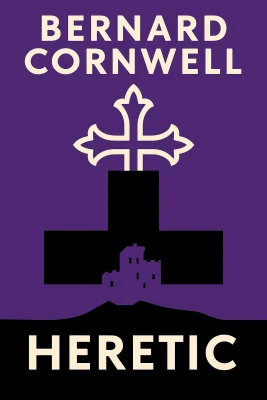
Heretic
Categories
Fiction, Audiobook, Historical Fiction, Military Fiction, Fantasy, Historical, France, Adventure, War, Medieval
Content Type
Book
Binding
Mass Market Paperback
Year
2004
Publisher
HarperTorch
Language
English
ASIN
006053284X
ISBN
006053284X
ISBN13
9780060532840
File Download
PDF | EPUB
Heretic Plot Summary
Introduction
# Sacred Shadows: The Archer's Path Through Condemnation and Devotion The pyre stood ready in Castillon d'Arbizon's square, its wooden fingers reaching toward heaven like a prayer made of kindling. Thomas of Hookton, the English archer who had conquered this French stronghold with thirty men, stood before the condemned woman with a choice that would damn his soul. Genevieve waited in her white shift, golden hair catching the morning light, sentenced to burn as a heretic by the Church's inexorable judgment. The crowd pressed forward, hungry for the cleansing flames, while Thomas felt the weight of command and conscience crushing down upon him like stones. In that moment of terrible decision, Thomas chose love over law, mercy over doctrine. He cut her bonds and declared her under his protection, defying both God and king. The Dominican friar's curse followed swift as an arrow: excommunication. Cast out from grace, stripped of salvation, condemned to wander as a spiritual leper until death claimed him. But Thomas had glimpsed something in Genevieve's eyes that spoke of truths the Church feared to acknowledge, and he would follow that light into darkness itself. The Holy Grail waited somewhere in the shadows of his family's bloody past, and perhaps in finding it, he might discover whether redemption could exist beyond the reach of bishops and their curses.
Chapter 1: The Devil's Gambit: Choosing Love Over Law
The autumn rain hammered Castillon d'Arbizon's stones as Thomas knelt in the captured castle's chapel, his Dominican disguise heavy with water and deception. He had taken this fortress through cunning and violence, posing as a friar to slip past the guards before unleashing his archers like wolves among sheep. Now he commanded thirty Englishmen deep in enemy territory, their longbows the only law that mattered in these disputed lands. In the dungeons below, Genevieve waited for dawn and the cleansing fire. The Church had branded her a beghard, a dangerous heretic who claimed direct communion with God without need of priests. Her golden hair bore the scars of torture, her pale flesh marked by the Dominican's careful attention to her soul's salvation. Yet when Thomas looked into her eyes, he saw not madness but a terrible clarity that made him question everything he had been taught to believe. The townspeople gathered in the square as the sun climbed higher, their faces twisted with righteous hunger for the spectacle of purification. Father Medous clutched his prayer book with trembling hands while the pyre waited like an altar to their certainty. Thomas emerged from the castle leading Genevieve in her white gown, transformed from ragged prisoner to ethereal vision of martyrdom. He raised his hand for silence and spoke of Moses striking water from stone, of God's servants performing what ignorant men called witchcraft. Each word was a blade thrust at the Church's absolute authority, each argument a challenge to their power over life and death. When he demanded the consecrated wafer, the crowd held its breath. If she were truly the devil's creature, the holy bread would destroy her in screams and agony. Genevieve opened her mouth and received the sacred morsel. Seconds stretched into eternity as the crowd waited for divine judgment. But she remained whole, unmarked, alive. The silence that followed was more profound than any scream. Thomas cut her bonds with deliberate ceremony and declared her under the Earl of Northampton's protection. The crowd dispersed in confusion and fear, their certainties shattered by an Englishman's defiance.
Chapter 2: Excommunication: Cast from God's Grace
The bishop arrived three days later with a retinue of priests and the full weight of ecclesiastical authority. His white cope gleamed in the pale sunlight as he raised his staff in Castillon's square, his voice rolling across the stones like thunder from heaven. The ritual was ancient and implacable, each word a nail in Thomas's spiritual coffin. Thomas of Hookton was cut off from the body of Christ, expelled from the communion of saints, his soul consigned to eternal fire with Satan and all his angels. With each strike of the bishop's staff, each toll of the silver bell, another bond was severed between Thomas and salvation. The words echoed from the castle walls like doors slamming shut, one by one, until only darkness remained. The garrison watched in stunned silence as their commander was spiritually executed before their eyes. Some crossed themselves and backed away, fearing contamination from the cursed pair. Others, led by Robbie Douglas, began to mutter of betrayal and divine wrath. The young Scotsman's hand moved to his sword hilt as duty warred with friendship in his heart. Sir Guillaume d'Evecque, the scarred Norman knight, tried to maintain order with brutal efficiency, but even his authority could not bridge the growing chasm. Men who had fought side by side now eyed each other with suspicion. The brotherhood of arms that had bound them together through countless battles lay shattered like a blade struck against stone. As the bishop departed with his orange and white banners, Thomas stood alone on the battlements with Genevieve pressed close beside him. The wind carried the scent of rain and the promise of winter, but all he could feel was the cold emptiness where his faith had once burned bright. He was damned now, truly and completely, with nothing left to lose and eternity stretching before him like an endless night.
Chapter 3: Fugitives in the Wilderness: Seeking Sanctuary Among Outcasts
The hollow chestnut tree offered scant shelter from the driving rain, but it was all Thomas and Genevieve had left in the world. They huddled together in the ancient trunk, two outcasts fleeing the righteous fury of Church and state. Sir Guillaume had brought them supplies and horses under cover of darkness, but even his loyalty had limits. The garrison was fracturing, and Thomas's presence would only hasten its destruction. Their flight eastward was a desperate gamble toward the ruins of Astarac, where Thomas hoped to find answers to questions that had haunted his family for generations. Genevieve rode beside him in her silver mail, no longer the helpless prisoner but a warrior in her own right. The countryside crawled with coredors and bounty hunters eager to claim the forty gold coins placed on an English archer's head. The attack came without warning as crossbow bolts whistled from the treeline. Thomas's war bow sang its deadly song, sending white-feathered death among their attackers. Bodies fell like wheat before the scythe, but Genevieve took a quarrel in the shoulder, her blood staining the silver rings of her hauberk. They fought their way to high ground, trading arrows for sanctuary among the rocks. Philin, the bandits' leader, proved to be a fallen monk whose own sins had driven him to outlawry. He recognized the futility of fighting English archery and offered terms: safe passage in exchange for his wounded son's life. The bargain struck, they rode together toward Saint Sever's monastery, where Abbot Planchard offered sanctuary to all who sought it. In the leper house behind the abbey walls, Brother Clement tended Genevieve's wound with gentle skill. The mute monk's kindness was balm to souls that had known too much hatred, and among the grey-robed outcasts who sang of ancient love, Thomas began to understand that damnation might not be the end of his story but merely its beginning. The Grail still waited somewhere in the shadows of the past, and perhaps redemption lay not in the Church's forgiveness but in the courage to seek truth despite the cost.
Chapter 4: Blood and Betrayal: When Brothers Become Enemies
The monastery of Saint Sever rose from the morning mist like a vision of peace, its white walls and red-tiled roofs speaking of sanctuary and healing. But their refuge shattered on the second night when black-cloaked horsemen thundered into the courtyard. Thomas recognized the leader with a chill of fear: his cousin Guy Vexille, the knight known as the Harlequin, whose very name was whispered in terror across Christendom. Hidden in the monastery's bone-filled crypt, Thomas and Genevieve listened as Guy interrogated Abbot Planchard. The conversation revealed terrible truths that made Thomas's blood run cold. Guy had murdered Thomas's father years ago, had tortured the mad priest for secrets about the Holy Grail's location. Now he sought the cup not for glory but to cleanse the world with fire and sword, to remake it in his own twisted vision of purity. When Planchard refused to reveal what he knew, Guy's blade found the old man's throat. The abbot died slowly, clutching his crucifix as his blood pooled on the ancient stones. Above them, Guy's men ransacked the monastery, searching for clues to the Grail's location while the monks cowered in terror. Thomas held Genevieve close in the darkness, surrounded by the bones of centuries of dead monks, and swore that his cousin would pay for this murder. The hunt for the Grail had become personal now, a blood debt that only death could settle. Guy's voice echoed through the crypt as he spoke of destiny and divine purpose, but Thomas heard only the ravings of a madman drunk on his own righteousness. As dawn broke over the violated monastery, Guy departed with his black riders, leaving behind only corpses and ashes. Thomas emerged from the crypt to find Brother Clement weeping over the abbot's body, the tongueless monk's grief more eloquent than any words. The sanctuary was broken, the peace shattered, and Thomas knew that nowhere in this world would be safe until Guy Vexille lay dead.
Chapter 5: The False Grail: Deception in Holy Vestments
The siege of Castillon d'Arbizon had become a grinding nightmare of cannon fire and death. Thomas and Genevieve returned to find Sir Guillaume holding the castle with a handful of loyal men while the great gun called Hell Spitter hammered at the gates. The new Count of Berat, young Joscelyn who had murdered his uncle for the title, commanded the besiegers with Robbie Douglas at his side. In the chaos of their desperate return, Genevieve made a discovery that changed everything. Hidden in a crossbowman's quiver, wrapped in linen and sealed with wax, lay a cup of breathtaking beauty. Gold filigree work surrounded a vessel of green glass, and when wine was poured into it, the liquid seemed to glow with inner light. Could this be the Holy Grail itself? Thomas displayed the cup on the castle walls, and the effect was immediate. The besiegers fell to their knees in awe, even hardened soldiers weeping at the sight. The great gun fell silent as priests rushed to witness the miracle. Guy Vexille himself came forward under a flag of truce, his black armor gleaming in the pale winter sun. The cousins met in the rubble-strewn gateway, two men bound by blood and divided by faith. Guy offered alliance: together they could overthrow the corrupt Church and rule in God's name. The Grail would be their banner, their justification for conquest. But Thomas had learned too much of his cousin's methods, had seen too many innocents die for Guy's vision of purity. That night, as the garrison prepared for the final battle, Thomas made a terrible discovery. The green glass cup did not fit properly in the ancient wooden box that supposedly held the true Grail. The proportions were wrong, the wear patterns didn't match. With growing horror, he realized they had been deceived. This beautiful cup was nothing more than an elaborate fake, crafted to fool the faithful and line the pockets of corrupt clerics.
Chapter 6: Plague and Final Reckoning: Death's Judgment on All
Dawn brought more than the expected assault. It brought death itself riding on the wind. The pestilence that had ravaged Italy arrived in Castillon d'Arbizon like a black tide, striking down besiegers and defenders alike. Men who had been healthy at sunset woke with swollen faces and agonizing pain. By midday, the streets were filled with the dying. The great gun stood silent, its crew too sick to load and fire. Count Joscelyn fled north with his healthy men, abandoning the siege in panic. But Guy Vexille remained, seeing God's hand in the plague. This was divine judgment, he declared. The Grail must be seized before the pestilence consumed them all. With thirty men-at-arms, Guy launched a desperate assault on the castle. They came behind great wooden shields, advancing through the rubble-choked gateway while arrows rained down from the walls. Thomas met them with fire as Genevieve hurled burning coals down the narrow stairs, filling the air with smoke and screaming men. The battle raged through the castle's halls, sword against bow, faith against desperation. Guy fought like a man possessed, his black blade seeking Thomas's heart. But the archer had advantages: he knew every stone of the castle, and his remaining men fought with the fury of the doomed. In the courtyard, surrounded by the dead and dying, the cousins faced each other for the last time. Thomas drew his bow, a bodkin arrow nocked and ready. Guy raised his sword, but armor was no protection against an English arrow at close range. The first shaft was for Thomas's father, murdered years ago. The second for Eleanor, his lost love. The third for Abbot Planchard, butchered in his own monastery. And the fourth, driven deep into Guy's throat, was for Thomas himself, for all the pain and loss and bitter years of hunting shadows.
Chapter 7: The True Cup: Finding Sacred Truth in Simple Clay
Spring came to England like a whispered promise, but it brought little comfort to a land ravaged by plague. Thomas and his surviving companions rode through empty villages and abandoned fields. The pestilence had taken one person in three, leaving behind a world of ghosts and memories. Genevieve rode beside him, her silver mail catching the pale sunlight, while young Sam and the few remaining archers followed in silence. They came at last to Hookton, Thomas's birthplace, now nothing but ruins overgrown with thorns. The church where his father had preached to the gulls stood roofless under the sky, its altar stones scattered by wind and rain. But among the weeds and rubble, Thomas found what he had truly been seeking all along: a simple clay bowl, rough-made and worthless-looking. This was his father's secret, hidden in plain sight for all those years. The mad priest had written "I prepare a table" in his cryptic notes, and the altar was that table. The clay bowl had held the communion wafers, had sat upon the altar week after week while Thomas served as an altar boy. It was the cup that had caught Christ's blood, the true Grail, disguised as the humblest of vessels. Thomas held the bowl in his hands, feeling its rough surface, its imperfect roundness. Here was the prize that had driven men to madness, the relic that could topple kingdoms and remake the world. For a moment, he was tempted to keep it, to use its power for good. But he remembered Abbot Planchard's words about shepherds and sheep, about the corruption that power brought even to the purest hearts. The weight of destiny pressed down upon him like stones, but Thomas had learned the difference between burden and choice. The Grail was real, but its power lay not in miracles or conquest. It lay in the simple act of communion, of sharing bread and wine in memory of love. That truth needed no golden cup, no elaborate ceremony. It lived in the hearts of those who chose compassion over cruelty, mercy over judgment.
Chapter 8: Redemption Through Renunciation: Casting Away the Ultimate Prize
At the water's edge, where the waves crashed against the shingle of his childhood, Thomas made his final choice. The clay bowl felt warm in his hands, as if it held some inner fire that no earthly flame could kindle. Genevieve stood beside him, her golden hair streaming in the salt wind, understanding without words what he meant to do. Behind them lay a trail of blood and ashes: Guy Vexille dead in Castillon's courtyard, the false grail shattered, the plague-ravaged countryside littered with the bones of the faithful and the damned alike. The Church that had cast him out still preached its certainties from pulpits built on fear, while kings and nobles played their games of power with human lives as counters. Thomas drew back his archer's arm and hurled the Grail far out to sea, watching it disappear beneath the grey-green waves. The cup that had caused so much death and suffering was gone, returned to the depths where it could harm no one. The madness was over at last, and Thomas was free: free to live, to love, to be simply human in a world that had forgotten what that meant. The sea swallowed the Grail without ceremony, its waters closing over the most precious relic in Christendom as if it were nothing more than a stone cast by a child. No angels sang, no miracles blazed across the sky. There was only the eternal rhythm of the waves and the cry of gulls wheeling overhead, indifferent to human dreams of glory and damnation. Thomas turned away from the water and took Genevieve's hand. They walked together up the beach toward their waiting horses, two souls who had found each other in the darkness and chosen love over everything else the world could offer. The sun was setting behind them, painting the sky in shades of gold and crimson, and ahead lay the uncertain promise of tomorrow.
Summary
In the end, Thomas of Hookton found what he had been seeking, but not in the way he expected. The Holy Grail was real, but it was not the golden cup of legend. It was a simple clay bowl, humble and unremarkable, hidden among the ruins of his childhood. His quest had cost him everything: his command, his faith, his friends, even his soul according to the Church that had cast him out. Yet in losing everything, he had gained something more precious: the wisdom to know when to let go. The plague that swept across Europe was only the beginning of a darkness that would last for centuries. But in that darkness, small lights still burned: the love between Thomas and Genevieve, the loyalty of friends like Sir Guillaume, the quiet courage of men like Abbot Planchard who chose compassion over dogma. The Grail's power was not in its ability to grant wishes or win battles, but in its capacity to reveal the true nature of those who sought it. Thomas chose to cast it away rather than be consumed by it, and in that choice found his redemption. The archer's war was over, but his real life, free from the madness of quests and the burden of destiny, was just beginning.
Best Quote
“Acho que o Santo Graal é um sonho que os homens têm, um sonho de que é possível tornar o mundo perfeito. Se ele existisse, todos nós teríamos sabido que o sonho não pode se transformar em realidade.” ― Bernard Cornwell, Heretic
Review Summary
Strengths: Bernard Cornwell excels in crafting battle scenes and memorable characters. The book offers plenty of action, with both personal and historical battles set against the backdrop of the Hundred Years War. The plot and pacing are solid, making it enjoyable for newcomers to Cornwell's work. Weaknesses: The book falls short in character development, particularly with the protagonist, Thomas of Hookton, and side character Robbie Douglas. The romance subplot is criticized for lacking depth and chemistry, and the protagonist's decisions are seen as repetitive and frustrating. Overall: The reader finds this installment less satisfying than its predecessors, noting a decline in character engagement. While it may appeal to new readers, it is considered weaker compared to other works in the series.
About Author

Bernard Cornwell
Cornwell explores the intricacies of historical conflicts through the lens of compelling characters and vivid storytelling. His fascination with the Napoleonic Wars, sparked by childhood readings of C.S. Forester, led him to create the Sharpe series, centered on the fictional rifleman Richard Sharpe. This decision was partly driven by a gap in literature that he sought to fill, connecting personal passion with a professional opportunity when moving to the United States. Cornwell's works are not mere retellings of history; they delve into themes of loyalty and leadership, with a particular focus on how individuals navigate the chaos of war.\n\nBernard Cornwell’s unique approach to historical fiction involves blending meticulous research with engaging narratives. While his books transport readers to pivotal periods such as the Hundred Years' War and the early unification of England, they also reflect his own life experiences, like his upbringing in a strict Protestant sect and his work in British television. This depth of personal connection infuses his stories with authenticity, as seen in co-authored novels like "A Crowning Mercy," which draws from his religious background. Readers benefit from Cornwell's dedication to historical accuracy and dynamic character development, making his novels both educational and immersive.\n\nThe author’s recognition extends beyond commercial success; his appointment as an Officer of the Order of the British Empire underscores his contribution to literature. Cornwell’s early book "Sharpe's Eagle" set the stage for his prolific career, resulting in adaptations that have reached wider audiences through television. This short bio offers insight into how Cornwell’s personal history and narrative style have cemented his status as a leading figure in historical fiction, resonating with audiences who seek both entertainment and enlightenment through the written word.
Read moreDownload PDF & EPUB
To save this Black List summary for later, download the free PDF and EPUB. You can print it out, or read offline at your convenience.
Heretic
by Bernard Cornwell
