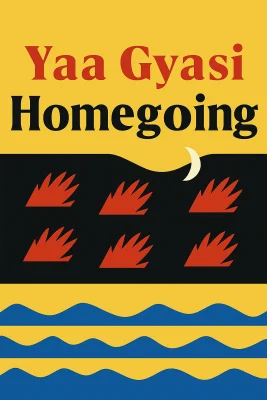
Homegoing
Categories
Fiction, Audiobook, Historical Fiction, Africa, Adult, Book Club, Historical, Race, Ghana, Literary Fiction
Content Type
Book
Binding
Hardcover
Year
2016
Publisher
Alfred A. Knopf
Language
English
File Download
PDF | EPUB
Homegoing Plot Summary
Introduction
# Chains of Heritage: Fire and Water Across Generations Two sisters born under the same burning sky would never meet, yet their blood would flow through centuries like twin rivers of fire and water. Effia walked the marble floors of Cape Coast Castle while Esi lay chained in its dungeons below, separated by stone walls but bound by the same father's blood. The year was 1775, and the Gold Coast trembled under choices that would echo through generations unborn. Above, Effia married the British governor who bought her like cargo, living in luxury while the screams of the enslaved drifted up through floorboards she learned never to question. Below, Esi pressed her face against cold stone, listening to the ocean's whisper of ships and chains, clutching a black stone that would become the only inheritance she could pass to children born into bondage. The castle's white walls gleamed beautiful and terrible in the African sun, a monument to humanity's capacity for both civilization and savagery, while two bloodlines began their divergent journeys across oceans and centuries.
Chapter 1: The Castle's Daughters: Sisters Divided by Stone and Sea
The marriage ceremony felt like a funeral wrapped in celebration. Effia stood in her finest kente cloth while British soldiers formed crimson rows around the castle courtyard, their uniforms blazing against white stone walls that had witnessed a thousand such transactions. James Collins took her hand with surprising gentleness, his pale fingers intertwining with her dark ones as the chaplain spoke English words she barely understood. Above them, cannons pointed seaward, ready to defend this profitable enterprise built on human flesh. Three floors below, Esi had given birth in darkness. The baby's cries echoed off dungeon walls until they stopped altogether, another small life claimed by the castle's endless hunger. She pressed her scarred face against the floor, feeling vibrations of footsteps above where her father's other daughter was beginning a new life while hers crumbled into despair and human waste. James showed Effia the library, the dining hall, gardens where bougainvillea bloomed in violent purple cascades. He never showed her the dungeons. When she asked about sounds that drifted up through floorboards at night, he would pull her close and whisper about wind, about old buildings settling, about anything except the truth that lived beneath their feet like a buried heart still beating. The ship carrying Esi away left on a Tuesday morning. Effia watched from her bedroom window as white sails disappeared into the horizon, unaware that part of her own story was sailing toward a continent she would never see. The black stone necklace around her throat grew warm, as if responding to some distant call across waters that had swallowed so many voices they could never be counted.
Chapter 2: Bloodlines Diverge: Survival in Two Worlds
Esi's daughter Ness was born into bondage on a Georgia plantation where the overseer's whip sang through humid air like a deadly hymn. She named her son in secret, whispering syllables against his tiny ear while other enslaved women kept watch. The plantation owner called him Sam, but Ness carried his true name like a hidden flame that masters could never extinguish. Rice fields stretched endlessly under merciless sun, and young Sam learned that survival meant becoming invisible. He watched his mother's back bend under endless labor, saw how she flinched when footsteps approached their cabin after dark. The overseer's shadow fell across their doorway too often, and Sam understood without words that some hungers were more dangerous than others. Meanwhile, in the Gold Coast, Effia's son Quey grew up between worlds, his mixed heritage marking him as neither fully British nor fully Asante. Other children whispered "obroni" behind his back with voices that cut deeper than blades. His pale skin burned easily under the African sun, and his father's blue eyes seemed displaced in a face that carried his mother's proud cheekbones. When James sent Quey to England for education, London's gray skies and cold stone buildings felt like prison to a child raised under endless blue heavens. Students mocked his accent, his stories of Africa, his desperate attempts to belong somewhere, anywhere. Returning to Cape Coast, the castle felt smaller, its walls closing like a trap around his future.
Chapter 3: Inheritance of Chains: Trauma Passed Through Generations
Ness made a choice that would haunt them both forever. She set fire to the overseer's house on a night when wind carried flames toward fields, toward quarters, toward everything they had known. The blaze lit up the sky like a second sun, and in its glow, Sam saw his mother's face transformed by something between rage and liberation that would mark his dreams for decades. They ran through swampland where alligators watched with ancient eyes, where Spanish moss hung like funeral shrouds from cypress trees. Sam carried his mother when her strength failed, feeling her life ebb with each labored breath. She died in his arms beside a creek that reflected stars like scattered diamonds, and he buried her with bare hands in soil that had never known slavery's taste. Quey found work in the slave trade, telling himself it was business, nothing more. But at night he heard voices from the dungeons speaking languages he half-remembered from childhood. His mother's necklace, now his inheritance, grew heavy around his neck, weighted with souls that passed through the castle's doors like water through cupped hands. In America's Great Dismal Swamp, Sam found refuge with escaped slaves who built homes on stilts above black water. They created families from fragments of broken lives, told stories that kept ancestors alive in memory. Sam married a woman named Pinky, and together they raised children who had never known chains, never felt the overseer's whip bite into flesh like a snake's fang.
Chapter 4: Resistance and Resilience: Fighting Different Forms of Bondage
Their son Kojo grew up free but haunted, carrying slavery's stories like scars on his soul. When the Civil War ended, he took the surname Freeman and walked north toward Baltimore, seeking work in shipyards where former slaves and immigrants labored side by side. The harbor reeked of tar and sweat, but to Kojo it smelled like possibility wrapped in hope. He married Anna, whose laughter could chase away the darkest memories, and for a time they built something resembling happiness. But freedom in America came with invisible chains, and when Anna disappeared one night, Kojo understood that slavery had simply changed its face like a shapeshifter in the darkness. Across the ocean, Quey's son James had inherited the family's role in human trafficking, but the business was dying. The British had outlawed the trade, and the castle's dungeons stood empty for the first time in generations. James married Akosua, an Asante woman who refused to take his name or bow to his authority. She carried herself like royalty, spine straight as a spear, eyes holding secrets that predated his family's arrival on African shores. Their daughter Abena grew up hearing stories of old ways, of kings and queens who ruled vast empires before white men came with ships and hunger. She learned to read signs in palm oil, to speak with ancestors through dreams, to carry history's weight in her bones like marrow that would never stop aching.
Chapter 5: Between Worlds: The Struggle for Identity and Belonging
In Alabama, Kojo's son H learned that freedom was a word with many meanings, most of them lies. Coal mines swallowed black men whole, their lungs filling with dust until they coughed up darkness itself. H's strength was legendary—they called him Two-Shovel H for his ability to move mountains of coal—but even legends could be broken by injustice's relentless weight. When mine owners needed more workers, they simply had sheriffs arrest black men for crimes as small as breathing while black. H found himself in chains again, his grandfather's nightmares made real in a different century. Prison mines were worse than slavery, because slaves had been valuable property. Convicts were disposable, their lives measured only in tons of coal extracted from earth's belly. In Ghana, Abena had grown into a woman of power, her connection to ancestors strengthening with each passing year. She could see the firewoman in dreams, a spirit who carried two burning children and spoke of sorrows spanning oceans. The visions terrified and exhilarated her, showing glimpses of family members she had never met but somehow knew like her own reflection. When the British demanded the Golden Stool, the sacred seat of Asante power, Abena joined resistance led by Queen Mother Yaa Asantewaa. The war was brutal and brief, ending with the queen's exile and the kingdom's submission. But Abena's daughter Akua inherited something more dangerous than weapons: the ability to see across time and space, to witness suffering of ancestors and descendants alike.
Chapter 6: Ancestral Echoes: Memory as Bridge Across Time
The firewoman's visits grew more frequent as Akua aged, showing her visions of family members scattered across the world like seeds on wind. She saw H emerging from mines, his body broken but spirit intact. She witnessed his son Sonny's struggles with heroin in Harlem, watched as addiction became another form of slavery wrapped in different chains. In America, the Great Migration carried millions of black souls northward, seeking freedom in cities that promised opportunity but delivered only different forms of oppression. Willie's voice soared above church congregations, her gospel songs carrying echoes of African rhythms that had survived the Middle Passage like messages in bottles washing up on distant shores. Her son Carson, who called himself Sonny, grew up angry at a world designed to crush him. The civil rights movement offered hope, but progress came slowly, paid for in blood and tears that seemed to flow from the same source as his ancestors' suffering. Sonny marched and protested, was arrested and beaten, until injustice's weight drove him to seek escape in the needle's temporary paradise. Akua's son Yaw became a teacher, dedicating his life to telling true stories that history books ignored. His scarred face, burned in childhood when his mother's visions overwhelmed her, served as a reminder that some truths were too painful to bear. He taught students to question everything, to seek silenced voices, to understand that history belonged to victors but real stories lived in survivors.
Chapter 7: The Long Journey Home: Healing the Generational Divide
Generations later, Marcus stood on the beach at Cape Coast Castle, his feet touching sand that had witnessed his ancestors' departure centuries before. The water that had terrified him all his life suddenly seemed less threatening, as if the ocean itself was welcoming him home after an impossibly long exile. Beside him, Marjorie lifted her grandmother's necklace from her neck, the same black stone that had traveled from Effia to Esi's descendants through impossible journeys across time and space. The castle's white walls gleamed in afternoon sun, beautiful and terrible as ever, but now Marcus understood he was not just a visitor to this place of sorrow. He was coming home, completing a circle that had been broken by slavery's violence. As Marjorie placed the necklace around Marcus's neck, the black stone grew warm against his chest, as if recognizing the completion of its long journey. The firewoman's children, carried in dreams across centuries, had finally found their way back to each other. Water that had divided them now united them, washing away artificial boundaries that had kept families apart for generations. The Door of No Return had become a door of return, and ancestors who had been lost to the ocean's depths could finally rest. In that moment, standing where the Atlantic met the African shore, Marcus felt the weight of all the stories that had led to this reunion, all the suffering and survival that had brought two bloodlines back together like rivers flowing into the same sea.
Summary
The castle's dungeons could no longer hold their ancestors' spirits, for those spirits lived on in descendants who had survived, who had endured, who had found their way back to the beginning. Marcus and Marjorie stood where Effia and Esi had been separated by stone and circumstance, their reunion healing wounds that had festered across centuries. The black stone necklace had completed its journey from one sister to another's descendant, carrying with it the accumulated weight of every story, every struggle, every small victory that had led to this moment of recognition and return. The circle was complete, but the story would continue, carried forward by new voices singing old songs, telling new truths about the unbreakable bonds that connect all human hearts across the vast expanse of time and space. Fire and water, the elements that had marked their ancestors' separation, now flowed together in their children's veins, proving that some things—love, memory, the stubborn persistence of hope—could survive even the most determined attempts to destroy them.
Best Quote
“We believe the one who has power. He is the one who gets to write the story. So when you study history, you must ask yourself, Whose story am I missing? Whose voice was suppressed so that this voice could come forth? Once you have figured that out, you must find that story too. From there you get a clearer, yet still imperfect, picture.” ― Yaa Gyasi, Homegoing
Review Summary
Strengths: The review highlights the book's ability to create rich characters and cover extensive historical content within a concise 300 pages. It praises the ambitious scope of the family saga, spanning seven generations and fourteen perspectives, without any character feeling underdeveloped. The storytelling is commended for its depth and insight into human nature, effectively addressing complex subjects like slavery and colonialism. Overall: The reader expresses a highly positive sentiment, awarding the book 4 1/2 stars. They recommend "Homegoing" for its compelling narrative and impressive handling of historical themes, suggesting it as an exceptional family saga that stands out for its ambition and storytelling prowess.
About Author

Yaa Gyasi
Gyasi reframes the complexities of identity and heritage through her evocative storytelling, offering a window into the intersections of race, history, and personal experience. Her work is characterized by a profound exploration of the African diaspora, weaving intricate narratives that connect the past with the present. Her debut novel, "Homegoing," tackles the enduring impacts of slavery, tracing the lineage of two half-sisters across centuries and continents. Meanwhile, "Transcendent Kingdom" delves into the psychological and spiritual struggles of a Ghanaian family in Alabama, highlighting Gyasi's ability to navigate the intimate spaces of the human condition.\n\nAs a novelist deeply influenced by literary giants like Toni Morrison and James Baldwin, Gyasi embraces the challenge of writing about the "difficult work of justice," aiming to dismantle, unlearn, and heal. This thematic dedication is evident in her ability to craft stories that resonate with a broad audience, offering insights into the experiences of Black Americans and African communities. Her writing appears in esteemed publications such as the "New York Times" and "Granta," further showcasing her range and depth as an author.\n\nReaders of Gyasi's books benefit from her layered narratives that provide both historical context and emotional depth. Her nuanced bio reflects her commitment to telling stories that matter, earning her accolades like the PEN/Hemingway Award and the National Book Critics Circle's John Leonard Award. Gyasi's unique voice not only enriches contemporary literature but also invites readers to engage with pressing social issues, making her work both a literary and a cultural milestone.
Read moreDownload PDF & EPUB
To save this Black List summary for later, download the free PDF and EPUB. You can print it out, or read offline at your convenience.
Homegoing
by Yaa Gyasi
