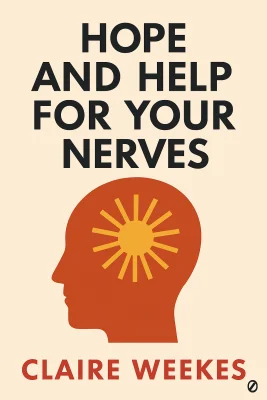
Hope and Help for Your Nerves
Categories
Nonfiction, Self Help, Psychology, Health, Science, Mental Health, Audiobook, Personal Development, Medical, Counselling
Content Type
Book
Binding
Mass Market Paperback
Year
1990
Publisher
Berkley
Language
English
ASIN
0451167228
ISBN
0451167228
ISBN13
9780451167224
File Download
PDF | EPUB
Hope and Help for Your Nerves Plot Summary
Introduction
Sarah sat in her car outside the grocery store, gripping the steering wheel as waves of panic washed over her. Her heart pounded, her palms sweated, and she felt as though she couldn't breathe. Just six months ago, she had been a confident professional, managing teams and delivering presentations with ease. Now, the simple act of entering a store felt impossible. Like millions of others, Sarah found herself trapped in a cycle of anxiety that seemed to have no explanation or escape. This experience of sudden, overwhelming fear accompanied by bewildering physical symptoms is far more common than most people realize. What many don't understand is that these terrifying sensations, while real and distressing, follow a predictable pattern rooted in our body's natural fear response. Through decades of clinical experience, one pioneering physician discovered that nervous illness isn't a mysterious affliction but rather a comprehensible condition with clear pathways to recovery. This book reveals how understanding the mechanics of fear can transform terror into triumph, showing that even in our darkest moments of panic and despair, hope and healing remain within reach.
Chapter 1: The Nature of Nervous Suffering: Understanding Fear and Sensitization
A successful businessman named David had never experienced anything like it. Following a routine medical procedure, he found himself startling violently at the gentlest sounds. The soft impact of a cleaning brush against his hospital bed sent shock waves through his entire nervous system, as if someone had struck him with lightning. Where once he had been steady and unflappable, now every sensation seemed magnified beyond all proportion. The rustle of curtains, footsteps in the hallway, even his own heartbeat became sources of alarm. David's experience illustrates what happens when our nervous system becomes sensitized. Through stress, illness, or trauma, our nerves can become hyperalert, responding to normal stimuli with extraordinary intensity. This sensitization isn't a character flaw or a sign of weakness; it's simply what occurs when our protective alarm system gets stuck in the "on" position. Understanding this process is crucial because it reveals that those overwhelming feelings aren't dangerous signs of impending breakdown, but rather evidence of nerves that have become temporarily oversensitive to fear and stress. Once we recognize sensitization for what it is, we can begin to see our symptoms not as mysterious threats, but as understandable responses that will naturally calm when we stop adding fuel to the fire of our own anxiety.
Chapter 2: The Physical Manifestations: How Nervous Symptoms Actually Work
Margaret described her symptoms with vivid precision: her hands trembled and sweated constantly, her heart felt like it was pounding out of her chest, and her stomach churned with such intensity that she could barely eat. Most frightening of all was the tight band of pain that seemed to encircle her head like an iron crown. She was convinced something terrible was happening to her body, perhaps a brain tumor or impending heart failure. Her list of symptoms, written in shaky handwriting, filled an entire page with words like "dreadful," "palpitations," and "all tied up." What Margaret didn't realize was that every single one of her symptoms had a simple, harmless explanation. Her racing heart was responding normally to the stress hormone adrenaline, working no harder than it would during a brisk walk. Her sweating hands were simply her body's natural cooling response to anxiety. Even that frightening head pain was nothing more than tense scalp muscles contracting from worry, the same mechanism that creates a tension headache. The churning stomach, trembling limbs, and feelings of breathlessness all followed the same pattern - normal bodily responses to fear that felt abnormal only because her sensitized nerves were amplifying every sensation. Understanding this truth can be profoundly liberating: our bodies aren't betraying us or breaking down, they're simply doing what they're designed to do when we're afraid, only with the volume turned up too high.
Chapter 3: Facing, Accepting, Floating: The Path to Recovery
When Elena first learned the technique that would change her life, she was skeptical. For months, she had been trapped in her home, unable to venture even to the corner shop without overwhelming panic. Her doctor had told her to stop fighting her feelings and instead practice "floating" through them, like swimming gently through calm water rather than thrashing against the waves. The concept seemed too simple, even ridiculous. How could something so gentle work when all her determined fighting had failed? The first time Elena tried it, standing at her front door with her heart hammering, she made herself relax her shoulders and imagine floating forward instead of forcing herself ahead. To her amazement, the paralysis that had gripped her for so long began to dissolve. She didn't feel perfect, but she could move. Within days, she was floating through the supermarket aisles, accepting the waves of anxiety that still came but no longer adding her own panic to them. She had discovered the profound difference between fighting fear and flowing with it. This approach - facing our symptoms rather than fleeing, accepting them rather than fighting them, and floating past them rather than forcing our way through - represents a complete reversal of our natural instincts. Yet this counterintuitive method works because it breaks the cycle that keeps us trapped. When we stop adding our own fear of fear to the original sensation, we remove the fuel that keeps the fire burning. The path to freedom doesn't lie in becoming brave enough to battle our symptoms, but in becoming wise enough to stop battling them altogether.
Chapter 4: Common Manifestations: Panic, Agoraphobia and Depression
Robert's panic attacks began without warning, striking like lightning from a clear sky. One moment he would be sitting peacefully at a restaurant with friends, the next he would be consumed by waves of terror so intense he was certain he was dying. His heart would race, his vision would blur, and an overwhelming urge to flee would grip him. Soon he found himself sitting only near exits, then avoiding restaurants altogether, until finally his world had shrunk to the boundaries of his own home. What had begun as mysterious episodes of panic had evolved into full-blown agoraphobia. This progression from panic to avoidance is tragically common, yet entirely preventable once we understand what's really happening. Robert's panic attacks weren't random strikes of madness but predictable responses to what we might call "first fear" - the initial flash of alarm that anyone might feel. The problem arose when he began to fear the fear itself, adding layer upon layer of "second fear" to the original sensation. Each "what if" and "oh my goodness" thought amplified his distress until a momentary flutter became a tidal wave of terror. Depression often follows as the constant vigilance and repeated defeats exhaust the spirit. The key insight that can break this pattern is recognizing that we experience not one fear but two separate fears happening so quickly they feel like one. While we may have little control over that first flash of alarm, we have enormous power over our response to it. When we learn to spot second fear and refuse to feed it, even the most intense panic begins to lose its grip on our lives.
Chapter 5: Breaking the Cycle: Practical Steps Beyond Medication
Dr. Harrison watched his patient Emma transform before his eyes. Just weeks earlier, she had been unable to function, convinced that her racing thoughts and physical symptoms meant she was losing her mind. Emma had been dependent on increasing doses of medication that seemed to help less and less. Then he introduced her to a different approach: instead of trying to suppress her symptoms, she learned to observe them with curiosity rather than terror. She began to see her churning stomach not as a sign of impending doom but as her body's predictable response to sustained worry. Emma discovered that when she stopped trying to control every sensation and instead practiced what she learned to call "masterly inactivity," something remarkable happened. Her symptoms didn't disappear immediately, but they lost their power to terrify her. She learned to let her hands tremble while still using them, to allow her heart to race while continuing her activities. Most importantly, she found that the more she accepted these temporary visitors instead of fighting them, the sooner they departed. This approach doesn't dismiss the value of medication when truly needed, but it empowers people to find their own strength rather than becoming dependent on external solutions. The most profound healing comes not from pills that mask symptoms but from understanding that gives us the confidence to face whatever our nervous system might produce. When we know that even the most intense sensations are temporary and harmless, we can weather any storm our anxiety might bring.
Chapter 6: Living with Recovery: Preventing Future Breakdowns
Years after her recovery, Janet still occasionally felt that familiar flutter of panic, especially during times of stress. The difference now was her response. Where once she would have immediately thought "Oh no, it's starting again!" and spiraled into hours of anxiety, she now observed the sensation with the detached interest of a scientist. She recognized it as simply her sensitive nervous system responding to pressure, nothing more. Sometimes she would even smile and think, "There you are again, old friend. I know exactly what you are." This shift in perspective represents true recovery - not the absence of all nervous sensations, but the presence of understanding that transforms their meaning. Janet had learned that her only real enemy was fear itself, and without fear feeding the flames, even intense sensations would burn themselves out naturally. She understood that her nervous system might always be somewhat sensitive, but this was no longer a source of dread but simply a characteristic to acknowledge, like having brown eyes or being left-handed. The promise of lasting recovery lies not in achieving perfect calm but in developing unshakeable confidence in our ability to handle whatever feelings may arise. When we know the way through fear, we need never again be lost in its maze. Each small victory builds upon the last, creating a foundation of inner strength that no future challenge can completely destroy. This is the gift of understanding: not just freedom from current suffering, but immunity from future fear.
Summary
Through these stories of transformation - from David's post-surgical hypersensitivity to Sarah's grocery store terror, from Elena's homebound prison to Janet's confident recovery - we see that nervous suffering, however mysterious it may seem, follows clear and understandable patterns. The path to healing doesn't require superhuman courage or perfect willpower, but rather the simple wisdom to stop feeding our fears with more fear. When we learn to face our symptoms rather than flee from them, to accept them rather than fight them, and to float through them rather than force our way past them, we discover that what seemed like an insurmountable mountain was merely a temporary storm. The most profound truth revealed in these pages is that recovery lies not in the absence of all difficult feelings, but in the presence of understanding that transforms their meaning. Every person who has found their way back to peace has done so by learning to distinguish between the temporary visitor of anxiety and the permanent resident of their true self. This knowledge becomes a compass that will never fail us, pointing always toward hope even in our darkest moments. With patience, practice, and the gentle persistence of floating rather than fighting, anyone can reclaim their life from the grip of nervous suffering and step forward into a future bright with possibility.
Best Quote
“principle of treatment can be summarized as: Facing Accepting Floating Letting time pass” ― Claire Weekes, Hope and Help for Your Nerves: End Anxiety Now
Review Summary
Strengths: The book provides immediate relief and practical tools for managing anxiety and panic attacks, particularly focusing on the concept of "second fear." Dr. Weekes' conversational and compassionate writing style, free from technical jargon, is praised for its accessibility and effectiveness. The book's timeless relevance and ability to instill self-confidence in readers are highlighted. Additionally, the author’s recordings are noted as potentially more powerful. Overall: The review conveys a highly positive sentiment, recommending the book especially for those with severe anxiety or panic disorders. It is seen as a comforting and reassuring resource, offering practical advice and emotional support. The reviewer strongly endorses it for its life-saving impact.
About Author

Claire Weekes
Weekes reflects on the intricate landscape of anxiety disorders, focusing on the pivotal role of fear and its management. Her work emphasizes that anxiety issues stem not from deep-seated personality flaws but from the habit of fear-avoidance, exacerbated by a sensitized nervous system. This perspective led her to develop innovative treatment methods that prioritize acceptance and the concept of "floating" through symptoms, distinguishing her from traditional psychiatric approaches like psychoanalysis. Her pioneering ideas are encapsulated in her notable book, "Self-Help for Your Nerves," which remains influential in the field of cognitive-behavioral therapy.\n\nWhile her methods were initially met with skepticism from the psychiatric community, Weekes' contributions have since been acknowledged as foundational to modern anxiety treatment. Her focus on the natural responses of first and second fears provided a new lens through which patients could understand and manage their anxiety, therefore transforming the way nervous disorders are addressed. This has made her books essential reading for individuals seeking self-help resources and professionals aiming to deepen their understanding of anxiety management.\n\nBeyond her literary achievements, Weekes' bio reveals her diverse career path, which included roles as a general practitioner and a research scientist. Her dedication to exploring the human condition and her relentless advocacy for patient empowerment earned her significant recognition, including her appointment as a Member of the Order of the British Empire (MBE). Today, her legacy continues as her techniques and insights are frequently cited in contemporary mental health literature, providing valuable frameworks for both clinicians and those struggling with anxiety.
Read moreDownload PDF & EPUB
To save this Black List summary for later, download the free PDF and EPUB. You can print it out, or read offline at your convenience.
Hope and Help for Your Nerves
by Claire Weekes
