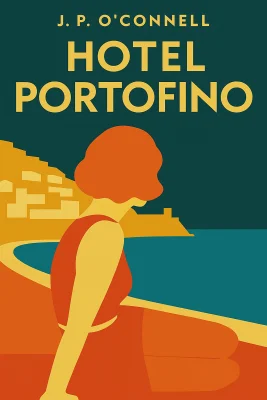
Hotel Portofino
Categories
Fiction, Audiobook, Mystery, Historical Fiction, Romance, Adult, Book Club, Historical, Italy, Drama
Content Type
Book
Binding
Hardcover
Year
2022
Publisher
Blackstone Publishing
Language
English
ASIN
B09KP48CYB
ISBN13
9798200816446
File Download
PDF | EPUB
Hotel Portofino Plot Summary
Introduction
# Shadows on the Riviera: Hotel Portofino's Season of Secrets The Mediterranean sun beats down on Hotel Portofino's pristine façade in 1926, but beneath its genteel English charm, dark currents swirl like poison in crystal wine. Bella Ainsworth stands at her office window, watching her dream hotel transform into a nightmare of blackmail, forbidden love, and violent secrets. What began as an elegant season hosting British aristocrats on the Italian Riviera has descended into a web of deception that threatens to destroy everything she has built. Local fascist official Danioni circles like a vulture, demanding bribes to keep the hotel open while her husband Cecil orchestrates an elaborate art fraud involving a stolen Rubens painting. Her war-scarred son Lucian burns with desire for their Yorkshire maid Constance, even as his arranged engagement to vapid Rose Drummond-Ward looms like a death sentence. As political tensions explode and personal betrayals multiply, each character must confront a brutal truth: in this paradise built on lies, survival demands the ultimate sacrifice.
Chapter 1: Arrivals at Paradise: Dreams and Deceptions Begin
The morning mist clings to Portofino's harbor as the last guests arrive at Hotel Portofino. Bella Ainsworth adjusts her pearl necklace with practiced grace, but her fingers betray the anxiety gnawing at her chest. Three years of planning, her entire inheritance poured into transforming this crumbling villa into an English sanctuary on the Italian coast—everything depends on these next few weeks. Lady Latchmere emerges from her carriage, her walking stick tapping against marble floors as she surveys the drawing room with eyes sharp as broken glass. Behind her trails the timid Melissa, clutching botanical sketches like protective talismans. Cecil Ainsworth appears from the library, his mustache freshly waxed, radiating the hollow confidence of a man living beyond his means as he greets tennis champion Plum Wingfield with excessive enthusiasm. The American couple Jack and Claudine Turner arrive in a gleaming Bugatti that makes Cecil's eyes gleam with envy. Jack's expensive suit cannot quite mask his predatory nature, while Claudine moves with the fluid grace of someone who has learned to survive on beauty and wit alone. She exchanges knowing glances with Constance, the young Yorkshire maid whose golden hair catches Mediterranean light like spun honey. As guests settle into their routines, Bella notices how her son Lucian's eyes follow Constance through the corridors. At twenty-six, he still bears invisible scars from the Great War, his artistic soul seeking solace in forbidden places. His arranged courtship of Rose Drummond-Ward proceeds with mechanical precision, but Rose's calculating mother Julia watches everything, already counting wedding settlements. The Italian staff move through this English tableau like ghosts. Count Albani brings his aristocratic menace, while Francesco the handyman speaks no English—or so everyone believes. As evening falls over terraced gardens, Bella breathes in jasmine and approaching storm. She has created something beautiful here, but beauty built on secrets never lasts. In the distance, black-shirted fascists patrol Portofino's streets, and Danioni sharpens his claws, waiting for the perfect moment to strike.
Chapter 2: The Rubens Conspiracy: Art, Fraud, and Dangerous Games
Morning sun streams through library windows as Cecil unveils his family's greatest secret. With theatrical flourish, he pulls away dust cloth to reveal a painting that has hung unnoticed in their London home for decades—a voluptuous Venus gazing into a mirror, rendered in unmistakable Rubens style. His hands shake as he lights his morning cigarette, casino bills from San Remo mounting like storm clouds. Jack Turner circles the canvas like a shark scenting blood. His practiced eye takes in every brushstroke, every crack in aged paint. "It's certainly his style," he murmurs with careful neutrality of a man who trades in beautiful lies. "The workshop churned out hundreds. Some he painted himself, some he supervised." The negotiation unfolds with surgical precision—forty percent if it makes over one hundred thousand, one percent less for every two thousand beneath. Francesco hammers the painting back into its crate with suspicious efficiency for a man who supposedly understands no English. His dark eyes miss nothing as the two conspirators shake hands over their devil's bargain. The painting becomes a symbol of the hotel's precarious foundation—like the elegant façade concealing structural problems, the supposed masterpiece represents the gap between appearance and reality. Meanwhile, Plum Wingfield creeps through shadows, his tennis celebrity masking mounting desperation. Gambling debts have consumed his father's allowances, and his wife Lizzie drowns her longing for children in gin and false cheer. Alice Mays-Smith watches from windows with growing suspicion, her Catholic fervor sharpened by years of loneliness. She notices how Lucian's sketches increasingly feature the young maid's face, how his eyes follow her movements with hungry intensity. As evening approaches, the painting disappears into Jack and Claudine's suite, guarded by more than locked doors. Jack's revolver gleams in lamplight as he instructs Claudine to let no one enter. But in a hotel built on secrets, even carefully laid plans crumble like ancient parchment. The Mediterranean night wraps around Hotel Portofino like velvet, but beneath its beauty, the machinery of deception grinds forward relentlessly.
Chapter 3: Fascist Shadows: Politics Invades the English Sanctuary
Black shirts appear at dawn like carrion birds, their boots echoing against Portofino's cobblestones. Danioni leads them with the swagger of a man drunk on newfound power, his eyes scanning hotel windows for signs of weakness. Bella watches from her office, coffee growing cold as fascist authority tightens its grip around her dream like a closing fist. "Signora Ainsworth," Danioni purrs when she meets him at the front door, his smile revealing teeth stained yellow by cheap cigarettes. "Such a beautiful morning for an inspection, no?" Behind him lurks Ricci from the Labor Inspectorate, a scarecrow with clipboard and dead eyes of a bureaucrat who feeds on others' fear. The inspection is pure theater—Ricci runs fingers along Betty's spotless counters, peers into ovens where golden buns rise like small suns, his nose wrinkling with manufactured disgust. "Condizioni anti igieniche," Ricci scribbles on his form, the words falling like hammer blows. Unhygienic conditions. Bella's hands clench into fists as she reads the fabricated report, knowing this is merely the opening gambit in a longer, more dangerous game that could destroy everything she has built. Meanwhile, Lucian and his friend Nish venture into Portofino's narrow streets, drawn by curiosity toward anti-fascist meetings advertised in smuggled pamphlets. Young revolutionary Gianluca speaks with passionate intensity about resistance and freedom, his blue eyes blazing with true belief. But carabinieri arrive like wolves, their whistles shrieking through night air as political opposition crumbles under systematic persecution. The three young men flee through olive groves and peach orchards, hearts hammering against ribs. They hide beneath overturned fishing boats while Danioni's torchlight sweeps the beach, missing them by mere inches. In cramped darkness, Gianluca's lips find Nish's in a kiss that tastes of salt and revolution, awakening desires that have no name in polite society. Back at the hotel, Billy Scanlon's petty crimes catch up with him like hounds pursuing a fox. Bicycle theft, master keys hidden in his room—all carefully orchestrated by forces beyond his understanding. As Cecil and Jack drag him to the stone outhouse, his mother Betty's cries echo across the courtyard like a wounded animal's wail. Danioni's web tightens with each passing hour, and the predator circling outside grows bolder.
Chapter 4: Forbidden Hearts: Love Across Class and Convention
Morning light filters through Lucian's studio windows as he sketches Constance by the sea, her borrowed swimming costume clinging to curves that haunt his dreams. She emerges from azure water like Venus herself, droplets cascading from golden hair. When their eyes meet across rocky outcrop, something electric passes between them—a recognition that transcends class and propriety like lightning splitting the sky. But Alice Mays-Smith watches from shadows, her Catholic conscience burning with righteous fury. In Constance's room, she discovers hidden letters that reveal the maid's darkest secret: an illegitimate child abandoned in Yorkshire, his photograph treasured in a silver locket like a saint's relic. The war widow's face twists with vindictive satisfaction as she imagines exposing this sin. "You must see these," Alice declares, thrusting letters at Bella with trembling hands. But her mother's reaction shocks her to the core. Instead of moral outrage, Bella shows only compassion for the young woman's plight. "Put them back," she commands with ice-cold authority. "This instant." The confrontation explodes like a grenade in the office's confined space, Alice's years of suppressed bitterness pouring out in torrents of accusations and biblical fury. Meanwhile, Cecil's machinations reach their climax. The telegram to his brother lies ready on his desk, announcing Lucian's engagement to Rose with the finality of a death sentence. "This will be in the Times next week," he declares, pressing paper against his son's chest. "So do your duty." Rose wanders hotel corridors like a beautiful ghost, her mother Julia orchestrating every movement with calculating precision. In the garden's golden afternoon light, Lucian finally speaks words that will seal both their fates. He drops to one knee among jasmine blossoms, his proposal delivered with mechanical precision of a man fulfilling obligation rather than following his heart. Rose's acceptance comes in a whisper, her eyes already distant with knowledge that love has nothing to do with their arrangement. Constance watches from the kitchen window, her heart shattering like crystal against stone. The letters Alice discovered contain more than evidence of past shame—they hold memory of her son Tommy, the child she was forced to abandon to preserve reputation. As evening falls over Hotel Portofino, the engagement celebration begins with champagne and hollow congratulations, but beneath surface gaiety, hearts break in silence.
Chapter 5: The Web Tightens: Blackmail, Violence, and Betrayal
The scream that shatters morning air comes from Jack Turner's throat, raw with disbelief and rage. The Rubens painting has vanished from his locked suite like smoke, leaving only an empty crate and the bitter taste of betrayal. His accusations fly like bullets through elegant corridors, shattering the carefully maintained façade of English civility as guests watch in horrified fascination. "You goddamn crooks!" Jack roars, his American accent thick with fury as he confronts Cecil in the marble-floored hall. The painting's disappearance threatens to expose secrets that could destroy them all, unraveling the conspiracy like a pulled thread in expensive fabric. Danioni arrives with his police sergeant like a spider sensing vibrations in his web, the search that follows methodical and invasive. But the pamphlets Billy hid under Lady Latchmere's bed have mysteriously vanished, spirited away by Constance's quick thinking and hidden among laundry where no man would think to look. In the stone outhouse, Billy endures interrogation with stubborn silence of the working class while his mother Betty weeps in the kitchen, her strong hands shaking as she prepares sandwiches for her imprisoned son. The hotel's guests fragment under pressure like glass struck by lightning. Plum Wingfield returns from tournament defeat with pockets full of gambling winnings, but his past sins follow him like hunting dogs. Claudine Pascal—for that is her real name, not the Turner she borrowed for respectability—finally breaks free from Jack's increasingly violent control when he draws his revolver in the main hall. The confrontation reaches crescendo when Cecil's own violence explodes behind closed doors. Bella's bruised face tells the story her words cannot speak—the price of loving where love is not returned, the cost of building dreams on foundations of sand. Her husband's discovery of her correspondence with Henry, her father's accountant and secret lover, unleashes rage that leaves marks on more than just her skin. As police investigation continues and accusations multiply, the hotel's carefully constructed world begins to collapse. Francesco's true loyalties emerge as he reveals his connection to Danioni, his supposed inability to speak English exposed as another layer of deception. The painting's theft was an inside job, orchestrated with military precision, and in the gathering storm, alliances shift like sand while secrets spill like wine from broken glass.
Chapter 6: Shattered Facades: When All Secrets Come to Light
Morning after the storm brings unexpected calm to Hotel Portofino. Billy Scanlon emerges from his stone prison, freed by Cecil's blood money and Danioni's greed, but the boy's innocence lies buried in that cramped cell forever. His mother Betty embraces him with fierce protectiveness, knowing their world has shifted on its axis like a ship struck by lightning. Bella stands before her mirror, covering bruises on her face with makeup that cannot hide the broken blood vessel in her eye. The physical marks will fade, but something deeper has crystallized in the darkness of her bedroom—a resolve as hard and bright as diamond. When Cecil appears with his pathetic bouquet and hollow apologies, she meets his gaze with the steady stare of a woman who has finally seen the truth. The hotel empties as guests flee scandal like rats abandoning a sinking ship. Lady Latchmere and Melissa depart with promises to spread word of the hotel's charms, their aristocratic endorsement worth more than gold. The Drummond-Wards retreat to London with Rose's engagement secured, Julia's calculating eyes already planning the wedding that will bind their families in profitable union. Count Albani makes his own desperate play for happiness, offering Alice Mays-Smith a bracelet and his heart with equal sincerity. But the war widow's Catholic conscience recoils from the possibility of joy, her years of self-imposed martyrdom too precious to abandon for mere love. She flees from his proposal like a nun from temptation, choosing familiar pain over uncertain bliss. In quiet corridors, Constance tends to little Lottie with renewed purpose. Bella's discovery of her secret—the abandoned son, the letters from home, the weight of shame carried like stones in her heart—brings not condemnation but compassion. "We all deserve a chance to make amends," Bella tells her, and in those words lies the promise of redemption that transforms everything. Lucian wanders the gardens like a man in a trance, his engagement to Rose feeling like chains forged from duty and despair. His sketches of Constance burn in memory, but the gulf between desire and possibility seems vast as the Mediterranean itself. The painting's theft has exposed more than criminal conspiracy—it has revealed the hollow core of his family's pretensions, leaving him to choose between tradition and authenticity.
Chapter 7: Breaking Free: Bella's Choice and New Beginnings
As the sun sets over Portofino for another day, Bella makes her choice with the finality of a judge pronouncing sentence. When Cecil appears with his check for a thousand pounds—blood money disguised as reconciliation—she tears it into pieces that flutter to the floor like snow. "I won't take a penny from you," she declares, her voice steady as stone. "It's time to start making some of my own rules." The door closes between them with the finality of a coffin lid. Bella drops the key into her wastebasket, a small act of rebellion that echoes like thunder through the hotel's elegant halls. Outside, the Mediterranean stretches to the horizon, vast with possibility and promise that she has never dared to embrace before this moment of liberation. Francesco's true role in the painting theft emerges as the final piece of Danioni's elaborate puzzle. The handyman's feigned ignorance of English masked his position as the fascist official's inside man, orchestrating the conspiracy that would have destroyed the hotel's reputation forever. But even the best-laid plans crumble when human nature intervenes, and greed proves stronger than loyalty. Constance faces her own moment of truth as Lucian's engagement celebration continues around them like a funeral masquerading as a wedding. The letters Alice discovered contain more than shame—they hold the key to her son Tommy's future, the possibility of redemption through honest work and genuine affection. When Bella offers her not just employment but respect, the young maid glimpses a future beyond servitude. The hotel's remaining guests drift through their final evening like actors in a play whose script has been rewritten without their knowledge. The Rubens painting, recovered from its hiding place in Francesco's quarters, returns to its crate with all its secrets intact. But the real masterpiece has been Bella's transformation from victim to survivor, from dependent wife to independent woman. As Mediterranean stars emerge in the darkening sky, Hotel Portofino stands transformed. No longer a stage for masculine ambition and feminine submission, it becomes something unprecedented—a sanctuary where women like Bella and Constance refuse to remain silent, where the price of freedom is measured not in money but in courage. The shadows on the Riviera are lifting, revealing a world where anything might be possible for those brave enough to seize it.
Summary
In the end, Hotel Portofino stands like a monument to the price of dreams built on deception. The stolen Rubens painting was never about art—it was about the desperate lengths people will go to preserve their illusions of respectability and control. Cecil's elaborate con, orchestrated with Francesco's help, crumbles under the weight of its own contradictions, leaving him exposed as the hollow man he always was. Bella's bruises heal, but her awakening proves permanent, transforming her from victim to survivor in the space of a single, decisive moment when she chooses independence over security. The hotel's guests scatter like leaves before an autumn wind, carrying their secrets and scars back to their carefully ordered lives. But something has shifted in the Mediterranean air, a recognition that the old certainties no longer hold. Fascism rises in Italy's streets while hearts break in drawing rooms, and the personal becomes political in ways none of them fully understand. In choosing love over duty and truth over comfort, they write the first chapters of a new story—one where the shadows finally lift to reveal a world transformed by courage.
Best Quote
Review Summary
Strengths: The author successfully defines and gives depth to a vast cast of characters, including secondary ones. The audiobook narrator effectively uses voice and accents to delineate characters, enhancing the listening experience. Weaknesses: The novel lacks a central plot, with numerous story arcs that are not deeply explored, preventing a strong connection with the characters. The depiction of historical elements, such as Mussolini's rise, is superficial, and the portrayal of threats like blackmail lacks menace, failing to evoke strong emotions. Overall: The reader finds "Hotel Portofino" to be an average read, with an engaging narration but a fragmented storyline that limits emotional engagement and depth.
About Author

J.P. O'Connell
O'Connell delves into the intricate dynamics of human relationships through narratives that juxtapose personal awakenings with historical contexts. His work often reflects a fascination with the past, as seen in his debut novel, "Hotel Portofino," where he situates British characters on the Italian Riviera during the Roaring Twenties, exploring themes of cultural exchange and personal discovery. This approach highlights his ability to weave rich historical detail with character-driven stories, creating immersive worlds that invite readers to explore the complexities of human emotions and societal influences.\n\nCentral to O'Connell's method is his skillful character development and attention to detail, which bring life to his literary creations. His book, "Lovers and Liars," continues this exploration by further unraveling the emotional intricacies of its characters against the backdrop of interwar Europe. Moreover, O'Connell's versatility as an author is evident in his non-fiction works, such as his analysis of David Bowie's favorite books, where he delves into the interplay between literature and musical artistry. By engaging readers with both fiction and non-fiction narratives, O'Connell's works cater to those intrigued by the intersections of history, culture, and personal growth, offering insights into the human experience across different genres.
Read moreDownload PDF & EPUB
To save this Black List summary for later, download the free PDF and EPUB. You can print it out, or read offline at your convenience.
Hotel Portofino
by J.P. O'Connell
