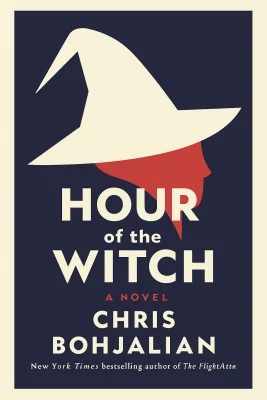
Hour of the Witch
Categories
Fiction, Audiobook, Mystery, Historical Fiction, Thriller, Adult, Book Club, Historical, Witches, Mystery Thriller
Content Type
Book
Binding
Hardcover
Year
2021
Publisher
Doubleday
Language
English
ASIN
0385542437
ISBN
0385542437
ISBN13
9780385542432
File Download
PDF | EPUB
Hour of the Witch Plot Summary
Introduction
# Red Lotus: A Tale of Biological Betrayal and Deadly Deception The morning mist clung to Vietnam's Hai Van Pass like a burial shroud as Austin Harper clipped into his pedals for the last time. His girlfriend Alexis watched from their hotel balcony as his blue cycling jersey disappeared around the mountain bend, unaware she was witnessing the final act of an elaborate deception. Austin had claimed this trip was a pilgrimage to honor his father's Vietnam War service, but like everything else about the charming hospital fundraiser, it was a carefully constructed lie. When Austin's broken body was pulled from a ravine twelve hours later, the Vietnamese police called it a tragic cycling accident. But the puncture wound on his hand told a different story, one that would lead Alexis from the sterile corridors of a Manhattan hospital to the shadow world of biological weapons trafficking. The man she thought she loved had been carrying something far deadlier than memories across international borders, and his death was just the beginning of a conspiracy that threatened to unleash plague upon the world.
Chapter 1: The Vanishing Cyclist: Death on Vietnam's Mountain Pass
The last confirmed sighting of Austin Harper alive came from a street vendor selling coconut water near the base of Highway One's serpentine climb toward Hue. The American cyclist had stopped to refill his water bottles, chatting in broken Vietnamese about visiting a pagoda to honor his father's military service. But when Captain Nguyen Quang of the Vietnamese mobile police investigated, no one at any of the mountain temples remembered seeing Austin that afternoon. The crash site told its own story. Austin's Trek bicycle lay twisted in the ravine, its carbon fiber frame shattered beyond repair. His helmet had split cleanly in half, the foam liner stained with blood and brain matter. The impact pattern on his cycling shorts showed the distinctive grill marks of a truck bumper, and his left leg bore burns consistent with a vehicle's exhaust system. Everything pointed to a hit-and-run accident on the treacherous mountain pass. But Alexis Remnick wasn't buying the official story. As an emergency room physician, she knew trauma patterns, and something felt wrong about Austin's injuries. The puncture wound on the back of his right hand was too precise, too deliberate. When she examined his cycling glove, there was no corresponding tear in the fabric. The wound had occurred before he'd put the glove back on, before he'd climbed onto his bike for that final ride. More disturbing were the energy gel packets scattered near the crash site. Austin had been obsessive about his nutrition during their cycling tour, carrying specific brands and flavors in his jersey pockets. These packets bore tiny puncture marks, as if someone had injected them with a needle and then resealed them with heat. Alexis collected them carefully, sensing they might be breadcrumbs leading to the truth about Austin's disappearance and death.
Chapter 2: Unraveling the Lies: When Love Becomes Deception
The flight back to New York gave Alexis twelve hours to process the collapse of everything she thought she knew about Austin Harper. FBI attaché Toril Bjornstad had delivered the devastating news with clinical precision. Austin's father Peter had never been wounded in Vietnam combat. He'd broken his leg in a go-cart accident at a rear-echelon base, working as a lifeguard while real soldiers fought and died. The uncle Austin claimed had died heroically near their cycling route had actually died in Massachusetts, nowhere near Southeast Asia. Back in Manhattan, the lies multiplied like cancer cells. A dress arrived from Vietnam, supposedly bought for Alexis, but it was sized for a woman half her height. Austin's laptop and tablet had been wiped clean, erased remotely before his death. Even his parents, Peter and Catherine Harper, seemed stunned by the revelation that their son had fabricated an entire family military history to justify his trips to Vietnam. Desperate for answers, Alexis hired private investigator Ken Sarafian, a Vietnam veteran whose weathered face and careful questions suggested he understood the weight of secrets. Ken quickly focused on Douglas, the mysterious friend who had been with Austin the night he was shot in a Manhattan bar six months earlier. Austin had claimed a junkie had accidentally shot him during a robbery, but witnesses told a different story. Austin hadn't been alone, and the shooting hadn't been random. Douglas Webber lived on Third Street and claimed to be a travel writer, but his apartment told a different story. Ken discovered a dartboard mounted on the wall, its surface pocked with holes from countless games. The darts were professional grade, their points sharp enough to punch through bone. As Alexis stared at crime scene photos of Austin's puncture wound, she realized she was looking at the mark of a weapon disguised as a game.
Chapter 3: The Puncture Wound: Evidence of Torture and Murder
The morgue in Da Nang had been sterile and cold, but nothing could have prepared Alexis for what she saw when they pulled back the sheet covering Austin's body. Beyond the obvious trauma from the cycling accident, there were subtler signs of violence. Scars on his fingers that she'd once attributed to a cat bite now looked suspiciously like rat teeth marks. The puncture wound on his hand showed signs of deliberate pressure, as if someone had driven a dart through the bone with considerable force. Dr. Tran, the Vietnamese pathologist, had been thorough in his examination. Austin's blood showed traces of propofol, a surgical anesthetic that would have rendered him unconscious but metabolized quickly enough to avoid detection in a routine autopsy. Someone had drugged him, tortured him for information, and then sent him back onto that mountain road in a chemically induced haze. The truck that struck him might have been driven by the same people who had interrogated him. Ken Sarafian's investigation in New York was yielding disturbing parallels. The energy gel packets Alexis had collected from the crash site weren't just athletic supplements. Laboratory analysis revealed they contained traces of biological material, microscopic organisms that had no business being in sports nutrition products. Someone had been using Austin's cycling hobby as cover for smuggling operations, turning his innocent energy gels into delivery systems for something far more sinister. The pattern was becoming clear. Austin hadn't been a random victim of Vietnam's dangerous roads. He'd been a courier, carrying something valuable enough to kill for. His lies about family military history had been cover stories for repeated trips to Southeast Asia. His shooting in Manhattan hadn't been a random crime but a test of loyalty from partners who were beginning to suspect his reliability. The puncture wound on his hand was evidence of an interrogation that had gone too far, extracting information that sealed his fate.
Chapter 4: Biological Conspirators: From Hospital Labs to Weapons Trade
The university hospital where Alexis worked in the emergency room housed secrets in its upper floors that connected directly to Austin's death. Behind biosafety protocols and key-card access, researchers worked with transgenic rats in laboratories that adjoined the administrative wing where Austin had worked in hospital development. The proximity wasn't coincidental. Dr. Sara Edens, a young researcher studying hantavirus, confirmed what Alexis had begun to suspect. The labs were filled with genetically modified rodents designed to carry specific diseases for research purposes. But these weren't ordinary laboratory rats. Some had been injected with genetic material from Vietnamese rats, descendants of animals that had survived chemical warfare during the 1960s. Fifty years and hundreds of generations later, these creatures had evolved into something unprecedented. Austin's supervisor, Sally Gleason, had seemed helpful at first, even providing Ken Sarafian's contact information. But a photograph on social media revealed the truth. There was Sally, captured accidentally in the background of a tourist photo taken at the Empire State Building. The photographer was Binh Pham, a Vietnamese food chemist who had been executed in a laboratory fire near Da Nang just days after Austin's death. The web of connections grew more sinister with each revelation. Austin hadn't been a simple fundraiser seduced by easy money. He'd been a courier with access to biological materials that could be weaponized. The rats in the hospital labs carried antibiotic-resistant pathogens, diseases that could kill humans while leaving the carriers immune. Someone was harvesting these organisms and smuggling them to buyers who saw pandemic potential as a business opportunity.
Chapter 5: The Rat King's Network: Tracing Austin's Deadly Connections
Oscar Bolton reached out to Alexis in the middle of the night, claiming he needed to talk about Austin, their mutual grief, their shared memories of their dead colleague. Over French toast at a Manhattan restaurant, he probed carefully about what she had brought back from Vietnam, what she knew about Austin's final days, whether she had found any of his research materials. His questions were too precise, too focused on specific details that only someone involved in Austin's work would know. The trap was elegant in its conception. Dr. Wilbur Sinclair, one of the hospital's senior researchers, called that same afternoon with an offer to tour the laboratories. He claimed that Sara Edens had suggested Alexis might be interested in seeing their work with transgenic rodents. But when Alexis tried to reach Sara, the young researcher had vanished as completely as Austin had on his final day in Vietnam. Ken Sarafian's detective instincts warned him that something was wrong. His investigation had revealed that Douglas Webber wasn't just a travel writer with a dart hobby. Military records showed he'd served in special operations before transitioning to private security work. His travel writing was cover for arms dealing, brokering weapons sales across international borders. He'd cultivated Austin carefully, recognizing the young man's weaknesses and his access to biological materials. The plan had been simple. Austin would carry weaponized plague samples to Vietnam, hidden in his energy gel packets and disguised as athletic supplements. Binh Pham, the food chemist, would receive the materials and pass them to North Korean contacts willing to pay millions for biological weapons that could devastate populations while leaving infrastructure intact. But Austin had gotten greedy, planning to sell samples to multiple buyers without Douglas's knowledge. That betrayal had cost him his life and triggered a cleanup operation that left bodies scattered across two continents.
Chapter 6: Plague Carriers: When Healing Becomes Killing
The laboratory tour was scheduled for late afternoon, when most of the hospital staff would be heading home. Sinclair led Alexis and Ken through corridors lined with cages containing hundreds of rats, their red eyes gleaming under fluorescent lights. These weren't ordinary laboratory animals. They'd been genetically modified to carry a strain of plague that combined the worst characteristics of historical pandemics with modern antibiotic resistance. The rats themselves were immune to the diseases they carried, perfect vectors for biological warfare. Their Vietnamese genetics, inherited from survivors of chemical weapons, made them incredibly hardy. They could survive in urban environments, reproduce rapidly, and spread pathogens through their droppings and saliva. A single infected rat released in a subway system could potentially kill millions of people within weeks. Douglas Webber was waiting in the laboratory with a syringe of propofol, the same drug that had been used to subdue Austin in Vietnam. The plan was elegant in its simplicity. They would render Alexis unconscious, stage her suicide as another casualty of grief over her boyfriend's tragic accident, and eliminate the last person asking dangerous questions about Austin's death. Ken would be collateral damage, another victim of urban violence. But Ken had survived Vietnam and thirty years of police work by trusting his instincts. When Douglas reached for the syringe, Ken was already drawing his service weapon. The gunfight in the hospital corridor shattered the sterile silence, sending laboratory animals scurrying for cover as bullets sparked off metal cages. Douglas's shot shattered Ken's arm, but the detective's return fire drove the arms dealer back toward the laboratory exit.
Chapter 7: Final Confrontation: Blood and Buboes in the Laboratory
Alexis had never killed anyone before, but she felt no hesitation as she drew the scalpel from her pocket and sliced through Douglas Webber's carotid artery with surgical precision. Arterial blood sprayed across the hospital corridor in rhythmic pulses that matched his dying heartbeat, painting the white walls crimson as his life drained away. Justice, she thought, even as she began to feel the first symptoms of her own approaching death. The chocolate-flavored energy gel she had consumed before coming to the hospital hadn't been an athletic supplement. It contained the same weaponized strain of plague that Austin had been carrying to Vietnam, designed to kill quickly and resist all known antibiotics. She'd eaten it deliberately, knowing it might be her only chance to understand what Austin had died for. Now the modified bacteria were overwhelming her immune system, and she had perhaps hours before the infection killed her. Ken Sarafian, infected through contact with Alexis's blood, pursued Wilbur Sinclair through the hospital corridors even as the disease began to shut down his organs. His arm hung useless at his side, shattered by Douglas's bullet, but he managed to corner the fleeing scientist near the laboratory exit. Sinclair begged for mercy, claiming he'd been developing defensive measures against biological warfare, not offensive weapons. Ken's response was a single shot to the spine that left the researcher paralyzed but alive to face justice. The conspiracy reached deeper than anyone had imagined. Sally Gleason had been coordinating with multiple partners, playing Austin against Douglas in a competition to see who could deliver the most profitable biological weapon to the highest bidder. They had turned healing into killing, research into warfare, and a university hospital into a factory for genocide. But their greed had made them careless, and their paranoia had turned them against each other.
Chapter 8: The Price of Truth: Containment, Justice, and Redemption
Ken Sarafian died on the phone with his wife, his body succumbing to the plague as he lay bleeding on the hospital floor. His last act was to ensure that the infected rats remained contained, preventing a pandemic that could have killed millions. Alexis, barely conscious and burning with fever, managed to call 911 and warn them about the biological hazard before collapsing beside Douglas Webber's corpse. The FBI raid that followed revealed the full scope of the conspiracy. Hazmat teams sealed the laboratory while investigators documented evidence of biological weapons development that violated every international treaty on chemical and biological warfare. The rats were destroyed, their cages incinerated at temperatures hot enough to sterilize any remaining pathogens. The hospital's entire research wing was quarantined for months while decontamination teams scrubbed away traces of weaponized plague. Alexis survived because she had consumed a degraded sample of the pathogen, weakened by time and exposure to air. The doctors induced a coma and flooded her system with experimental antibiotics, fighting the infection with every weapon in their medical arsenal. She would wake days later to find herself a hero in the media narrative, the brave doctor who had helped prevent a pandemic by sacrificing her own life. But heroism felt hollow when measured against the cost. Ken Sarafian was dead, leaving behind a widow who had already lost a daughter to cancer. The Vietnamese laboratory technician who had first opened Austin's energy gel was dead, along with the taxi driver who had taken him to the hospital. A homeless boy in Hoi An would die after eating gel from Austin's abandoned luggage, and American tourists who found his body would carry the infection back to the United States before it burned itself out.
Summary
Austin Harper's journey from hospital fundraiser to biological weapons courier revealed how easily ordinary corruption could escalate into crimes against humanity. His lies had begun small, inflating his family's military record to justify trips to Vietnam, but they had grown into a web of deception that ultimately threatened millions of lives. The red lotus pathogen he had tried to smuggle represented humanity's darkest impulses weaponized, a plague that could kill entire populations while leaving infrastructure intact for the survivors to inherit. In the end, Alexis understood that love and trust were as fragile as the lotus flowers that bloomed in Vietnamese ponds, beautiful on the surface but rooted in dark water, vulnerable to forces that could destroy them in an instant. She had shared her bed with a man willing to unleash genocide for profit, trusted someone who carried death in his luggage like souvenirs. The only redemption came from those willing to die to protect others, and the only justice was measured in lives saved rather than lives lost. The lotus rises not because it is strong, but because it chooses to bloom again despite the darkness that surrounds it.
Best Quote
“Yes, this may be the hour of the witch. But the Devil? He most definitely wears breeches. The Devil can only be a man.” ― Chris Bohjalian, Hour of the Witch
Review Summary
Strengths: The review highlights the novel's mounting tension and unexpected ending, suggesting an engaging narrative. The author, Chris Bohjalian, is recognized as a gifted writer, which may appeal to his existing fan base. Weaknesses: The reviewer expresses disappointment, potentially due to high expectations from Bohjalian's previous works. The setting and theme, involving puritan witch trials, are noted as tiresome, particularly for those familiar with such historical contexts. The novel's classification as a thriller is questioned, indicating possible genre misalignment. Overall: The reader's sentiment is mixed, with appreciation for the narrative tension but dissatisfaction with the thematic execution. The recommendation is lukewarm, suggesting that while the book has merits, it may not meet the expectations of all readers, particularly those familiar with similar historical themes.
About Author

Chris Bohjalian
Bohjalian investigates human resilience and moral dilemmas through his diverse array of literary fiction, historical fiction, thrillers, and ghost stories. His commitment to addressing complex social issues such as domestic violence, mental illness, and climate change is evident in his narratives, which often weave these themes into the lives of relatable characters. This multi-genre approach enables readers to explore a wide spectrum of human emotions and societal problems, thereby engaging with his work on multiple levels. In "The Sandcastle Girls", for example, Bohjalian delves into the Armenian genocide with both historical insight and emotional depth, showcasing his talent for tackling intricate topics with empathy and narrative skill.\n\nThe author’s extensive body of work, comprising over 25 books, including the bestseller "Midwives", demonstrates his versatility and dedication to storytelling that defies repetition. His book "The Flight Attendant", adapted into a successful TV series, underscores his impact on both literary and visual media, expanding his audience reach. Readers gain a deeper understanding of contemporary social controversies through Bohjalian’s books, which not only entertain but also educate. His ability to adapt stories into other formats speaks to the universal appeal and adaptability of his themes.\n\nRecognition for Bohjalian's literary contributions includes several prestigious awards, such as the ANCA Freedom Award and the New England Society Book Award. These accolades highlight the author’s influence in both literary circles and broader social discussions. His writing, characterized by psychological complexity and thematic richness, makes his bio a compelling study of an author who continuously pushes the boundaries of genre to offer fresh perspectives and thought-provoking narratives. Through his storytelling, Bohjalian invites readers to reflect on their own values and the world around them, ensuring his work resonates well beyond the final page.
Read moreDownload PDF & EPUB
To save this Black List summary for later, download the free PDF and EPUB. You can print it out, or read offline at your convenience.
Hour of the Witch
by Chris Bohjalian
