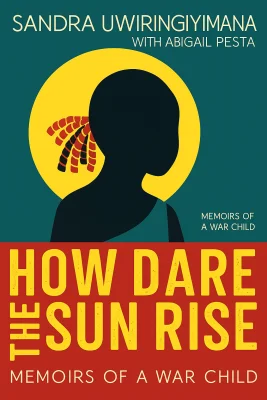
How Dare the Sun Rise
Memoirs of a War Child
Categories
Nonfiction, Biography, History, Memoir, Audiobook, Africa, Adult, Autobiography, Biography Memoir, War
Content Type
Book
Binding
Hardcover
Year
2017
Publisher
HarperCollins
Language
English
ASIN
0062470140
ISBN
0062470140
ISBN13
9780062470140
File Download
PDF | EPUB
How Dare the Sun Rise Plot Summary
Introduction
In the scorching heat of an August evening in 2004, ten-year-old Sandra Uwiringiyimana lay beside her six-year-old sister Deborah in a refugee camp in Burundi, trying to fall asleep despite the stifling air. Within hours, their world would be shattered by gunfire, flames, and unspeakable violence that would claim Deborah's life and forever alter Sandra's destiny. What emerged from that horrific night was not just another survivor's tale, but the birth of a voice that would eventually reach the United Nations Security Council, the White House, and stages alongside Angelina Jolie and world leaders. Sandra's journey from a stateless refugee child to an internationally recognized human rights advocate reveals the extraordinary resilience of the human spirit and the power of transforming trauma into purpose. Through her story, readers will discover how personal tragedy can fuel global advocacy, how cultural identity can be preserved while embracing new possibilities, and how one young woman's determination to seek justice for her lost sister became a beacon of hope for countless displaced people worldwide. Her path illuminates the complex realities of refugee resettlement, the challenges of cultural assimilation, and the courage required to speak truth to power on behalf of the voiceless.
Chapter 1: Childhood in Congo: Love and Identity
Sandra's earliest memories were painted in the vibrant colors of her homeland - the sparkling blue waters of Lake Tanganyika where she secretly swam despite her parents' warnings about crocodiles, the yellow-brick house with its green roof that served as a sanctuary for extended family and strangers alike, and the infectious laughter of her little sister Deborah, whose thick black curls and soulful brown eyes could melt anyone's heart. Born into the Banyamulenge tribe in the Democratic Republic of the Congo, Sandra grew up understanding that her people were perpetually viewed as outsiders, speaking a language that marked them as different, looking distinct from their Congolese neighbors. The Uwiringiyimana household buzzed with constant activity, embodying the generous spirit of their tribe. Sandra's mother Rachel ran the family with strength and wisdom, eventually starting her own business selling cows - work traditionally reserved for men. Her father Prudence, gentle and forward-thinking, insisted on educating his daughters equally with his sons, a radical notion in their culture. While war and displacement periodically interrupted their lives, forcing temporary flights to Burundi or refugee camps, Sandra's childhood was filled with rich experiences that shaped her worldview. At school, Sandra excelled academically, consistently ranking in the top three of her class despite the challenges of frequent relocations due to conflict. She dreamed of becoming a television journalist, practicing her skills by conducting mock news broadcasts for her family in French. The teasing from Congolese classmates who called her "Rwandan" as an insult barely registered - she had no understanding of the deeper tribal tensions that would later explode into violence. Her parents taught tolerance and forgiveness, even as they faced discrimination, instilling in Sandra the values that would later guide her advocacy work. The bond between Sandra and Deborah grew stronger each day. As the two youngest siblings, they shared a bed, played with handmade fabric dolls, and created their own secret world of games and adventures. Deborah would wait by the front gate each day for Sandra to return from school, and she served as Sandra's accomplice in covering up evidence of forbidden swimming expeditions. Sandra taught Deborah the athletic skills she had learned from their brothers, while Deborah's natural diplomacy made her the family's designated negotiator whenever the children needed parental permission for activities. This idyllic childhood, though punctuated by the sounds of distant warfare and periodic evacuations, provided Sandra with a foundation of love, learning, and cultural pride that would sustain her through unimaginable trials ahead. The values instilled by her parents - the importance of education, the dignity of hard work, and the obligation to help others less fortunate - would become the cornerstone of her later advocacy. Most importantly, the profound love she shared with Deborah would become both her greatest source of pain and her most powerful motivation to fight for justice.
Chapter 2: Gatumba Massacre: The Night Everything Changed
The evening began with an unusual tenderness from six-year-old Deborah, who spent the day repeatedly hugging Sandra and their mother, telling them she loved them with an urgency that puzzled ten-year-old Sandra. As darkness fell over the Gatumba refugee camp in Burundi, where the Uwiringiyimana family had been living for three months after fleeing renewed persecution in Congo, Sandra and Deborah settled onto their shared mattress in the large green tent, trying to escape the oppressive summer heat through sleep. The first sounds of the attack came like popping corn in the distance, gradually growing louder as armed men descended on the camp. Sandra's mother Rachel burst into the tent with panic etched across her face, awakening the girls with urgent whispers of "We are under attack!" The family's aunt appeared moments later, her arms nearly severed by gunfire, blood flowing like a river. As chaos erupted throughout the camp, families huddled together under mattresses while the sound of Christian songs sung by their attackers filled the air - a chilling contradiction that Sandra could not comprehend. When men appeared at their tent entrance claiming to offer rescue, Rachel made the fateful decision to trust them. Carrying Deborah on her back and holding the hands of two young cousins, she led the group toward what she believed would be safety. Sandra, sensing danger, hung back in the hallway of the tent. From her position, she watched in horror as sparks of gunfire erupted from the men's weapons, striking her mother and sister. The image burned into her memory forever - bright blasts that looked like fireworks, sending her mother crumpling to the ground with Deborah still clinging to her back. Fleeing back into the burning tent, Sandra hid beneath a mattress as flames consumed everything around her. She heard men with guns and machetes moving through the camp, systematically killing survivors, slashing victims with machetes, and setting people ablaze. When she finally emerged into the decimated camp, the scene was apocalyptic - limbs, bones, and bloody bodies scattered everywhere, tents in flames, and the horrifying sight of a beloved pastor burning alive on his knees. A man grabbed Sandra and pressed a gun to her temple, but in the chaos of the moment, somehow she was kicked to the ground and escaped into a nearby garbage ditch. The massacre at Gatumba claimed 166 lives, including Sandra's beloved sister Deborah, her aunt, and two young cousins. Led by Forces Nationales de Libération under Agathon Rwasa, the attackers targeted the Banyamulenge refugees with systematic brutality, yet no one was ever brought to justice for these crimes. For Sandra, the night transformed her from a carefree child into a traumatized survivor, forever haunted by the image of her sister's murder and driven by an unquenchable thirst for justice that would define the rest of her life.
Chapter 3: Refugee Journey: Finding a New Home in America
The aftermath of Gatumba left Sandra's family scattered and broken, struggling to survive in temporary housing in Burundi before eventually relocating to a cramped apartment in Rwanda. For months, Sandra suffered violent shaking fits every night, her body convulsing uncontrollably as darkness triggered memories of the massacre. The family lived in extreme poverty, sometimes going days without food or water, while Sandra's father desperately searched for work and her mother took on backbreaking factory jobs to keep the family alive. Hope arrived in an unexpected form when Sandra's father heard rumors of a United Nations resettlement program for Gatumba massacre survivors. The prospect of moving to America seemed impossibly distant, but after months of grueling interviews and background checks, the family received life-changing news - they had been accepted for resettlement in Rochester, New York. The bureaucratic process was exhausting and invasive, requiring them to recount their trauma repeatedly to officials who treated their losses as statistics rather than human tragedy. The journey to America began with Sandra's first airplane ride, a wonder-filled experience that temporarily lifted her spirits as she marveled at the mechanics of flight and the luxury of in-flight meals. Landing in New York during a snowstorm, the family encountered their first culture shock - the brutal cold that made Sandra's father declare he felt like he was being electrocuted. Their initial housing was a run-down building in Rochester's inner city, stocked with unfamiliar foods like peanut butter and ground beef that Sandra initially mistook for worms. The early months in America proved far more challenging than the family had anticipated. Neighbors threw rocks at them and called them derogatory names, while well-meaning caseworkers struggled to bridge the cultural divide. Shopping at Walmart became an overwhelming sensory experience, with its endless aisles of processed foods and massive scale that dwarfed anything they had known in Africa. The donated clothing from church drives smelled musty and unfashionable, making Sandra acutely aware of how different they appeared from other Americans. Despite these challenges, the family slowly began to adapt with the help of their new church community, particularly Pastor Linda, who became a surrogate family member and cultural interpreter. Sandra's parents took grueling factory jobs, working day and night shifts to support their family while struggling to learn English and navigate American systems. The American dream they had been promised felt more like an American struggle, as they discovered that being refugees in America meant starting at the very bottom of society, regardless of their education or previous accomplishments. Yet even in these difficult early days, Sandra began to sense that this new country, despite its challenges, offered possibilities that had never existed in their homeland.
Chapter 4: Cultural Clashes: Navigating Two Worlds
Sandra's entry into American middle school marked the beginning of a complex identity crisis that would follow her throughout her teenage years. At John Williams School No. 5, she encountered not only the language barrier but also a racial dynamic she had never experienced in Africa. The predominantly Black and Hispanic student body was often hostile to her accent and appearance, while her buzz-cut hair and donated clothing made her an easy target for ridicule. Kids would mock her pronunciation and repeat her words back to her with cruel laughter, treating her like a foreign curiosity rather than a fellow student. The concept of racial identity in America proved particularly confusing for Sandra, who had never defined herself by skin color in Africa. Black American students accused her of "sounding white" when she spoke English, creating an impossible situation where she belonged to neither the white nor Black social groups. She began code-switching, attempting to modify her speech patterns depending on her audience, desperately trying to fit into categories that seemed to shift based on expectations she didn't understand. The pressure to conform led her to acquire an itchy synthetic wig to cover her short hair, enduring painful rashes rather than face continued ridicule about her appearance. At home, cultural tensions mounted as Sandra began absorbing American teenage culture while her parents struggled to maintain their traditional values. Negotiations became necessary for everything from clothing choices to school dances, with Sandra learning to present logical arguments for why she should be allowed to participate in American social customs. Her parents' unfamiliarity with concepts like dating, school dances, and casual socializing created a constant need for cultural translation and compromise. Sandra found herself serving as an intermediary between worlds, helping her parents navigate bills and phone calls while secretly resenting the adult responsibilities thrust upon her. The transfer to Our Lady of Mercy, a private Catholic school, provided some relief but introduced new challenges around class and privilege. Her predominantly white classmates made assumptions about her African background that ranged from innocent ignorance to offensive stereotypes, with some asking if she had been surprised to see shoes for the first time in America. Sandra learned to deflect such questions with humor, sometimes spinning elaborate fictional tales about pet lions and mud huts to highlight the absurdity of their assumptions. The complexity of her identity crisis deepened as Sandra began to understand the historical and ongoing struggles of African Americans, learning about slavery, discrimination, and systemic racism while simultaneously being told she wasn't "Black enough" by some peers. A pivotal moment came when she and her white friend were followed and eventually asked to leave a store due to racial profiling, her first direct experience of discrimination based solely on her skin color. These experiences taught Sandra that in America, her identity would be largely defined by how others perceived her race, regardless of her own cultural background or personal accomplishments. The realization was both painful and educational, setting the stage for her later advocacy work around inclusion and human dignity.
Chapter 5: Trauma and Healing: Confronting the Past
Sandra's sophomore year of college marked the beginning of her most difficult personal battle, as the trauma she had suppressed for years began manifesting in debilitating flashbacks and nightmares. The carefully constructed facade of the successful student and activist crumbled as bloody images from the Gatumba massacre invaded her consciousness at unpredictable moments, leaving her paralyzed on her dorm room floor while concerned friends looked on helplessly. The nightmares were so vivid that she could smell the burning flesh and hear the screams of her dying relatives, waking up night after night in cold sweats that left her roommate Shannon deeply worried. The flashbacks struck without warning during class lectures, social gatherings, or quiet moments of study, transporting Sandra back to that horrific night when she watched her sister die. She began avoiding sleep, terrified of the dreams that awaited her, but the exhaustion only made the daytime episodes worse. Her grades plummeted as she struggled to concentrate on anything beyond survival, disappointing professors who had once seen her as a promising student. The weight of survivor's guilt pressed down on her as she questioned why she had lived when Deborah and so many others had not, wondering if her parents secretly blamed her for her sister's death. The cultural stigma around mental health in her community made it nearly impossible for Sandra to reach out for help or even understand what was happening to her. There was no language in her native culture for discussing psychological trauma, and the concept of therapy seemed foreign and unnecessary to people who had always relied on faith and family resilience to overcome hardships. When Sandra finally began seeing a campus counselor, she initially resisted opening up, maintaining that she was "fine" while clearly struggling with severe post-traumatic stress disorder. Breaking down those barriers required months of patient work with her counselor, slowly learning to articulate feelings she had never been taught to express. Sandra began to understand that her trauma responses were normal reactions to abnormal circumstances, and that healing didn't mean betraying Deborah's memory or minimizing the horror of what had happened. The process of confronting her past included recognizing that she had been carrying inappropriate guilt about her sister's death and unrealistic expectations about her own strength and resilience. The healing journey ultimately led Sandra to take a break from college, spending time in New York City where she could process her trauma away from the pressures of academic performance and family expectations. This period of intense self-reflection, supported by friends and eventually including reconciliation with her parents, allowed Sandra to begin integrating her traumatic experiences into a coherent sense of self. Rather than being defined solely by what had happened to her, she began to see how her survival and recovery could serve a larger purpose in advocating for others who had experienced similar traumas.
Chapter 6: Finding Her Voice: Becoming an Activist
Sandra's transformation from trauma survivor to global advocate began with a simple photography project at a reunion of Gatumba massacre survivors in Syracuse, New York. Working with her brother Alex and guided by a church friend named Joanna, Sandra began documenting the faces and stories of her fellow survivors, initially intending only to create a small local exhibit. The process of photographing her people and listening to their experiences became deeply healing, allowing her to see beyond their shared trauma to recognize their resilience, dignity, and continuing humanity in the face of unimaginable loss. The portraits captured something powerful - not the broken victims that the world expected to see, but strong individuals who had rebuilt their lives despite losing everything. When the Visual Studies Workshop in Rochester agreed to display the exhibit, Sandra carefully curated every detail, from frame sizes to wall placement, discovering an intuitive understanding of how to present her community with respect and power. The opening night drew unexpected crowds from the local art community, students, and activists, all drawn to the compelling faces and stories that challenged their assumptions about refugees and survivors. The success of the exhibit caught the attention of producers from the Women in the World Summit, leading to Sandra's first major speaking opportunity on a global stage. Her appearance alongside Charlie Rose at Lincoln Center, sharing the program with Angelina Jolie and other international figures, marked her emergence as a voice for the voiceless. Despite her nervousness, Sandra discovered she possessed a natural ability to translate complex trauma into accessible narrative, helping audiences understand not just what had happened to her people, but why it mattered to the broader world. Her growing platform brought both opportunities and challenges, as Sandra learned to balance her role as a spokesperson for her community with her own need for privacy and healing. Speaking engagements at churches, schools, and humanitarian organizations multiplied, each one requiring her to relive her trauma while simultaneously working to educate and inspire others. The emotional toll was significant, often leaving her exhausted after performances, but Sandra began to see how her story could serve as a bridge between her isolated community and the wider American public that had never heard of the Banyamulenge people. The evolution from survivor to advocate culminated in Sandra's address to the United Nations Security Council, where she challenged world leaders to move beyond empathy to accountability, demanding justice for the perpetrators of the Gatumba massacre who remained free. Her advocacy work expanded to include broader issues of refugee rights, women's empowerment, and the need for international intervention in forgotten conflicts. Through finding her voice, Sandra discovered that her greatest power lay not in trying to forget her past, but in using it to illuminate the ongoing struggles of displaced people everywhere, transforming personal tragedy into a force for global change.
Chapter 7: Reconnecting with Africa: Coming Full Circle
Sandra's return to Africa for her sister Princesse's wedding represented both a homecoming and a reckoning with how much she had changed since leaving as a traumatized child. The decision to visit a refugee camp in Rwanda, despite her mother's concerns about triggering a breakdown, demonstrated Sandra's evolution from someone who fled from her trauma to someone who confronted it directly. Accompanied by her sisters Adele and Princesse, Sandra approached the camp not as an official with an organization, but simply as a friend returning to understand her people's ongoing struggles. The journey to the camp required hours of travel by bus and motorcycle through Rwanda's transformed landscape, where modern cities with gleaming skyscrapers existed just hours away from isolated refugee settlements where time seemed frozen. When Sandra finally arrived at the camp, her first emotion was unexpected joy at seeing faces that looked like hers, people who spoke her language and understood her heritage without explanation. Yet she quickly recognized that her experiences in America had marked her as different - while the camp residents carried expressions of hopelessness and resignation, Sandra and her sisters radiated hope and possibility. Meeting thirteen-year-old Francine, a girl who had spent half her life in the camp and could envision no future beyond its boundaries, crystallized for Sandra the devastating impact of hopelessness on human potential. Francine's inability to dream of anything beyond possibly becoming a camp nurse someday illustrated how refugee camps, while providing physical safety, could trap people in cycles of dependency and despair. Sandra's attempt to expand Francine's vision of what was possible reflected her own journey from powerlessness to advocacy. The camp visit also provided Sandra with a deeper understanding of the random nature of survival and opportunity. She met an uncle who had been searching for news of her family since the massacre, not knowing who had lived or died. The encounter reminded her that her family's resettlement to America, while triggered by tragedy, had provided them with possibilities that remained unavailable to thousands of their tribal members still living in camps. This recognition intensified Sandra's commitment to using her platform to advocate for those without voices. The experience in Rwanda, combined with celebrating her sister's wedding among extended family, helped Sandra reconcile her American identity with her African heritage. Rather than seeing these as competing aspects of herself, she began to understand how her bicultural perspective could serve her advocacy work. Her ability to navigate both worlds - to understand the isolation and despair of refugee camps while also knowing how to access American power structures - positioned her uniquely to serve as a bridge between forgotten communities and the international community with the power to help them.
Summary
Sandra Uwiringiyimana's journey from a ten-year-old genocide survivor to an internationally recognized human rights advocate demonstrates that our greatest traumas can become our most powerful tools for creating change in the world. Her story reveals that healing from unspeakable loss does not require forgetting or minimizing what happened, but rather finding ways to honor those we have lost while building bridges of understanding across cultures, races, and experiences. The lessons embedded in Sandra's experience offer valuable insights for anyone facing seemingly insurmountable challenges or seeking to make a difference in an indifferent world. Her path suggests that authentic advocacy emerges not from perfection or invulnerability, but from the courage to remain open-hearted in the face of hatred, to seek understanding rather than revenge, and to transform personal pain into a force for justice. For readers interested in human rights, refugee experiences, or simply the power of resilience, Sandra's story illuminates how individual voices can pierce through global silence to demand accountability and create hope where none existed before.
Best Quote
“So many girls around the world—refugee girls in particular—suffer in silence after being sexually assaulted by someone they know. Most rapes happen at the hands of a relative or friend, not a stranger. I want girls to know that they have the power to speak out. They don’t have to stay quiet. No matter what culture or country you are from, there will always be pressure to remain silent, to never tell. But you don’t have to protect sexual predators. By speaking up, you are standing up for yourself. And you might be preventing it from happening again. Tell people what happened. The predators expect you to stay silent. You can prove them wrong.” ― Sandra Uwiringiyimana, How Dare the Sun Rise: Memoirs of a War Child
Review Summary
Strengths: The book is described as moving, empowering, and real, tackling important topics such as discrimination, persecution, feminism, mental health, and family. The author, Sandra Uwiringiyimana, is noted for her bravery and crucial work in raising awareness about her tribe's situation and fighting for justice and acceptance. Weaknesses: The review mentions a desire for more information about the creation of the book and Sandra's work as a Global Ambassador. Additionally, the second half of the book is described as frustrating, with a focus on race and a perceived strong victim mentality that was challenging for the reviewer. Overall: The book is seen as a raw and emotional autobiography that effectively highlights significant social issues. While it is praised for its authenticity and impact, some readers may find the focus on race and victimhood challenging. The reviewer recommends the book for its enlightening and powerful narrative.
About Author

Sandra Uwiringiyimana
Uwiringiyimana reflects on the intersection of personal trauma and advocacy in her compelling work, translating her experiences into a broader call for humanitarian action. Born into the Banyamulenge tribe in South Kivu, Democratic Republic of the Congo, her early life was marred by conflict, notably surviving a rebel attack in Burundi. This harrowing event catalyzed her advocacy for refugees and marginalized communities. Her transition from a stateless refugee to a Congolese-American author highlights her resilience and commitment to raising awareness on issues of displacement and conflict.\n\nHer core themes revolve around empowerment through education and the fight for refugee rights, as illustrated in her founding of the Jimbere Fund. This initiative aims to rejuvenate communities in Congo, providing both a method for change and a testament to her dedication to justice. Uwiringiyimana’s activism extends beyond her organizational work; she has spoken on prestigious platforms such as the United Nations Security Council to address the plight of children in armed conflict. Her critically acclaimed memoir, "How Dare the Sun Rise: Memoirs of a War Child," further amplifies her voice, offering readers insight into the resilience required to rebuild life after trauma.\n\nThe impact of Uwiringiyimana's work is far-reaching, affecting individuals and communities seeking inspiration and understanding of refugee experiences. Her book and advocacy work serve as a guiding light for those grappling with similar adversities. Her educational journey in the United States, supported by scholarships, underscores the transformative power of education—a theme she passionately advocates for on an international stage. This bio captures Uwiringiyimana as not just an author, but a pivotal figure in the ongoing dialogue about human rights and global peace.
Read moreDownload PDF & EPUB
To save this Black List summary for later, download the free PDF and EPUB. You can print it out, or read offline at your convenience.
How Dare the Sun Rise
by Sandra Uwiringiyimana
