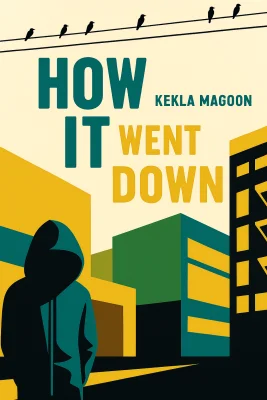
How It Went Down
Categories
Fiction, Audiobook, Mystery, Young Adult, Social Justice, African American, Contemporary, Race, Realistic Fiction, Teen
Content Type
Book
Binding
Unknown Binding
Year
2014
Publisher
Henry Holt and Co. (BYR)
Language
English
ISBN13
9781627791595
File Download
PDF | EPUB
How It Went Down Plot Summary
Introduction
June 2nd, 5:30 PM. The sound of gunshots echoes through Peach Street in Underhill, shattering more than just the evening quiet. Sixteen-year-old Tariq Johnson lies bleeding on the sidewalk, a carton of milk spilling white across the dark pavement beside him. Jack Franklin, a white man who had stopped his car and approached the scene, drives away with a smoking gun. Within minutes, the police arrive to find Tariq dead and Franklin nowhere to be found. What should have been a simple trip to the corner store becomes the spark that ignites a community already simmering with racial tension and injustice. As witnesses offer conflicting accounts and the media descends like vultures, the truth becomes as elusive as justice itself. Some say Tariq was armed and dangerous, a gang member who got what he deserved. Others insist he was an innocent kid carrying nothing more threatening than candy and milk. In the aftermath, friends become enemies, families fracture under pressure, and a neighborhood discovers that sometimes the most dangerous weapon isn't a gun—it's the story people choose to believe.
Chapter 1: The Shot That Echoed Through a Community
The afternoon heat pressed down on Peach Street like a weight. Tariq Johnson walked home from Rocky's convenience store, arms full of groceries for his family. Milk for his developmentally disabled sister Tina, salsa for dinner, toilet paper. Ordinary things for an ordinary day that would end in blood. Across the street, Jennica sat on a stoop with her boyfriend Noodle, both high and lazy in the summer heat. She barely noticed the commotion until the shouting started. Tariq was arguing with Brick, leader of the 8-5 Kings gang, their voices carrying that particular edge of young men testing each other's limits. Nothing unusual for the neighborhood. But then Brian Trellis emerged from the hardware store. The big white man had heard Rocky shouting after Tariq—something about coming back, though for what remained unclear. Trellis grabbed Tariq by the shoulder, thinking he'd stopped a theft in progress. The teenager spun around, arms still full of groceries, face stormy with indignation. Jack Franklin was driving Tom Arlen's borrowed car when he saw what looked like a white man being threatened by a gang member. Without hesitation, Franklin stopped his car and approached, his hand already moving toward the gun at his hip. He couldn't see the milk carton in Tariq's arms, couldn't hear the boy's protests of innocence. All he saw was a young black man in a hoodie facing off against someone who looked like him. The first shot dropped Tariq to his knees. The second finished him. Franklin stood over the fallen teenager for a moment that stretched like eternity, then walked back to his car with mechanical precision. Witnesses would later argue about what they'd seen—a gun, a candy bar, empty hands, a red bandanna. But there was no arguing about the milk spreading across the pavement like spilled innocence, mixing with blood that would stain the concrete long after the body was removed.
Chapter 2: Conflicting Truths: The Aftermath of Violence
Within minutes, sirens wailed through Underhill as emergency responders descended on Peach Street. Jennica found herself kneeling beside Tariq's body, her hands pumping his chest in desperate CPR while his life leaked away beneath her palms. She felt his last breath move through his ribs, tasted it in the air around them. He was already gone, but she couldn't stop trying to bring him back. The Kings scattered like startled birds, leaving only Jennica and Noodle to face the police. When the detectives arrived, they found a scene that fit too neatly into their expectations. Young black male in a hoodie, history of association with gang members, shot while allegedly committing a crime. Case closed before it began. But the witnesses couldn't agree on the story. Edwin "Rocky" Fry, the store owner, insisted Tariq hadn't stolen anything—he'd simply forgotten his change. Brian Trellis spoke of feeling threatened, of hearing someone shout about a gun. Tom Arlen, who'd loaned Franklin the car, backed up the self-defense claim. Yet Jennica swore Tariq was unarmed, that Franklin had emerged from his car like an avenging angel with murder in his eyes. The police released Franklin after questioning, accepting his claim of self-defense. No charges filed, no investigation planned. Just another young black man dead in Underhill, another white citizen exercising his Second Amendment rights. The system worked exactly as designed. But this time, something was different. This time, there were cameras. This time, the story spread beyond the neighborhood's boundaries, carried by social media and picked up by news outlets hungry for the next viral tragedy. Franklin's release sparked outrage that rippled far beyond Peach Street, setting the stage for a confrontation that would test everything the community thought it knew about justice, truth, and the price of being young and black in America.
Chapter 3: Grief and Vigil: A Neighborhood in Mourning
The flowers appeared first—small bouquets left against the brick wall where Tariq fell. Then came the candles, photos, handwritten messages. "Justice for Tariq" scrawled on poster board. "Gone too soon" in careful cursive. The impromptu memorial grew like a living thing, fed by grief and rage in equal measure. Vernesha Johnson moved through her son's funeral preparations like a sleepwalker. The questions from reporters felt like physical blows. Had Tariq been in a gang? Was he armed? Why was he really at the store? Every query chipped away at her memory of the boy who'd kissed her goodbye that morning, who'd promised to pick up candy for his sister. Tina, Tariq's developmentally disabled younger sister, couldn't understand why her brother wasn't coming home. She waited by his locked bedroom door, counting the hours on her fingers, making lists of the things that were different now. No more Snickers bars appearing in her backpack. No more bedtime stories in funny voices. No more magic spells to keep the monsters away. The vigil that first night drew hundreds. Neighbors who'd known Tariq since childhood stood beside strangers drawn by news coverage. Miss Rosalita, the neighborhood's ninety-four-year-old matriarch, took the hands of young mothers in hers, feeling their tears drop onto her weathered skin. She'd seen too many vigils, buried too many children. The circle of life had become a straight line leading to an early grave. As darkness fell, the candles flickered like earthbound stars. The singing began low and mournful, voices joining voices until the very air seemed to vibrate with loss. They sang for Tariq, but also for all the Tariqs—all the young lives cut short, all the futures stolen, all the mothers left to wonder what they could have done differently. The vigil would last until dawn, and then begin again the next night, and the next, until grief transformed into something harder and more dangerous.
Chapter 4: Media Spotlight: When Personal Tragedy Becomes Public Spectacle
Reverend Alabaster Sloan arrived in Underhill like a hurricane, bringing with him the full apparatus of modern media spectacle. The civil rights leader and senatorial candidate saw opportunity in Tariq's death—a chance to thrust racial injustice back into the national spotlight and boost his own political fortunes in the process. He set up operations in a downtown hotel, recruiting local beautician Kimberly to handle his makeup and administrative needs. She was young, beautiful, and star-struck by his attention, working long hours to coordinate press conferences and media interviews. For Kimberly, helping Sloan felt like stepping into a larger world, one where her intelligence and ambition might actually matter. The media descended on Underhill with the feeding frenzy of sharks scenting blood. Every detail of Tariq's life was dissected, analyzed, weaponized. His grades, his friends, his family's financial situation—nothing was off limits. Reporters cornered anyone who'd known him, pressing for quotes that could be twisted into whatever narrative sold more papers or drove more clicks. Jennica found herself caught in the crossfire when a television crew cornered her at the diner where she worked. The reporter's questions felt like traps, each one designed to elicit either damning or sanctifying soundbites. Did Tariq have a gun? Was he really innocent? How did it feel to watch a teenager die? The money they offered was more than she'd make in a week, but it felt dirty in her hands. The story metastasized across social media, spawning hashtags and think pieces and amateur investigations. #JusticeForTariq trended worldwide. Cable news panels debated whether he'd been a gang member or an honor student, as if those categories were mutually exclusive, as if the truth mattered less than the story each side needed to tell. In the carnival atmosphere of modern media coverage, the actual boy—the one who'd bought milk for his sister and forgotten his change—disappeared entirely, replaced by a symbol that meant whatever the viewer needed it to mean.
Chapter 5: Pressure Points: The Pull of Gang Life and the Weight of Choices
Tyrell had always counted himself lucky to have Tariq as a shield. His best friend's quick wit and fierce loyalty had kept the 8-5 Kings at bay, deflecting their recruitment attempts with jokes and promises of "maybe someday." But with Tariq gone, Tyrell found himself exposed and vulnerable, a perfect target for predators who smelled weakness like blood in the water. Brick, the Kings' charismatic leader, turned his attention to Tyrell with laser focus. He'd always wanted Tariq in the organization, had seen something special in the boy's fierce independence and protective instincts. Now Brick transferred that attention to Tariq's best friend, convinced he could mold the frightened teenager into a suitable replacement. The pressure came from all directions. At home, Tyrell's father resented his son's academic ambitions, seeing them as a rejection of the hard life he'd built. At school, former friends avoided him, afraid of guilt by association. On the streets, rival Stinger gang members tested him, sensing easy prey. Only the Kings offered protection, brotherhood, a sense of belonging in a world that seemed designed to crush boys like him. Sammy, Tariq's childhood friend who'd already joined the Kings, watched Tyrell's struggle with a mixture of sympathy and calculation. He remembered his own initiation, the fear and excitement of crossing that line from civilian to soldier. There was a terrible logic to it—join or be victimized, fight or be destroyed. The streets of Underhill offered few alternatives. But Tyrell carried something his friends had lost—a memory of different possibilities. He'd scored high on practice SATs, received letters from colleges that seemed as distant as Mars. Two more years until graduation, two years to survive the gauntlet of adolescence in a neighborhood where young black men faced a brutal arithmetic: join a gang, go to prison, or die. The mathematics of despair that reduced human beings to statistics, dreams to probabilities, futures to body counts.
Chapter 6: The March for Justice: Hoodies and Heartache
Ten thousand people gathered in Roosevelt Park as the sun began its descent, their hooded silhouettes creating a sea of solidarity and sorrow. The march for Tariq had grown beyond anything Reverend Sloan had anticipated, drawing protesters from across the region who saw in his death an echo of their own fears and losses. Kimberly moved through the crowd with nervous excitement, coordinating media appearances and managing Sloan's schedule. She'd never felt so important, so connected to something larger than herself. When he kissed her cheek and told her he couldn't have managed without her, she felt her heart might burst with pride and possibility. But cracks were showing in the narrative. Noodle had been pressured by Brick to speak to reporters, painting Tariq as an innocent victim despite his own private belief that his dead friend had been armed and asking for trouble. The contradictions gnawed at him like a wound that wouldn't heal—defending someone he'd never liked, lying to cameras for a cause he didn't believe in. As the march moved through Underhill's streets, past the mural that had appeared on the wall where Tariq died, the crowd's energy built like a storm. Justice for Tariq. The chant echoed off buildings, rolled down alleyways, filled the air with desperate hope. But what was justice? Convicting Franklin? Changing laws? Bringing back the dead? In the crowd, Jennica walked arm-in-arm with Kimberly and Tyrell, feeling strength in their connection. She'd finally broken up with Noodle, ended her toxic relationship with the Kings' violent world. The march felt like a cleansing, a chance to wash away the blood she'd tasted in that desperate moment of CPR. But she knew that some stains never fade, that Tariq's last breath would always live in her lungs, a ghost that would haunt every breath she took for the rest of her life.
Chapter 7: Choosing a Different Path: Breaking the Cycle of Violence
The breaking point came when Brick cornered Tyrell with a knife and an ultimatum. Jack Franklin was hiding in Tom Arlen's house—Tyrell had glimpsed the killer through a window during his recycling rounds. Now Brick demanded blood for blood, revenge for Tariq's death. Cut Franklin, mark him, make him pay. It was Tyrell's chance to prove himself, to join the Kings and gain their protection. The blade felt heavy in Tyrell's palm, its weight pulling him toward a future he'd always feared. He could see how easy it would be to let the current carry him away, to stop fighting the tide of violence that swept through Underhill like a natural disaster. Join the Kings, accept the inevitable, become another statistic in the neighborhood's endless war. But then he saw Tina, Tariq's little sister, running down the street with a backpack clutched in her small fists. Inside was a red-handled knife, one of Junior's weapons that Tariq had hidden in his room. The little girl had discovered it and was trying to bury it in the cemetery, her childish instincts understanding what the adults had forgotten—that some things were too dangerous to keep. In that moment, Tyrell remembered who Tariq really was. Not the gang member Brick claimed, not the innocent victim the media created, but simply Tariq—a boy who'd loved his sister enough to protect her from the truth, who'd stood between his friends and danger, who'd bought Snickers bars and forgotten his change and died for the color of his skin and the assumptions of strangers. Tyrell dropped the knife, watching it clatter on the pavement like a period at the end of a sentence he'd never write. He walked away from Brick's shocked silence, away from the Kings and their promises of protection, toward Tina and the choice his best friend would have made. They buried the red-handled knife together in Tariq's grave, covering it with dirt and tears and the quiet understanding that some cycles could be broken, some futures could be chosen rather than imposed. As they walked back through the cemetery gates, Tina's small hand in his, Tyrell felt the ghost of his friend's presence. The mathematics of survival still applied—join a gang, go to prison, or die. But Tariq had shown him a fourth option, the hardest one of all: remain yourself, no matter the cost.
Summary
In the end, Tariq Johnson's death accomplished what his life could not—it forced a community to confront the lies they told themselves about justice, safety, and the value of young black lives. Jack Franklin disappeared into witness protection, his self-defense claim accepted without question. The police investigation stalled, the media moved on to the next tragedy, and Underhill was left to count its dead and bury its dreams once again. But seeds of change had been planted in the rubble. Jennica broke free from the Kings' orbit, choosing solitude over security, hope over cynicism. Kimberly learned that some dreams come with prices too high to pay, that sometimes the best thing a person can do is refuse to be used. And Tyrell discovered that courage doesn't always roar—sometimes it whispers "no" to those who would make you into something you're not, something your friend would never have wanted you to become. In a world that seemed designed to destroy young black men, perhaps the greatest act of rebellion was simply surviving with your humanity intact, carrying forward the memory of those who couldn't, and refusing to let their deaths be in vain. The shadows of truth are long and dark, but in them, if you look carefully, you can still find the light.
Best Quote
“People make mistakes. They look at the surface of things and see what they want to.” ― Kekla Magoon, How It Went Down
Review Summary
Strengths: The review highlights the book's ability to evoke deep personal reflections and its portrayal of urban street life with complexity. The narrative is praised for its layers and for addressing significant social issues like race relations and white privilege. The perspectives of characters Steve and Will are appreciated for their relatable depiction of navigating different worlds. Overall: The reader expresses a strong emotional connection to the book, finding it a necessary reminder of personal and societal compartmentalization. The book is recommended for its impactful storytelling and its role in fostering important discussions on race and privilege.
About Author

Kekla Magoon
Magoon interrogates the complexities of identity, community, and empowerment through her award-winning literature, often weaving socio-political themes into her young adult and middle-grade books. Her commitment to historical research and storytelling is evident in works like "The Rock and the River", which delves into the turbulent intersection of the civil rights movement and the Black Panther Party through the eyes of a young protagonist. This approach underscores her focus on giving voice to youth navigating intricate moral and social landscapes, as seen in other significant titles like "How It Went Down" and "The Season of Styx Malone".\n\nThrough her literary career, Magoon builds narratives that are as educational as they are engaging, providing young readers with a lens into civil rights history and the ongoing struggles for racial justice. Her background in history, combined with an M.F.A. in Writing, enables her to craft stories that challenge and inspire, thereby offering readers not only entertainment but also a deeper understanding of social issues. Her work, which spans genres such as historical fiction and contemporary young adult, reaches audiences who value books that confront real-world issues with authenticity and sensitivity.\n\nRecognized with numerous accolades, including the Margaret A. Edwards Award and the John Steptoe New Talent Award, Magoon’s contributions to literature are celebrated for their impact on young audiences. Her novels, rich in thematic depth and historical insight, continue to resonate with readers who seek stories that reflect the complexities of society and the power of individual agency. This bio highlights her role in shaping narratives that empower the next generation to engage thoughtfully with the world around them.
Read moreDownload PDF & EPUB
To save this Black List summary for later, download the free PDF and EPUB. You can print it out, or read offline at your convenience.
How It Went Down
by Kekla Magoon
