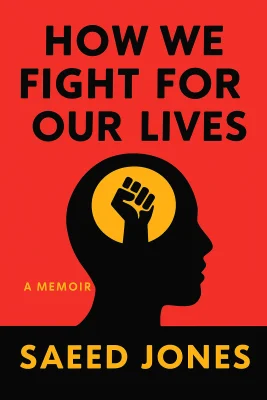
How We Fight For Our Lives
Categories
Nonfiction, Biography, Memoir, Audiobook, Poetry, Biography Memoir, Book Club, Race, LGBT, Queer
Content Type
Book
Binding
Hardcover
Year
2019
Publisher
Simon and Schuster
Language
English
ISBN13
9781501132735
File Download
PDF | EPUB
How We Fight For Our Lives Plot Summary
Introduction
In the sweltering heat of a Texas summer, a twelve-year-old boy discovered James Baldwin's "Another Country" tucked away in his mother's collection of paperback novels. Between those worn pages, he found not just a story, but a Polaroid photograph of a mysterious man from Jackson, Mississippi—a man whose knowing smile would haunt him for years to come. This moment marked the beginning of a profound awakening, one that would force him to confront the dangerous intersections of being both black and gay in America. This is the story of Saeed Jones, a young man who learned early that survival meant more than simply staying alive—it meant finding ways to live authentically while navigating a world that seemed determined to erase him. Through his journey from the suburbs of Texas to the poetry stages of New York, we witness the raw complexity of growing up at the crossroads of multiple identities. Readers will discover how one person can transform pain into creative power, how family love can both sustain and complicate, and how the search for belonging often leads us through the darkest valleys before we find our voice. His story illuminates the universal struggle to become ourselves while honoring those who raised us, even when their love comes wrapped in expectations we cannot fulfill.
Chapter 1: Confronting Identity in a Small Texas Town
In the apartment complex parking lots of Lewisville, Texas, young Saeed watched white boys play catch from his window perch, never joining them despite his quiet longing. The summer heat seemed to mirror the intensity of his internal confusion as he discovered his mother's hidden library of novels by James Baldwin, Toni Morrison, and Alice Walker. These books opened doors to worlds he didn't know existed, but they also raised questions that no one in his small-town life seemed equipped to answer. The discovery of that mysterious Polaroid in Baldwin's pages became a catalyst for understanding. When his mother finally revealed that the smiling man in the photograph had died of AIDS after taking his own life, the weight of what it meant to be different in America began to settle on Saeed's young shoulders. Her single word—"AIDS"—carried with it all the unspoken fears and societal prejudices of the era, making clear that some identities came with life-or-death stakes. His subsequent visits to the public library became covert missions of self-discovery. Hidden among the sociology books and health sections, he found materials about homosexuality that painted a grim picture of isolation, disease, and early death. Every resource seemed to confirm his worst fears: that being gay meant being alone, that it was a pathway to suffering rather than joy. The connection between identity and mortality wasn't abstract—it was immediate and terrifying. Yet even in this climate of fear, curiosity proved stronger than caution. The same summer that brought crushing realizations about the dangers of being different also brought moments of recognition and possibility. When he finally worked up the courage to ask direct questions, he found that the adults in his life, particularly his mother, responded with a mixture of love and worry that would characterize their relationship for years to come. These early confrontations with identity taught him that survival would require not just self-acceptance, but also the delicate navigation of family expectations and societal norms.
Chapter 2: Finding Voice Through Books and Rebellion
Literature became both sanctuary and weapon in Saeed's adolescent arsenal. While his peers focused on sports and social hierarchies, he discovered that books could transport him beyond the limitations of suburban Texas life. The works of black authors, in particular, showed him that stories could be both mirrors and windows—reflecting his own experiences while opening pathways to broader understanding of what life might offer beyond the constraints of his immediate environment. His relationship with reading evolved from passive consumption to active rebellion. Each book he chose, each poem he secretly admired, became an act of defiance against the narrow definitions of masculinity and identity that surrounded him. When classmates mocked his interests or questioned his demeanor, literature provided both comfort and ammunition—proof that there were other ways of being in the world, other models of strength and beauty that didn't conform to small-town expectations. The tension between his inner world and external reality reached a breaking point during confrontations with peers who sensed his difference long before he fully understood it himself. The painful encounter with Cody and his brother, which ended with that devastating slur shouted through a locked door, crystallized everything Saeed had been trying to avoid acknowledging about himself. Yet even in that moment of rejection and humiliation, books had prepared him with a vocabulary for resilience. Writing began as extension of reading—tentative attempts to capture his own experiences in the voices of mythological women, creating distance through metaphor while still exploring themes of love, loss, and identity. These early creative efforts represented his first attempts to transform pain into art, to find power in the very experiences that seemed designed to diminish him. Through literature, he learned that survival could be more than just endurance—it could be a form of creative expression that honored both struggle and hope.
Chapter 3: Escaping to College and Sexual Awakening
Western Kentucky University offered Saeed his first taste of freedom, but it also presented new challenges about authenticity and self-presentation. Arriving on campus in carefully chosen clothing that proclaimed his difference, he quickly learned to code-switch between various versions of himself—the speech team intellectual, the party-going fraternity brother wannabe, the mysterious loner. Each persona offered different forms of protection and possibility, but none felt entirely genuine. The discovery of a vibrant gay community among his fellow students marked a watershed moment in his development. For the first time, he encountered other young men who weren't hiding their sexuality, who treated same-sex attraction as normal rather than shameful. The first parties, the first kisses, the first sexual experiences—all occurred in an atmosphere of relative safety and acceptance that he had never imagined possible during his isolated teenage years. Yet even within this newfound freedom, complications arose. The speech and debate team became his intellectual home, providing structure and recognition for his talents, while also offering cover for his exploration of identity. His relationship with teammates allowed him to experiment with degrees of openness, testing the waters of acceptance while maintaining plausible deniability when necessary. The delicate balance between authenticity and self-protection remained a constant consideration. His romantic and sexual experiences during these college years were marked by both liberation and confusion. The transition from furtive, shame-filled encounters to open relationships challenged every assumption he had developed about gay life during his adolescence. However, the gap between sexual freedom and emotional intimacy proved difficult to navigate. Even as he gained confidence in his physical relationships, the deeper work of integrating his various identities—son, student, writer, gay man—remained incomplete, setting the stage for future struggles with self-acceptance and family relationships.
Chapter 4: Dangerous Encounters and Self-Destruction
As college progressed, Saeed's sexual liberation took increasingly dangerous turns, reflecting deeper struggles with self-worth and internalized shame. His encounters with men like the Botanist revealed the toxic intersection of racial fetishization and sexual exploitation that haunted his relationships. These experiences forced him to confront how racism and homophobia could combine in ways that were both seductive and devastating, as he found himself simultaneously desired and dehumanized. The pattern of seeking out dangerous situations reached its terrifying climax during a New Year's Eve party in Phoenix, where what began as mutual attraction quickly transformed into a life-threatening assault. The man who had seemed like another conquest became a mirror reflecting Saeed's own internalized hatred and self-destructive impulses. The attack forced him to recognize that his pursuit of sexual liberation had become entangled with a deeper desire to punish himself for his perceived transgressions against societal norms. His response to trauma revealed both his resilience and his continued struggles with processing complex emotions. Rather than seeking help or acknowledging the psychological impact of the assault, he channeled his experience into creative writing, attempting to control the narrative by fictionalizing his own near-death. This pattern of transforming pain into art became both a coping mechanism and a form of avoidance, allowing him to process difficult experiences while maintaining emotional distance from their full impact. The aftermath of these dangerous encounters highlighted the isolation that still characterized his life, despite his apparent integration into college social circles. His inability to discuss these experiences with friends or family members revealed how much of his authentic self remained hidden, even within supposedly accepting communities. The gap between his public persona as a successful student and his private struggles with sexual trauma and internalized shame created a dangerous psychological split that would require years to heal.
Chapter 5: Grieving a Mother and Finding Oneself
The sudden collapse of his mother's health during his senior year of college forced Saeed to confront the reality that his journey toward independence had been built on her sacrifices. Her hospitalization and subsequent move to Atlanta marked the end of their shared life in Texas, but also the beginning of a more complex relationship as two adults trying to navigate love across distance and difference. Her reluctance to fully acknowledge his sexuality created an ongoing tension that both protected and pained them. Coming out to his mother over the phone represented a crucial step toward authenticity, but it also revealed the limits of their communication. While she responded with love and acceptance, the conversations that followed showed how much remained unsaid between them. Her questions about his safety and happiness reflected genuine concern, but they also highlighted her struggle to understand a world she had never experienced. Their relationship became characterized by profound love expressed through careful silence. The years following his graduation were marked by increasing independence and creative success, but also by a growing awareness of his mother's mortality. Her heart condition served as a constant reminder that their time together was limited, while his own struggles with depression and dangerous relationships created additional sources of worry. His move to New York and later New Jersey represented the fulfillment of childhood dreams, but also increased the physical distance between them at a time when both needed connection. When the final crisis came, it arrived with shocking suddenness that left no time for preparation or proper goodbyes. His mother's collapse on Mother's Day weekend, followed by her rapid decline into coma and brain death, compressed all their unfinished conversations into a few terrible days in Memphis hospitals. The experience of being designated as next of kin forced him to assume adult responsibilities while still feeling like a child who needed his mother's guidance, creating a profound sense of displacement that would take years to resolve.
Chapter 6: Transforming Pain into Creative Power
The immediate aftermath of his mother's death revealed both Saeed's vulnerability and his resilience. Surrounded by family members who had known him since childhood, he found himself stripped of the carefully constructed personas that had protected him throughout his adult life. The raw grief that followed forced him to confront not only the loss of his mother, but also the realization that much of his identity had been defined in relationship to her expectations and sacrifices. The discovery of his mother's life insurance policy created a complex mixture of guilt and opportunity. The financial freedom that her death provided allowed him to pursue writing full-time, but it also forced him to grapple with the uncomfortable reality that his artistic dreams were now funded by her absence. This contradiction between loss and liberation became a central theme in his creative work, as he struggled to honor her memory while also claiming his own life and voice. His travels through Europe, particularly his encounter with Esther in Barcelona, provided crucial perspective on grief and healing. Meeting another person who had lost a mother and was navigating the world alone helped him understand that his experience, while uniquely painful, was also part of the universal human condition. Their friendship demonstrated that connection and understanding could emerge from shared loss, even between strangers from different backgrounds. The process of writing about his experiences represented the culmination of his journey from silence to voice. By committing his story to the page, he transformed private pain into public testimony, creating a narrative that could serve both as personal healing and as witness for others facing similar struggles. His memoir became proof that survival was possible, that the intersections of race, sexuality, and family love could be navigated with honesty and grace, even when the path forward seemed impossible to discern.
Summary
Saeed Jones's journey from a confused boy in suburban Texas to a confident writer in New York illuminates the complex process of becoming oneself while honoring those who shaped us. His story demonstrates that authenticity often requires us to disappoint the people we love most, not out of cruelty, but out of necessity—that the choice between self-preservation and family harmony is sometimes no choice at all. Through his experiences, we learn that survival can be transformed into triumph when we find the courage to tell our stories with both honesty and compassion. The most powerful lesson from his life lies in understanding that our struggles with identity, family, and belonging are not weaknesses to be overcome, but sources of strength to be cultivated. His journey suggests that we must learn to see ourselves as worthy of love and protection, even when the world suggests otherwise, and that creative expression can serve as both shield and sword in the fight for our lives. For anyone wrestling with questions of identity, family acceptance, or the courage to live authentically, his story offers proof that it is possible to honor our origins while also claiming our own destinies.
Best Quote
“I made myself a promise: Even if it meant becoming a stranger to my loved ones, even if it meant keeping secrets, I would have a life of my own.” ― Saeed Jones, How We Fight For Our Lives
Review Summary
Strengths: The memoir is praised for its masterful writing, with Saeed Jones's background in poetry enhancing the quality and flow of the narrative. It is described as a beautifully written coming-of-age story that skillfully weaves fragments of epic poetry. The book is also noted for its cultural significance, providing an important perspective on growing up as a Black gay man in the South. Weaknesses: Some readers feel the memoir does not fully live up to its promise, describing it more as a collection of traumatic memories rather than a cohesive narrative. There is a suggestion that the detailed descriptions can sometimes be excessive. Overall: The review reflects a generally positive sentiment, recommending the book for its literary quality and cultural importance, particularly for those interested in nonfiction by queer Black authors. However, there is a note of reservation regarding its narrative cohesion.
About Author

Saeed Jones
Jones navigates the complexities of identity, power, and race through his poignant poetry and memoirs. His works, such as "Prelude to Bruise" and "How We Fight for Our Lives," delve into the intersections of race, desire, and masculinity, blending mythology and black iconography to articulate the raw experiences of a Black queer man. With a foundation in creative writing from Rutgers University–Newark, Jones's writing is characterized by emotional directness and lyrical intensity, offering readers an unflinching look at the societal and personal challenges he has faced.\n\nIncorporating elements of elegy and gallows humor, Jones's narrative style encourages readers to reflect on broader systemic issues through the lens of personal history. His contributions as the founding editor of BuzzFeed LGBT and his role as a cultural critic further underscore his commitment to exploring and challenging societal norms. This approach not only enriches the literary landscape but also offers readers a profound understanding of the multifaceted nature of identity.\n\nAs an acclaimed author, Jones's work has been recognized with numerous awards, including the 2019 Kirkus Prize for Nonfiction. His forthcoming memoir, "Home Out There," promises to continue his exploration of these themes, providing both new and returning readers with insights into his evolving perspective. Those who engage with his books will find a deeply resonant exploration of identity that challenges and enriches their understanding of the world.
Read moreDownload PDF & EPUB
To save this Black List summary for later, download the free PDF and EPUB. You can print it out, or read offline at your convenience.
How We Fight For Our Lives
by Saeed Jones
