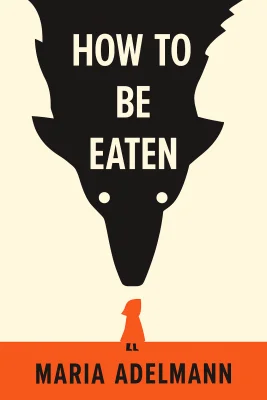
How to Be Eaten
Categories
Fiction, Audiobook, Horror, Fantasy, Adult, Book Club, Contemporary, Magical Realism, Retellings, Fairy Tales
Content Type
Book
Binding
Hardcover
Year
2022
Publisher
Little, Brown and Company
Language
English
ASIN
0316450847
ISBN
0316450847
ISBN13
9780316450843
File Download
PDF | EPUB
How to Be Eaten Plot Summary
Introduction
In a basement rec room beneath the bustling streets of New York City, five women gather in metal folding chairs arranged in a circle. Each carries the weight of a story the world thinks it knows—stories that have been twisted, sensationalized, and stripped of their humanity. Bernice, known to the media as "Bluebeard's Girlfriend," clutches a blue step stool that once belonged to a murdered woman. Ruby wraps herself in the blood-stained fur coat of the wolf who tried to devour her as a child. Ashlee, fresh from reality TV infamy, fidgets with an engagement ring that feels more like a shackle. Gretel, survivor of a childhood disappearance, keeps her earbuds in to block out the world's judgment. Raina, polished and mysterious, hides secrets behind her perfect facade. They've come here seeking something the headlines never offered—the chance to tell their own stories. But their therapist Will harbors his own dark agenda, and the group sessions are being secretly recorded for a reality show that will exploit their deepest traumas. As each woman peels back the layers of her carefully constructed public image, they discover that the most dangerous predators aren't always the obvious monsters. Sometimes they're the ones who smile while they steal your story, the ones who promise to help while they're really hunting.
Chapter 1: The Circle of Secrets: Women Gathering in the Basement
The email had arrived like a whisper in the night: "Personal trauma, public figure? Unusual story?" It spoke directly to the hollow ache each woman carried, that sense of being known by millions yet understood by no one. The basement of the YMCA feels like a confession booth, all harsh fluorescent lights and echoing footsteps from the world above. Will arrives first, arranging chairs with the precision of someone setting a trap. He's handsome in that television-host way—teeth too white, smile too practiced. When the women trickle in through the rain, each brings her armor: Bernice's exhausted indifference, Ruby's aggressive coat of matted fur, Ashlee's Instagram-perfect desperation, Gretel's studied invisibility, Raina's flawless composure. The introductions feel like a lineup of damaged goods. Bernice explains how she survived Bluebeard's house of horrors while other women became furniture. Ruby's coat reeks of sweat and old trauma, the skin of the wolf who once held her captive in his belly. Ashlee's engagement ring catches the light like a warning beacon as she insists her story is about love, not tragedy. Gretel keeps her headphones in, protecting herself from yet another interrogation about what really happened during those three missing months of her childhood. Will watches them with the hungry attention of a collector examining rare specimens. He speaks in therapy-speak about "narrative healing" and "absolute honesty," but his eyes shine with something else entirely. The women sense it too—that feeling of being watched by more than just each other, though they can't quite place why the room feels like a stage.
Chapter 2: Bluebeard's Last Girlfriend: Bernice's Survival Story
Bernice's story unfolds like a horror movie played in reverse—starting with blood and ending with the seduction that made it all possible. She tells them about Ashton Adams, the tech billionaire with the cyan-blue beard who collected women the way others collect art. His mansion across from her family's modest home rose like a monument to excess, blue as a bruise against the sky. The courtship began with gifts: blue cakes, blue flowers, blue jewelry that made Bernice feel special for the first time in her life. While her sister Naomi possessed effortless beauty and confidence, Bernice had always felt like the consolation prize. Ashton's attention transformed her, made her believe she was worth something more than waitressing tables and living in her sister's shadow. The mansion tour revealed Ashton's twisted aesthetic—furniture made from human remains, though Bernice didn't understand until too late. The dresser inlaid with bone fleur-de-lis, the lamp with its suspicious leather shade, the journals bound in skin soft as velvet. Ashton spoke of each piece with collector's pride, explaining their provenance like museum placards. When he gave her the skeleton key to his basement workshop, warning her never to use it, Bernice walked straight into his trap. The basement held tools of torture and preservation, and hanging from the ceiling like a grotesque ornament was Taylor, his previous girlfriend, transformed into a monument to his obsession. The house locked itself around Bernice with mechanical precision, Andrea's voice echoing from hidden speakers like the sound of her own doom approaching. But salvation came through Amazon—a same-day delivery that broke Ashton's perfect system. As Bernice fled through the unlocked door, Ashton chose poison over capture, ending his reign of terror with typical dramatic flair. The media painted her as either accomplice or fool, never as the survivor she truly was. Now she lives with the furniture made from murdered women, their voices filling her sleepless nights with demands for justice that will never come.
Chapter 3: The Wolf in Her Coat: Ruby's Traumatic Encounter
Ruby arrives late and bleeding, her massive fur coat dripping pink water across the basement floor like a crime scene in progress. She's just been doused with fake blood by a fur-rights activist, but the stain feels appropriate—she's been marked by violence since she was twelve years old and met a talking wolf in a suburban cul-de-sac. The encounter began with flirtation, Ruby admits with bitter honesty. She was smoking stolen cigarettes and wearing her mother's lipstick when the wolf appeared, elegant and silver in the dappled sunlight. His compliments made her feel seen in a way that cut through years of being called names by classmates. When his tail flicked between her legs under her red skirt, something inside her responded with a warmth she didn't understand. But fairy tale seduction quickly turned to nightmare. Ruby led the wolf to her grandmother's house, gave him the address like handing over a menu. She found her grandmother's body crumpled in blood while the wolf's belly expanded with his recent meal. The hunting-knife salvation that followed left Ruby coated in wolf guts and stomach acid, her skin burned red from the digestive juices. The aftermath proved worse than the attack itself. Barbara Walters interviewed the child Ruby, pressing her about why she didn't run, why she seemed to enjoy the wolf's attention. The media painted her as either victim or seductress, sometimes both, never just a confused kid who'd been manipulated by a predator. The wolf's skin became her coat, her armor and her prison, a constant reminder that she survived when her grandmother didn't. Now Ruby works dead-end jobs and hooks up with strangers in storage closets, wearing her trauma like a second skin. The coat has become part of her identity, so integral that she can't imagine who she'd be without it. She's the girl who was almost eaten, who tasted like tragedy and somehow lived to tell about it.
Chapter 4: Reality's Distorted Mirror: Ashlee's Television Romance
Ashlee's love story began with a billboard and ended with a spit-soaked face in a Manhattan bar. She'd been working retail in Pennsylvania when she saw the casting call for The One, desperate enough for love or fame that the distinction didn't matter. What she found was a carefully orchestrated psychological experiment designed to break down women for entertainment. The production stripped away everything that made the contestants human—phones, clocks, contact with the outside world. Locked in hotel rooms for days, then blindfolded and transported to a remote mansion, the women became lab rats in a maze designed to provoke jealousy and conflict. Ashlee adapted by becoming exactly what the show wanted: hungry, desperate, willing to fight for male attention like her life depended on it. The glass incident that made her infamous was both accident and inevitable result of the pressure cooker environment. When Ashley Y stole Ashlee's makeshift sundial—her only way to track time in the clockless world—rage overtook reason. The shattered daiquiri glass through Ashley Y's palm became the defining image of Ashlee's character: violent, unhinged, willing to maim for love. But the real violence was what happened in the editing room, where producers crafted Ashlee into the villain through careful manipulation of footage. Her genuine emotions became punchlines, her desperation transformed into entertainment. The mouth that had earned her the nickname "Ashlee E" became a meme, a symbol of feminine excess and hunger that disgusted viewers. Brandon, her supposed prize, revealed himself to be just another version of the small-town losers she'd tried to escape. In their Brooklyn apartment, he mixed peanut butter with whiskey and blamed her for making him look bad on television. The engagement ring on her finger felt less like a symbol of love than evidence of her own poor judgment, a glittering reminder that fairy tales are just another kind of trap.
Chapter 5: The Candy House Memory: Gretel's Haunting Past
Gretel's story emerges in fragments, like archaeological evidence of a childhood that defied all logic. She and her brother Hans vanished for three months when she was six, reappearing miles from home with wild tales of a house made of candy and an old woman who fed children to fatten them for slaughter. The famous photograph of their reunion became an icon of hope and family reunion, but it captured only a single moment in a lifetime of doubt. The house had been impossible and undeniably real—walls of gingerbread, mortar sweet as caramel, windows of spun sugar that cracked under desperate hands. The woman inside wore hunger like jewelry, her gold teeth gleaming as she separated the children, fattening Hans while starving Gretel down to bone and determination. The PlayStation in his room, the empty cell that was hers. The way the woman's fingernail traced up Gretel's throat, searching for evidence of stolen food. The escape required sacrifice that haunts Gretel still. When she shoved the woman into her own oven, watching flesh bubble and bones crack in the heat, she saved her brother's life and damned her own peace of mind. The woman's screams mixed with the sweet smell of burning sugar, creating a sensory memory that would never fade. But the real tragedy wasn't the murder—it was the abandonment that led to it. Their parents had walked them through the dawn streets and left them there deliberately, breadcrumbs of Adderall scattered behind them like a trail they never meant to follow home. Poverty had made them disposable, two more mouths they couldn't afford to feed. Now adult Gretel works as an art conservationist, preserving broken things exactly as they are rather than trying to restore them to wholeness. She fell in love with Jade, a woman whose kindness felt like another kind of trap, whose mole resembled the woman from the candy house. When the convenience store cashier recognized her name and made his crude joke about buying candy, Gretel knew the story would never really end. Some hungers never die, they just find new forms.
Chapter 6: The Imp's Heart: Raina's Hidden Truth
Raina has been hiding in plain sight, the perfect wife with the devastating secret. Twenty years ago, she was a broke waitress named after a cocktail napkin with a phone number, the daughter her alcoholic father tried to sell to the highest bidder. That bidder turned out to be Jake Jackson, then just a rising television host looking for young women to exploit in the name of opportunity. The editing job was a fiction, but the imp who did the work was real. Little Man appeared in her windowless office like something out of a fairy tale, strange and golden and brilliant with technological magic. He could spin raw footage into television gold, craft villains from saints and heroes from monsters with nothing but the click of a mouse and an understanding of human nature's darkest appetites. Their love affair unfolded in secret, Raina's body responding to his gentle touch in ways she never expected. His scent of hamburgers and kindness, his massive eyes filled with longing she recognized as her own. While Jake Jackson courted her with expensive lunches and empty promises, Little Man taught her about the machinery of storytelling, how reality could be reshaped to serve any narrative. But when pregnancy forced a choice, Raina chose the safe path of conventional love over the dangerous truth of what she felt. Jake Jackson offered marriage and social respectability, a name that would erase her father's debts and her own shameful origins. Little Man offered only himself, and that seemed like too small a prize for too great a risk. The morning she told him no, Little Man destroyed himself with the literalness that only fairy tale creatures possess. He tore himself in half with his bare hands, splitting down the center in a fountain of blood and organs that splattered across the office walls. His heart kept beating even after it left his body, pulsing on the carpet like a promise that would never be fulfilled. Raina closed his dying eye and married Jake Jackson six months later. Their daughter Oribel arrived with her father's golden skin and impossible ears, her pointed chin and wet brown eyes like chestnuts in the rain. Jake never looked closely enough to notice, too narcissistic to see anything that didn't reflect his own image. The child became Raina's secret shame and secret joy, proof that love can create life even when it ends in death.
Chapter 7: Unmasking the Storyteller: Will's Deception Revealed
The final session explodes when Will's perfect facade literally falls apart. In the middle of Raina's confession, his skin begins to pucker and snap, revealing the dried and flaking face of Jake Jackson underneath. The host who built an empire on manufacturing romance has been wearing a younger man's face like a mask, sweating inside synthetic skin while secretly filming their most vulnerable moments. The women's shock turns to fury as the scope of his betrayal becomes clear. Every confidence shared, every trauma revealed, every moment of healing—all of it recorded for another reality show designed to exploit their pain. Jake's plan was to position himself as the savior therapist, the man who helped damaged women find their voices, while actually stealing those voices for profit. His defense is pathetic and predictable: they need him to tell their stories properly, the world deserves to hear their truths, he's doing them a favor by giving them a platform. The same manipulative language that built his television empire, now deployed against women who've learned to recognize predators by their promises to help. But these women are no longer the naive victims they once were. They've shared their stories on their own terms, found strength in witnessing each other's pain without judgment. They've learned that healing doesn't require a camera crew or a television contract, just the simple radical act of being believed. Ruby removes her blood-stained coat and hands it to Raina, accepting the new one offered as a gift. Bernice plans to donate the murder furniture to museums where the victims' stories might be preserved rather than sensationalized. Ashlee breaks her engagement and returns to Pennsylvania with her dignity intact. Gretel continues her work of preservation, keeping broken things exactly as they are rather than trying to fix them.
Summary
The basement sessions end with Jake Jackson's empire crumbling around him, legal battles mounting as his deceptions unravel in public. His perfect teeth gleam from his ruined face as he threatens to air the footage anyway, but the women have already won something more valuable than media control. They've reclaimed their narratives from the predators who tried to profit from their pain, transforming from objects of pity or fascination into subjects of their own stories. Each woman carries forward the hard-won knowledge that survival isn't just about escaping the monster—it's about refusing to let others define what your survival means. Bernice finds peace in the silence of her new apartment, no longer haunted by voices demanding justice she cannot provide. Ruby discovers that identity doesn't have to be worn like armor, that removing the coat doesn't erase the story. Ashlee learns that love stories written by others are just another kind of prison. Gretel accepts that some memories will never make complete sense, and that's not a failure of truth but a condition of trauma. Raina stops hiding from the consequences of her choices, finally allowing her daughter to know the extraordinary story of her origins. In the end, they discover that the most powerful magic isn't transformation—it's the radical act of seeing clearly, of refusing to let others spin your suffering into their gold. The fairy tales that shaped them were always incomplete, focusing on the moment of rescue rather than the lifetime of recovery that follows. But real women write different endings, messier and more honest, where happily ever after means simply learning to live with the truth of what happened, and finding others who can witness that truth without trying to change it into something more palatable. Their stories belong to them now, fractured but free.
Best Quote
“Morals create a labyrinth of rules geared toward blaming the victim” ― Maria Adelmann, How to Be Eaten
Review Summary
Strengths: The review appreciates the creative concept of retelling fairy tales in contemporary settings, highlighting the feminist reclamation of traditional narratives. The book's inventive approach to transforming fairy tales into true crime stories is noted as a compelling aspect. The reviewer also values the exploration of problematic themes in classic tales and the unique therapy group setting for characters. Weaknesses: The review does not explicitly mention any significant weaknesses, but the three-star rating suggests some reservations or unmet expectations. Overall: The reader finds the book to be a high three-star read, indicating a moderate level of enjoyment and appreciation for its creativity and thematic exploration. The recommendation is somewhat positive, particularly for those interested in feminist retellings of fairy tales.
About Author

Maria Adelmann
Adelmann explores the intricacies of human relationships and personal transformation through her engaging narrative style. Her work, published in prestigious outlets like Tin House and n+1, reflects a deep curiosity about the intersections of personal and communal life. By drawing on her MFA in fiction from The University of Virginia, Adelmann crafts stories that delve into complex emotional landscapes, making her narratives resonate with authenticity and depth. Her ability to weave together themes of self-discovery and creativity, as seen in her contributions to The Threepenny Review and Indiana Review, offers readers both a mirror and a window into the multifaceted nature of identity.\n\nThrough her innovative storytelling methods, Adelmann employs a blend of humor and poignancy that captivates her audience. She has received accolades such as prizes from the Baker Artist Awards and the Maryland State Arts Council, highlighting her contribution to contemporary literature. Meanwhile, her interest in crafts and personal projects parallels her literary work, both embodying a commitment to exploring new frontiers. Readers gain insight into the human condition while enjoying narratives that encourage introspection and empathy. This approach ensures that her work remains relevant and relatable, appealing to a diverse readership seeking both entertainment and enlightenment.\n\nAdelmann's stories, acknowledged as a Distinguished Story in The Best American Short Stories, are characterized by their rich character development and thematic depth. Her recent experiences in Copenhagen, where she relocated after the pandemic, add a layer of global perspective to her writing. This background enriches her bio, illustrating how her personal journey and professional achievements intersect to create a unique literary voice. As an author whose work spans various prestigious publications, Adelmann provides valuable contributions to both literary enthusiasts and casual readers, ensuring her stories resonate across different contexts and cultures.
Read moreDownload PDF & EPUB
To save this Black List summary for later, download the free PDF and EPUB. You can print it out, or read offline at your convenience.
How to Be Eaten
by Maria Adelmann
