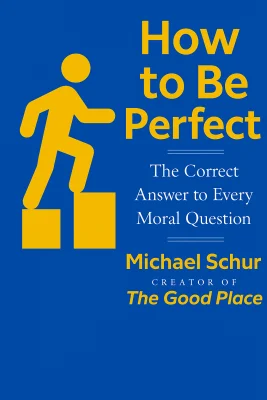
How to Be Perfect
The Correct Answer to Every Moral Question
Categories
Nonfiction, Self Help, Psychology, Philosophy, Audiobook, Personal Development, Adult, Humor, Book Club, Comedy
Content Type
Book
Binding
Hardcover
Year
2022
Publisher
Simon & Schuster
Language
English
ISBN13
9781982159313
File Download
PDF | EPUB
How to Be Perfect Plot Summary
Introduction
# The Moral Compass: Everyday Choices and the Quest for Goodness Picture yourself standing in a grocery store parking lot, having just loaded your purchases into your car. The shopping cart sits there, waiting. The return rack is forty yards away, across the lot. You're tired, it's hot, and you just want to get home. Do you make that extra trip to return the cart, or do you leave it where it stands? This seemingly trivial moment reveals something profound about who we are and who we aspire to become. Every day, we face countless decisions that test our moral compass. Some are dramatic—the burning building scenarios we hope never to encounter. But most are mundane, like that shopping cart, or whether to tell a white lie to spare someone's feelings, or how to respond when we witness injustice. These moments accumulate to form the architecture of our character. The beautiful truth is that becoming a better person isn't about achieving moral perfection—it's about developing the wisdom to navigate these choices with greater clarity, compassion, and courage. This journey of ethical growth offers us something precious: the chance to live with integrity while building a world where kindness and justice flourish together.
Chapter 1: The Shopping Cart Test: Small Acts That Reveal Character
Mike Schur found himself staring at an abandoned shopping cart in a parking lot when a simple question began consuming his thoughts: what do we actually owe to each other? The cart sat there innocently enough, but it represented something larger. There was no law requiring him to return it, no punishment awaiting if he didn't, no reward if he did. The store employed people specifically to collect these carts, so technically, leaving it there wasn't even creating extra work. Yet something about walking away felt wrong. As he wrestled with this decision, Schur began to see the shopping cart as a perfect test case for human decency. Returning it requires a small sacrifice of time and energy with no personal benefit. It's purely an act of consideration for others: the employees who won't have to chase it down, future customers who'll find carts waiting where they expect them, and fellow parkers who won't have their cars dinged by a runaway cart. The effort required is minimal, but the cumulative effect of everyone making this choice creates a more pleasant world for all. This tiny moral moment illuminates a profound truth about ethics: the most important choices aren't always the dramatic, life-altering decisions we imagine when we think about right and wrong. Instead, they're often found in the mundane moments when no one is watching, when there's no external pressure to do the right thing, and when the only motivation is an internal compass pointing toward consideration for others. The shopping cart test reveals that true character emerges not in grand gestures, but in the accumulation of small acts of thoughtfulness that require nothing more than the recognition that we share this world with other people who deserve our care.
Chapter 2: When Good Intentions Create Harm: The Saab Story Lessons
When J.J. bumped into another driver's car at barely one mile per hour, it seemed like a minor inconvenience. The police officer who examined both vehicles couldn't find any damage. But a few days later, a claim arrived for $836 to replace an entire fender. Mike Schur was incensed. This was happening during Hurricane Katrina, as New Orleans lay underwater and thousands of people had lost everything. How could someone care about a barely visible scratch when such enormous human suffering was unfolding? In a fit of righteous indignation, he made the other driver an offer: he would donate $836 to hurricane relief in the man's name if he would simply live with the microscopic damage to his car. What started as a personal dispute quickly spiraled into a viral phenomenon. Friends began pledging money to the cause, then strangers joined in, and soon tens of thousands of dollars were promised for hurricane relief if this unsuspecting Saab owner would just forget about his fender. Schur started a blog to track the donations and fielded media inquiries. He felt like a moral crusader, using the power of shame to redirect resources from a trivial concern to a genuine crisis. But then, sitting on his front porch late one night with J.J., both of them felt a sudden, sickening realization: they were doing something deeply wrong. The problem wasn't the hurricane relief or even the frustration with insurance costs. The problem was the weapon they had chosen: public shame directed at someone who had done nothing wrong. Yes, $836 seemed excessive for such minor damage, but the man hadn't set that price. He was simply trying to restore his property after an accident, which was entirely reasonable. By connecting his personal situation to an unrelated tragedy, Schur had created a false moral equivalency that was fundamentally unfair. The experience taught him that good intentions don't justify harmful methods, and that the desire to do good can sometimes lead us to do considerable harm. True moral action requires not just the right goals, but the right means of achieving them.
Chapter 3: Moral Exhaustion and the Perfect Choice Paradox
Sarah stared at her computer screen, paralyzed by a seemingly simple decision: which coffee to buy. The fair-trade option cost more but supported farmers. The organic choice was better for the environment but came from a company with questionable labor practices. The local roaster employed people in her community but sourced beans through potentially exploitative supply chains. What had once been a five-second decision now required research, moral calculations, and a gnawing sense that whatever choice she made would somehow be wrong. This scenario captures what many of us experience daily: moral exhaustion. In our interconnected world, we're increasingly aware of the ethical implications of every purchase, every choice, every action. We know that our smartphones contain minerals mined by children, that our favorite restaurants may exploit workers, that our entertainment choices might support problematic creators. The weight of trying to be good in every moment, with every decision, can become crushing. We want to do right, but the complexity of modern life makes it nearly impossible to navigate without some form of moral compromise. The path forward isn't to abandon our ethical aspirations, but to recognize that perfection is neither possible nor necessary. Moral exhaustion often stems from the belief that we must optimize every choice, that any ethical failing makes us bad people. Instead, we can embrace a more sustainable approach: caring deeply while accepting that we'll sometimes fall short, making better choices when we can while forgiving ourselves when we can't, and remembering that the goal isn't moral perfection but moral engagement. The very fact that we feel exhausted by these choices demonstrates something beautiful about human nature: we care about doing right, even when it's difficult.
Chapter 4: Art, Artists, and Our Complicated Cultural Relationships
The chicken sandwich was, by all accounts, extraordinary. Perfectly seasoned, expertly prepared, served with those incredible pickles that somehow elevated the entire experience. But in 2012, when Chick-fil-A's CEO publicly opposed marriage equality, that sandwich became something more complicated than food. It became a moral choice wrapped in a bun. For many people, including some of Mike Schur's colleagues in the Parks and Recreation writers' room, this created an agonizing dilemma: could they continue to enjoy something they loved when doing so meant financially supporting views they found abhorrent? The arguments flew back and forth with surprising intensity. Some writers insisted they would never eat there again, viewing each purchase as a vote for discrimination. Others argued that boycotting wouldn't really make a difference, that one person's order was a drop in the corporate profit bucket. They pointed out that the food was made by individual employees who might lose their jobs if business declined, and besides, didn't every fast-food CEO probably hold equally problematic views? The sandwich was just so good, they pleaded. Surely there had to be a way to separate the food from the politics, the art from the artist, the pleasure from the principles. This debate reflects one of the most challenging aspects of modern ethical living: the discovery that nearly everything we love is connected to something problematic. Our favorite movies are made by studios with troubling practices, our beloved sports teams are owned by people whose values we despise, our cherished childhood memories are tied to creators whose actions we now find reprehensible. The question isn't whether we can find pure, unproblematic entertainment and products, because we can't. The question is how we navigate a world where moral complexity is the norm, where loving something often requires holding two contradictory thoughts simultaneously: this brings me joy, and this causes others pain. The path forward lies not in perfect choices, but in conscious ones, acknowledging the tensions rather than ignoring them, and accepting that being good sometimes means being uncomfortable.
Chapter 5: The Luck Factor: Privilege and Our Unequal Starting Points
Robert Frank was playing tennis with a friend when his heart suddenly stopped. In medical terms, he experienced "sudden cardiac death," a condition that is 98 percent fatal. But in an extraordinary stroke of fortune, two ambulances happened to be responding to nearby car accidents at that exact moment. One was able to immediately divert to Frank's location, arriving within minutes instead of the usual thirty to forty it would have taken from the nearest station. Frank survived, not because he was more virtuous or deserving than the countless others who don't survive such episodes, but because of pure, random luck. This experience transformed Frank's understanding of success and failure, achievement and circumstance. He realized that everything in his life after that moment was, in a very real sense, a gift of chance. But more than that, he began to see how luck had shaped his entire existence, from the family he was born into to the opportunities that had come his way. The tennis court incident was just the most dramatic example of something that happens constantly: random events, completely beyond our control, that fundamentally alter the trajectory of our lives. We like to believe that success comes from hard work and talent alone, but Frank's experience revealed how much of what we achieve depends on factors we never chose and often never even notice. This recognition of luck's role doesn't diminish the importance of effort or character, but it does change how we think about moral responsibility. If someone born into poverty makes choices we disapprove of, can we judge them by the same standards we apply to someone born into wealth and stability? If our own success is partially due to fortunate circumstances, don't we owe something extra to those who weren't as lucky? Frank's story suggests that acknowledging the role of chance in our lives isn't about diminishing our achievements, but about recognizing our obligations. When we understand how much of what we have comes from luck, gratitude becomes not just an emotion but an ethical imperative, calling us to use our good fortune in service of others who haven't been as blessed by circumstance.
Chapter 6: Existential Freedom: Creating Meaning Through Our Choices
Jean-Paul Sartre received a visit from a former student facing an impossible choice. The young man's father had collaborated with the Nazis, bringing shame to his family. His older brother had been killed fighting for the French Resistance. Now he had to decide: should he join the resistance fighters in England to avenge his brother's death and fight for freedom, or should he stay home to care for his mother, who had already lost so much? If he left, he might be killed before ever reaching England, making his sacrifice meaningless. If he stayed, he would be abandoning the cause he believed in while his countrymen died for liberty. The student had come to Sartre hoping for guidance, for some philosophical framework that would make the choice clear. But Sartre offered him something more challenging than answers: the recognition that no external authority, no moral system, no religious doctrine could make this decision for him. There was no oracle to consult, no universal principle that clearly applied, no sign from above pointing the way forward. There was only the young man himself, his freedom to choose, and the weight of responsibility that comes with that freedom. Whatever he decided would define not just his actions, but his very essence as a human being. This story captures the heart of existentialist thinking: we are "condemned to be free," thrown into existence without a predetermined purpose or meaning, forced to create ourselves through our choices. It's a terrifying prospect, but also a liberating one. If there's no cosmic plan dictating our actions, then we are truly free to become whoever we choose to be. The anxiety we feel when facing difficult decisions isn't a bug in the system, it's a feature, a sign that we're taking seriously the profound responsibility of human existence. Sartre's message to his student, and to all of us, was both stark and hopeful: you are alone in making this choice, but that solitude is also your freedom, and from that freedom comes the possibility of authentic human dignity.
Chapter 7: The Art of Apology: Courage in Admitting Our Failures
Few acts require more courage than a genuine apology. The author explores this through contrasting examples: Tom Petty's heartfelt acknowledgment of his past use of Confederate imagery versus a politician's non-apology that blamed others for misunderstanding his clearly offensive words. The difference reveals everything about the moral function of apologies. A real apology requires several elements: acknowledging what we did wrong, understanding how it affected others, taking full responsibility without excuses, and expressing genuine remorse. It's not about managing our reputation or avoiding consequences—it's about repairing relationships and demonstrating that we've learned from our mistakes. The difficulty of apologizing stems from the shame involved in publicly admitting fault. But this shame serves an important purpose—it signals that we understand the weight of our actions and care about their impact on others. The person incapable of shame, as Aristotle noted, has no sense of disgrace and therefore no capacity for moral growth. When we apologize sincerely, we don't just repair past harm; we demonstrate our commitment to doing better in the future, transforming our failures into foundations for stronger relationships and deeper integrity. The courage to try again after failure requires a fundamental shift in how we understand moral progress. Instead of viewing ethics as a test we can pass or fail, we must see it as an ongoing practice, like meditation or physical fitness. Some days we'll be stronger, some days weaker, but the commitment to continue trying—to care about whether our actions are good or bad—is what ultimately shapes our character. This perspective transforms failure from a source of shame into a catalyst for growth, reminding us that the very fact that we care enough to feel bad about our mistakes is evidence of our moral capacity.
Summary
The deepest insight of this philosophical journey is beautifully simple: caring matters more than succeeding. The very fact that we worry about whether our actions are good or bad, that we feel guilt when we fall short and joy when we help others, reveals our fundamental moral capacity. This caring—not perfect adherence to rules or flawless ethical reasoning—is what makes us human and gives us hope for becoming better. The path forward requires both humility and determination. We must accept that we will make mistakes, hurt people we care about, and sometimes choose poorly despite our best intentions. But we must also commit to the ongoing work of moral development, treating each failure as a learning opportunity and each success as encouragement to keep trying. The ancient wisdom remains our best guide: in understanding our own capacity for both good and evil, and in seeking balance in all things, we find not perfection but something far more valuable—the possibility of growth, connection, and meaning in an uncertain world.
Best Quote
“in the words of Samuel Beckett: Try again. Fail again. Fail better.” ― Michael Schur, How to Be Perfect: The Correct Answer to Every Moral Question
Review Summary
Strengths: The book showcases Michael Schur's wit and humor, reminiscent of his work on "The Good Place." The writing style is light and conversational, making complex philosophical ideas accessible. The audiobook, narrated by Schur, includes contributions from "The Good Place" cast, enhancing the experience. The book provides a broad overview of philosophical concepts, which some readers found engaging and educational. Weaknesses: The book's exploration of ethics was not engaging for all readers, with some finding it lacking in depth and overly biased towards liberal views. Expectations for more insights into "The Good Place" were unmet. Some readers disagreed with Schur's moral perspectives and found his tone occasionally off-putting. Overall: The book is appreciated for its humor and accessible approach to philosophy, but opinions are divided on its depth and ideological stance. It is recommended for fans of Schur's previous work, though it may not satisfy those seeking a comprehensive or neutral exploration of ethics.
About Author

Michael Schur
Schur extends his influence in television comedy by weaving sharp humor with thoughtful explorations of ethics and human nature. His work frequently interrogates what it means to lead a good life, blending comedic elements with philosophical musings. This focus on ethical questions became especially pronounced in his solo creation, "The Good Place", a series that delves into moral philosophy while engaging audiences with its supernatural narrative. Schur's education in literature and philosophy at Harvard University, where he was involved with "The Harvard Lampoon", significantly shapes his creative approach. This blend of humor and depth has made him a pivotal figure in modern television comedy.\n\nHis method involves creating complex, multi-dimensional characters and narratives that explore societal norms and ethical dilemmas. Schur co-created "Parks and Recreation" and "Brooklyn Nine-Nine", both of which showcase his ability to craft ensemble casts that reflect diverse perspectives on community and justice. Meanwhile, "The Office" and "Rutherford Falls" highlight his knack for developing settings that serve as microcosms for broader societal issues. Through these series, Schur has created a space for audiences to engage with ethical questions in a format that is both entertaining and thought-provoking.\n\nFor readers and viewers alike, Schur's work offers a unique blend of comedy and philosophical inquiry that prompts reflection on personal values and societal norms. His book, "How to Be Perfect: The Correct Answer to Every Moral Question", further extends this dialogue, providing a humorous yet insightful exploration of moral philosophy. Schur's achievements, including an Emmy Award for outstanding comedy series as a producer, underscore his impact on the field, making his body of work essential for those interested in the intersection of comedy and ethics.
Read moreDownload PDF & EPUB
To save this Black List summary for later, download the free PDF and EPUB. You can print it out, or read offline at your convenience.
How to Be Perfect
by Michael Schur
