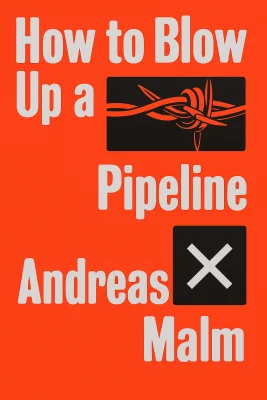
How to Blow Up a Pipeline
Categories
Nonfiction, Philosophy, Science, History, Politics, Theory, Environment, Ecology, Activism, Climate Change
Content Type
Book
Binding
Paperback
Year
2021
Publisher
Verso Books
Language
English
ISBN13
9781839760259
File Download
PDF | EPUB
How to Blow Up a Pipeline Plot Summary
Introduction
In the summer of 2018, a fifteen-year-old girl with braided hair sat alone outside the Swedish Parliament, holding a hand-painted sign that read "School Strike for Climate." Greta Thunberg's solitary protest would ignite a global movement, but as millions of young voices joined her cry for action, the world's emissions continued to rise. The girl who sparked hope also embodied a haunting question: what happens when even the most passionate appeals for change meet deaf ears? This book emerges from that contradiction—the growing urgency of climate breakdown against the stubborn persistence of business as usual. Andreas Malm, a scholar-activist who has marched in climate protests since the 1990s, confronts an uncomfortable truth: decades of peaceful demonstration have coincided with accelerating destruction. Through historical analysis and unflinching moral reasoning, he challenges the climate movement to examine its tactical assumptions. This is not merely an academic exercise, but a urgent plea for effectiveness in humanity's greatest crisis. The pages ahead offer both sobering diagnosis and controversial prescription for a movement running out of time.
Chapter 1: The Climate Crisis and the Paradox of Inaction
Since the first UN climate summit in 1995, global CO2 emissions have grown by 60 percent. In the quarter-century following that Berlin gathering where activists chained themselves to gates chanting "No more blah-blah-blah," more carbon entered the atmosphere than in the previous seventy-five years combined. The United States became the world's top oil and gas producer again. Germany continued extracting 200 million tons of brown coal annually. Sweden, despite its green image, launched one of its largest infrastructure projects ever—a massive highway ring around Stockholm designed to carry millions more tons of emissions. Meanwhile, the signals from the earth grew impossible to ignore. In 2017, Hurricane Maria—supercharged by record-warm Gulf waters—devastated Dominica with the force of a mechanical saw, leaving Prime Minister Roosevelt Skerrit to address the UN General Assembly in shock: "We dug graves today in Dominica! We buried loved ones yesterday!" His voice broke as he declared to the world's leaders: "The war has come to us! We are shouldering the consequences of the actions of others." Yet as climate impacts intensified, so did fossil fuel investment. The International Energy Agency reported that in 2018, two-thirds of energy investment still flowed to oil, gas, and coal. New pipelines snaked across continents. The world's largest oil companies planned production increases of 35 percent by 2030. This created what scientists call "committed emissions"—infrastructure designed to operate for forty to sixty years, locking in climate chaos regardless of future policy promises. The disconnect between climate science and economic reality reveals a system constitutionally incapable of self-correction. Fossil capital operates under its own logic of endless accumulation, impervious to scientific warnings or moral appeals. This is why three decades of conferences, protests, and pledges have coincided with accelerating destruction. The ruling classes are not simply stubborn or ignorant—they are structurally bound to continue burning until forced to stop.
Chapter 2: Lessons from Historical Struggles Against Oppression
The climate movement has drawn inspiration from history's great liberation struggles, yet it has systematically misremembered them. Strategic pacifists point to Gandhi's Indian independence movement, the American civil rights struggle, and the fall of apartheid as proof that nonviolence always works. This sanitized history serves present biases while ignoring inconvenient truths about how change actually happened. Gandhi, the supposed paragon of nonviolence, repeatedly volunteered himself and Indians for British military service. During World War I, he promised the viceroy he could "rain men on you"—half a million additional Indian soldiers for the trenches. His strategy assumed that proving martial valor alongside the British would earn Indians respect and eventual independence. Meanwhile, his disapproval of popular violence against the occupation frequently put him at odds with mass movements he claimed to lead. The American civil rights movement succeeded not through moral suasion alone, but through a complex interplay of nonviolent protest and radical flanks that made moderation appear reasonable by comparison. The Civil Rights Act of 1964 passed because the Kennedy administration feared that rejecting Martin Luther King's demands would drive frustrated African Americans toward "less responsible leaders" like Malcolm X. As one advisor warned, without concessions, "the streets of the South would be flowing with floods of blood." The movement's power came from this implicit threat—reform or face revolution. Similarly, the suffragettes deployed systematic property destruction, not gentle persuasion. After decades of petitions yielded nothing, they specialized in "the argument of the broken pane," shattering windows across London and torching buildings in a carefully orchestrated campaign of sabotage. Emmeline Pankhurst declared militancy "a moral obligation" and asked: "Is not a woman's life, is not her health, are not her limbs more valuable than panes of glass?" Their arson campaign claimed responsibility for 337 attacks in eighteen months, creating the crisis that forced political change. These historical examples reveal a consistent pattern: successful movements combine moral authority with disruptive capacity. Those who made change happen understood that power concedes nothing without demand, and that demands backed by consequences carry more weight than appeals to conscience alone.
Chapter 3: Beyond Pacifism: The Strategic Case for Sabotage
The climate movement's commitment to absolute nonviolence represents a historically unprecedented self-limitation. Never before has a movement facing existential threat voluntarily constrained itself to tactics that pose no meaningful cost to its opponents. This strategic pacifism has become a form of political paralysis, elevating means over ends even as the planet burns. Consider the temporal dimension that sets climate apart from other struggles. Previous movements fought against present injustices—slavery, segregation, occupation. Climate activism fights against future catastrophe, racing against tipping points and feedback loops that operate on their own timeline. Every month of delay locks in more suffering, yet the movement treats urgency as incompatible with tactical innovation. This temporal trap demands breaking free from conventional protest playbooks. The technical feasibility of sabotage has been proven repeatedly. The Pipeline and Gas Journal lamented in 2005 that "pipelines are very easily sabotaged" after Iraqi resistance fighters executed nearly 200 attacks on oil infrastructure. A simple explosive device can shut down critical pipeline sections for weeks, creating "an inhospitable investment climate" that scares away the very investors driving climate chaos. From Palestinian fighters targeting British oil pipelines in the 1930s to Nigerian militants shutting down a third of Africa's largest oil production in the 2000s, history demonstrates that small, determined groups can disrupt fossil fuel systems designed for undefended operation across vast distances. The moral case for property destruction becomes clear when weighed against the stakes. If burning fossil fuel infrastructure causes climate breakdown that threatens civilization itself, then preventing that burning—even through property destruction—serves the deepest values of life and protection. As one philosopher argues, if a grossly immoral war is being waged, "the right of railway engineers to keep the tracks in good shape may be superseded by the more important right of the people in the country to which the troops are headed, to life itself." Strategic pacifism's claim that violence always backfires crumbles under examination. Successful movements throughout history have combined nonviolent mass mobilization with militant flanks that made moderate demands appear reasonable. The radical flank effect occurs when extreme positions make previously radical ones seem moderate, opening space for negotiation and reform that pure pacifism cannot achieve.
Chapter 4: Targeting Fossil Infrastructure: A Tactical Framework
Effective climate sabotage requires strategic selectivity, not random destruction. Unlike the suffragettes who attacked tea shops and theaters, climate militants must target the infrastructure directly causing planetary destruction. Every new pipeline, coal plant, and gas terminal represents committed emissions—decades of guaranteed climate chaos built into steel and concrete. Scientists calculate that achieving even modest climate targets requires not just halting new fossil infrastructure but decommissioning existing facilities decades early. Jessica Reznicek and Ruby Montoya demonstrated sophisticated sabotage techniques during their campaign against the Dakota Access Pipeline. After peaceful protests failed, these Catholic Workers taught themselves to use welding torches and gasoline-soaked rags, conducting precisely timed attacks that damaged equipment while avoiding human harm. Their actions delayed pipeline construction for months, proving that determined individuals could impose real costs on fossil capital. "We never at all threatened human life," Reznicek emphasized. "We're acting in an effort to save human life, to save our planet." The key principles for climate sabotage emerge clearly from successful historical examples: target fossil infrastructure exclusively, avoid human casualties, minimize environmental damage, and maintain clear political messaging. The goal is not terrorism but strategic disruption—making fossil fuel investment sufficiently risky and expensive that capital flows toward renewable alternatives. Even the threat of such disruption could deter investment in new fossil infrastructure, serving the immediate goal of halting the expansion of committed emissions. Modern technology offers new possibilities for precise, low-risk sabotage. The Houthi attack on Saudi Arabia's Abqaiq oil facility using small drones shut down 7 percent of global oil supply in a single strike, demonstrating how cheap, accessible technology can target the most critical nodes of fossil infrastructure. Climate activists need not match military capabilities—they need only impose sufficient costs to alter investment calculations. The tactical framework must distinguish between different types of fossil infrastructure. Pipelines crossing hundreds of miles of undefended territory offer obvious vulnerabilities. Refineries and processing plants concentrate enormous amounts of capital in fixed locations. Coal mines operate expensive equipment that cannot be quickly replaced. Each represents a different tactical opportunity, but all share the characteristic of being designed for peaceful operation rather than defense against sabotage.
Chapter 5: Luxury Emissions and Climate Justice
The climate crisis manifests most obviously through extreme inequality in emissions. The richest 1 percent of humanity generates carbon footprints 175 times larger than the poorest 10 percent. A single flight from London to New York emits more CO2 than the average Somalian produces in an entire year. The global superyacht fleet—300 vessels owned by 0.0027 percent of humanity—generates as much CO2 as the ten million inhabitants of Burundi combined. These "luxury emissions" represent crime sold as ideal living. Henry Shue's distinction between luxury and subsistence emissions becomes crucial as carbon budgets approach exhaustion. Subsistence emissions occur when poor people use available energy sources to meet basic needs—cooking food, lighting homes, commuting to work. They have no alternatives within existing systems. Luxury emissions, by contrast, serve no vital purpose beyond status display. The billionaire burning jet fuel for weekend trips to private islands could easily abstain without experiencing any genuine hardship. The Swedish "Indians of the Concrete Jungle" demonstrated elegant tactics against luxury emissions when they deflated SUV tires across Stockholm's wealthiest neighborhoods in 2007. Using simple tools—a grain of gravel to depress tire valves—activists temporarily disabled over 1,500 vehicles while leaving clear explanations for owners. The action caused no lasting damage but delivered a powerful message: rich people cannot claim the right to burn others to death through conspicuous emissions. SUV sales dropped 27 percent during the campaign period. This targeting strategy serves multiple purposes beyond immediate emissions reduction. Luxury emissions represent the ideological spearhead of business-as-usual consumption, advertising destructive lifestyles as aspirational goals. They concentrate enormous per-capita impacts among people who simultaneously possess the resources to adopt alternatives and the mobility to escape climate consequences. Most importantly, they offer the clearest moral targets—emissions that serve no vital human need yet accelerate catastrophe for the world's most vulnerable populations. The French Gilets Jaunes uprising demonstrated what happens when climate policy attacks subsistence rather than luxury emissions. Macron's fuel tax targeted working-class commuters forced by housing costs to live far from urban centers, weighing five times more heavily on the bottom 10 percent than the top. Meanwhile, luxury emissions continued unconstrained. The resulting revolt showed that climate policy perceived as unjust will trigger fierce resistance, while targeting luxury emissions could build rather than undermine popular support for rapid decarbonization.
Chapter 6: Overcoming Despair: Finding Hope in Resistance
Climate fatalism—the belief that catastrophic warming is now inevitable—represents one of the greatest obstacles to effective action. Writers like Roy Scranton and Jonathan Franzen argue that since governments have failed to act decisively, civilizational collapse becomes unavoidable. Their prescription involves acceptance rather than resistance, learning to die rather than learning to fight. This fatalism masquerades as wisdom while serving the interests of fossil capital by discouraging the very actions that could still make a difference. Scranton's trajectory from environmental activist to Iraq War soldier to climate fatalist reveals the psychology behind despair. Having participated in the "dirty work of empire" and witnessed its destructive futility, he projects personal disillusionment onto the entire species. "I'm a bad environmentalist," he confesses, describing his inability to control his own carbon footprint. From this individual failure, he concludes that humanity collectively cannot change course: "We can't stop. We won't stop." This represents what philosopher Catriona McKinnon calls the fallacy of despair: "I can make no difference because I am unwilling to make a difference." The scientific basis for climate fatalism collapses under examination. While positive feedback mechanisms and committed emissions create serious constraints, climate science consistently affirms that "it is not a question of whether we can limit warming but whether we choose to do so." Every additional increment of warming increases suffering, but no threshold exists beyond which action becomes meaningless. The carbon budget analogy illustrates this clearly: even if we've spent most of our "allowance," every ton of avoided emissions reduces future harm. Hope emerges not from probability calculations but from understanding that human action remains the decisive variable. Social movements have repeatedly achieved seemingly impossible transformations by refusing to accept expert predictions of inevitability. The abolition of slavery, the collapse of European colonialism, the fall of the Berlin Wall—all occurred despite appearing impossible to contemporary observers. As Rebecca Solnit writes, "Hope is not a door, but a sense that there might be a door somewhere." In climate terms, hope means recognizing that business-as-usual remains politically constructed and therefore politically changeable. The antidote to despair lies in action itself. Participants in climate blockades consistently report that direct engagement with fossil infrastructure provides psychological relief from the powerlessness that breeds fatalism. Standing in brown coal mines, chaining themselves to pipeline equipment, or simply deflating SUV tires restores agency and demonstrates that the systems destroying the planet are neither natural nor invulnerable. Resistance generates hope by proving that another world remains possible.
Chapter 7: Building the Movement: Mass Mobilization and Radical Flanks
The climate movement's greatest achievement has been its rapid growth from small activist networks to mass mobilizations involving millions of participants. Greta Thunberg's solitary school strike catalyzed global youth uprisings that brought 4 million people to the streets in a single day. Extinction Rebellion's civil disobedience campaigns shut down central London and spawned imitators worldwide. Ende Gelände perfected the art of mass blockades, training thousands in coordinated tactics that repeatedly overwhelmed police cordons and seized control of fossil fuel infrastructure. Yet this success has coincided with continued emissions growth and accelerating fossil fuel investment. The movement's exclusive commitment to nonviolence, while enabling mass participation, has also limited its disruptive capacity. Fossil capital has learned to absorb protest as a cost of business, confident that however large demonstrations become, they pose no real threat to profitable operations. Pipeline construction continues during blockades. Coal mines resume production hours after activists are removed. The movement generates impressive spectacles but fails to impose meaningful costs on its opponents. Extinction Rebellion's tactical limitations became clear during its October 2019 action targeting London's public transport system. Activists climbed onto underground trains during rush hour, blocking working-class commuters trying to reach their jobs. The resulting confrontation—including one activist kicking a black passenger in the head—revealed both the strategic confusion and class blindness afflicting parts of the movement. Treating fossil fuel consumption as similar to political dictatorship leads to targeting solutions (public transport) rather than problems (private luxury emissions). The historical precedent suggests that successful movements combine mass nonviolent mobilization with militant flanks that make moderate demands appear reasonable. The civil rights movement succeeded because the threat of black revolution made integration seem preferable to white power structures. Anti-apartheid activism combined international sanctions campaigns with armed resistance that made negotiated settlement attractive. The climate movement's categorical rejection of property destruction eliminates this tactical option, leaving it dependent on moral persuasion alone. A climate movement incorporating militant wings would require careful coordination to avoid negative radical flank effects. Property destruction that appears random, targets inappropriate infrastructure, or causes civilian casualties would discredit rather than strengthen the broader movement. But precisely targeted sabotage of fossil infrastructure, clearly explained and strategically timed, could create the crisis atmosphere necessary to force rapid policy changes. The key lies in maintaining unity of purpose while diversifying tactics across the spectrum from peaceful protest to direct action against the machinery of destruction.
Summary
The climate crisis has reached a point where conventional politics offers no adequate response. Three decades of peaceful protest, scientific warnings, and international negotiations have coincided with accelerating emissions and expanding fossil fuel infrastructure. The movement's exclusive commitment to nonviolent tactics, while morally admirable and strategically valuable for mass mobilization, has proven insufficient against opponents who profit from planetary destruction. When moral appeals fail and time runs short, the logic of self-defense demands reconsidering tactical limitations that serve the enemy's interests more than the movement's goals. History's successful liberation movements combined nonviolent mass mobilization with militant actions that imposed real costs on oppressive systems. Climate activism faces a unique temporal constraint—positive feedback mechanisms and infrastructure lock-in effects mean that delays in action translate directly into irreversible harm. This urgency, combined with the stakes involved, creates a moral imperative for tactical innovation that the movement has yet to embrace. Breaking the spell of strategic pacifism may prove essential for breaking the spell of business-as-usual before it breaks the climate system itself. The choice facing the movement is not between violence and nonviolence, but between effectiveness and futility in humanity's greatest crisis.
Best Quote
“non-violence is not to be treated as a holy covenant or rite, then one must adopt the explicitly anti-Gandhian position of Mandela: ‘I called for non-violent protest for as long as it was effective’, as ‘a tactic that should be abandoned when it no longer worked.” ― Andreas Malm, How to Blow Up a Pipeline
Review Summary
Strengths: Malm presents compelling arguments for the role of sabotage in combating climate change, which could benefit those aligned with non-violent movements like XR. Weaknesses: The review criticizes Malm for insufficient exploration of the carceral system and the political roots of terms like terrorism and crime. His limited discussion on the repression of climate activists and the disproportionate impact on marginalized groups is noted. Additionally, his offensive naming of a sabotage group and lack of intersectional analysis are highlighted as significant oversights. Overall: The reader expresses disappointment, noting that while Malm's arguments have potential value, the lack of depth in addressing violence's role alongside non-violence and the absence of intersectional analysis undermine the book's effectiveness.
About Author

Andreas Malm
Malm interrogates the entanglements of capitalism and climate change, adopting a Marxist perspective to illuminate how industrial development has precipitated environmental catastrophes. His work weaves climate science, economic history, and political theory, emphasizing the need for historical materialism in understanding the climate crisis. As a Swedish journalist and academic, Malm's scholarly contributions are crucial for readers seeking to comprehend the roots and implications of global warming. This focus is evident in his award-winning book, "Fossil Capital", which delves into the rise of steam power and its enduring impacts.\n\nBeyond his academic pursuits, Malm's engagement with climate activism offers practical insights for those motivated by environmental justice. His bio reveals a deep-seated commitment to direct action, particularly in response to Europe's extreme summer of 2018. This shift from historical analysis to urgent contemporary interventions underscores the relevance of his work for activists and scholars alike. His book, "How to Blow Up a Pipeline", challenges traditional activism strategies, urging for a more radical approach to combat the climate crisis.\n\nMalm's thought-provoking publications resonate with those interested in the intersections of politics, economy, and environment. As a member of the editorial board of "Historical Materialism", he further solidifies his influence within Marxist intellectual circles. His collaborative efforts with Shora Esmailian in "Iran on the Brink" showcase his versatility in addressing varied global issues. Malm's contributions are indispensable for readers and academics aiming to understand and confront the ecological challenges of our time.
Read moreDownload PDF & EPUB
To save this Black List summary for later, download the free PDF and EPUB. You can print it out, or read offline at your convenience.
How to Blow Up a Pipeline
by Andreas Malm
