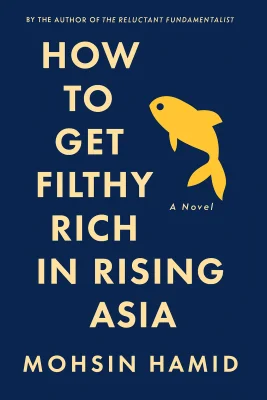
How to Get Filthy Rich in Rising Asia
Categories
Business, Fiction, Audiobook, Literature, Asia, Book Club, Contemporary, Novels, Literary Fiction, Pakistan
Content Type
Book
Binding
Hardcover
Year
2013
Publisher
Riverhead Books
Language
English
ISBN13
9781594487293
File Download
PDF | EPUB
How to Get Filthy Rich in Rising Asia Plot Summary
Introduction
In a mud-walled room where death hovers like smoke, a boy lies shivering beneath his mother's cot. Yellow eyes betray the hepatitis coursing through his veins, yet when his father asks if he'll survive, the child croaks a single word that changes everything: "Yes." This moment of defiance against mortality becomes the first step in an extraordinary journey from rural poverty to urban empire, then back to the fundamental truths that money cannot buy. This is the story of how one man builds a water dynasty in rising Asia's greatest city, accumulates vast wealth through cunning and corruption, only to lose it all and discover what truly matters. It's a tale of love found and lost, of violence wielded and suffered, of the pretty girl who haunts every chapter of his life like a recurring dream. In a world where clean water becomes liquid gold and survival demands compromise, our protagonist learns that the most dangerous current isn't in the city's contaminated pipes, but in the relentless flow of time itself.
Chapter 1: Rural Roots and Urban Dreams
The village reeks of survival. Sewage mingles with drinking water in the same shallow stream, while upstream a textile plant hemorrhages gray effluent into what was once a brook. Your father squats in the fields, sickle in hand, gathering fodder under a sun that measures life in backbreaking hours. When the landlord's SUV rumbles past, he bends low, averting his eyes from centuries of inherited power. Inside the compound, your mother sweeps the courtyard under your grandmother's toothless disapproval. The old woman spits instructions through cloth held between her lips, playing a waiting game where age wars against youth. Your mother would be queen in an all-female world, blood on her staff and skulls beneath her feet. Here, she settles for avoiding severe provocation. The decision comes at nightfall. Your father stands over your fever-wracked form, calculating the mathematics of survival. Ten thousand rupees monthly in the city makes him poor there, but rich here. Your family could squeeze into his quarters, but it would mean abandoning the extended clan that depends on his remittances. When he asks if you'll be all right, the answer you give takes destiny into your own hands. That night your parents seal the deal with desperate coupling on the floor, their bodies moving in practiced silence while you and your siblings feign sleep. A month later, you grip ropes on the bus roof as decades of human progress compress into hours. Dirt becomes pavement, mud transforms to concrete, and buildings stretch toward heaven like prayers made solid. When the bus finally shudders to a stop, you embody one of history's great migrations from extended to nuclear family, trading the suffocating embrace of the clan for the terrifying freedom of the city's anonymous millions.
Chapter 2: Education, Ambition, and First Love
School sits wedged between a tire repair stall and a cigarette kiosk, fifty students crammed into a room built for thirty. Your teacher, a hollow-cheeked man who wanted to read electricity meters instead of minds, chants multiplication tables with murderous distraction. When he declares twelve times twelve equals one hundred thirty-four, your correction earns you sand-abraded earlobes and the lesson that knowledge can be dangerous currency. At home, your sister alternates between tears and cold superiority. She's betrothed to your father's second cousin, a man whose first wife died in childbirth, and fear wars with bravado in her voice. Together you play river in a filthy alley, transforming sewage into rushing torrents with the alchemy of imagination. But even games end when adult eyes intrude, and your sister's childhood shrinks daily toward its arranged conclusion. Your brother coughs paint dust from his lungs, spending days in an airless courtyard workshop where spray guns hiss like mechanical snakes. He's fourteen and already carries the weight of a man's responsibilities, his boyhood sacrificed so you might stay in school. The family's careful arithmetic of survival means someone must read, someone must learn, someone must climb higher than the others can reach. The pretty girl enters your world like a riddle wrapped in defiance. Dark-skinned and lean where beauty traditionally demands pale curves, she walks through your neighborhood with a swagger that belongs to different dreams. Boys turn to stare, but she notices only you, the delivery boy who knows movies, who carries stories between the poor and rich districts of this sprawling city. When she finally speaks, asking for the most popular film, her voice carries the same hunger that drives your late-night bicycle routes through streets that separate the desperate from the merely struggling.
Chapter 3: The Entrepreneur's Ascent
Your master counts money in a windowless room, fingers dancing through cash with an artist's precision. This man who cannot drive but owns several cars has discovered the perfect business model: selling expired goods with fresh dates printed over the old ones. He transforms waste into profit, inefficiency into opportunity, and teaches you that wealth flows to those who see markets where others see only problems. The pretty girl vanishes from your neighborhood like smoke, leaving only rumors about honor surrendered and virtue compromised. But she materializes on billboards advertising jeans, her face thirty feet high and smoldering with the promise of escape. You carry her phone number like a talisman, calling when loneliness becomes unbearable, finding in her voice the sound of worlds beyond your reach. Your apprenticeship in corruption is thorough. You learn to read the hunger in shopkeepers' eyes, to navigate the delicate negotiations that transform suspicion into partnership. When a merchant spits at your feet and calls you a dirty pimp, you discover the weight of reputation and the price of defiance. Violence lurks beneath every transaction, civility maintained only by the careful balance of mutual need and mutual threat. Your mother's death from cancer strips away illusions about fairness and divine justice. The operation that might have saved her costs more than your father earns in a year, funded by his employer's grudging charity. The follow-up treatment remains beyond reach, and you watch her die in agony, clutching heroin-laced cigarettes as her only medicine. Her funeral becomes your graduation from idealism, the moment you finally understand that survival requires abandoning faith in anything beyond your own determination.
Chapter 4: Power, Corruption, and Compromise
University introduces you to the intoxicating mathematics of organized violence. Your beard and black clothes signal allegiance to an organization that transforms student rage into political power. Armed with stipends and protection, you patrol campus like a feudal knight, enforcing order through the threat of retribution. Knowledge becomes secondary to belonging, and belonging demands absolute loyalty to the group's brutal hierarchy. The pretty girl has evolved into a model of modest success, earning enough to afford independence but not enough to forget her origins. She moves through fashion shoots and hotel bars with calculated grace, trading intimacy for advancement in a game where beauty has expiration dates. When you meet her at an exclusive hotel, the gulf between your worlds becomes a bridge you cross on trembling legs. Your mother's suffering radicalizes you against the system's casual cruelty. She dies without the radiotherapy that might have granted years of life, victim of a healthcare system that rations survival by ability to pay. The organization's clinic offers prayer instead of treatment, and you realize that ideology's promises dissolve under medicine's stark realities. Faith provides comfort but not cures, righteousness but not results. The gap between you and the pretty girl widens with each stilted phone conversation. She inhabits a universe of photographers and fashion shoots while you navigate the violent politics of student factions. Your paths diverge like branches from the same tree, growing toward different light. When your beard finally falls to the barber's razor, it marks not just a change in appearance but the end of your brief flirtation with revolution. Survival, not ideology, will chart your future course.
Chapter 5: Empire of Water in a Thirsty Land
Water becomes your kingdom. The city's pipes crack under pressure and age, mixing sewage with drinking supplies in a cocktail of desperation. You build an empire on the simple premise that people will pay anything for survival. Your factory transforms contaminated tap water into bottled salvation, five minutes of boiling separating profit from plague. Marriage arrives as a business transaction disguised as romance. Your wife is twenty to your forty, beautiful enough to command a price but practical enough to accept your terms. She demands completion of her law degree and delays childbearing, testing her power in negotiations that feel more like merger agreements than romantic courtship. You agree because she represents respectability, the social legitimacy that money alone cannot purchase. Your brother-in-law becomes your deputy, family loyalty binding him closer than shared blood. Together you navigate the labyrinth of permits and inspections that separate legal business from outright criminality. Each official demands tribute, each approval requires negotiation, and each expansion threatens to topple the delicate ecosystem of mutually assured corruption that keeps your enterprise afloat. The pretty girl's cooking show makes her a household name, her street-smart persona seasoning recipes with autobiography. Your wife watches religiously, unknowing that she admires your first love's television transformation. When you demand channel changes, she smiles and complies, assuming masculine disinterest in culinary arts rather than the deeper truth that some hungers cannot be satisfied by domestic contentment.
Chapter 6: The Fall: Betrayal, Illness, and Loss
Death arrives for your father quietly, exhaustion finally claiming the man who cooked for the wealthy while his own family scraped by on leftovers. You carry his white-shrouded body on shoulders that once bore water jugs, completing the circle that connects childhood labor to adult grief. His passing strips away the last buffer between you and your own mortality. Violence erupts when you challenge established water territories. A boy with curly hair presses a pistol to your neck, his voice cracking with adolescent menace as he warns you to remember your place. Your guard's response is swift and brutal, three bullets ending the threat in a spray of bone and brain matter photographed for insurance purposes. Business continues, but innocence dies beside the young assassin. Your heart betrays you in a hospital room filled with machines that measure the precise mathematics of your mortality. Electrodes connect you to beeping monitors while your ex-wife organizes second opinions and specialists. The world expert from another planet declares your surgery successful, granting months or years of borrowed time just as news arrives that your brother-in-law has absconded with your empire's treasury. Bankruptcy strips away everything except the knowledge that you have loved and been loved in return. Your wife remarries a younger man with fatherly wisdom, while your son chooses art over commerce in distant North America. The pretty girl returns to your city after her assistant dies in a robbery, seeking something she cannot name but recognizes when she finds it in your failing eyes.
Chapter 7: Final Waters: Reunion and Reflection
Age transforms the city into mythology, its concrete arteries carrying rumors of violence and transformation beyond your hotel room's grimy windows. You become an elder dispensing advice to young men seeking their fortunes, your reduced circumstances proving that wisdom and wealth often flow in opposite directions. The cane you carry measures not weakness but the accumulated weight of survival. At a crowded pharmacy, fate delivers its final gift. The pretty girl emerges from the press of bodies, her hand cool against your knuckles as recognition dawns. Neither of you has escaped time's erosion, but something essential remains untouched by the years. Coffee becomes conversation, conversation becomes companionship, and companionship becomes the careful construction of shared days. Her townhouse becomes your sanctuary, two bedrooms preserving independence while shared meals rebuild intimacy from older materials. You play cards with the intensity of gamblers wagering more than money, each hand revealing character traits polished by decades of separate experience. She calls you little boy with ancient affection, and you respond with the name that first captured your imagination: pretty girl. Cancer claims her swiftly, pancreatic shadows spreading through her body like ink through water. She refuses hospitalization, choosing to die at home with her eyes open and your hand in hers. Her final weeks become a masterclass in graceful surrender, teaching you that love's deepest expression is witnessing another's courage in the face of absolute darkness.
Summary
Your own death arrives as illusion dissolving into truth. In the hospital bed, surrounded by monitors and tubes, you see your ex-wife and son looking impossibly young, then the pretty girl approaching with the face she wore fifty years ago. The fantasy breaks apart like morning mist, but what remains is solid: you have loved and been loved, have moved beyond yourself into connection with others, have found courage in the face of terror. The story ends where it began, with a choice about survival. But now the boy who once croaked "yes" from beneath his mother's cot understands that the most important victories cannot be measured in rupees or corporations or empires of liquid gold. You contain her, and this story, and all the readers who will discover themselves in these pages, proof that love transcends the boundaries of individual mortality. In the end, you die well, aware that the greatest wealth was always the connections that made you human, the pretty girl holding your hand as consciousness fades into the vast democracy of darkness that awaits us all.
Best Quote
“We are all refugees from our childhoods. And so we turn, among other things, to stories. To write a story, to read a story, is to be a refugee from the state of refugees. Writers and readers seek a solution to the problem that time passes, that those who have gone are gone and those who will go, which is to say every one of us, will go. For there was a moment when anything was possible. And there will be a moment when nothing is possible. But in between we can create.” ― Mohsin Hamid, How to Get Filthy Rich in Rising Asia
Review Summary
Strengths: The novel features fast-paced storytelling and consistent, readable prose. The second-person narrative, initially jarring, becomes engaging, and the emotional impact is profound, leaving the reader vulnerable and introspective. The book effectively challenges preconceptions about foreign cultures and offers a vivid morality tale and social satire. Weaknesses: The use of second-person narration and self-help style introductions are initially perceived as grating and gimmicky. The storyline is considered a cliché "rags to riches" plot, and the narrative initially feels directionless. Overall: Despite initial skepticism, the reader's expectations were overturned by the novel's emotional depth and narrative mastery. The book is highly recommended for its ability to captivate and provoke reflection on personal and societal themes.
About Author

Mohsin Hamid
Hamid interrogates the complex interplay between identity and globalization, weaving narratives that explore the effects of political and social upheaval on individuals. His works, such as "Exit West" and "The Reluctant Fundamentalist", combine realism with elements of magical realism and innovative narrative structures to depict migration and belonging. Hamid’s focus on the human consequences of economic and political change highlights themes of alienation and the search for meaning in a rapidly evolving world, drawing readers into a deeper understanding of these issues.\n\nReaders of Hamid’s books gain insight into the modern human condition through his compassionate and thought-provoking portrayals. His bio highlights his experiences in diverse global settings, enriching his narratives with authenticity and nuance. For those interested in the dynamics of migration and identity, Hamid’s work offers a reflective lens on these pivotal themes. With novels that have been adapted for cinema and translated into over thirty-five languages, Hamid’s impact on contemporary literature is profound and far-reaching. His recognition includes being shortlisted for the Man Booker Prize and receiving fellowships from esteemed foundations, underscoring his significance as an author whose work resonates worldwide.
Read moreDownload PDF & EPUB
To save this Black List summary for later, download the free PDF and EPUB. You can print it out, or read offline at your convenience.
How to Get Filthy Rich in Rising Asia
by Mohsin Hamid
