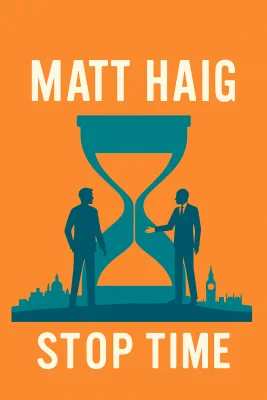
How to Stop Time
Categories
Fiction, Science Fiction, Audiobook, Historical Fiction, Romance, Fantasy, Book Club, Historical, Contemporary, Time Travel
Content Type
Book
Binding
Paperback
Year
2019
Publisher
Penguin Books
Language
English
ASIN
0525522891
ISBN
0525522891
ISBN13
9780525522898
File Download
PDF | EPUB
How to Stop Time Plot Summary
Introduction
Tom Hazard looks forty-one, but he was born in 1581. Standing in a London classroom, teaching history he has lived through, he carries the unbearable weight of four centuries. His condition—anageria—grants him near-immortality at the cost of endless isolation. Every eight years, he must abandon his life, assume a new identity, and move on before people notice he doesn't age. But Tom is tired of running. Haunted by memories of his lost wife Rose, who died of plague in 1623, and his daughter Marion, who vanished centuries ago, he yearns for something he's been denied for four hundred years: a normal life. When he spots Camille, a French teacher who seems to recognize him from an old photograph, his carefully constructed world begins to crumble. The past refuses to stay buried, and the Albatross Society—the shadowy organization that has protected him for over a century—demands one final, terrible assignment.
Chapter 1: The Man Out of Time: Tom's Centuries of Isolation
The blood pooled beneath William Manning's boots as he pressed the dagger against Tom's mother's pale skin. The witchfinder's single good eye gleamed with malicious certainty. "See the darkness of her blood," Manning declared to the gathered crowd in their Suffolk cottage. "She has traded with demons for her son's eternal youth." Tom watched helplessly as they dragged his mother to the River Lark. The ducking stool waited—that medieval instrument of perverted justice. If she drowned, she was innocent. If she survived, she was guilty and would burn. Either way, she would die because of what Tom was: a boy who had stopped aging at puberty, cursed with anageria. As the chair plunged beneath the dark water, his mother's final words echoed in his mind: "You must stay alive. God made you this way for a purpose." The river claimed her, but Tom survived, carrying the weight of her sacrifice into an impossibly long future. Centuries later, that same weight pressed down on him as he stood before a class of bored teenagers in modern London. Teaching history when you've lived through it presents unique challenges. How do you explain the Spanish Civil War when you fired rifles in those trenches? How do you describe Shakespeare's plays when you remember the Bard's drunken complaints about his failing career? Tom had tried everything to make his endless life bearable. He'd been a musician, a sailor, a farmer. He'd fought in wars, studied languages, mastered dozens of instruments. But nothing could fill the void left by Rose and Marion, the family torn from him by fear and ignorance. The headaches were getting worse—what other albas called "memory pain." His mind could no longer contain four centuries of experience without fracturing.
Chapter 2: Shadows of the Past: Rose, Marion, and Ancient Wounds
The plague house on Chapel Street reeked of death and desperation. Rose lay dying, her once-beautiful face mapped with the black buboes of the Black Death. Tom knelt beside her bed, knowing his immunity to disease was both blessing and curse—he could comfort her final moments without fear of contagion. "There is a darkness that fringes everything," Rose whispered, her eyes wide with delirium. "A most horrid ecstasy." She had been everything to him—the strong-willed fruit seller who'd rescued him from starvation at a London market, the woman who'd accepted his terrible secret and loved him anyway. They'd married, had a daughter, tried to build a normal life. But normalcy was impossible for someone who aged one year for every fifteen that passed. "Marion," Rose gasped with her dying breath. "She was like you. She stopped growing old. Manning came... she fled... you must find her." The revelation shattered Tom. His daughter—their brilliant, sensitive girl who could quote Montaigne at age nine—shared his condition. She'd vanished into the London crowds, another impossible secret trying to survive in a world that burned witches and drowned the different. Now, four centuries later, Tom still searched every face in every crowd. He'd joined the Albatross Society partly for their resources, their promise to help find Marion. But she remained a ghost, a possibility that kept him anchored to life when everything else felt meaningless. In his London flat, Abraham the rescue dog sensed his master's anguish. The scarred Akita understood abandonment and loss. Together they were two damaged creatures finding solace in shared brokenness, walking empty streets where memories of Rose and Marion flickered like candlelight against the darkness of time. The past wasn't past—it was a living thing that breathed alongside him, growing heavier with each passing year.
Chapter 3: The Albatross Society: Hendrich's Web of Control
Hendrich's penthouse in Los Angeles gleamed with the wealth of centuries. At over seven hundred years old, he was the oldest alba Tom had ever met—a Dutch tulip trader who'd built an empire and used it to protect their kind. The Albatross Society wasn't just an organization; it was Hendrich's masterpiece of control and paranoia. "The first rule is that you don't fall in love," Hendrich had told Tom in 1891, his ancient eyes cold as winter. "Love makes you weak. Love gets you killed." Tom learned this lesson in blood and fire. When he'd sought medical help in Victorian London, approaching Dr. Hutchinson about his condition, the good doctor had ended up floating face-down in the Thames. The society protected its secrets through murder when necessary. For over a century, Tom had followed the Eight-Year Rule—never staying anywhere long enough for people to notice he didn't age. He'd lived a dozen different lives: pianist in Paris jazz clubs, farmer in New Mexico, librarian in Boston. Each identity carefully constructed, each departure timed to prevent suspicion. But the work came with obligations. Sometimes Hendrich needed "recruiters"—albas who could convince others of their kind to join the society. Those who refused rarely lived to reconsider. Tom had killed for the society, watched friends die for it, sacrificed his humanity on the altar of survival. The biotech age brought new terrors. Companies in Silicon Valley and research institutes in Berlin hunted their kind, seeking the secret of their longevity. Hendrich's paranoia deepened with each passing decade. He spoke of threats everywhere—scientists who would cage them, governments who would weaponize them, corporations who would harvest them. Standing in his Los Angeles sanctuary, surrounded by the fruits of immortal accumulation, Hendrich embodied both salvation and damnation. He offered protection at the cost of freedom, safety at the price of love. For Tom, the cage had become indistinguishable from the key.
Chapter 4: Dangerous Recognition: Camille and the Photograph
The seizure struck without warning. One moment Camille was conducting parent conferences, the next she was convulsing on the floor of the school gymnasium. Tom rushed to her side, steadying her trembling form as concerned voices filled the air around them. When her eyes finally focused, they locked onto his with unsettling intensity. "Ciro's," she whispered, her voice barely audible above the commotion. The word hit Tom like a physical blow. Ciro's—the Parisian restaurant where he'd played piano in the 1920s. A photographer had captured him there, lost in the music, his face illuminated by the golden age of jazz. But that was nearly a century ago. Camille looked no older than thirty. Days later, in a pub near the reconstructed Globe Theatre, she showed him the photograph on her phone—a crisp black-and-white image of a young man at a piano, his sleeves rolled up to reveal the distinctive curved scar on his arm. The same scar Tom bore, earned in a moment of desperate pain centuries earlier. "I worked at a hotel in Paris," Camille explained, her French accent adding music to her words. "This photo hung in the lobby. I stared at it every day for two years. And now you're here, looking exactly the same." Tom felt the walls of his carefully constructed life crumbling. No one was supposed to recognize him. No one was supposed to connect the dots across decades and centuries. But Camille's super-recognizer brain had done what should have been impossible—identified him across the gulf of time. Sitting across from her in the theater district where Shakespeare himself had once performed, Tom faced an impossible choice. He could lie, deflect, disappear as he'd done countless times before. Or he could do something he hadn't done in four hundred years: tell someone the truth about who and what he really was. The risk was enormous. Hendrich would kill her without hesitation if he knew. But looking into Camille's intelligent, caring eyes, Tom felt something he'd almost forgotten—hope.
Chapter 5: Finding the Lost: The Search for Marion and Omai
The nursing home smelled of antiseptic and resignation. Mary Peters, ancient beyond belief, sat hunched in her wheelchair, her eyes still sharp despite her body's decay. She'd known Rose at the London markets centuries ago, one of the few albas Tom had encountered from his distant past. "I met your daughter," Mary whispered, her voice like autumn leaves. "Marion. We were both patients at the psychiatric hospital in Southall. She told everyone who would listen about her condition. They thought she was mad, of course." Tom's hands shook. After four centuries of searching, finally a lead. "Where is she now?" "She disappeared one night. There was commotion, then nothing. They said she'd been discharged, but we knew better. Someone took her." The revelation sent Tom reeling. Marion was alive—or had been recently. But if she'd been talking openly about her condition, she was in terrible danger. The wrong people might have heard. The institute in Berlin. Corporate researchers. Or worse—the Albatross Society itself. Meanwhile, Hendrich delivered another bombshell. Omai—Tom's old friend from Captain Cook's voyages—had been found. The Tahitian who'd become Tom's closest companion during their 18th-century adventures was now a surfer in Byron Bay, Australia. Videos of his impossible wave-riding skills were going viral, attracting exactly the kind of attention that got albas killed. "He needs to be brought in," Hendrich said, his voice carrying the weight of centuries. "Or eliminated. The choice is his." Tom remembered Omai as he'd been—wise, optimistic, grounded by his island spirituality. They'd shared the unique bond of two impossible men adrift in a world that would destroy them if it knew the truth. Now Omai was surfing perfect waves under Australian skies, refusing to hide anymore. The assignment felt like a trap. Tom would have to choose between his oldest friend and the society that had protected him. Between loyalty and survival. Between the past that haunted him and the future that waited like an abyss.
Chapter 6: Breaking Free: Confronting Hendrich and the Past
The Byron Bay night air crackled with tension as Tom faced his daughter for the first time in four centuries. Marion held the gun steady, her blue hair catching moonlight, her eyes burning with betrayal and rage. "You never wanted me," she snarled. "Hendrich showed me the letter. You asked them to find me so they could get rid of me." Tom's heart shattered. Hendrich had played them both—lies within lies, manipulations spanning decades. He'd found Marion years ago, recruited her, twisted her memories until she believed her own father wanted her dead. "I've been searching for you every day for four hundred years," Tom said, pulling out the polythene bag containing her lucky penny—the coin she'd given him as a child. "This kept me alive when nothing else could." Recognition flickered in Marion's eyes. The penny. The memory of a little girl playing tin pipe melodies on Canterbury streets. Slowly, the gun lowered. But their reunion was shattered by the stench of petrol. Hendrich emerged from the darkness, ancient and terrible, dousing Omai's house with fuel. The old Dutchman had finally revealed his true nature—not protector, but controller. Not savior, but tyrant. "History has a way of correcting its mistakes," Hendrich said, raising his chrome lighter. His eyes held the madness of too much time, too much power. "I've seen the future, Tom. I know how this ends." The shot rang out before Tom could move. Marion's bullet found its mark, blood streaming from Hendrich's shoulder. But the ancient alba was beyond stopping now. He poured petrol over himself, brought the flame to his chest, and became a walking funeral pyre. The burning figure staggered toward the cliff's edge, carrying seven centuries of secrets and sins into the darkness. When he fell, Tom felt chains breaking—invisible bonds that had held him prisoner since 1891. The Albatross Society died with its founder, consumed by the same fire that had threatened to destroy them all. Standing in the aftermath, Tom finally understood what freedom meant. It wasn't the absence of danger—it was the presence of choice.
Chapter 7: Beginning Again: Embracing Life Beyond Time
London welcomed Tom back with gray skies and the scent of possibility. In his Hackney flat, Marion sat cross-legged on his sofa, no longer the little girl from his memories but a woman shaped by centuries of survival. She was damaged, medicated, beautifully broken—but she was alive and she was his. "Love is a motherfucker," she said, her modern vernacular jarring against his memories of her childhood eloquence. But when she hummed John Dowland's "Flow My Tears"—the same melody he'd played on his lute four centuries ago—time collapsed into a single, perfect moment. At school, Camille waited. The French teacher who'd recognized him across the impossible gulf of decades still carried questions in her eyes, but also something more dangerous: acceptance. When Tom finally told her the truth—all of it—she listened with the patience of someone who'd always known the world held more mysteries than most people could handle. "I don't care how long you've lived," she said as they walked beside the Thames. "I care about how you choose to live now." Her seizure disorder made her intimately familiar with time's fragility. Every moment was precious precisely because it was uncertain. Together they built something neither had thought possible: a relationship based on truth instead of carefully constructed lies. The headaches faded. The weight of centuries began to feel less like a burden and more like accumulated wisdom. Tom returned to his classroom with new purpose—not just teaching history, but helping young minds understand that the past informed the present without imprisoning it. Anton, the troubled student who'd once threatened him with a knife, now carried history books and asked thoughtful questions about the patterns that repeated across generations. Small changes, but meaningful ones. Ripples in the pond of time. Standing before his students, Tom finally understood what his mother had meant about finding his purpose. It wasn't about living forever—it was about making the time you had matter. Whether you lived forty years or four hundred, the question remained the same: What would you do with the precious, fleeting gift of existence?
Summary
Tom Hazard's impossible journey through four centuries reveals the weight of memory and the power of connection. Born with anageria in Elizabethan England, he spent four hundred years running from himself—hiding from love, avoiding attachment, surviving under the protection of the Albatross Society's suffocating embrace. But survival without purpose is merely existence, and existence without love is a special kind of death. The reunion with his daughter Marion and the discovery of honest love with Camille forced Tom to confront a fundamental truth: time's passage doesn't diminish life's meaning—it amplifies it. Every moment becomes precious precisely because it cannot last. Whether measured in decades or centuries, a life's value lies not in its duration but in its connections, its courage to remain vulnerable despite inevitable loss. In a world obsessed with youth and terrified of mortality, Tom's story offers a different perspective. The true horror isn't aging or dying—it's the refusal to live fully while you can. Standing in his London classroom, no longer hiding behind false identities, Tom finally embraces the gift his mother died protecting. Not immortality itself, but the chance to use extended time wisely: to teach, to love, to remember the past while building toward an uncertain but hopeful future. The echoes through time aren't just memories—they're promises to make each moment count.
Best Quote
“And, just as it only takes a moment to die, it only takes a moment to live. You just close your eyes and let every futile fear slip away. And then, in this new state, free from fear, you ask yourself: who am I? If I could live without doubt what would I do? If I could be kind without the fear of being fucked over? If I could love without fear of being hurt? If I could taste the sweetness of today without thinking of how I will miss that taste tomorrow? If I could not fear the passing of time and the people it will steal? Yes. What would I do? Who would I care for? What battle would I fight? Which paths would I step down? What joys would I allow myself? What internal mysteries would I solve? How, in short, would I live?” ― Matt Haig, How to Stop Time
Review Summary
Strengths: The review highlights the emotional impact of Matt Haig's writing, particularly in "The Humans," which the reviewer describes as a source of comfort and hope. The anticipation and excitement for "How to Stop Time" are palpable, indicating a strong connection to Haig's storytelling. The review also notes the author's skill in crafting engaging narratives that resonate deeply with readers. Overall: The reviewer expresses a profound admiration for Matt Haig's work, particularly praising the emotional depth and relatability of his novels. The anticipation for "How to Stop Time" is high, suggesting a strong recommendation for readers who appreciate emotionally engaging and well-crafted stories.
About Author
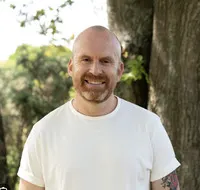
Matt Haig
Haig probes the intricate tapestry of human experience, intertwining personal struggles with mental health into narratives that are both poignant and universally resonant. His work often reflects on themes of identity, resilience, and the human condition, providing readers with insights into their own lives. Through a blend of speculative fiction, fantasy, and realism, Haig explores complex emotions and situations, as seen in books like "The Midnight Library," which delves into life choices and existential dilemmas, and "Reasons to Stay Alive," offering a deeply personal account of his own journey through depression.\n\nMoreover, Haig’s method of merging accessible storytelling with imaginative elements allows him to reach a diverse audience. He connects deeply with readers by portraying authentic human experiences that emphasize connection and understanding. His narratives frequently offer therapeutic perspectives, fostering hope and offering solace, as illustrated in works like "Notes on a Nervous Planet," which probes the anxieties of modern life. The emotional clarity in his prose ensures that each book not only entertains but also enlightens, resonating widely with those seeking meaning in a complex world.\n\nIn recognition of his significant impact, Haig's work has garnered numerous awards, including the Nestlé Children’s Book Prize for "Shadow Forest" and the Goodreads Choice Award for "The Midnight Library." His books, translated into over 50 languages, have reached an international audience, affirming his status as an influential commentator on mental health and well-being. Readers across the globe benefit from the empathy and authenticity Haig infuses into his writing, finding comfort and insight within the pages of his deeply human stories.
Read moreDownload PDF & EPUB
To save this Black List summary for later, download the free PDF and EPUB. You can print it out, or read offline at your convenience.
How to Stop Time
by Matt Haig
