
If Beale Street Could Talk
Categories
Fiction, Classics, Audiobook, Historical Fiction, Romance, Book Club, African American, Novels, Race, Literary Fiction
Content Type
Book
Binding
Paperback
Year
2006
Publisher
Vintage
Language
English
ASIN
0307275930
ISBN
0307275930
ISBN13
9780307275936
File Download
PDF | EPUB
If Beale Street Could Talk Plot Summary
Introduction
The glass wall in the Tombs prison visiting room reflects nothing but despair. Nineteen-year-old Tish sits across from Fonny, her childhood friend and lover, speaking through a telephone that carries more weight than words. She has news that will change everything – she's pregnant with his child. But Fonny is trapped behind bars, accused of raping a Puerto Rican woman he's never met, caught in a web spun by a racist cop named Bell who has marked him for destruction. In Harlem, where love blooms against impossible odds, Tish and her fierce family – mother Sharon, sister Ernestine, and father Joseph – wage war against a system designed to crush Black men like Fonny. As Tish's belly grows with new life, time becomes their enemy. The trial date shifts like sand, witnesses disappear into the shadows, and justice feels as distant as freedom itself. This is their story of love as resistance, of family as fortress, of hope carved from the hardest stone.
Chapter 1: Foundations of Love: Tish and Fonny's Unbreakable Bond
Tish remembers the day everything changed with crystalline clarity. She and Fonny had been inseparable since childhood, two Black kids navigating the harsh streets of Harlem where survival meant watching each other's backs. At six years old, she hit him with a nail-studded stick during a playground fight, drawing blood across his cheek. Instead of hatred, that moment forged something deeper – a recognition that they belonged to each other. Years later, when Fonny turned twenty-one and Tish eighteen, their childhood bond transformed into something electric. Walking through Greenwich Village one Saturday evening, searching for their future together, Fonny took her to his basement apartment on Bank Street. The space was cramped and cluttered with wood sculptures and tools, but it was theirs. That night, with tender hands and whispered promises, they crossed the threshold from friendship to love. The morning after found them in Tish's family kitchen, facing her parents with news of their engagement. Joseph Rivers, her dock-working father, sized up young Fonny with eyes that had seen too much of the world's cruelty. But when Fonny spoke of his love with raw honesty, when he asked permission to marry rather than simply taking, Joseph saw something worth protecting. Sharon, Tish's mother and former singer, recognized the same fierce devotion that had once driven her own choices. Sister Ernestine, sharp-tongued and protective, delivered her blessing with characteristic bluntness: she'd rather see Tish with a real man than some dressed-up pretender. The family expanded that night, bonds forged not just in blood but in chosen love. They were young and poor and Black in America, but they had something precious – each other, and the unshakeable belief that love could build a fortress against whatever storms might come.
Chapter 2: The Weight of False Accusation: A System Designed to Break
The trap closed on a Tuesday evening in March. Fonny sat in his Bank Street apartment with Daniel, an old friend freshly released from prison, both of them trying to heal wounds that went deeper than skin. When the police hammered on the door, their world exploded into chaos and lies. Officer Bell stood in the doorway like an avenging angel of white supremacy, his blue eyes cold as winter steel. He'd been hunting Fonny since that day at the vegetable stand when an Italian shopkeeper had defended him against both a white punk and Bell's own authority. Now Bell had his chance – a Puerto Rican woman named Victoria Rogers claimed she'd been raped, and the police needed a Black face to pin it on. The lineup was a mockery of justice. Five light-skinned men and Puerto Ricans, and Fonny – the only truly Black man among them. Victoria Rogers, trembling and traumatized, pointed her finger at the obvious choice. Bell's testimony sealed the trap: he swore he'd seen Fonny fleeing the scene on Orchard Street, miles from where Fonny had actually been that night. Attorney Arnold Hayward, hungry and young, took the case more from desperation than conviction. His office near Trinity Church felt like a courtroom where verdicts had already been decided. As he explained the charges to Tish and her mother, his words carried the weight of a rigged game: "The truth doesn't matter. What matters is who wins." But in Hayward's eyes, behind the cynicism, something resembling hope flickered. He'd built his career on small cases and smaller dreams, but now he held a young man's life in his hands. The system revealed its true face – not blindfolded justice, but a machine designed to consume Black bodies and feed white fears. Every door led to another locked room, every witness vanished into shadows, every hope crashed against the stone walls of institutional racism. Yet in that crushing machinery, something else began to emerge: the fierce determination of a family that refused to let their son disappear.
Chapter 3: Life Amidst Ruins: Navigating Pregnancy and Imprisonment
Inside the Tombs, Fonny discovered what it meant to be hunted. The other prisoners recognized his youth, his fear, the way he carried himself like someone who still believed the world might be fair. In this concrete hell, fairness was a luxury no one could afford. He learned to fight or be broken, learned to see the violence before it found him, learned that surviving meant becoming someone his former self might not recognize. Tish felt the baby's first kick on the morning after a sleepless night. The life growing inside her seemed to respond to Fonny's danger, as if even in the womb it understood that its father was fighting for his life. She quit her job at the perfume counter, no longer able to pretend normalcy while her world crumbled. Every day brought new sickness, new fears, new reasons to believe that everything she loved might disappear. The visiting room became their sanctuary and their torture chamber. Twice a day when possible, Tish pressed her palm against the glass while Fonny pressed his from the other side. They spoke of the baby, of the trial that kept getting postponed, of a future that felt more like fantasy with each passing week. Fonny sketched her from memory, capturing her face as it changed with pregnancy, while she brought him books and cigarettes and news from a world that seemed increasingly foreign. Joseph and Frank, the two fathers, began their own war against the system. They worked double shifts, stole from their jobs, sold hot goods in Harlem bars – anything to raise money for lawyers and bail. Frank carried the additional weight of his family's betrayal: his wife and daughters had sided with respectability over blood, declaring Fonny guilty to preserve their own reputations. Only Frank refused to abandon his son, even as the pressure threatened to destroy him. At night, Tish lay in bed with her hands on her swelling belly, feeling the baby turn and kick as if testing the boundaries of its temporary prison. She whispered stories to the unborn child about its father – his gentle hands, his fierce love, his determination to carve beauty from hard wood and harder circumstances. The baby seemed to listen, seemed to understand that it was the reason everyone kept fighting when surrender would have been so much easier.
Chapter 4: Desperate Measures: The Search for Witnesses and Truth
Hayward's investigation revealed the rotten foundation of the case against Fonny. Victoria Rogers had disappeared from her Orchard Street tenement, leaving no forwarding address and taking with her the prosecution's star witness. Daniel, who could have testified to Fonny's whereabouts that night, had been arrested on drug charges and held incommunicado, almost certainly to prevent him from helping his friend. The lawyer's office became a war room where strategy mixed with desperation. Ernestine, sharp as a blade and twice as cutting, had compiled a file on Officer Bell that could have destroyed careers and ruined lives. She knew about the twelve-year-old boy Bell had killed in Brooklyn, about the transfer that was meant to bury the incident, about the wife who hated him and the mother of the murdered child who still grieved for justice. Money became the constant enemy, always needed and never available in sufficient quantities. Joseph worked overtime on the docks, his body aging years in months as he loaded and unloaded ships in all weather. Frank stole from the garment center with the methodical desperation of a man watching his son disappear into the system's maw. The women scraped together dollars from wherever they could find them, while Ernestine's actress employer unknowingly funded the fight through missing bottles of expensive brandy. Time moved differently now, measured not in days and weeks but in visiting hours and court dates that shifted like mirages. Tish's pregnancy progressed with inexorable logic while Fonny's case stalled in bureaucratic quicksand. The baby would come whether its father was free or imprisoned, whether the family had raised enough money or not, whether justice prevailed or was strangled in its crib. Each setback felt like a small death, each glimmer of hope like a resurrection. When Hayward finally managed to see Daniel, he found a young man beaten and drugged, barely recognizable as the friend who had laughed in Fonny's apartment just months before. The system had claimed another victim, turned another witness into a ghost, made another family's love irrelevant in the face of institutional power.
Chapter 5: Confrontation in Puerto Rico: Sharon's Journey to Victoria
Sharon Rivers had never flown before, but love gave her wings to travel to Puerto Rico in search of the woman whose testimony held her son-in-law's fate. Armed with photographs and determination, she landed in San Juan as the sun painted the sky the color of dried blood. The investigation had traced Victoria Rogers to a favella beyond Santurce, a garbage-strewn hillside where hope went to die. Jaime, her teenage taxi driver, became her unlikely guide through this landscape of broken dreams. His young face reminded Sharon of Fonny, of all the young Black and brown men who carried the weight of the world's indifference on their shoulders. Together they navigated streets that had no names, past children who played in the shadows of poverty while the blue Caribbean mocked them with its beauty. The confrontation came in a crumbling room three flights up, where Victoria Rogers called herself Sanchez and pretended not to recognize her own photograph. But Sharon saw through the lie to the frightened girl beneath – barely older than Tish, used and discarded by systems designed to consume women like her. Victoria's thin face carried the map of every violation, every compromise, every choice that wasn't really a choice at all. Their conversation danced around truth like boxers circling each other. Victoria insisted she remembered her attacker's face, that the lights in the hallway had been sufficient, that the man in the police lineup was the same one who had hurt her. But Sharon pressed harder, showing photographs of Fonny and Tish together, forcing Victoria to confront the human cost of her testimony. The breaking point came when Sharon touched the gold crucifix at Victoria's throat and invoked the name of God. Victoria's scream shattered the morning air, bringing neighbors running and revealing the depth of her trauma. She collapsed into the arms of another woman, her sobs echoing through the concrete hallways while Sharon stood alone, holding photographs that had become weapons in a war she was losing. The taxi horn summoned her back to reality, but the victory she'd hoped to win remained as elusive as justice itself.
Chapter 6: Shattering Points: Frank's Despair and the Broken Family
The news hit the family like a physical blow: Victoria Rogers would not be coming to New York. Her disappearance into the Puerto Rican hills meant the trial would be postponed indefinitely, stretching Fonny's imprisonment into an uncertain future. The prosecution held all the cards now, able to keep him locked away until their star witness recovered her sanity or her willingness to lie again. Frank Hunt cracked under the pressure with the sound of breaking glass. Fired from his job for suspected theft – the very theft he'd committed to pay his son's legal fees – he came home drunk and raging. His wife and daughters cowered in their righteousness while Frank cursed them for their abandonment of his boy. The respectable women who should have been Fonny's anchor had become the weights dragging him deeper into the system's depths. Joseph found Frank two days later, discovered by police in his car deep in the woods upstate. The engine had run until the gas tank emptied, the exhaust filling the closed vehicle while Frank sat behind the locked doors, finally free from the weight of a world that had never wanted him to succeed. The father who had loved his son enough to steal for him, to risk everything for him, had found the one escape the system couldn't deny him. The funeral was a small affair, attended by the remnants of two broken families and the knowledge that love sometimes leads to destruction. Mrs. Hunt and her daughters dressed in their finest clothes, finally free to grieve publicly for a man whose death made their respectability complete. They had lost a husband and father, but gained the sympathy of their church community and the satisfaction of being victims rather than accomplices. Tish held her swollen belly and watched them lower Frank Hunt into the ground, understanding that this was what the system did to men like him – ground them down until death seemed like victory. The baby kicked urgently against her ribs, as if sensing that its grandfather would never hold it, never teach it to carve wood into dreams, never pass on the fierce love that had driven him to the edge of madness and beyond.
Chapter 7: Endurance and Rebirth: Labor Pains and the Fight Continues
The baby came on Columbus Day, as if choosing to arrive on the anniversary of another great historical lie. Tish's labor began with a phone call about Frank's death and intensified through the night while her family gathered around her like a protective circle. Sharon and Ernestine took turns holding her hands while Joseph paced the hospital corridors, waiting for news that would change everything or nothing at all. Fonny learned of his father's death and his child's birth in the same conversation, delivered through the prison phone that carried all their joys and sorrows. His face transformed as Tish held their son up to the visiting room glass – a perfect child with his father's eyes and his mother's determination, born into a world that had tried to destroy him before he drew his first breath. The baby's cries filled the visiting room, demanding attention from guards who had grown used to separating families but had never seen love made manifest in such tiny, furious form. Fonny pressed his palm against the glass while his son reached toward him with fingers that seemed to grasp for the father just beyond their reach. Three generations of men reduced to this moment – grandfather dead, father imprisoned, son newborn and already fighting for his place in an unwelcoming world. Hayward arrived with news that felt like another kind of birth: the prosecution, having lost its key witness and facing questions about the investigation's legitimacy, was willing to discuss bail. The amount was staggering, more money than the family had ever seen, but they had something more valuable than cash – they had a reason to keep fighting that now had a name and a face and lungs that could wake the dead. The baby slept in Tish's arms while she made plans for Fonny's freedom, counting dollars and dreams with equal precision. Outside the hospital windows, Harlem stretched toward the horizon, still dangerous, still beautiful, still home to families who loved fiercely enough to move mountains or die trying. The baby would grow up knowing this story, would understand that his life began with his family's refusal to surrender, would carry in his blood the legacy of those who fought the system and sometimes won.
Summary
In the end, love proves both fragile and indestructible, a force that can be contained but never truly conquered. Tish and Fonny's child enters a world where his father remains imprisoned by lies and his family bankrupt from the cost of seeking justice. Yet in that hospital room, holding her son while planning her lover's freedom, Tish embodies the fierce determination that has carried her family through the darkest season of their lives. The system has taken its toll – Frank Hunt dead by his own hand, Daniel broken by imprisonment, Victoria Rogers disappeared into trauma's shadows. But it has not broken the essential thing: the love that connects Tish to Fonny, the family bonds that transform individual suffering into collective resistance, the hope that refuses to die even when hope seems foolish. The baby's first cry becomes both mourning song and battle anthem, marking not an ending but a beginning, not surrender but the promise that the fight will continue into the next generation. In the visiting room of the Tombs, three hearts beat against the glass – mother, father, and child – proving that even the thickest walls cannot separate souls that truly belong together.
Best Quote
“Neither love nor terror makes one blind: indifference makes one blind.” ― James Baldwin, If Beale Street Could Talk
Review Summary
Strengths: The review highlights the deep emotional connection between the main characters, Fonny and Tish, emphasizing their evolution from lifelong acquaintances to lovers and best friends. It also underscores the supportive role of Tish's family, which provides a crucial safety net amidst the challenges posed by 1970s racist New York. Weaknesses: The review points out the negative portrayal of Fonny's family, particularly his mother and sisters, who are depicted as unsupportive and judgmental, contrasting sharply with Tish's family. Overall: The review conveys a positive sentiment towards the narrative's exploration of love and familial support against societal adversities. It suggests a compelling story of resilience and emotional depth, likely recommending the book to readers interested in profound character dynamics and social themes.
About Author
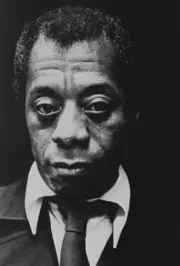
James Baldwin
Baldwin interrogates the complexities of identity and social justice through the profound narratives and incisive essays that define his literary career. His work often explores themes of race, sexuality, and belonging, while weaving personal reflection with sharp social critique. Central to Baldwin's approach is his ability to channel the impassioned cadences of the Black church, where he preached as a youth, into his writing. Therefore, his narratives resonate with emotional intensity and eloquence, capturing the struggles and triumphs of marginalized voices. Baldwin's method includes refining drafts to deliver clarity and impact, as seen in "Go Tell It on the Mountain" and "The Fire Next Time," works that dissect racial and familial tensions while challenging societal norms.\n\nFor readers, Baldwin's body of work offers a rich exploration of the human experience, particularly for those interested in social justice and identity politics. His writing provides not only a historical lens on mid-20th-century America but also timeless insights into the enduring issues of race and equality. Baldwin's ability to intertwine personal and societal narratives makes his literature a vital resource for understanding the intersections of race, sexuality, and class. His novel "Giovanni’s Room" expands on these themes by delving into the complexities of homosexuality, a bold move that highlights Baldwin's commitment to truth and representation. Meanwhile, "Blues for Mister Charlie" reflects his engagement with themes of justice, further establishing his significance in the civil rights discourse.\n\nBaldwin's enduring legacy lies in his powerful storytelling and his role as a beacon for marginalized communities. This bio of the author showcases how his work continues to inspire readers to confront difficult questions with courage and clarity. His literary contributions have not only chronicled the struggles of his time but also laid the groundwork for future discussions on race, sexuality, and human rights. As Baldwin's narratives continue to be celebrated and studied, they remind us of the importance of examining our social fabric through a compassionate and critical lens.
Read moreDownload PDF & EPUB
To save this Black List summary for later, download the free PDF and EPUB. You can print it out, or read offline at your convenience.

If Beale Street Could Talk
by James Baldwin
