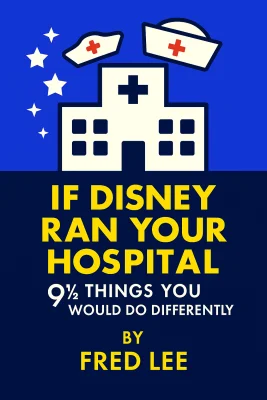
If Disney Ran Your Hospital
9 1/2 Things You Would Do Differently
Categories
Business, Nonfiction, Self Help, Health, Leadership, Management, Personal Development, Medicine, Health Care, Medical
Content Type
Book
Binding
Paperback
Year
2003
Publisher
Second River Healthcare
Language
English
ASIN
0974386014
ISBN
0974386014
ISBN13
9780974386010
File Download
PDF | EPUB
If Disney Ran Your Hospital Plot Summary
Introduction
Picture this: a young mother sits in a hospital waiting room at 2 AM, her fevering child restless in her arms, watching as staff members hurry past without making eye contact. The fluorescent lights buzz overhead, casting harsh shadows on worn furniture, while the smell of disinfectant mingles with her mounting anxiety. Now imagine the same scene, but this time a nurse approaches with a genuine smile, kneels down to the child's level, and says, "I can see how worried you must be. Let me show you to a more comfortable room where we can take better care of both of you." The difference between these two experiences isn't about medical expertise or cutting-edge technology—it's about understanding that healthcare is fundamentally about human connection and compassion. This profound shift in perspective lies at the heart of transforming patient care from a clinical transaction into a healing experience. When we examine the principles that make Disney World the most beloved destination on earth, we discover timeless truths about human nature, service excellence, and organizational culture that can revolutionize how we care for patients and their families. The insights revealed here aren't about entertainment or fantasy—they're about creating authentic moments of connection that promote healing, build loyalty, and remind healthcare workers why they chose this noble calling. Through real stories and practical wisdom, we'll explore how the magic of genuine care can transform both patient outcomes and staff fulfillment.
Chapter 1: Beyond Service: The Theater of Patient Experience
Fred Lee discovered this truth during his first day at Disney University, when his instructor posed a simple question to the room full of new cast members: "Who is Disney's competition?" The eager participants quickly rattled off the obvious answers—Universal Studios, Sea World, other theme parks in Central Florida. But their instructor smiled and crossed out every response. "At Disney, we take a much larger view of competition," he explained. "The truth is that our competition is anyone our customers compare us to." This revelation struck Lee like lightning. In hospitals, administrators often measure themselves against other medical facilities, comparing clinical outcomes and efficiency metrics. But patients don't think that way. When a patient evaluates their hospital experience, they're not mentally comparing their nurse to other nurses—they're comparing that interaction to every service encounter they've ever had. The friendly barista who remembers their coffee order, the hotel concierge who goes out of their way to help, the restaurant server who anticipates their needs—these become the benchmarks against which healthcare workers are unconsciously measured. Lee witnessed this phenomenon firsthand when he received a letter from the chief of police in Altamonte Springs, Florida, asking him to evaluate an officer's conduct during a traffic stop. The letter included detailed questions about professionalism, respect, and overall satisfaction with the encounter. "Only in Orlando," Lee thought, realizing how Disney had elevated service standards for every organization in the community, even those that traditionally operated as monopolies. The police understood that their reputation depended not just on law enforcement, but on how citizens felt during every interaction. This paradigm shift reveals why focusing solely on clinical excellence, while absolutely essential, isn't enough to create patient loyalty. Patients expect competent medical care—that's the baseline. What transforms a satisfactory experience into an exceptional one are the countless small moments of human connection that communicate care, respect, and genuine concern for the person behind the patient.
Chapter 2: Compassion Over Metrics: Why Loyalty Trumps Satisfaction
The revelation came during Lee's exploration of Disney's guest satisfaction data, expecting to find scores that would make any hospital administrator envious. Instead, he discovered something surprising: Disney's numbers appeared disappointingly low compared to typical hospital satisfaction surveys. The highest score was in the high 70s, while most hospital scores ran 10 to 20 percentage points higher. When Lee questioned a Disney manager about these seemingly poor results, the explanation changed his understanding forever. "That's the percentage of respondents who said they are very satisfied," the manager explained. "We use a five-point scale. A four means you're satisfied. A five means you're very satisfied." Lee realized that if Disney combined scores the way most hospitals did—grouping threes, fours, and fives together as "satisfied"—their numbers would reach 99 or 100 percent. But Disney wasn't interested in satisfaction; they were measuring loyalty. Research shows that customers who mark a four are six times more likely to defect than those who mark a five, revealing a crucial gap between satisfaction and true loyalty. This distinction became crystal clear when Lee analyzed unsolicited patient comments from his wife's hospital, looking for patterns in the language patients used to describe experiences that earned their devotion. The most frequently mentioned words weren't about efficiency or competence, but about emotional connection: caring, kind, compassionate, helpful, comforting, concerned, listening, loving, understanding. These weren't just nice sentiments—they represented the difference between patients who would reluctantly return if necessary versus those who would actively recommend the hospital to friends and family. Lee recalled the story of Judy, who faced breast cancer surgery with overwhelming fear and anxiety. The medical team performed flawlessly, but what transformed her into a loyal advocate happened late one night when she was crying alone. Her nurse entered the room with medication, noticed Judy's tears, turned off the light, set down the tray, and simply pulled up a chair to hold Judy's hand in silence. "It was like an angel had entered my room," Judy later said. That single act of compassion—going beyond the task to connect with human suffering—created a loyalty that no amount of clinical excellence alone could have achieved.
Chapter 3: The Motivating Power of Imagination in Healthcare
The lesson began with a simple exercise during Disney Traditions orientation. The instructor asked the new cast members to imagine that dear friends they hadn't seen in years would be visiting their homes for the weekend. "What would you do to get ready?" he asked. The responses flowed naturally: clean the house, stock favorite foods, change the sheets, create a welcoming environment. Then came the follow-up question: "What would you do while they're there to make sure they have a wonderful time and want to come back?" Again, the answers came easily: be attentive, ask what they'd like to do, serve them first, be cheerful and accommodating. The instructor smiled as he pointed to their combined responses on the flip chart. "We all know how to treat guests in our homes, don't we? It's no different at Disney. We are hosts, every one of us. Our customers are called guests. Please treat them as you would if you knew each one of them personally and liked them." This wasn't about following scripts or memorizing procedures—it was about accessing the natural hospitality that exists within everyone when they care deeply about someone's experience. Lee later encountered a profound example of imagination creating empathy during a nursing staff meeting where a colleague led an exercise with a simple daisy. She asked the staff to imagine the flower represented their life, with each petal symbolizing something meaningful—family, health, career, independence, hobbies. Then she began removing petals one by one, asking what happens to these precious things as people age. Friends die, health fails, independence vanishes, mobility decreases. Soon only a few forlorn petals remained on the stem. "This is what is happening to our patients," she said quietly. "When my life looks like this sad flower, I hope I am cheerful and cooperative with everyone around me. But I suspect there will be days when I'm grumpy and difficult. When I think of this flower, I feel so fortunate to be part of their lives even when they're challenging." The power of this exercise wasn't in providing new information about aging or illness—it was in activating the imagination to create genuine empathy. When we ask ourselves "What would it take for me to act like that?" or "How would I feel if this happened to me?" we open our hearts to understanding rather than judgment. This emotional connection becomes the wellspring of compassionate care, transforming routine interactions into healing encounters that patients remember long after their medical treatments are complete.
Chapter 4: Decentralizing Authority: Empowering Staff to Say Yes
The locked classroom door seemed like such a small problem until it revealed a much larger cultural issue. Lee had arrived at the satellite hospital for his morning training session, only to find the room secured and unstaffed. As frustrated participants gathered outside, a security guard arrived with the proper key but refused to open the door. "I'm not allowed to open a room without permission from central dispatch," he explained apologetically, even though he could clearly see the instructor and attendees waiting to begin their customer service training. The irony wasn't lost on anyone—they were about to learn about exceeding patient expectations while experiencing a system that prevented employees from using basic common sense to solve obvious problems. This scene repeated itself across the hospital system, where centralized authority had created invisible barriers to responsive service. Another executive shared her frustration about a physician who needed to retrieve materials from the medical library after hours, but even administrators couldn't convince security to unlock the door without approval from headquarters twenty miles away. The security officer knew everyone involved, understood the legitimate need, and had the physical ability to help—but the system had stripped away his authority to say yes. Disney had learned this lesson the hard way and systematically dismantled the functional silos that prevented cast members from delighting guests. At EPCOT, they reorganized pavilions so that one general manager had authority over all the restaurants, shops, and attractions in their area, eliminating the bureaucratic maze that previously required multiple approvals for simple changes. Cast members were taught "You are always right when satisfying a guest," and given the authority to spend money or bend rules to resolve problems immediately rather than sending disappointed visitors on long walks to distant guest services offices. The contrast couldn't have been starker when Lee encountered the hospital's food service director during his visit. When he complimented the exceptional breakfast potatoes, she didn't know how they were prepared but immediately brought the cook over to share her recipe. The cook beamed with pride as she described her technique, clearly empowered to innovate and take ownership of her craft. Here was a frontline employee who felt valued for her creativity and expertise, working within a department that encouraged rather than controlled her efforts to exceed expectations. This tale of two cultures within the same organization illustrates a fundamental truth: structure drives culture, and culture determines whether staff members approach each day looking for ways to help or reasons to say no.
Chapter 5: Courtesy Before Efficiency: Reshaping Organizational Priorities
The lesson in priorities came clearly during Disney's orientation when Lee learned about their hierarchy of values: Safety first, then Courtesy, followed by Show, and finally Efficiency. This wasn't just a poster on the wall—it was a decision-making framework that resolved conflicts between competing demands. When a cast member faced a choice between being courteous to a guest and being efficient with a task, courtesy won every time. The elegance of this system lay in its clarity and completeness, eliminating the confusion that plagues organizations where everything is supposedly equally important. Lee witnessed this principle in action through a personal encounter with Ray Guthrie, the president of Overland Park State Bank. When Lee called the bank expecting to reach Guthrie's secretary, he was surprised when the executive answered his own phone. "She's here," Guthrie said when Lee expressed surprise. "Do you want to speak to her?" When Lee later asked about this practice, Guthrie's response was profound in its simplicity: "Whose time is more important, yours or the caller's?" This banker had chosen to make his customer's experience more important than his own operational efficiency. The transformation became visible when Doug McCaw, director of food service at Avista Hospital in Colorado, received permission from CEO John Sackett to experiment with room service available all day to anyone—patients, families, even staff in the physicians' offices. What seemed like an expensive indulgence actually became more cost-effective as volume increased and waste decreased. More importantly, word spread throughout the community about this extraordinary service, creating loyalty that extended far beyond the cafeteria to the hospital's overall reputation. The results spoke for themselves. Independent market research revealed unprecedented levels of community and physician loyalty to Avista Hospital, with respondents consistently mentioning the remarkable room service as evidence of an organization that truly cared about people's experience. This wasn't about food—it was about a culture that had made courtesy more important than conventional operational constraints. The paradox became clear: by putting courtesy first, hospitals often discover greater overall efficiency as departments work together to solve problems rather than protecting their individual territories, and as patient loyalty reduces the costs associated with complaints, turnover, and negative word-of-mouth that can take years to overcome.
Chapter 6: Creating a Culture of Constructive Dissatisfaction
Walt Disney stood at the gates of Disneyland on opening day in 1955, watching his dream become a nightmare. Counterfeit tickets had doubled the expected crowd, rides broke down under the strain, restaurants ran out of food, and a gas leak forced the closure of an entire section of the park. The temperature soared past 100 degrees as frustrated families waited in impossibly long lines. Disney later called it "Black Sunday" and could have easily declared victory—after all, he had created the world's first theme park and attracted massive crowds. Instead, he saw only the gaps between his vision and reality, and spent the rest of his life obsessively improving every detail of the guest experience. This constructive dissatisfaction became Disney's driving force. Even after creating the most successful entertainment company in history, Disney continued to push boundaries, pioneer new technologies, and imagine better ways to bring joy to families. He died while planning his next revolutionary project—EPCOT Center—leaving behind detailed instructions for innovations he would never see completed. His brother Roy later looked skyward in exasperation and said, "Walt, what have you gotten me into?" But that relentless dissatisfaction with the status quo had created a legacy that continues to set global standards for customer experience. Lee observed this same spirit in Lester Rilea's radiology department at Florida Hospital East Orlando, where the team decided their 40-minute average turnaround time for emergency procedures wasn't good enough, even though it compared favorably to national benchmarks. Without additional staff, space, or equipment, they systematically analyzed their processes, reorganized workflows, and tracked performance metrics until they achieved a 38 percent improvement. The result wasn't just faster service—it was 5,000 hours of time saved annually for emergency patients and a dramatic increase in satisfaction scores. The key insight from behavioral science confirms what Disney instinctively knew: dissatisfaction with current performance plus a vivid dream of excellence plus knowledge of improvement methods must be greater than an organization's natural inertia. This formula works at every level, from individual motivation to organizational transformation. The danger lies in celebrating mediocrity or allowing comparative rankings to create false comfort. When Disney measures guest satisfaction, they don't compare themselves to competitors—they simply post the stark percentage of guests who rated their experience as "very satisfied" rather than merely "satisfied." True excellence requires embracing the uncomfortable truth that being good is often the enemy of becoming great, and that the most dangerous phrase in any organization may be "that's good enough." The hospitals that achieve legendary status are those that channel their dissatisfaction into systematic improvement rather than excuses, creating cultures where everyone asks not "How do we compare?" but "How can we be better tomorrow than we are today?"
Chapter 7: Closing the Gap Between Knowing and Doing
The most revealing moment came when Liz Jazwiec, emergency department director at Holy Cross Hospital in Chicago, finally faced the truth about her leadership. For years, she had successfully deflected accountability for patient satisfaction scores with a arsenal of "How?" questions. How could her department possibly match Disney's service standards when they dealt with genuine life-and-death emergencies? How could they be friendly when facing the chaos of trauma, addiction, and human suffering? How could anyone expect emergency staff to smile while dealing with belligerent patients, impossible working conditions, and endless bureaucratic demands? Her resistance crumbled when CEO Mark Clements presented her with an ultimatum: dramatically improve patient satisfaction scores in 90 days or lose her job. He had already moved her replacement into her office. Suddenly, all the "How?" questions that had protected her from change became irrelevant. "I was nearly fired twice," she would later tell audiences seeking the secret to her department's transformation from worst to first in patient satisfaction rankings. The knowledge had always been there—she simply hadn't wanted to badly enough to overcome the inertia of established habits and defensive thinking. This pattern repeated itself at Baptist Hospital in Pensacola, Florida, where CEO Quint Studer inherited an organization in the bottom quartile of patient satisfaction. Rather than embarking on lengthy studies or benchmark visits, he simply made satisfaction scores a matter of survival for every manager. The hospital's remarkable journey to the top of national rankings and eventual Malcolm Baldrige Award wasn't powered by revolutionary insights or secret methodologies—it was fueled by unwavering accountability and the daily discipline of leaders who refused to accept excuses. The gap between knowing and doing revealed itself as largely imaginary. Hospital managers already possessed the knowledge needed to create exceptional patient experiences. They understood the importance of courtesy, empathy, responsiveness, and teamwork. The missing element wasn't information but commitment—the deep, personal desire to transform good intentions into consistent actions. When that commitment finally emerged, often under pressure, the results appeared almost magical to outside observers who assumed complex solutions must have driven such dramatic improvements. Lee realized that five major traps kept organizations stuck in perpetual planning rather than action: expecting trainers and committees to transform culture, hiring coordinators without authority, seeking more knowledge instead of implementing current understanding, letting assessment substitute for action, and allowing managers to stall indefinitely with "How?" questions. The breakthrough came when leaders stopped asking "How do we do this?" and started declaring "This will be done," then trusting their teams to discover the methods through experimentation and practice.
Summary
The profound truth emerging from these stories is that healthcare excellence isn't about choosing between clinical competence and compassionate service—it's about recognizing that both emerge from the same source: deep respect for human dignity and an unwavering commitment to exceeding expectations. When Disney's cast members treat every guest like a beloved friend visiting their home, they're not acting or following scripts—they're connecting with the universal human desire to make others feel valued and cared for. Healthcare workers who embrace this same mindset discover that their clinical skills become more effective when delivered with genuine warmth, and their most challenging patients often respond to authentic concern with cooperation and gratitude. The transformation begins when we stop thinking of healthcare as a series of medical procedures and start seeing it as a healing experience that encompasses the whole person. Every interaction becomes an opportunity to reduce anxiety, restore dignity, and communicate hope. The nurse who sits quietly with a frightened patient, the housekeeper who notices a family's distress and offers comfort, the physician who takes time to truly listen—these moments of human connection often prove as therapeutic as any medication. When healthcare organizations align their systems, training, and accountability around this patient-centered vision, they discover that staff satisfaction naturally follows, turnover decreases, and their reputation in the community flourishes. The magic isn't in copying Disney's specific practices, but in embracing their fundamental commitment to creating experiences that people treasure rather than simply endure.
Best Quote
“The Healthcare Advisory Board had one word to describe the difference between hospitals that receive high patient-loyalty scores and those that don’t: hardwiring. When responsibility for satisfaction and loyalty is hardwired into every manager’s accountabilities, then courtesy gets hardwired into every employee’s performance evaluation.” ― Fred Lee, If Disney Ran Your Hospital: 9 1/2 Things You Would Do Differently
Review Summary
Strengths: The review highlights the book's innovative approach to redefining competition, emphasizing the importance of courtesy over efficiency, and advocating for decentralized decision-making. It praises the focus on imagination and empathy as tools for motivation and improvement, and the shift from service to theater in work environments. Overall: The review suggests a positive sentiment towards the book, appreciating its fresh perspectives on management and motivation. It recommends the book for its practical insights into improving organizational culture and performance, particularly in service-oriented industries.
About Author

Fred Lee
Lee integrates hospitality principles from Disney into healthcare, pioneering a transformative approach that elevates patient experience through empathy and compassion. His methodology, rooted in blending cultural insights from his time at Disney University with healthcare management, emphasizes creating a positive organizational culture. This unique approach, detailed in his influential book "If Disney Ran Your Hospital: 9 1/2 Things You Would Do Differently", outlines how hospitals can enhance patient loyalty and satisfaction. By focusing on these principles, Lee charts a course for healthcare professionals to build engaging and empathetic environments.\n\nThe impact of Lee's work is far-reaching, benefiting healthcare executives, administrators, and staff who aim to foster patient-centered care. His ideas offer practical applications for those looking to improve service quality and patient interactions within medical settings. The bio of this renowned author reflects his significant contribution to the field, as he blends storytelling and practical insights drawn from extensive international experiences. His accolades, including prestigious awards from the American College of Healthcare Executives, underscore the profound influence his ideas have had on hospital administration globally.\n\nBy weaving narrative elements into his presentations and writings, Lee captivates his audience, making complex concepts accessible and engaging. His story-driven style encourages healthcare professionals to reconsider traditional practices and adopt a more holistic, hospitality-driven model. This approach not only enhances patient care but also boosts staff morale and loyalty, proving invaluable for institutions striving for excellence in healthcare delivery. Through his work, Fred Lee continues to inspire a reimagining of patient experience that prioritizes empathy and organizational culture transformation.
Read moreDownload PDF & EPUB
To save this Black List summary for later, download the free PDF and EPUB. You can print it out, or read offline at your convenience.
If Disney Ran Your Hospital
by Fred Lee
