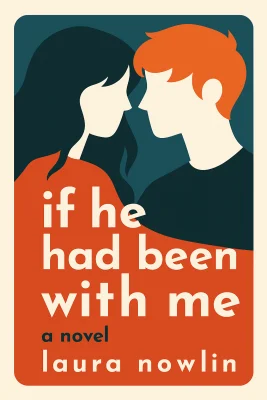
If He Had Been With Me
Categories
Fiction, Mental Health, Audiobook, Romance, Young Adult, Book Club, Contemporary, Coming Of Age, Realistic Fiction, Friends To Lovers
Content Type
Book
Binding
Paperback
Year
2013
Publisher
Sourcebooks Fire
Language
English
ISBN13
9781402277825
File Download
PDF | EPUB
If He Had Been With Me Plot Summary
Introduction
Rain slicks the asphalt like spilled oil on this August night. In the twisted wreckage of a little red sports car, seventeen-year-old Phineas Smith sits untouched behind the steering wheel, breathing heavily as his girlfriend Sylvie Whitehouse lies unconscious on the wet pavement beyond the shattered windshield. The flashing lights of emergency vehicles cut through the darkness, but in this suspended moment between catastrophe and comprehension, Finny exists in perfect stillness. His mind is blank. He feels nothing, thinks nothing—he simply exists, unscathed and weightless, while the rain begins to fall through the gaping hole where glass once protected him. This is the story that haunts Autumn Davis, told from the aching perspective of the girl next door who wasn't there that night. It's a tale that reaches backward through time, unraveling the threads of a friendship that began before memory and ended in silence, examining the cruel mathematics of teenage love and the weight of words left unspoken. What Autumn knows—what burns in her imagination like a fever—is that if Finny had been with her instead of arguing with Sylvie about her, everything would have been different. The story lurking underneath the official version is one of parallel lives, missed chances, and the devastating power of almost.
Chapter 1: Childhood Bonds: The String Between Windows
They were born a week apart in September, when the leaves still clung green to the branches but people already hung smiling scarecrows on their doors. Phineas arrived first on the twenty-first, and Autumn followed seven days later, likely missing the one who had been kicking her through their mothers' adjoining bellies all summer long. The mothers had been best friends since girlhood—Autumn's mother respectably married with her Victorian house and white-picket dreams, Aunt Angelina next door with her patchwork skirts and lover's child, bought and paid for by a married man who pretended they didn't exist for thirty days at a time. That summer, they sat together on the back porch with their feet propped up, drinking lemonade and planning the futures of the children who would kick each other like twins. Finny was loyalty incarnate, even at six years old. When Donnie Banks called Autumn a freak in third grade, Finny's small fist connected with the boy's stomach in the only fight he would ever start. When other kids threw snowballs, Finny stepped between them and his strange, pretty best friend who read under trees during recess and believed platypuses were government conspiracies. She belonged to him, and he belonged to her, and everyone understood this fundamental law of their small world. At night, they strung cups and string between their bedroom windows, whispering secrets across the twenty feet of air that separated their houses. Finny would signal with his flashlight—three quick flashes—and Autumn would take up her end of the line. They planned tree houses that were never built, adventures that lived only in imagination, and promised each other things that children promise when they believe forever is real. The golden time stretched through elementary school like honey in sunlight. They got chickenpox together, spent Christmas mornings as one family, and weathered The Mothers' attempts to make them befriend other children. But childhood has its own cruel calendar, and even the strongest string will rot if left hanging long enough. By eighth grade, something had shifted in the space between their windows, and the line that once carried their voices had snapped, leaving only silence where their whispered plans used to live.
Chapter 2: Growing Apart: The Painful Drift of Adolescence
The first crack appeared during the autumn of eighth grade, when Autumn discovered she could trade her weirdness for acceptance if she simply learned the right dance steps. The girls who called themselves The Clique welcomed her with painted nails and friendship bracelets, and for the first time in her life, Autumn felt the intoxicating warmth of being wanted by many instead of just one. The transformation was swift and merciless. Where once every afternoon had been spent with Finny, now there were sleepovers and shopping trips, bathroom conferences where girls brushed each other's hair and shared secrets that excluded the boy next door. Autumn told herself it was temporary, that she could have both worlds, but each day spent learning the complicated choreography of popularity put another brick in the wall growing between them. Finny watched from his own awkward distance, surrounded by boys who accepted him without understanding him, speaking less and less when their paths crossed in hallways that suddenly felt vast as oceans. Their homework sessions ended. Their shared television time dwindled to silence punctuated by the mechanical passing of the remote. When they did interact, every unspoken word hung heavy in the air between them, transforming their easy intimacy into something strained and careful. The mothers noticed but said nothing, perhaps hoping the strange weather would pass. At family dinners, Finny and Autumn sat across from each other like polite strangers, offering salt and declining dessert with voices that revealed nothing of the friendship slowly bleeding out in the spaces between words. The string between their windows had long since rotted away, but neither had bothered to take down the cups. New Year's Eve arrived with unseasonable warmth and the cruel promise that everything could be different. They spent the week together like old times—building forts, watching movies, planning novels that would never be written. For seven perfect days, they were themselves again, and Autumn allowed herself to believe that maybe they had found their way back to each other. But at midnight, as fireworks painted the sky in celebration of beginnings, Finny leaned in and pressed his mouth to hers in a kiss that tasted like goodbye. The bruises from his fingers on her arm lasted longer than her tears. By morning, even the pretense of friendship was gone, and they began the long work of learning to live as strangers who happened to share a history.
Chapter 3: Parallel Lives: Watching From Across the Divide
High school arrived with all the ceremony of a knife fight. Autumn transformed herself again, this time into deliberate oddity—black hair, ripped clothes, and a succession of tiaras that crowned her the queen of beautiful misfits. She found Jamie Allen waiting on The Steps to Nowhere like a dark-haired prince, and together they built a kingdom of artistic rebellion that felt safer than royal courts. Finny bloomed differently, growing tall and golden and drawing admirers like flowers turn toward light. Soccer claimed him, and with it came a different kind of popularity—the effortless kind that looked like destiny rather than performance. He moved through hallways with Sylvie Whitehouse on his arm, a cheerleader whose smile was bright enough to blind anyone looking too closely at what lay underneath. They orbited each other carefully, these two who had once shared everything. Autumn learned to time her arrivals at the bus stop to minimize conversation. Finny developed an expertise in looking through her as if she were made of air. When forced proximity demanded interaction—family dinners, chance encounters in hallways—they spoke with the careful politeness of diplomats from warring nations. The war became literal during junior year, fought over cafeteria real estate with the viciousness that only teenagers can muster. Tables were claimed and abandoned, territory marked and defended, until even their friend groups understood that some borders could not be crossed. Autumn's misfit court watched Finny's golden circle with the same fascination and loathing that commoners reserve for royalty they'll never be invited to join. But late at night, when the performances ended and the curtains fell, Autumn found herself watching Finny's window with the dedication of an astronomer tracking distant stars. She memorized his routines, catalogued his restless movements, and told herself this surveillance meant nothing even as she arranged her own schedule around the rhythm of his bedtime light. Some hungers refuse to be starved, growing stronger in darkness until they consume everything in their path. The careful architecture of avoidance they had built required constant maintenance, and cracks were beginning to show.
Chapter 4: Recognition: When the Heart Finally Understands
September brought Finny crashing into Autumn's world with the force of revelation. On the soccer field, surrounded by the controlled violence of teenage sport, he tumbled and rolled, landing hard in a way that made her mother gasp and Autumn's heart stop entirely. For one suspended moment, watching from the bleachers, she was ten years old again and couldn't imagine a world that didn't contain him. The recognition arrived like lightning—sudden, brilliant, and devastating. She had been in love with Finny her entire life, but somewhere in the wilderness years of adolescence, that love had grown into something bigger, deeper, more dangerous than childhood affection. It filled every corner of her being, this knowledge she had spent years refusing to acknowledge, and there was no longer any room for self-deception. The realization changed nothing and everything. Finny still belonged to Sylvie, still moved through his golden world with the confidence of someone who had never doubted his place in it. But now Autumn saw him with different eyes, noticed the way his shoulders tensed when he thought no one was watching, the careful distance he maintained even in crowds of admirers. She began to understand that popularity might be a costume he wore rather than a skin he was born in. Jamie sensed the shift without understanding it, the way animals smell weather changes before storms break. He held her tighter, loved her more desperately, and talked increasingly about futures that felt like beautiful cages. Autumn tried to match his certainty, to believe in the life they were building together, but her heart had already made its choice even if her mind refused to accept it. Winter arrived early and stayed late, trapping them all in a season that seemed designed for contemplation and regret. In the gray days between snow and spring, Autumn learned the particular torture of loving someone who could never be hers, of watching him choose someone else again and again while pretending it didn't matter. But spring always comes eventually, bringing with it possibilities that seemed impossible in the depths of winter's grip. The truth, once acknowledged, demanded attention like a wound demands tending.
Chapter 5: Reunion: Finding Our Way Back to Each Other
The reconciliation began with ice and ended with understanding. Finny appeared in Aunt Angelina's kitchen on Christmas night, drunk and beautiful and holding Autumn's keys like they were the answer to questions she hadn't known how to ask. They sat on her front porch in the cold darkness, sharing words that felt both foreign and familiar after years of careful silence. He worried about her dating Jamie, this boy who had never learned to see her completely. She deflected with jokes about his protective instincts, but something in his eyes suggested the concern ran deeper than brotherly duty. They talked around the edges of everything they couldn't say, finding their way back to a friendship that felt both precious and precarious. High school began to end with the slow inevitability of seasons changing. In lifetime sports class, they became partners by default—the only seniors in a room full of confused underclassmen. Finny's patient instruction on shuffleboard and badminton became the closest they had come to touching in years, his hands guiding hers with the careful attention of someone handling something fragile and valuable. Graduation approached like an approaching storm, bringing with it the promise of separations that had once seemed unthinkable. College brochures arrived daily, each one representing a different future, a different version of themselves. Autumn chose the school with a writing program she could afford. Finny planned for pre-med somewhere closer to home. Their paths, which had run parallel for so long, seemed destined to diverge completely. But first came summer, golden and dangerous, when schedules disappeared and supervision vanished with their parents' attention. Jamie's betrayal arrived like a blessing disguised as catastrophe—freeing Autumn from promises she had never really wanted to keep, opening space for possibilities she had never dared to consider. And Finny, patient and careful as always, was there to catch her when she fell. They drove through summer nights with windows down and music up, relearning each other's rhythms, rediscovering the ease that had once defined them. For the first time in years, Autumn felt like herself—not the weird girl or the perfect girlfriend, just Autumn, seen completely by someone who had loved her before either of them understood what love meant.
Chapter 6: One Perfect Night: What Should Have Always Been
August arrived like a fever dream, hot and urgent and impossible to ignore. The night Sylvie called from London, crying about something that made Finny's face go carefully blank, Autumn finished her novel and felt something break open inside her chest. The story she had been telling herself for years—about friendship and loyalty and impossible love—demanded to be written down, given shape, made real on the page. She wrote through the afternoon and into evening, pouring herself onto the screen with the desperation of someone confessing before execution. When Finny knocked on her bedroom door, she was shaking from exhaustion and revelation, tears streaming down her face for characters who felt more real than her own life. He held her while she sobbed, this boy who had always known how to comfort her, and she made a decision that felt both inevitable and terrifying. He read her novel in silence while she pretended to watch television, his face revealing nothing as page after page of her heart's truth scrolled past his eyes. The story of Izzy and Aden—two children who loved each other completely and never let go, who built a life together instead of walking away, who chose love over safety again and again—was also the story of Autumn and Finny, the life they might have lived if fear hadn't taught them to settle for less. When he finally spoke, his voice carried the weight of years of careful pretense finally abandoned. Why did you have to leave me like that? The question that had lived between them since they were thirteen, poisoning every interaction with its unspoken presence, finally found its voice. And in answering, they began to untangle the careful lies they had told themselves about growing apart, about inevitability, about the impossibility of loving someone you had known your entire life. The kiss that followed felt like coming home and falling off a cliff at the same time. His hands in her hair, her name on his lips like a prayer, the slow recognition that this was what had been missing from every other kiss she had ever received. When he asked if she was sure, she answered with her whole body, drawing him down into the bed where they had once drawn pictures on each other's backs with innocent fingers. Making love to Finny was like remembering something she had forgotten she knew, like finding a missing piece of herself she hadn't realized was lost. Afterward, they lay tangled together in the growing light of dawn, planning a future that seemed to stretch out before them like an open road. Tomorrow he would break up with Sylvie. Tomorrow they would tell their mothers. Tomorrow their real life would finally begin. But tomorrow, as it turned out, was already too late.
Chapter 7: The Accident: When Everything Changes in an Instant
The call came at midnight on August eighth, tearing through sleep and dreams with the merciless efficiency of bad news. Autumn's mother stood in the doorway, her face a mask of careful control barely containing the devastation beneath. Oh, Autumn, she said, and those two words carried the weight of every nightmare that had ever woken a child in darkness. The hospital smelled of disinfectant and despair. Aunt Angelina sat in the waiting room like a broken doll, her artist's hands twisted in her lap, staring at nothing with eyes that had seen too much. The police officer's words floated over them like smoke—wet roads, excessive speed, electrical lines down from the storm. A single power line lying in a puddle of water, waiting with the patience of death itself. Sylvie had survived, thrown clear through the windshield in a miracle of physics and trajectory that left her with cuts and bruises but intact. She sat wrapped in a hospital blanket, telling her story to anyone who would listen—how they had been arguing, how Finny had been distracted, how the car had hydroplaned on the slick pavement and spun into the utility pole. What she didn't tell them, what Autumn knew without being told, was what they had been arguing about. Finny had kept his promise. He had gone to break up with Sylvie, to clear the way for the life he wanted to build with Autumn. But Sylvie, intuitive in the way of women who sense their rivals, had demanded to know why. Was there someone else? Had he fallen for his weird neighbor with her books and tiaras and strange intensity? The fight that followed was the fight of a girl who could feel her world slipping away, conducted at seventy miles per hour on rain-slicked asphalt with death waiting patiently by the roadside. He should have stayed in the car. He should have remained in that perfect moment of suspension, untouched and breathing in his leather seat. But Finny, who couldn't bear to see worms dying on sidewalks, who carried spider webs outside rather than destroying them, saw Sylvie lying still in the road and couldn't leave her there alone. He knelt beside her in the water, concerned only with her welfare, and placed his hand down beside her head to steady himself. The electrical current found him instantly, efficiently, without drama or ceremony. Death took him as quietly as he had lived, leaving behind only the rain and the broken glass and the girl in the hospital bed who would spend the rest of her life knowing that Finny died because of her tears.
Chapter 8: After: Learning to Live With What Remains
The funeral was a theater of grief where everyone performed their assigned roles. Teachers spoke of potential unfulfilled, teammates remembered goals scored and games won, cheerleaders wept photogenic tears for the cameras. The whole town came to mourn the golden boy who had died too young, as if collective sorrow could somehow resurrect him from the ground where they laid him to rest. Autumn sat in the back row, invisible in her black dress, watching them bury her heart with his body. She had lost the right to public mourning when she chose secrecy over honesty, when she let Finny drive away to break another girl's heart for her sake. The mothers wept together in the front pew, but Autumn wept alone, carrying the weight of a love that had no name in the official narrative of his death. September arrived without him, bringing with it the college acceptance letters that no longer mattered, the future plans that felt like artifacts from someone else's life. Autumn's breakdown was gradual and then sudden, a slow slide into darkness that ended with her wrists wrapped in neat white bandages and a pregnancy test that changed everything one final time. The baby was impossible, miraculous, a piece of Finny that death couldn't touch. It was also terrifying, overwhelming, a responsibility that felt too large for someone who could barely remember to eat. But Autumn looked at her still-flat belly and saw possibility where before she had seen only ending. This child would never know its father, but it would know the story of him, would carry his gentleness and his stubborn protective instincts into a world that had been diminished by his absence. The mothers rallied with the fierce protectiveness of women who had lost one child and refused to lose another. They built a nest of support and expectation around Autumn, demanding that she eat and sleep and live for the sake of the grandchild they would raise together. College was postponed but not abandoned. Dreams were deferred but not destroyed. In the end, the story that began with two children kicking each other through adjacent bellies became a story about the persistence of love beyond death, about the way some connections transcend the temporary boundaries of flesh and time. Autumn learned to carry Finny with her—not as a ghost to be exorcised but as a part of herself she had finally learned to acknowledge. Their child would grow up knowing that love, real love, was worth any sacrifice, any risk, any leap of faith required to claim it. If he had been with her that night, everything would have been different. But in choosing to be with her, even for one perfect moment, Finny had given her everything that mattered—the knowledge that she was loved completely, the courage to love in return, and the understanding that some stories continue even after their narrators have fallen silent.
Summary
In the mathematics of tragedy, timing equals everything. Autumn Davis learned this brutal equation on a rain-soaked August night when the boy she had loved her entire life died trying to protect the girl he was leaving for her. What began as a childhood friendship between two houses on a quiet street became a meditation on the weight of words left unspoken, the cruelty of almost, and the devastating power of love recognized too late. Finny's death was senseless in all the ways that matter to grieving hearts, but it was also the inevitable conclusion to a story that began the moment two pregnant women decided their unborn children should be friends. The child Autumn carries will grow up in the shadow of this love story, heir to both its tragedy and its transcendence. There is something beautiful in this continuation, something that suggests that love, real love, finds a way to survive even the worst that life can offer. In choosing Autumn over safety, in dying for the truth of his heart rather than living a lie, Finny became something more than the golden boy who never got to grow up. He became proof that some connections are stronger than time, deeper than death, and more enduring than the small fears that convince most of us to settle for half-measures and safe choices. The roses in Autumn's garden will bloom past their season, brown at the edges but still reaching toward light, still beautiful in their refusal to accept that all perfect things must end.
Best Quote
“I've loved him my whole life, and somewhere along the way, that love didn't change but grew. It grew to fill the parts of me that I did not have when I was a child. It grew with every new longing of my body and desire until there was not a piece of me that did not love him. And when I look at him, there is no other feeling in me.” ― Laura Nowlin, If He Had Been With Me
Review Summary
Strengths: The review highlights the book's poignant storytelling and beautiful prose, which captivated the reader despite knowing the ending. The narrative's exploration of friendship, love, and family is described as raw and intense. The use of flashbacks is praised for enhancing character understanding and emotional depth. Weaknesses: Some readers might find the alternating timelines confusing. The review suggests that Autumn's decisions could frustrate some readers, although it empathizes with her choices. Overall: The reader was deeply moved by the book, finding it mesmerizing and emotionally impactful. The review suggests a high recommendation level for those interested in intense, character-driven narratives dealing with complex emotional themes.
About Author

Laura Nowlin
Nowlin reframes the emotional landscapes of young adults through her novels, focusing on love, loss, and complex adolescent relationships. Her storytelling is deeply influenced by her personal belief that books allow individuals to live multiple lives within one lifetime. This philosophy shapes her narratives, as seen in her debut novel, "If He Had Been with Me", which became a #1 New York Times bestseller. The book originated from a vivid dream, and its raw emotional depth resonates with readers by capturing the intricacies of memory and genuine teenage voices.\n\nDrawing inspiration from her work at the St. Louis County Public Library, Nowlin’s method involves integrating diverse life experiences into her writing. The interactions with library patrons provide a wealth of material that enriches her character development, making her stories both authentic and relatable. Her academic background, holding a B.A. in English with an emphasis in Creative Writing from Missouri State University, further grounds her literary style in eloquent prose. Nowlin’s novels, including "If Only I Had Told Her" and "This Song is (Not) for You", emphasize emotional complexity without succumbing to typical young adult genre clichés.\n\nReaders who engage with Nowlin's works often find themselves drawn into an immersive experience that melds heartbreak, love, and the struggles of adolescence. The visceral quality of her writing leaves a lasting impact, appealing to those who seek an emotional journey through literature. Her position as an international bestselling author, represented by Five Otter Literary, underscores her significant contribution to the young adult genre. This short bio encapsulates the author’s journey, blending her career insights and thematic explorations to paint a comprehensive picture of her literary impact.
Read moreDownload PDF & EPUB
To save this Black List summary for later, download the free PDF and EPUB. You can print it out, or read offline at your convenience.
If He Had Been With Me
by Laura Nowlin
