Categories
Fiction, Mystery, Thriller, Adult, Book Club, Contemporary, LGBT, Queer, Dark Academia, Mystery Thriller
Content Type
Book
Binding
Hardcover
Year
2017
Publisher
Flatiron Books
Language
English
ASIN
125009528X
ISBN
125009528X
ISBN13
9781250095282
File Download
PDF | EPUB
If We Were Villains Plot Summary
Introduction
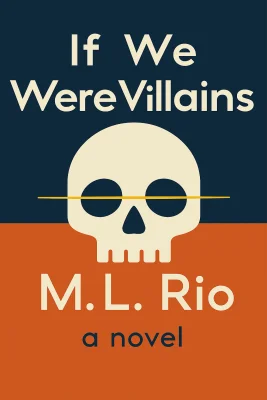
# If We Were Villains: A Shakespearean Tragedy of Art and Complicity The confession comes ten years too late, delivered in a sterile prison visiting room where Detective Joseph Colborne sits across from Oliver Marks, waiting for the truth about a death that was ruled an accident. Oliver's hands are steady now, no longer shaking with the weight of secrets that have carved hollow spaces in his chest. Outside, autumn rain streaks the windows like tears, and somewhere in the distance, Lake Dellecher reflects a gray sky that remembers everything. They were seven once, these beautiful and terrible young actors who lived Shakespeare's words until the boundaries between performance and reality dissolved like stage makeup in the rain. At Dellecher Classical Conservatory, they inhabited a world where passion was never moderate and every emotion demanded grand expression. Richard Stirling commanded their stage like a tyrant king, while gentle James Farrow embodied every noble hero with heartbreaking sincerity. Meredith Dardenne burned with dangerous allure, and Oliver himself played the eternal supporting role, watching from the wings as tragedy unfolded. But when their final performance ended with Richard floating face-down in the campus lake, the surviving six discovered that some secrets are too heavy for any one person to carry alone. Now, a decade later, Oliver finally speaks the words that will either damn them all or set him free.
Chapter 1: The Seven Players: Bonds Forged in Shakespeare's Shadow
Dellecher Classical Conservatory rises from the Illinois countryside like something conjured from a fever dream, all Gothic towers and leaded windows overlooking the dark mirror of Lake Dellecher. The fourth-year theater students live in the Castle, a converted mansion where they spend their nights drinking wine by flickering firelight and speaking in borrowed poetry. They are the chosen ones, survivors of yearly purges that claim half their classmates, bound together by shared ambition and the intoxicating belief that they are destined for greatness. Richard Stirling towers over them all, six foot three with sharp black eyes and a voice that can fill any theater without effort. He plays kings and conquerors with natural authority, his presence so commanding that even professors defer to him. His girlfriend Meredith Dardenne matches his intensity, a walking Renaissance painting with auburn hair and curves that stop conversations mid-sentence. Together they rule their small kingdom like royalty, beautiful and untouchable and somehow inevitable. James Farrow possesses a different kind of magnetism entirely. Where Richard commands through force, James draws people in with boyish charm and emotional depth that can make audiences weep with a single gesture. He is everyone's favorite, the golden boy who embodies every noble hero Shakespeare ever wrote. Oliver Marks, his roommate and closest friend, has long ago accepted his role as the loyal sidekick, content to bask in James's reflected glory while harboring feelings he dare not name. The others complete their ensemble like pieces in a perfect dramatic puzzle. Alexander Vass, thin and sharp-toothed, specializes in villains and speaks in cutting wit that can draw blood. Filippa Kott stands tall and chameleonic, equally convincing as Horatio or Lady Macbeth, watching over them all with calculating eyes. Wren Stirling, Richard's delicate cousin, plays every ingénue with heartbreaking sincerity, her fragility a stark contrast to her cousin's brutal strength. Together they form a complete dramatic company, each filling their designated role both on stage and in the intricate social theater of their daily lives. Their world is insular and intoxicating, fueled by competition and the constant pressure to prove themselves worthy of their elite education. They live on a steady diet of Shakespeare and wine, their conversations peppered with quotations, their emotions heightened by the belief that everything they do matters enormously. In this hothouse atmosphere, small rivalries bloom into something far more dangerous, and the line between performance and reality grows thinner with each passing day.
Chapter 2: Cracks in the Performance: When Art Becomes Reality
The autumn of their final year begins with the casting of Julius Caesar, and the results surprise no one. Richard claims the title role with his usual imperial arrogance, while James finds himself cast as Brutus, the noble friend who must betray his beloved leader. Oliver receives his customary supporting parts, playing both Casca and Octavius in what feels like theatrical leftovers. But something has shifted in their carefully balanced dynamic, a crack in the foundation that threatens to bring down their entire world. Richard's natural arrogance has curdled into something uglier during rehearsals, a need to dominate that extends far beyond the stage. He begins to hurt his fellow actors deliberately, leaving bruises on James's arms during the assassination scene, his grip tightening with each performance until the marks turn from pink to purple to sickly green. Oliver discovers the evidence by accident, catching sight of James changing clothes in their shared room, and the fingerprints on his friend's skin tell a story of deliberate cruelty. When Oliver confronts him about the injuries, James refuses to report Richard's behavior, afraid that showing weakness will only make things worse. His voice carries no conviction when he insists that Richard will give up if he thinks the abuse isn't working. The violence isn't limited to James either. During dress rehearsal, Richard throws Meredith so hard she falls against the stairs, drawing blood, then calls her a drama queen when she confronts him about it. Their acting teacher Gwendolyn threatens to replace Richard with Oliver if he can't control himself, but the threat feels hollow. Richard is too central to their world, too magnetic and terrible to simply remove. Instead, they all learn to work around his moods, walking on eggshells and pretending that everything is normal even as the bruises multiply and the fear grows thick as stage fog. The tension reaches a breaking point during opening night when Oliver, James, and Alexander make a pact. If Richard tries to hurt anyone during the assassination scene, they will fight back together. The moment comes when Oliver lunges forward with his paper knife, playing Casca in the conspiracy against Caesar. Richard grabs him by the throat, crushing his windpipe until stars explode behind Oliver's eyes, but this time he isn't alone. Alexander seizes Richard by the hair while James presses his blade to Richard's neck, and for one electric moment, the stage violence becomes terrifyingly real. The audience watches in rapt attention as the conspirators surround their fallen emperor, unaware that the brutality they witness goes far beyond mere acting. When Richard finally collapses among the stage blood, his eyes twitch with barely contained rage. He has been humiliated in front of hundreds of people, and everyone knows he will not forget.
Chapter 3: The Assassination: Violence Bleeding from Stage to Life
The cast party after Julius Caesar's opening night begins as a celebration but quickly descends into chaos. Richard has been drinking heavily since the afternoon, nursing his wounded pride in isolation while the others try to maintain the pretense of normalcy. When he finally emerges from his self-imposed exile, he moves through the crowded castle like a predator seeking prey, his eyes bright with alcohol and malice. The explosion comes in the kitchen, where Richard sucker-punches a music student who has been talking to Meredith. Blood splatters across the floor as the boy's teeth cut his lip, and suddenly everyone is screaming at once. Meredith confronts Richard with fury blazing in her green eyes, but his response is to grab her wrist and call her a slut in front of the horrified crowd. Oliver finds himself moving without conscious thought, driven by a protective instinct he doesn't fully understand. He pulls Meredith away from Richard's grasp, and in the chaos that follows, she leads him upstairs to her room. What happens next feels inevitable, as if they are following a script written by forces beyond their control. They fall into bed together with desperate hunger, their coupling fierce and tender by turns while Richard pounds on the door below, screaming threats and promises of violence. When they finally emerge, the party has ended and Richard has vanished into the woods with a bottle of expensive Scotch. James tells them he tried to stop Richard from leaving, but the bigger man shoved Wren aside so violently that James feared for her safety. No one follows Richard into the darkness, and that decision will haunt them all. They retreat to their rooms and try to sleep, telling themselves that Richard will stumble back at dawn, hungover and ashamed. But dawn comes gray and cold, bringing with it Alexander's scream from the dock. Richard floats face-down in the lake, his skull crushed, his body twisted at impossible angles. The most horrible thing is that he's still breathing, still alive, one hand reaching weakly toward the shore. The six survivors stand in stunned silence, watching their tormentor die by inches in the dark water. James starts to jump in, driven by some heroic instinct to save even his enemy, but Oliver holds him back. Alexander's voice cuts through the morning air with terrible clarity: "Do we really have to help him?" The question hangs between them like a blade. They all remember Richard's cruelties, his violence, his threats. They think of James's bruises, of Meredith's tears, of their own fear every time Richard entered a room. And in that moment of moral reckoning, they make a choice that will bind them together forever.
Chapter 4: Halloween's Dark Magic: A Night of Blood and Prophecy
Two weeks before Richard's death, Dellecher holds its traditional Halloween performance of Macbeth on the beach, and the fourth-years find themselves cast in a midnight spectacle that blurs the lines between theater and ritual. Oliver plays Banquo to James's Macbeth, a casting choice that surprises him until he realizes Richard has been relegated to voicing the apparitions from offstage, his imperial presence reduced to disembodied whispers. The performance begins with three witches rising from the lake like vengeful spirits, their white dresses clinging to their bodies as they deliver prophecies under the storm-darkened sky. The magic is intoxicating and dangerous, fed by the wild energy of the audience and the primal setting. When Oliver appears as Banquo's ghost, covered in stage blood that gleams crimson in the firelight, he feels the power of transformation that makes acting addictive. The audience gasps at his ghoulish appearance, and for a moment he is no longer mild-mannered Oliver Marks but something supernatural and terrible. The performance reaches its climax with Lady Macbeth's sleepwalking scene, Meredith moving through the sand like a woman possessed, her voice carrying across the water with heartbreaking clarity. But the real drama happens after the final bow, when the students gather for their traditional Halloween revelry. Richard's mood has grown increasingly dark as the night wears on, his drinking heavy and purposeful. When the others begin playing in the lake, engaging in drunken chicken fights and water games, he watches from the shore with predatory intensity. The violence erupts suddenly and without warning. Richard plunges James underwater and holds him there, his arm locked around James's neck while the others scream and fight to pull them apart. For terrifying seconds, it seems he might actually drown his supposed friend, and when James finally surfaces, gasping and choking, everyone understands that Richard has crossed a line from which there can be no return. The incident is dismissed as drunken horseplay, but the fear lingers like smoke in their lungs. Richard has shown them what he is capable of when pushed, and the knowledge sits like a stone in all their stomachs. The night ends with them huddled around a dying fire, their costumes torn and their faces pale in the flickering light. They speak in whispers now, as if afraid that Richard might be listening from the shadows. The magic of the performance has curdled into something ugly, and they all sense that they are hurtling toward a conclusion none of them can control.
Chapter 5: The Fatal Party: Passion, Rage, and Reckoning
The night of Richard's death unfolds like a Greek tragedy, each moment weighted with inevitability. The cast party fills the castle with laughter and music, but beneath the celebration runs a current of tension that makes everyone's skin crawl. Richard moves through the crowd like a shark sensing blood, his eyes bright with alcohol and barely contained violence. The confrontation in the kitchen happens fast and brutal. One moment Richard is talking to Meredith, his voice low and threatening, the next he's grabbing her wrist hard enough to leave marks. When Oliver intervenes, pulling her away from Richard's grasp, something fundamental shifts in the room's atmosphere. The other students sense the danger and begin to drift away, leaving the three of them alone in the harsh fluorescent light. Richard's rage is magnificent and terrible, his voice filling the kitchen as he hurls accusations and threats. He calls Meredith a whore and Oliver a pathetic wannabe, his words chosen with surgical precision to inflict maximum damage. But there's something desperate beneath his fury, a recognition that his kingdom is crumbling and his subjects are in revolt. Meredith leads Oliver upstairs to her room, and what follows feels like both rebellion and inevitability. They make love with desperate intensity while Richard pounds on the door, his threats echoing through the thin wood. Their passion is fierce and tender by turns, a claiming of something real in a world of endless performance. When they finally emerge, the party has ended and Richard has disappeared into the night. James reports that he tried to stop Richard from leaving, but the bigger man was beyond reason, drunk on Scotch and rage. He shoved Wren aside so violently that James feared for her safety, then stumbled into the woods clutching a bottle like a weapon. No one follows him into the darkness, and that choice will define everything that comes after. The survivors retreat to their rooms, but sleep proves elusive. Oliver lies awake listening to the wind in the trees and the distant sound of waves against the dock. Somewhere out there, Richard is alone with his fury and his bottle, and the knowledge fills Oliver with a dread he cannot name. When morning comes with Alexander's scream, it feels less like a shock than a confirmation of something they all knew was coming.
Chapter 6: By the Lake: A Death Foretold and Witnessed
Dawn breaks gray and merciless over Lake Dellecher, and Alexander's scream cuts through the morning air like a blade. Richard floats face-down in the dark water, his body twisted at impossible angles, his skull a ruin of blood and bone. But the most horrible thing is that he's still alive, still breathing, one hand reaching weakly toward the shore where his former friends stand frozen in shock. The six survivors gather on the dock like mourners at a funeral, their faces pale in the weak sunlight. James starts forward, driven by some heroic instinct to save even his enemy, but Oliver catches his arm and holds him back. The water around Richard's broken body spreads with crimson, and his struggles grow weaker with each passing second. Alexander's voice cuts through their paralysis with terrible clarity: "Do we really have to help him?" The question hangs between them like a sword, forcing them to confront the choice that will define the rest of their lives. They remember Richard's cruelties, his violence, his threats. They think of James's bruises, of Meredith's tears, of their own fear every time he entered a room. In that moment of moral reckoning, they choose silence over action, complicity over heroism. They stand watching as Richard's hand falls still, as the blood spreads in the dark water, as their tormentor finally pays the price for his cruelties. Oliver is the one who finally enters the lake, but only to confirm what they already know. Richard Stirling is dead, and they have killed him through inaction as surely as if they had struck the blow themselves. The conspiracy of silence begins immediately, born from shared guilt and mutual self-preservation. They agree on a story that paints Richard as a drunk who stumbled and fell, hitting his head on something in the woods before crawling to the lake to die. They will claim to have just discovered him, will play the role of grieving friends rather than complicit witnesses. When the police arrive with their cameras and questions, the six friends present a united front of shocked grief. Their acting training serves them well, each performance calibrated to deflect suspicion while maintaining the illusion of innocence. But Detective Colborne watches them with knowing eyes, sensing the lies beneath their carefully constructed facade. The official verdict comes back as accidental death, but the detective's suspicions linger like smoke in the air, waiting for the wind to change direction.
Chapter 7: The Conspiracy of Silence: Six Survivors, One Truth
The investigation transforms Dellecher into a crime scene, with police tape fluttering in the autumn wind and detectives prowling the halls like hunting dogs. Detective Joseph Colborne leads the inquiry with patient thoroughness, his sharp eyes missing nothing as he interviews each student separately. He suspects the fourth-years are hiding something, but their acting training makes them formidable opponents in this deadly game of truth and lies. Oliver finds himself cast in the most dangerous role, as the one who was with Meredith when Richard died. The implications are clear to everyone: if anyone had motive to kill Richard, it was the boy who stole his girlfriend. But Meredith backs his story without hesitation, claiming they spent the night talking rather than making love, her performance flawless under Colborne's relentless questioning. The memorial service becomes a masterpiece of theatrical manipulation. Wren delivers a heartbreaking eulogy that paints Richard as a complicated but beloved figure, while the others sit in the front row playing their parts with devastating conviction. Only they know that Richard's portrait, unveiled with such ceremony, captures his true nature: imperious, demanding, and somehow still threatening even in death. As the semester continues, the weight of their shared secret begins to tell. They move through their classes like ghosts, going through the motions of their education while the knowledge of what they've done eats at them from within. The easy camaraderie of their earlier years is gone, replaced by a brittle tension that threatens to shatter at any moment. Alexander turns to drugs with increasing desperation, his wit sharpening into cruelty as he tries to numb the guilt. James grows distant and strange, disappearing for hours at a time to wander the frozen grounds or sit by the lake in temperatures that should kill him. Wren becomes more fragile by the day, jumping at shadows and speaking in whispers. Only Filippa seems unchanged, watching over them all with growing alarm as she recognizes the signs of a group in psychological free fall. The spring semester brings King Lear, and the casting reflects their new reality. James claims Edmund the Bastard with fierce intensity, no longer content with noble heroes. Oliver finds himself promoted to Edgar, the legitimate son who must watch his brother's machinations destroy their family. The parallels to their own situation are too obvious to ignore, as if their professors are forcing them to confront their guilt through Shakespeare's most brutal tragedy.
Chapter 8: Ten Years Hence: Confession and the Price of Complicity
A decade passes before the truth finally emerges, ten years of silence that have carved hollow spaces in Oliver's chest. He serves his time in Colborne County Correctional Facility for a crime he didn't commit, protecting the others even as his own life crumbles around him. The official story is that he killed Richard in a jealous rage over Meredith, and he accepts that narrative rather than expose his friends to justice. The confession comes on a gray October morning, delivered in the same sterile visiting room where Detective Colborne once interrogated him. The retired detective sits across from Oliver, older now and grayer, but still hungry for the truth that has eluded him for ten years. When he offers Oliver a chance to tell the real story off the record, the weight of a decade's silence finally becomes unbearable. The truth pours out of Oliver like water from a broken dam, carrying with it all the guilt and pain he has carried alone. He tells Colborne about that November night, about the choice they made on the dock, about the conspiracy of silence that bound them together in complicity. But even now, even with nothing left to lose, he cannot bring himself to name the real killer. The others have scattered to the winds, their promising careers built on the foundation of Richard's death and Oliver's sacrifice. Meredith became a television star, her beauty intact but somehow hollow. Alexander continued acting in avant-garde productions, his talent sharpened by suffering. James and Wren and Filippa found their own paths away from the stage, carrying their secrets like stones in their hearts. Only Oliver paid the full price for their collective sin, sacrificing his freedom to preserve their secret. Now, walking free into a world that has moved on without him, he carries nothing but a worn copy of Shakespeare's complete works and the knowledge that some performances demand everything, including the performer's soul. As he tells his story to Colborne in the empty halls of Dellecher, Oliver reflects on the cost of their complicity. They had been young and beautiful and terrible, drunk on Shakespeare and their own sense of importance. They had believed themselves to be the heroes of their own story, but in the end, they were just another tragedy, bound together by blood and silence and the understanding that some secrets are too heavy for any one person to carry alone.
Summary
The tragedy of the Dellecher seven was not Richard's death, but what they became in its aftermath. They had entered that autumn as friends, bound by shared dreams and the intoxicating belief that they were destined for greatness. They emerged as conspirators, their innocence sacrificed on the altar of self-preservation, their souls stained with the blood of their complicity. Oliver's confession, delivered ten years too late, reveals the true cost of their Shakespearean education: they learned to play their parts so well that they forgot who they really were beneath the masks. In the end, their story serves as a dark mirror to the tragedies they studied so obsessively. Like Hamlet or Macbeth, they discovered that some knowledge cannot be unknown, some choices cannot be undone. The lake at Dellecher still reflects the sky, dark and still and perfect, holding its secrets in the depths where Richard Stirling found his final rest. And somewhere in the silence between confession and absolution, the ghost of their former selves continues to perform, trapped forever in a play that has no final curtain call, no redemption, only the endless echo of words spoken too late and truths that cut deeper than any blade.
Best Quote
“For someone who loved words as much as I did, it was amazing how often they failed me.” ― M.L. Rio, If We Were Villains
Review Summary
Strengths: The book's initial setup is engaging, with a compelling campus setting and high-stakes drama that captivates the reader. The first two acts are particularly strong, successfully drawing parallels to Shakespearean plays, which adds an intriguing layer to the narrative. Weaknesses: The plot is described as ultimately chaotic and the character development is criticized as lackluster. The characters are perceived as pretentious, often quoting Shakespeare excessively, which detracts from their authenticity. The frame story is seen as unnecessary and distracting, and some scenes are considered overly dramatic and unrealistic. Overall: The reviewer expresses frustration with the book, noting its potential but ultimately finding it disappointing. While the initial acts are promising, the overall execution falls short, leading to a mixed recommendation.
About Author

M.L. Rio
Rio delves into the intricate dynamics of academic and artistic communities, crafting narratives that reflect her own multifaceted experiences. Her work, characterized by a strong emphasis on dark academia and literary mystery, often explores intense relationships and moral ambiguity. This thematic focus is particularly evident in her debut novel, "If We Were Villains," which became an international bestseller. By integrating her academic background in Shakespeare studies and her diverse professional experiences as an actor, bookseller, and music writer, Rio's stories gain a unique authenticity and depth.\n\nHer method is marked by adaptability, with each book demanding a distinct approach. This flexibility allows her to engage readers on a psychological level, as seen in her novella "Graveyard Shift," which delves into themes of insomnia and desperation within a single night at an academic institution. By exploring the psychology of groups bound by shared passion or circumstance, her narratives resonate deeply with readers who are fascinated by the complexities of human interaction. \n\nRio’s literary journey is further enriched by her personal influences, such as John Knowles's "A Separate Peace," a transformative work that shaped her understanding of literature at a young age. Her writing not only appeals to fans of dark academia and literary mysteries but also to those who appreciate narratives that explore the emotional and psychological depths of their characters. With each publication, Rio continues to expand her impact, engaging audiences with her skillful storytelling and intricate thematic exploration.
Read moreDownload PDF & EPUB
To save this Black List summary for later, download the free PDF and EPUB. You can print it out, or read offline at your convenience.
If We Were Villains
by M.L. Rio
