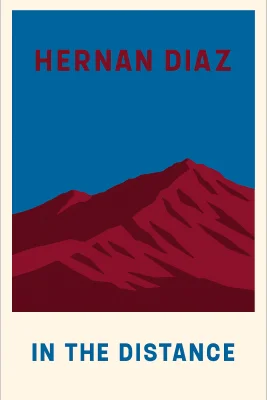
In the Distance
Categories
Fiction, Audiobook, Historical Fiction, Westerns, Book Club, Historical, Contemporary, Novels, Adventure, Literary Fiction
Content Type
Book
Binding
Paperback
Year
2017
Publisher
Coffee House Press
Language
English
ISBN13
9781566894883
File Download
PDF | EPUB
In the Distance Plot Summary
Introduction
In the frozen Arctic waters, a massive figure emerges from a hole in the ice, his long white hair streaming with frost. The crew of the icebound ship watches in stunned silence as this giant of a man climbs back aboard, naked and unperturbed by the killing cold. They whisper his name with equal parts fear and reverence—the Hawk. But this legendary figure was once just Håkan Söderström, a Swedish farm boy who lost his brother at a Portsmouth dock and spent decades wandering the American wilderness, transformed by violence, love, and an endless search for home. This is the story of a man who became a myth, who killed when forced to kill, who loved when he thought love impossible, and who walked alone across a continent that seemed determined to break him. From the California goldfields to the Mormon territories, from underground burrows to Arctic ice, Håkan's journey spans the brutal expansion of 19th-century America. His tale is one of survival and loneliness, of the price of legend and the weight of memory, told in the flickering light of a dying fire as his ship lies trapped in the endless white.
Chapter 1: Severed Paths: The Brothers' Separation and Håkan's Arrival in America
The hunger had been gnawing at Sweden for years. In the isolated farmlands north of Lake Tystnaden, the Söderström family scraped survival from exhausted soil while their landlord's demands grew heavier with each failed harvest. Only two sons remained—Linus, the elder storyteller whose wild tales filled their empty days, and Håkan, who hung on his brother's every word like gospel truth. Everything changed when their father sold a hidden foal and bought passage for two to America. The boys hurried to Gothenburg with their few possessions and abstract dreams of a place called "Nujårk." During the crossing to Portsmouth, they divided their meager coins and Linus painted vivid pictures of the wonders awaiting them across the Atlantic. The Portsmouth docks exploded with sensory chaos—merchants hawking exotic goods, sailors with foreign tattoos, the clash of a dozen languages, smoke belching from newfangled steamships. Walking side by side through the maze of humanity, the brothers tried to absorb everything while searching for their America-bound vessel. Håkan turned to share his wonder at a group of Chinese seamen eating lunch with elegant chopsticks, but Linus had vanished into the crowd as completely as morning mist. Panic transformed the bustling port into a nightmare. Håkan climbed onto crates, screaming his brother's name until his voice cracked, pushing through the indifferent masses. When he finally found a boat bound for "Amerika," desperation overcame caution. As the gangplank was pulled away and the ship began its journey, he stood at the rail calling into the wind, watching Portsmouth shrink to nothing. The Irish family who found him days later, burning with fever and refusing all food, could only guess at the depth of his loss. Months later, when they docked in San Francisco instead of New York, Håkan understood the magnitude of his mistake. The world was larger and more unforgiving than Linus had ever imagined in his stories.
Chapter 2: A Land of Strangers: Captivity, Learning, and Survival in the Wilderness
The goldfields had transformed decent men into hollow-eyed obsessives. James Brennan, the Irish miner who had shown Håkan such kindness on the ship, withered before his eyes once he found his strike. Working from dawn to well past dark, James became a skeletal figure haunted by paranoia, even hiding his daily take under a pile of his own excrement to keep it safe. When supplies ran low, Håkan accompanied James to Clangston, a ramshackle frontier town where a peculiar fat man in an orange-blossom cologne cloud welcomed them with theatrical hospitality. The man's jovial mask never quite concealed the calculating eyes beneath, and his dragoon companion lurked in corners like a patient spider. Above them both, glimpsed only briefly at a second-floor window, appeared a woman whose amber hair and glittering dress seemed to belong to another world entirely. The woman's men came for the mine with their painted wagon and practiced violence. James was given a choice that wasn't really a choice—take his family and flee, or watch them die. But in a moment of cold calculation that chilled Håkan more than the desert winds, they decided the Swedish boy would stay behind. His size and foreign tongue made him valuable in ways he couldn't yet understand. The woman's carriage became Håkan's prison, its interior thick with incense and the sweet-sick smell of her rotting gums. For months she held him captive, dressing him in various costumes like a living doll, her toothless smile revealing the decay beneath her painted beauty. Each night brought new humiliations as she molded him into fantasies of dead lovers, her cold jeweled hands positioning him like furniture while her breath reeked of burnt sugar and death. When a sandstorm finally offered cover for escape, Håkan fled into the wasteland with nothing but the clothes on his back. The desert stretched endlessly in all directions, offering no shelter, no water, no mercy—only the promise that freedom might be more terrible than captivity.
Chapter 3: The Burden of Violence: Blood on the Emigrant Trail
The wilderness had nearly killed him by the time John Lorimer's expedition found him walking stiff-armed through the desert, his skin caked with dried bird's blood for protection from the sun. The scholarly naturalist became Håkan's teacher and closest thing to a father, introducing him to the mysteries of anatomy and the radical idea that all life shared common origins. Under Lorimer's tutelage, Håkan discovered he possessed an uncanny gift for surgery, his massive hands capable of delicate precision with scalpel and needle. But Lorimer's obsession with proving his evolutionary theories led them to the salt flats of Saladillo, where the naturalist nearly died of sun poisoning while searching for evidence of primordial life in the alkaline pools. When local Indians rescued and sheltered them, Håkan learned the rituals of sterilization and wound care from their medicine man, knowledge that would serve him well in the violence to come. Joining a wagon train bound for California, Håkan found himself bodyguard to Jarvis Pickett, a smooth-talking captain who promised emigrants paradise while systematically swindling them of their possessions. When tensions finally erupted into violence, the attackers weren't random bandits but a coordinated gang of killers masquerading as both cavalry and Indians, slaughtering families with calculated brutality. In the chaos that followed, Håkan discovered capacities for violence he never knew he possessed. As men violated and murdered Helen, the girl whose gentle touch had awakened his first taste of love, something fundamental broke inside him. He killed with the systematic thoroughness of a butcher, his medical knowledge making each blow devastatingly effective. When the smoke cleared, he knelt beside Helen's mutilated body, understanding that he had crossed a line from which there could be no return. The survivors hailed him as a hero, but Håkan knew better. The men he'd killed deserved their fate, but their deaths had stained him permanently. He left the wagon train at dawn, carrying the weight of necessary murder and the knowledge that Helen's smile would haunt him until his own death came to collect its due.
Chapter 4: The Ghost of the Plains: Becoming a Legend and Retreating from Humanity
Word of the massacre traveled faster than any horse, growing and distorting with each telling. The Swedish giant who'd saved the emigrants became the Hawk, a figure of legend whose exploits multiplied in frontier taverns and around campfires. Håkan discovered his newfound notoriety when bounty hunters captured him in a small town, the sheriff torturing him with sadistic glee while preparing to sell him to Mormon vigilantes who wanted revenge for their dead brethren. Asa, a decent man among the sheriff's corrupt deputies, helped Håkan escape into the wilderness. For the first time since losing Linus, Håkan found companionship with someone who saw past the legend to the broken man beneath. Asa cooked elaborate meals from prairie ingredients, shared his warmth during cold nights, and planned a future where they might find peace in California's coastal towns. Their refuge ended in a red canyon where Asa fell from a cliff, his leg shattered beyond repair. Using his surgical skills, Håkan set the bone and tended the wounds, discovering in himself a fierce protective love that rivaled what he'd felt for his brother. They hid in an orange-domed cave while Asa healed, playing games of finding shapes in the stone patterns and dreaming of the life that awaited them beyond the desert. The end came with the thunder of hoofbeats and gunshots echoing through the canyon. Asa led their pursuers away from their hiding place, sacrificing himself so Håkan might escape. From his concealment, Håkan watched the bounty hunters drag Asa's body past, strapped to his own horse like a sack of grain. The casual brutality of it, the complete erasure of everything Asa had been, broke something in Håkan that would never heal. He remained in the cave for days, staring at the stone ceiling where they'd once traced imaginary constellations, until even the echoes of Asa's voice faded into the endless silence of his solitude.
Chapter 5: Returning to the Beginning: The Journey Home Across Ice and Memory
Years blurred into decades as Håkan wandered the continent, his legend growing while the man himself withered. He dug an elaborate underground burrow and lived like an animal, trapping and skinning creatures with mechanical precision, his world reduced to the narrow circles of firelight in his tunnels. When armed men finally found his hiding place, they offered him a choice between joining their criminal enterprise or facing the hangman's noose. The third option revealed itself in Asa's cooking pot, where Håkan prepared one final meal seasoned with laudanum from his medical supplies. As his captors succumbed to drugged sleep, he struck out for the coast, pursuing a desperate plan to recover gold he'd once seen buried in the California hills. But the goldfields had become an industrial hellscape of steam and dynamite, and his carefully hoarded secret had been obliterated along with the landscape itself. Captain Altenbaum, a Finnish wine-maker who recognized quality in Håkan's fur work, offered a different kind of redemption. His shipping fleet included vessels bound for Alaska, that vast territory where a man might disappear entirely and find the solitude he craved. The captain asked no questions about the past, seeing only an old man who deserved whatever peace remained to him. On the deck of the ice-bound ship, surrounded by fortune-seekers and company men, Håkan told his story through the long Arctic night. The young boy who listened with such intensity reminded him of himself at that age, full of dreams about the wider world. But unlike his own journey, this one would end by choice rather than chance. As dawn approached and the crew prepared to blast free from their icy prison, Håkan gathered his few possessions and prepared for one final journey. The boy begged to come along, but some paths must be walked alone. Sweden lay somewhere beyond the frozen horizon, across ice that might or might not hold a giant's weight.
Chapter 6: The Eternal Foreigner: Identity and Belonging in a Vast Land
The fire burned low as Håkan finished speaking, his words fading into the Arctic silence like smoke into the boundless sky. Around him, the listeners sat stunned by the magnitude of what they'd heard—not the legend of the terrible Hawk, but the simple truth of a man who'd spent his life searching for something that had been lost in a crowded dock decades ago. The boy watched with wide eyes as the giant rose from his place by the dying embers, understanding that he was witnessing something both ending and beginning. When morning came and the ice cracked under the ship's charges, Håkan climbed over the rail and dropped to the frozen sea. His lion coat flapped in the rising wind as he walked toward the distant sun, a solitary figure crossing the white expanse with the patient gait of someone who had learned that all journeys end where they began. The crew watched until he disappeared into the snow squalls, carrying with him the weight of every mile walked, every life taken, every love lost in the vast American wilderness that had never quite managed to claim him. He walked west across the ice toward a home that existed now only in memory, leaving behind a legend that would outlive the man who'd never wanted to be more than Håkan Söderström, a Swedish farm boy looking for his brother in a world too large for any single heart to hold.
Summary
The Arctic wind carries away the last echoes of Håkan's story as he walks into the white vastness, but his words linger like frost in the minds of those who heard them. This was never truly a tale of the legendary Hawk, but of Håkan Söderström—a man whose search for his lost brother became a meditation on belonging and exile, on the weight of necessary violence, and the terrible price of surviving in a land that transforms all who dare to cross its vastness. From the California goldfields to the Mormon territories, from underground burrows to the endless ice, his journey mapped the brutal expansion of America through the eyes of one who remained forever foreign to it. In the end, perhaps the greatest tragedy wasn't the brother lost in Portsmouth or the lovers killed by violent men, but the simple truth that home, once left behind, can never truly be reclaimed. Håkan walks toward Sweden across the frozen sea, but the boy who once fed eels to his father's pigs and listened to his brother's impossible stories died long ago in the American wilderness. What returns, if anything returns at all, will be something else entirely—a ghost of snow and memory, carrying within his massive frame the echoes of a continent that shaped him into legend while never allowing him to belong.
Best Quote
“A year and an instant are equivalent in a monotonous life.” ― Hernan Diaz, In the Distance
Review Summary
Strengths: The book is praised for its captivating narrative voice and unforgettable storytelling. It is described as a clever take on the Western genre, effectively capturing the heartache of loneliness and exploring the disillusionment of the American Dream. The protagonist's journey is likened to the compelling nature of "Perfume: The Story of a Murderer." Weaknesses: The review notes that the author occasionally indulges in excessive descriptive passages. Additionally, a significant flaw is identified where the story begins to repeat itself, possibly due to an editing error. Overall: The reader expresses a highly positive sentiment, rating the book 4 stars and recommending it as one of the best reads of the year, despite some narrative and editing issues.
About Author

Hernan Diaz
Diaz reframes literary exploration with his unique approach to storytelling, emphasizing themes of capitalism, American mythology, and cultural complexity. In his novels, Diaz employs an experimental narrative style, utilizing multiple voices and perspectives to disrupt traditional storytelling and amplify marginalized viewpoints. For example, in his Pulitzer Prize-winning book "Trust", he delves into early 20th-century U.S. capitalism through four contrasting perspectives, revealing the intricate dynamics of power and economic influence. Similarly, his debut novel "In the Distance" offers a revisionist take on the Western genre, challenging conventional narratives about the American frontier.\n\nReaders gain a deeper understanding of the blind spots in American literature and history through Diaz's work, which highlights overlooked narratives and complex socio-economic structures. His academic background and multicultural experiences enhance his literary output, allowing him to dissect the interplay between politics, philosophy, and culture. This nuanced examination is also evident in his nonfiction book on Jorge Luis Borges, where he delves into the relationship between politics, philosophy, and language. Diaz’s focus on these themes and his innovative methods make his work particularly valuable to those interested in literature that challenges and expands conventional perspectives.\n\nRecognized for his contributions to literature, Diaz has received numerous accolades, including the Pulitzer Prize for Fiction, the Whiting Award, and the Guggenheim Fellowship. His work has been translated into numerous languages, resonating with a global audience. As a result, Diaz has established himself as a significant figure in contemporary literature, offering readers an opportunity to engage with complex themes through a fresh, critical lens. This bio underscores Diaz’s impact as an author who not only entertains but also prompts meaningful reflection on cultural and economic issues.
Read moreDownload PDF & EPUB
To save this Black List summary for later, download the free PDF and EPUB. You can print it out, or read offline at your convenience.
In the Distance
by Hernan Diaz
