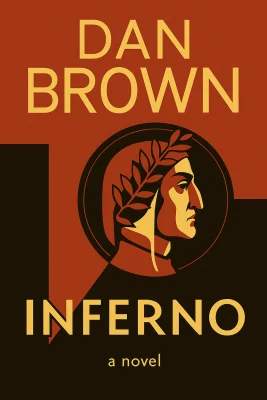
Categories
Fiction, Audiobook, Mystery, Historical Fiction, Thriller, Novels, Adventure, Suspense, Crime, Mystery Thriller
Content Type
Book
Binding
Hardcover
Year
2013
Publisher
Doubleday
Language
English
ASIN
0385537859
ISBN
0385537859
ISBN13
9780385537858
File Download
PDF | EPUB
Inferno Plot Summary
Introduction
# Shadows of Dante: A Race Through Hell's Map Robert Langdon's eyes snapped open to the antiseptic white of a hospital room, his skull throbbing with surgical precision. The Harvard professor remembered walking across campus three days ago, but now he found himself in Florence, Italy, with fresh stitches in his scalp and two days of his life simply erased. Before he could process this nightmare, gunfire erupted in the corridor outside his room. Dr. Sienna Brooks, a young physician with striking blonde hair, burst through his door just as an assassin in black leather appeared behind her. The killer's silenced weapon whispered death, dropping the bearded Dr. Marconi in a pool of spreading crimson. As the gun swung toward Langdon, Sienna grabbed his arm and pulled him into a desperate flight through Florence's ancient streets. Hidden in his jacket was a cylindrical projector containing a modified version of Botticelli's Map of Hell, its digital secrets pointing toward a conspiracy that would reshape humanity's future. The chase had begun, and somewhere in the shadows of Dante's medieval vision lay the key to preventing a modern apocalypse.
Chapter 1: Awakening in Florence: Amnesia and the First Betrayal
The spike-haired assassin moved through the hospital corridors like death incarnate, her weapon cutting down anyone who stood between her and Robert Langdon. The Harvard professor stumbled behind Dr. Sienna Brooks, his head swimming with medication and confusion. Two days of his life had vanished completely, leaving only fragments of memory and the taste of fear. Sienna navigated the maze of medical equipment with practiced efficiency, her slight frame supporting Langdon's unsteady steps. Behind them, the sound of splintering wood announced their pursuer's relentless advance. They burst through an emergency exit into the cold morning air of Florence, where the city's medieval towers rose like stone fingers against the dawn sky. The taxi's rear window exploded in a shower of glass as they fled through narrow streets that had witnessed seven centuries of human drama. Langdon caught glimpses of the Palazzo Vecchio's crenellated silhouette, its fortress-like walls a reminder that Florence had always been a city of secrets and sudden violence. But why was he here? What had brought a professor of symbology to this ancient place where art and assassination walked hand in hand? In Sienna's sparse apartment, she revealed the object hidden in his jacket. A titanium cylinder marked with the universal symbol for biological hazard, its surface warm to the touch and somehow alive with malevolent purpose. When the biometric scanner accepted his thumbprint, the device projected an image that made his blood freeze. Botticelli's Map of Hell spread across the wall, but someone had altered the Renaissance masterpiece, adding modern horrors to Dante's medieval vision of damnation.
Chapter 2: The Modified Inferno: Decoding Botticelli's Hidden Message
The projection transformed Sienna's kitchen wall into a window to hell itself. Botticelli's interpretation of Dante's Inferno spiraled downward through nine circles of torment, each level more horrifying than the last. But this was not the original masterpiece. Someone had corrupted the digital image, weaving new terrors into the familiar landscape of eternal punishment. In the eighth circle, the Malebolge, ten ditches contained different categories of fraudulent sinners. Each ditch now bore a letter, spelling out a cryptic message that seemed to pulse with hidden meaning. More disturbing still was the figure of a plague doctor, his beaked mask and hollow eyes staring out from the depths like a harbinger of pestilence. The medieval physician's costume had once protected doctors from the Black Death, but here it seemed to promise new forms of biological warfare. Sienna studied the projection with intense concentration, her medical training giving way to scholarly curiosity. The letters in the ditches were not random, she realized. They formed an anagram, a puzzle waiting to be solved. When rearranged in their proper order, they revealed their true message: CERCA TROVA. Seek and find. These words carried weight beyond their simple meaning. In the Hall of Five Hundred in Florence's Palazzo Vecchio, Giorgio Vasari had painted those same words on a battle flag, barely visible in his massive fresco. It was a message across the centuries, a breadcrumb trail left by Renaissance masters for future generations to follow. But the trail led somewhere dark, and the woman from Langdon's fevered visions had been trying to warn him. Time was running out, and somewhere in Florence's labyrinth of art and architecture lay the key to preventing a catastrophe that would make the Black Death look like a minor outbreak.
Chapter 3: Flight Through Renaissance: Zobrist's Apocalyptic Vision
The military vehicles surrounded Sienna's building with tactical precision, their occupants moving like pieces on a chessboard. Langdon and Sienna escaped through a rear window just as armed soldiers in black uniforms breached the front entrance. The chase led them through Florence's ancient heart, where every shadow might conceal an enemy and every doorway offered potential sanctuary or trap. Agent Brüder coordinated the hunt with cold efficiency, his voice crackling through radio channels as surveillance drones circled overhead like mechanical vultures. The resources arrayed against them suggested more than local law enforcement. This was an international operation, with unlimited funding and a mandate that apparently included killing American citizens on foreign soil. In the Boboli Gardens, they discovered the entrance to the Vasari Corridor, a secret passage built for the Medici family centuries ago. After Sienna used pressure points to subdue a guard, they entered the kilometer-long gallery that stretched from the gardens to the heart of old Florence. The corridor's walls were lined with self-portraits, hundreds of artists' faces watching their desperate flight through history's hidden arteries. The truth began to emerge in fragments as deadly as shattered glass. Dr. Bertrand Zobrist, a brilliant biochemist obsessed with Dante's vision, had purchased the poet's death mask from a Florence museum. But Zobrist was no ordinary collector. His academic papers painted a terrifying picture of humanity's future, with exponential population growth leading inevitably to resource collapse and civilizational suicide. His solution was as elegant as it was horrifying: a modern plague that would accomplish what the Black Death had done for medieval Europe, clearing the way for a new Renaissance built on the bones of the old world.
Chapter 4: Allies and Enemies: The Web of Deception Expands
The phone call to the American consulate should have been salvation. Instead, it became betrayal wrapped in diplomatic courtesy. Within minutes of providing his location, the same leather-clad assassin who had murdered Dr. Marconi arrived at the meeting point, her weapon ready and her intentions clear. Langdon's own government wanted him dead, and the conspiracy reached deeper than he had imagined. Dr. Elizabeth Sinskey materialized from his fragmented memories like a ghost gaining substance. The silver-haired director of the World Health Organization had recruited him to stop Zobrist's apocalyptic plan, but their mission had gone catastrophically wrong. Now she was a prisoner, drugged and helpless, watching as events spiraled toward their terrible conclusion. The Consortium operated in the shadows between nations, providing services to clients who could afford their absolute discretion. Their leader, known only as the Provost, commanded resources that spanned continents, but even he was beginning to question the wisdom of protecting Zobrist's final project. The geneticist had paid for one year of complete anonymity, and that year was almost over. In the Hall of Five Hundred, Vasari's massive fresco concealed its secrets behind layers of paint and politics. The Battle of Marciano covered the wall in Renaissance warfare, but the tiny words "cerca trova" on a green banner held the key to everything. The trail led away from Florence, toward Venice and the watery grave where Zobrist had hidden his gift to humanity. But the greatest deception was yet to be revealed, and it wore the face of the woman who had saved Langdon's life.
Chapter 5: Sienna's Truth: Love, Betrayal, and Genetic Destiny
The revelation struck like lightning illuminating a landscape of lies. Sienna Brooks was not the innocent doctor she had pretended to be. She was FS-2080, Bertrand Zobrist's lover and intellectual equal, the inspiration for his radical solution to humanity's crisis. Their relationship had begun in Chicago during a blizzard, when the charismatic geneticist seduced both her brilliant mind and her wounded heart. Sienna had been searching for purpose, haunted by childhood trauma and the isolation that came with exceptional intelligence. In Zobrist, she found someone who understood her fears about humanity's future and shared her belief that only radical intervention could save the species from itself. Their love affair was built on shared apocalyptic visions and the conviction that they alone possessed the courage to act. The elaborate chase through Florence, the helpful translations, even the hospital where Langdon had awakened, all of it had been an intricate deception designed to manipulate him into finding Zobrist's virus. But as the truth unraveled, so did Sienna's resolve. She had not come to prevent the plague's release, as everyone assumed. Instead, she hoped to steal it, to destroy Zobrist's creation before it could spread across the globe. Standing in St. Mark's Basilica, surrounded by golden mosaics that had inspired Dante's vision of paradise, Sienna finally revealed the complete truth. Zobrist's virus didn't kill, it sterilized. One-third of humanity would lose the ability to reproduce, selected at random by the pathogen's genetic programming. It was a bloodless plague, designed to reduce human population gradually over generations rather than through mass death. Zobrist had seen it as a humane solution, but to Sienna, it represented something far more terrifying: the power to redefine what it meant to be human, wielded by a single man who believed he knew better than nature itself.
Chapter 6: The Istanbul Revelation: Racing to the Ancient Cistern
The ancient Hagia Sophia rose before them like a monument to humanity's greatest aspirations and deepest fears. Langdon realized that Zobrist had chosen this location with characteristic symbolism. The great cathedral-turned-mosque represented the intersection of civilizations, the perfect ground zero for a plague designed to reshape human history. Deep beneath the building lay the Basilica Cistern, an underground marvel of Byzantine engineering where Zobrist had hidden his creation. The vast space, supported by hundreds of columns and filled with dark water, matched perfectly the description in his twisted poetry. Here, in this subterranean cathedral, a plastic bag containing engineered virus particles had hung suspended like a malevolent chrysalis waiting to hatch. But they were too late. For a full week, tourists had been visiting the cistern, breathing air contaminated with an engineered pathogen that spread like wildfire through human populations. The timing was diabolical. The cistern had been hosting free concerts, drawing thousands of visitors who then scattered across the globe, unknowingly carrying the virus to every corner of the Earth. Dr. Sinskey arrived with her containment team, but the plastic container had already dissolved as planned, releasing its contents into the stagnant waters. The virus was airborne now, spreading through the humid underground chambers where tourists walked on narrow catwalks, breathing deeply of the contaminated air. Every person who had visited the cistern in the past week had become an unwitting carrier, and the exponential mathematics of viral transmission meant that within hours, every human being on Earth would be infected.
Chapter 7: Virus Unleashed: Humanity's Involuntary Evolution
In the flooded chambers beneath Istanbul, the full scope of Zobrist's achievement became terrifyingly clear. The Inferno virus was not just another pathogen, it was a vector virus, designed to insert modified DNA directly into human cells. Unlike traditional diseases that killed their hosts, this creation would leave its victims alive and healthy, unaware that their genetic code had been permanently altered. The World Health Organization's containment team found only the dissolved remains of the plastic container that had held humanity's future. For seven days, the virus had been spreading through the ancient cistern's humid air, carried by tourists who then traveled home to every continent on Earth. The mathematics were inexorable. Within hours, every human being would be infected. The age of uncontrolled human reproduction was ending, not through war or natural disaster, but through the calculated intervention of a man who believed he was saving the world. Dr. Sinskey faced an impossible choice. Even if they could develop a counter-virus to reverse Zobrist's genetic modifications, doing so would require infecting the entire human population once again with an experimental pathogen. The cure might prove worse than the disease. And beneath the immediate crisis lay a more troubling question: was Zobrist wrong? With global population approaching eight billion and resources dwindling, perhaps humanity did need intervention to survive. The virus offered a solution that governments had been unable or unwilling to implement. A permanent reduction in human fertility that would allow civilization to continue without the specter of ecological collapse. Zobrist had accomplished what centuries of education, legislation, and social pressure had failed to achieve. Population growth would slow, then stop, then gradually reverse as the modified genetic code took effect across generations.
Chapter 8: Aftermath: Living with Tomorrow's Altered Bloodline
As dawn broke over the Bosphorus, the world remained unaware that its future had been irrevocably altered. The Inferno virus was now endemic in human DNA, a permanent addition to the genetic code that would be passed down through every generation. One-third of all children born from this day forward would be sterile, unable to contribute to the exponential growth that threatened to destroy civilization itself. Sienna Brooks found herself at the center of humanity's response to this new reality. Her intimate knowledge of Zobrist's work made her invaluable to the scientific teams trying to understand what had been done to them. In the halls of the World Health Organization in Geneva, she worked alongside researchers and ethicists grappling with questions that had no easy answers. Should they try to reverse Zobrist's modifications? Could they even do so safely? The virus had accomplished its purpose with surgical precision. There would be no mass death, no societal collapse, just a quiet transformation that would unfold over decades. Children would grow up in a world where large families were impossible for many, where the pressure on resources gradually eased, where humanity might finally achieve the balance with nature that had eluded it for so long. Robert Langdon returned to his quiet life at Harvard, but the events in Florence and Istanbul had changed him forever. He could no longer look at his students without wondering which of them carried Zobrist's genetic modifications, which would pass them on to children who might never be born. The future stretched ahead, uncertain and irrevocably altered by one man's vision of salvation. Whether Zobrist had been humanity's savior or its destroyer remained to be seen, but his legacy was now written in the very DNA of every person on Earth.
Summary
In the depths of Istanbul's ancient cistern, as the last traces of Zobrist's creation spread through contaminated waters, Langdon understood that they had witnessed not an ending but a beginning. The geneticist's final message revealed the true scope of his vision: not mass death, but controlled evolution, a forced adaptation that would limit human reproduction and buy time for the species to find sustainable solutions. Sienna, broken by the revelation of her lover's true nature, faced a future haunted by her role in nearly destroying the world she had sought to save. The plague that had been released would work silently, invisibly, altering human DNA in ways that wouldn't be fully understood for decades. Zobrist had achieved a kind of immortality through his creation, ensuring that his vision of humanity's future would unfold long after his death. As Langdon emerged from the underground cathedral into the light of a new day, he carried with him the knowledge that they lived now in a world forever changed, where the line between salvation and damnation had been redrawn by a madman's love for a species he believed was worth saving from itself. The shadows of Dante stretched across the centuries, reminding each generation that the path to paradise inevitably leads through the depths of hell.
Best Quote
“Nothing is more creative... nor destructive... than a brilliant mind with a purpose.” ― Dan Brown, Inferno
About Author

Dan Brown
Brown interrogates the intricate relationship between science and religion, often weaving these themes into his gripping narratives. His books, such as "The Da Vinci Code," have sparked widespread intellectual debates, drawing readers into complex puzzles that challenge established norms. Beyond merely entertaining, Brown's work pushes readers to question historical narratives and religious doctrines, often causing a stir among scholars and religious figures alike. This approach not only engages audiences but also fuels a broader conversation about the interplay between faith and empirical evidence.\n\nCentral to Brown's storytelling are the fundamental questions he poses, particularly evident in his book "Origin," which delves into humanity's origins and future. By integrating meticulous research with a flair for the dramatic, Brown crafts stories that captivate and educate, offering readers a deeper understanding of art, history, and science. His success, evidenced by over 200 million copies sold worldwide, underscores his ability to connect with a global audience. Therefore, his work is not just for those seeking thrills but also for those yearning for knowledge and introspection.\n\nReaders benefit from Brown's novels by gaining exposure to a blend of factual history and imaginative fiction, thus broadening their horizons and encouraging critical thinking. His influence extends beyond literature, having been named one of the 100 Most Influential People by TIME Magazine. This recognition highlights his role in reviving interest in historical and religious topics while impacting tourism and inspiring a wave of historical thrillers. Ultimately, Dan Brown's books offer a unique blend of entertainment and education, appealing to those who appreciate a well-crafted narrative with intellectual depth.
Read moreDownload PDF & EPUB
To save this Black List summary for later, download the free PDF and EPUB. You can print it out, or read offline at your convenience.
Inferno
by Dan Brown
