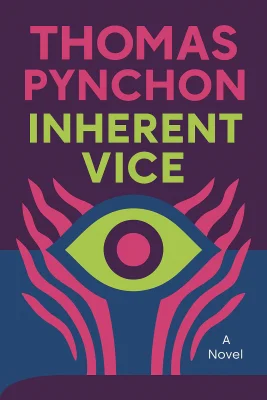
Inherent Vice
Categories
Fiction, Mystery, Literature, American, Humor, Contemporary, Novels, Crime, Literary Fiction, Noir
Content Type
Book
Binding
Hardcover
Year
2009
Publisher
Penguin Press
Language
English
ISBN13
9781594202247
File Download
PDF | EPUB
Inherent Vice Plot Summary
Introduction
# Inherent Vice: Fog, Paranoia, and Redemption in the Psychedelic Aftermath The fog rolled in from the Pacific like a living thing, swallowing the neon signs of Gordita Beach and turning the world into a maze of half-glimpsed shadows. In this haze, Larry "Doc" Sportello stumbled through the wreckage of the Summer of Love, a private investigator whose methods involved more marijuana than magnifying glasses. The year was 1970, and the counterculture's dreams had curdled into something darker, more paranoid, more dangerous. When Shasta Fay Hepworth appeared at his door after more than a year of silence, Doc knew trouble had found him again. She came bearing a story about Mickey Wolfmann, the real estate mogul who'd been talking about giving away his fortune, and a conspiracy involving his wife and her lover to have him committed. But when Mickey vanished without a trace and bodies started dropping, Doc discovered he'd stumbled into a web that stretched from the beaches of California to the corridors of federal power. In Thomas Pynchon's paranoid landscape, every answer led to deeper questions, every ally might be an enemy, and the only constant was the fog that obscured everything from view.
Chapter 1: The Return of Shasta Fay: A Desperate Plea from the Past
She came up the back steps the way she always used to, but everything had changed. Shasta Fay moved through Doc's kitchen like a ghost haunting familiar territory, her flower-child beauty now wrapped in the conservative clothes of straight society. The transformation unsettled him more than he cared to admit. "Need your help, Doc," she said, accepting the beer he offered with hands that trembled slightly. The story she told in the dim light made his blood run cold. Mickey Wolfmann, the real estate developer whose billboards dominated the Los Angeles skyline, had been talking about radical things. Giving away his fortune. Making amends for a lifetime of charging people for basic shelter. His wife Sloane and her lover Riggs Warbling wanted him committed to a mental institution, and they wanted Shasta to help them do it. Doc studied her face as she spoke, searching for traces of the woman he'd once loved. The hardness in her eyes was new, a calculation that hadn't existed before. When she mentioned the sums of money involved, he felt the familiar chill of recognition. This wasn't about adultery or even theft. This was about the kind of money that made people disappear permanently. The fog thickened outside as they talked, wrapping the beach community in its familiar embrace. By the time Shasta slipped away into the darkness, Doc knew he was already in too deep. He watched her taillights vanish into the mist, unaware that he'd just been handed the first piece of a puzzle that would nearly destroy him. The game had begun, and the stakes were higher than anything he'd encountered in his career as a small-time investigator in the ruins of the psychedelic dream.
Chapter 2: Channel View Estates: Blood in the California Sunshine
The morning brought news that shattered Doc's world like a brick through a window. Mickey Wolfmann had vanished without a trace, and his bodyguard Glen Charlock lay dead in the dusty streets of Channel View Estates. Worse still, Doc found himself at the center of the investigation, not as the detective he fancied himself to be, but as the prime suspect in a murder he couldn't remember committing. Detective Lieutenant Christian "Bigfoot" Bjornsen stood over the crime scene with the satisfied expression of a predator who'd finally cornered his prey. The massive Swedish-American cop had been waiting years for an opportunity like this. His favorite hippie suspect, found unconscious at a murder scene with no alibi and no memory of how he'd gotten there. The frozen chocolate banana Bigfoot gnawed on seemed to mock Doc's predicament. Channel View Estates stretched endlessly under the harsh California sun, a monument to Mickey Wolfmann's vision of suburban prosperity. Model homes sat like stage sets against the backdrop of the San Gabriel Mountains, their Spanish Colonial facades hiding cheap construction beneath. It was here, in this temple to American materialism, that violence had finally erupted into the open. Glen Charlock had been no ordinary bodyguard. A member of the Aryan Brotherhood with swastika tattoos and a history of violence, he'd been part of Mickey's security detail, a collection of ex-convicts and white supremacists who provided protection in exchange for steady pay. But someone had gotten past their defenses, and now Glen lay dead while his employer had simply vanished into the smoggy air of Los Angeles. As Doc was led away in handcuffs, he caught a glimpse of the massage parlor where he'd last been conscious, its neon signs dark and promising nothing but trouble ahead.
Chapter 3: The Missing Magnate: Mickey Wolfmann's Strange Disappearance
Released from custody but far from free, Doc began piecing together the mystery of Mickey Wolfmann's disappearance. The real estate mogul was no ordinary developer. His empire stretched from Malibu's beaches to the deserts beyond Palm Springs, built on political connections, mob money, and the ruthless ambition that had defined postwar California. But according to those who knew him best, Mickey had been changing in the months before he vanished. Doc's investigation led him to the Wolfmann mansion in the hills above Santa Monica, where he posed as a representative of a psychiatric facility. The ruse gave him access to Sloane Wolfmann, Mickey's English wife, a former Las Vegas showgirl whose beauty was matched only by her cunning. She received him in a living room designed by Hollywood lighting legend James Wong Howe, every surface calculated to flatter and deceive. Sloane wasn't alone. Riggs Warbling, her spiritual advisor and obvious lover, lurked in the shadows like a predator waiting to strike. A contractor specializing in experimental dome structures, Riggs had been working on Mickey's latest project, a mysterious development called Arrepentimiento near Las Vegas. The relationship between the three formed a triangle of desire and betrayal that would have impressed the most jaded Hollywood screenwriter. But it was Mickey's housekeeper, Luz, who provided the most disturbing insights into her employer's final days. She spoke of Mickey's growing obsession with giving away his fortune, his belief that the money he'd accumulated through decades of ruthless development was somehow cursed. He'd been taking LSD, experimenting with peyote, searching for spiritual redemption that his wife and her lover found both incomprehensible and threatening. The picture that emerged was of a man caught between worlds, trying to atone for a lifetime of exploitation while surrounded by people who had every reason to want him gone.
Chapter 4: The Dead Man Who Wasn't: Coy Harlingen's Secret Life
In the neon-lit underworld of San Pedro's Club Asiatique, Doc encountered a ghost. Coy Harlingen, the saxophone player who'd supposedly died of a heroin overdose months earlier, stood before him very much alive, though changed in ways that went beyond the obvious. The man who'd once played surf music with the legendary Boards was now a shadow of his former self, caught between life and death in a limbo that seemed to define the entire investigation. Coy's story unraveled like a jazz improvisation, full of unexpected turns and dark harmonies. His overdose had been staged, his death faked by forces that operated beyond the reach of conventional law enforcement. He'd been recruited by the LAPD's intelligence division, his supposed demise providing perfect cover for infiltrating radical groups and antiwar organizations. But the price of resurrection had been steep, forcing him to abandon his wife Hope and their young daughter Amethyst. The meeting at Club Asiatique was brief but revealing. Coy spoke in whispers about the Golden Fang, a mysterious schooner that appeared and disappeared like something out of a maritime ghost story. The vessel was more than just a boat, he hinted, but a floating symbol of the dark forces reshaping America in the aftermath of the sixties. Its crew included federal agents, CIA operatives, and mercenaries whose loyalty could be bought with the right combination of money and ideology. As they spoke, the fog rolled in from the harbor, wrapping the waterfront in its familiar embrace. Through the mist, Doc caught a glimpse of white sails moving against the darkness, a vision so brief he wondered if he'd imagined it. But Coy's reaction was immediate and visceral, the fear in his eyes confirming what Doc had suspected. The Golden Fang was real, and it was hunting. Before disappearing back into the shadows, Coy made one final request. He asked Doc to check on his family, to make sure they were safe without revealing that he was still alive.
Chapter 5: The Golden Fang: A Vessel of Many Mysteries
The schooner Golden Fang materialized out of maritime legend like something from a fever dream, her white sails cutting through the fog of San Pedro harbor with an elegance that belied her sinister purpose. Doc's lawyer Sauncho Smilax had been tracking the vessel for months, his obsession growing with each mysterious appearance and disappearance. What he'd discovered was a ship with a history as dark as the waters she sailed. Originally christened Preserved, the schooner had survived the Halifax explosion of 1917 only to be transformed into something far more dangerous. During the Cold War, she'd been refitted and renamed, becoming a floating platform for CIA operations throughout the Pacific. Her holds had carried weapons to anti-Communist guerrillas, her decks had hosted interrogations that left no survivors, and her crew had become legends in the shadow world of covert operations. The connection to Mickey Wolfmann's disappearance became clear when federal agents recovered containers of counterfeit currency from the ocean floor, bills bearing Richard Nixon's face in place of the usual presidents. The money had been dumped from the Golden Fang during Mickey's final voyage, a trip that had ended with the real estate mogul's mysterious vanishing. But the currency itself told a deeper story, suggesting connections to Southeast Asia and the drug trade that was financing America's secret wars. Shasta Fay Hepworth had been aboard the Golden Fang when she disappeared, according to intelligence sources that Sauncho had cultivated in the federal courthouse. Whether she'd gone willingly or under duress remained unclear, but her presence on the vessel linked her directly to Mickey's fate. The woman who'd once shared Doc's bed was now part of a conspiracy that reached into the highest levels of government. As Doc studied photographs of the schooner through borrowed binoculars, he felt the weight of forces beyond his comprehension pressing down like the fog that never seemed to lift.
Chapter 6: Shadowy Powers: The Forces Behind the Scenes
The deeper Doc dug into the mystery, the more he realized that Mickey Wolfmann's disappearance was part of something much larger than a simple kidnapping or murder. The real estate mogul had stumbled onto a conspiracy that reached from California's beaches to Southeast Asia's battlefields, a web of corruption that included federal agents, organized crime figures, and political operatives who thrived in the shadows of American democracy. At the center of it all was an organization called Vigilant California, a right-wing group that claimed to fight Communist infiltration but was actually engaged in activities that would have made the KGB proud. They'd recruited informants from the counterculture, staged false flag operations to discredit antiwar activists, and eliminated anyone who threatened to expose their operations. Mickey Wolfmann had become a target when he began talking about giving away his fortune, a gesture that would have disrupted carefully laid plans for using his money to fund covert operations. The federal agents who questioned Doc were part of this larger conspiracy, their interest in the case extending far beyond simple law enforcement. They were particularly interested in two stewardesses, Lourdes and Motella, whose smuggling operations had apparently intersected with the activities of the Golden Fang. The women were unknowing pawns in a game that stretched across the Pacific, their flights providing cover for the movement of drugs, weapons, and personnel. Even Doc's sometime lover, Deputy District Attorney Penny Kimball, was caught up in the web of deception. Her questions about the case revealed knowledge that could only have come from federal sources, suggesting that she was either working with the conspiracy or being manipulated by it. The boundaries between law enforcement and criminal activity had become so blurred that it was impossible to tell who was working for whom. As the investigation deepened, Doc began to understand that he wasn't just solving a case but uncovering the hidden history of his time, where paranoia wasn't a mental illness but a survival skill.
Chapter 7: Navigating the Haze: Connections in a Paranoid Landscape
In the end, the truth about Mickey Wolfmann's disappearance remained as elusive as the fog that perpetually shrouded Los Angeles. Doc's investigation had revealed the existence of a vast conspiracy, but the key players had vanished like smoke, leaving behind only questions and the lingering scent of corruption. The Golden Fang had sailed away into international waters, taking its secrets with it, while the forces that had orchestrated Mickey's disappearance melted back into the shadows of American power. Shasta Fay Hepworth remained missing, her fate unknown but probably sealed the moment she stepped aboard the mysterious schooner. Doc was left to wonder whether she'd been a willing participant in Mickey's downfall or simply another victim of forces beyond her control. The woman he'd once loved had become a ghost, existing only in his memories and in the paranoid fantasies that haunted his drug-addled dreams. The case officially remained open, but Doc knew that no conventional investigation would ever solve it. The conspiracy was too vast, too well-connected, too deeply embedded in the structure of American society. Mickey Wolfmann had discovered this truth too late, his attempt at redemption crushed by the very system he'd helped create. His fortune would be redistributed among his enemies, his idealistic dreams forgotten in the rush to profit from his disappearance. But something had changed in Doc during the course of the investigation. The perpetually stoned hippie detective had glimpsed the true nature of the world he inhabited, a place where the counterculture's dreams of peace and love had been systematically destroyed by forces that understood the power of corruption and fear. He'd survived the encounter, but he was no longer the same person who'd answered Shasta's desperate plea for help. As the fog rolled in from the Pacific once again, wrapping Los Angeles in its familiar embrace, Doc understood that he was living through the end of an era, where the only truth was that nothing was true, and the only constant was the fog that obscured everything from view.
Summary
In the hazy aftermath of the 1960s, Doc Sportello's journey through the labyrinth of California corruption revealed a world where idealism went to die and paranoia reigned supreme. Mickey Wolfmann's transformation from guilty philanthropist to missing person served as a metaphor for the larger defeat of the counterculture's dreams, while Shasta Fay Hepworth's disappearance aboard the mysterious Golden Fang symbolized the price of getting too close to the truth. The conspiracy that destroyed Mickey reached from the beaches of California to the corridors of Washington, revealing a nation where the war on drugs provided perfect cover for those who profited from chaos and division. Thomas Pynchon's vision of 1970 Los Angeles emerged as a landscape of perpetual fog and moral ambiguity, where private investigators stumbled through cases they could never truly solve and where corruption permeated every level of society. Doc's survival came at the cost of innocence, his drug-hazed perception clearing just enough to glimpse the true nature of the world he inhabited. The Golden Fang sailed away into international waters, but its legacy lingered in the paranoid atmosphere of a decade that would be defined by Watergate, Vietnam, and the systematic destruction of trust in American institutions. In this twilight realm where dreams and nightmares intermingled like smoke from a thousand joints, the search for truth became an act of faith, and the fog never fully lifted from the shores of a nation that had lost its way.
Best Quote
“What goes around may come around, but it never ends up exactly the same place, you ever notice? Like a record on a turntable, all it takes is one groove's difference and the universe can be on into a whole 'nother song.” ― Thomas Pynchon, Inherent Vice
Review Summary
Strengths: The review highlights the book's engaging and complex plot, filled with a variety of interesting characters and Pynchonesque names. The setting of 1969, with its backdrop of peace, love, and revolution, adds a unique atmosphere to the narrative. Weaknesses: The review points out that the protagonist, Doc Sportello, is not a very competent detective, often forgetting details and making mistakes due to his constant state of intoxication. The plot is described as becoming overly convoluted, leaving both Doc and the reader confused about the investigation's true focus. Overall: The reviewer provides a mixed sentiment, appreciating the book's rich character development and setting but critiquing the protagonist's ineptitude and the plot's complexity. The recommendation level is not explicitly stated.
About Author

Thomas Pynchon
Pynchon interrogates the complexities of modern life through narratives rich in historical and scientific references. His work is defined by its encyclopedic scope and a fascination with the intersection of reality and fiction, reflecting on themes like entropy and paranoia. By intertwining these elements with nonlinear plots and a metafictional style, Pynchon crafts stories that challenge traditional storytelling. His books often delve into the boundaries between order and chaos, as seen in works like "Gravity's Rainbow," which secured the National Book Award for Fiction in 1973.\n\nHis novels appeal to readers who appreciate intellectually demanding literature, offering a deep dive into the intricacies of societal and philosophical concerns. The bio of this elusive author reveals a dedication to exploring the fragmentation of modern society through complex characters and settings. Titles like "V." and "The Crying of Lot 49" exemplify his method of embedding dense references within the narrative, providing a rich tapestry for analysis and interpretation. Readers gain insights into the multifaceted nature of human existence and the hidden patterns that shape it.\n\nPynchon's literary achievements extend beyond his writing, influencing postmodern literature and earning him recognition as a pivotal figure in American letters. While "Gravity's Rainbow" remains one of his most celebrated works, other novels such as "Mason & Dixon" continue to captivate audiences with their intricate storytelling and thematic depth. His ability to weave humor with erudition ensures his place among the most influential novelists, offering works that remain relevant and thought-provoking.
Read moreDownload PDF & EPUB
To save this Black List summary for later, download the free PDF and EPUB. You can print it out, or read offline at your convenience.
Inherent Vice
by Thomas Pynchon
