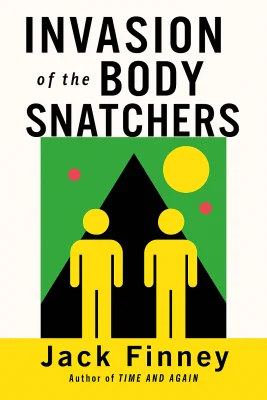
Invasion of the Body Snatchers
Categories
Fiction, Classics, Science Fiction, Audiobook, Horror, Thriller, Fantasy, Science Fiction Fantasy, Novels, Aliens
Content Type
Book
Binding
Paperback
Year
1998
Publisher
Scribner Paperback Fiction
Language
English
ASIN
0684852586
ISBN
0684852586
ISBN13
9780684852584
File Download
PDF | EPUB
Invasion of the Body Snatchers Plot Summary
Introduction
Dr. Miles Bennell thought he understood the human mind until his patients began reporting something impossible: their loved ones weren't their loved ones anymore. The faces were identical, the voices unchanged, even the memories intact—but the spark of humanity had vanished, replaced by something cold and alien. What started as a few isolated cases of delusion in the small California town of Santa Mira would soon reveal itself as something far more terrifying than any psychiatric condition. When Becky Driscoll appeared at his office that August evening in 1953, her eyes bright with unshed tears, Miles had no idea that her story about her father would be the thread that, when pulled, would unravel the very fabric of their world. The truth lurking in the shadows of their quiet town was more horrific than any nightmare: an invasion had begun, silent and methodical, targeting not just Santa Mira but potentially all of humanity.
Chapter 1: The First Signs: Strangers Wearing Familiar Faces
The trouble began with Wilma Lentz, a practical woman who ran the local library and had never shown signs of mental instability. She sat across from Dr. Miles Bennell's desk, her hands clasped tightly in her lap, insisting that her Uncle Ira—the man who had raised her—was an impostor. The resemblance was perfect, she explained. Every gesture, every memory, every scar was exactly as it should be. But the emotion was gone, replaced by hollow mimicry. Miles dismissed it as a delusion until more cases appeared. A quiet housewife claimed her husband wasn't her husband. Three mothers reported that their daughters insisted their English teacher was a fake. A young lawyer was convinced his sister had been replaced. All described the same impossible phenomenon: people who looked and acted exactly like their loved ones but felt fundamentally wrong, as if humanity itself had been drained from them. When Becky Driscoll knocked on his office door that evening, Miles felt a familiar warmth. She had been his high school sweetheart, and seeing her again stirred old feelings. But her visit wasn't romantic—she was terrified about her father, describing the same chilling transformation others had reported. Her father looked the same, remembered everything, but the loving warmth in his eyes had been replaced by something mechanical and cold. Miles wanted to believe these were psychiatric cases, treatable conditions brought on by stress or suggestion. But as he listened to Becky's trembling voice describe her father's hollow responses to childhood memories, a creeping dread began to take hold. The stories were too consistent, too detailed, and too frightening to dismiss. Something was happening in Santa Mira, something that challenged everything he thought he knew about human nature and reality itself.
Chapter 2: Discovery in the Basement: Uncovering the Pods
Jack Belicec's voice carried an edge of barely controlled panic when he called Miles away from the movie theater. A writer who lived on the outskirts of town, Jack was known for his rational mind and steady nerves. But that night, as he led Miles and Becky through his basement to a storage room beneath the stairs, his hands shook as he pulled the sheet away from what lay on his billiard table. The naked body appeared human at first glance—male, average height and build, well-formed but strangely unmarked by life's usual scars. Miles examined it carefully under the harsh light, noting the peculiar absence of any identifying marks or blemishes. The skin was pale and waxy, the face oddly unformed, like a sculpture waiting for the artist's final touches. Most disturbing of all, when Miles pressed the fingertips to an ink pad, they left no prints—only smooth, featureless circles. Jack's wife Theodora sat in their living room afterward, her face drained of color, explaining what she had witnessed. She had agreed to check on the body periodically while Jack slept, but what she saw in those midnight hours defied all logic. The blank face had slowly begun to change, taking on Jack's features with terrifying precision. The bone structure shifted, the hair darkened and curled, even a small scar on Jack's hand began to appear on the thing's corresponding limb. Miles felt his rational world crumbling as he listened to her account. This wasn't mass hysteria or shared delusion—they had physical evidence of something impossible. The body represented a biological mystery that challenged everything he knew about life and death. As they sat in Jack's living room overlooking the lights of Santa Mira, the three friends realized they were facing something far beyond their understanding, something that threatened not just their sanity but their very existence.
Chapter 3: The Quiet Conspiracy: A Town Transformed
Psychiatrist Mannie Kaufman arrived with explanations that should have been comforting but felt inadequate. He spoke of mass hysteria, of cases like the Dancing Sickness that once swept Europe and the phantom gasser of Mattoon, Illinois. His rational voice tried to impose order on the chaos, suggesting that fear and suggestion had created a shared delusion. But even as he explained away their experiences, Miles noticed something different in his old friend's eyes—a subtle absence of the warmth and curiosity that had always defined Mannie. The revelation came gradually, like a photograph developing in slow motion. Patients who had complained about replaced family members began returning to Miles's office, apologizing for their "delusions" and praising Dr. Kaufman's treatment. Their words were right, their mannerisms unchanged, but they spoke with the hollow ring of actors reciting lines. Wilma Lentz called to express embarrassment about her "foolish" concerns regarding Uncle Ira, her voice devoid of the genuine warmth Miles remembered. Miles began to see the signs everywhere once he knew what to look for. The town's gradual decay became apparent—empty shops with dusty windows, fewer repairs being made, a general atmosphere of neglect that suggested people going through the motions of living without true engagement. Even the local librarian, Miss Wyandotte, who had been a fixture of Miles's childhood, revealed herself to be something else entirely when confronted about missing newspaper clippings. Her transformation from kindly librarian to cold, alien presence happened in an instant, like a mask slipping away. The scope of the invasion became clear when Miles witnessed what appeared to be a normal shopping day on Main Street. But the coordinated distribution of mysterious pods to residents bound for neighboring towns revealed the systematic nature of the takeover. Santa Mira had become ground zero for something spreading methodically throughout Marin County, using human faces and familiar voices to mask its alien purpose.
Chapter 4: Running Against Time: The Flight Through Darkness
The discovery of fresh pods in Miles's basement sent the four friends fleeing into the night. The huge, membranous sacs pulsed with malevolent life, already beginning their grotesque transformation process. Miles and Jack destroyed them by the roadside, watching the alien matter dissolve in gasoline flames, but they knew more would come. The thing that had taken Santa Mira was patient, methodical, and utterly relentless in its spread. At a roadside motel, exhaustion warred with terror as they tried to process what they had witnessed. Becky lay beside Miles in the darkness, seeking comfort from the nightmare that had engulfed their world. But even in that moment of intimacy, the weight of what they faced pressed down on them. They were four people against an invasion that had already consumed their entire town, possibly their entire county. The morning brought a terrible realization: running wasn't enough. The pods weren't just replacing individuals—they were systematically taking over all life, turning it into something hollow and purposeless. Professor Budlong, who had first studied the pods when they appeared on local farms, tried to convince them with scientific explanations about space-borne spores and cellular reconstruction. But beneath his academic demeanor lurked the same cold emptiness they had seen in all the others. As they returned to Santa Mira, driven by a desperate need to understand and resist, Miles felt the full weight of their isolation. Every face they passed might be an enemy, every familiar voice might mask alien intelligence. The town that had been their home now felt like hostile territory, crawling with things that wore human shapes but harbored inhuman purposes. Their only advantage was that the invasion still needed to maintain its facade, still needed to appear normal to the outside world.
Chapter 5: The Last Stand: Confrontation in the Fields
In Miles's office, surrounded by the four figures that had once been their friends, the truth finally emerged in all its horror. Mannie Kaufman, his voice gentle but devoid of real emotion, explained the futility of resistance. The pods didn't just copy human appearance—they absorbed the complete pattern of electrical forces that held together every atom of a person's body. What remained was a perfect duplicate lacking only the spark of genuine life and feeling. The revelation was worse than death: this wasn't just about Santa Mira or even Earth. The pods were parasites of the universe itself, drifting from world to world, consuming all life and moving on to the next planet. They had already killed Mars, the Moon, and countless other worlds, leaving behind empty husks before launching themselves into space to continue their endless cycle of destruction. Earth was simply the next stop in their cosmic wandering. But Miles and Becky weren't ready to surrender. Using the skeletons from his office closet, Miles managed to trick the pods into exhausting themselves on lifeless bone. The deception bought them a few hours and a chance to escape, though they knew it was only temporary. As they fled through the night-darkened hills above town, they were pursued by every resident of Santa Mira, all moving with the coordinated purpose of a single alien intelligence. The chase led them to Art Gessner's farm, where hundreds of new pods lay ripening in carefully tended rows. Here, in sight of Highway 101 and potential salvation, Miles made the choice that would define humanity's fate. Rather than flee to safety, he and Becky used their last moments of freedom to destroy as many pods as possible, pouring gasoline through irrigation ditches and setting the alien nursery ablaze. It was a futile gesture against impossible odds, but it was purely, defiantly human.
Chapter 6: Unexpected Exodus: When the Invaders Retreat
The fire spread through the field like divine judgment, consuming pod after pod in brilliant white flames. Miles and Becky stood transfixed as the alien nursery burned, knowing their defiance would cost them everything but unable to stop themselves. This was what it meant to be human: to fight impossible odds, to choose hope over despair, to refuse surrender even when defeat was certain. As the pursuing crowd surrounded them, something extraordinary happened. The remaining pods began to move on their own, snapping free from their stems and rising slowly into the night sky. Like a vast swarm of dark balloons, they drifted upward past the moon and into the star-filled darkness beyond. The invasion was ending as suddenly as it had begun, but not through conquest—through retreat. Miles understood with crystalline clarity what their resistance had accomplished. The pods were ancient survivors, drifting through space for millions of years, consuming world after world. But they had encountered something new in humanity: a species that would never yield, never accept domination, never stop fighting even when fighting was hopeless. Every act of defiance, from Wilma's initial suspicions to this final desperate arson, had demonstrated that Earth would never be a suitable home for them. The crowd of hollow duplicates stood motionless as the last pods disappeared into space, their purpose suddenly meaningless. Without new pods to sustain them, these false humans would wither and die within years, leaving behind a town full of empty houses and fading memories. The invasion had failed not through superior force or clever strategy, but through the simple, stubborn refusal of human beings to accept the unacceptable.
Chapter 7: Aftermath: Living Among the Echoes
Santa Mira slowly returned to something resembling normal life, though the scars remained visible to those who knew where to look. Empty houses stood as monuments to the vanished, while the survivors—those few who had never been replaced—tried to rebuild their community. Miles and Becky married and settled into the quiet routine of small-town life, but they carried the weight of their knowledge like a hidden wound. The official world never acknowledged what had happened. There were no newspaper headlines or government investigations, no scientific studies of the alien threat that had nearly consumed Earth. Santa Mira's brief occupation by cosmic parasites became just another forgotten chapter in the town's history, dismissed by outsiders as collective hysteria or mass delusion. Only the gradual death of the remaining duplicates, dying of causes doctors couldn't quite name, hinted at the truth. But Miles knew the victory was not complete. Sometimes, reading obscure news items about inexplicable phenomena—showers of frogs, spontaneous human combustion, impossible coincidences—he recognized the signs of other worlds touched by wandering spores. The universe was vast and full of wonders and terrors beyond human comprehension. Somewhere out there, the pods continued their endless journey, searching for a world that would welcome them. Yet humanity had proven something vital in those terrible days: that the human spirit, once aroused, was unconquerable. No matter how hopeless the odds, no matter how overwhelming the enemy, there would always be those who chose to fight rather than surrender. In the end, that simple truth had been enough to save the world, and Miles slept peacefully knowing that it always would be.
Summary
The invasion of Santa Mira stands as testament to both humanity's vulnerability and its ultimate strength. What began as a handful of psychiatric cases revealed itself as the opening moves of a cosmic horror beyond imagination—ancient parasites that had consumed worlds across the galaxy, leaving behind empty husks before moving on to their next target. Yet in choosing Earth, these entities encountered something unprecedented: a species that would choose destruction over domination, death over surrender. Miles and Becky's love story became something greater than romance in the face of ultimate evil. Their refusal to yield, even when surrender promised peace and continued existence, embodied the fierce independence that defines human nature at its best. In setting fire to those alien pods, knowing it would cost them their lives, they demonstrated that some things matter more than survival—that freedom and authenticity are worth any price. The pods, ancient and patient as they were, could not comprehend such defiance and were forced to seek easier prey among the stars, leaving Earth scarred but free, diminished but triumphantly human.
Best Quote
“The human mind searches for cause and effect, always; and we all prefer the weird and thrilling to the dull and commonplace as an answer.” ― Jack Finney, Invasion of the Body Snatchers
Review Summary
Strengths: The review highlights the novel's originality and its insightful commentary on socialization and the concept of 'otherness.' The narrative's ability to maintain suspense and provoke thought is praised, as is the realistic portrayal of personal relationships amidst extraordinary circumstances. The book's commitment to its premise, despite its seemingly cheesy concept, is also appreciated. Overall: The reviewer expresses a highly positive sentiment towards "Invasion of the Body Snatchers," recommending it for its unique take on societal collapse and its engaging, suspenseful narrative. The book is suggested for readers interested in social science themes and those who enjoy science fiction with a psychological edge.
About Author

Jack Finney
Finney explores the intersection of science fiction and psychological suspense, weaving intricate narratives that combine speculative elements with historical settings. His work often delves into themes of time travel and identity, offering readers an imaginative escape while remaining anchored in meticulously researched details. For instance, "Time and Again," set in 1880s New York, stands out as a cult favorite among his fans due to its vivid depiction of the past, highlighting Finney's skill in blending reality with the fantastical.\n\nIn his books, Finney frequently uses the device of time travel not just as a plot mechanism but as a means to explore human experience across different eras. This approach is evident in works like "The Woodrow Wilson Dime," where the protagonist navigates parallel worlds, and "The Third Level," a short story collection that features characters slipping into different times. Beyond the thrill of his plots, Finney's stories resonate with readers who appreciate his character-driven narratives and his ability to bring the past to life with authenticity and emotional depth.\n\nReaders benefit from Finney's ability to combine genres in ways that challenge conventional storytelling while providing a rich, immersive experience. His influence extends beyond literature, impacting filmmakers and other writers drawn to his unique narrative style. This short bio reflects how Finney's legacy endures, not just through the enduring popularity of works like "The Body Snatchers," but through his lasting impact on the genres of science fiction and thrillers, marking him as a significant figure in 20th-century American literature.
Read moreDownload PDF & EPUB
To save this Black List summary for later, download the free PDF and EPUB. You can print it out, or read offline at your convenience.
Invasion of the Body Snatchers
by Jack Finney
