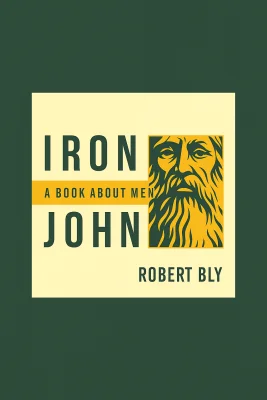
Iron John
A Book About Men
Categories
Nonfiction, Self Help, Psychology, Philosophy, Spirituality, Sociology, Poetry, Personal Development, Mythology, Gender
Content Type
Book
Binding
Paperback
Year
2004
Publisher
Da Capo Press
Language
English
ASIN
0306813769
ISBN
0306813769
ISBN13
9780306813764
File Download
PDF | EPUB
Iron John Plot Summary
Introduction
# Iron John: Ancient Wisdom for Modern Masculine Identity A father sits across from his thirty-five-year-old son at a coffee shop, both struggling to find words that bridge the gulf between them. The son has achieved professional success, yet feels hollow inside, disconnected from his own masculine power and purpose. The father, well-meaning but emotionally distant, offers practical advice that misses the deeper longing in his son's eyes. This scene, repeated in countless variations across modern society, reveals a profound crisis: the breakdown of traditional pathways that once guided boys into authentic manhood. In our contemporary world, young men find themselves caught between outdated models of toxic masculinity and an absence of meaningful initiation into mature masculine identity. They hunger for mentorship, for rituals of passage, for connection to something wild and authentic within themselves. This book offers a roadmap through that wilderness, drawing on ancient wisdom and fairy tale imagery to illuminate the essential stages every man must navigate on his journey toward wholeness. Through the powerful metaphor of Iron John, we discover how men can reclaim their inner wildness, heal their wounds, and step into their full potential as mature, integrated human beings.
Chapter 1: The Wild Man in the Cage: Confronting Our Forbidden Nature
Deep in the forest near a king's castle, something mysterious lurked beneath the waters of a remote pond. Hunters who ventured into that area would disappear without a trace, never to return. The local people learned to avoid that part of the woods entirely, sensing an ancient and powerful presence they could not understand. One day, a brave hunter arrived at the castle and volunteered to investigate the forbidden territory. Armed only with courage and accompanied by his faithful dog, he ventured into the mysterious woodland. When the hunter and his dog approached the ominous pond, a massive hand suddenly emerged from the dark water and dragged the dog beneath the surface. Rather than flee in terror, the hunter recognized this as the source of the mystery. He returned to the castle, gathered helpers with buckets, and began the slow, methodical work of draining the pond. Bucket by bucket, they removed the water until finally, lying at the bottom, they discovered a wild man covered in reddish hair from head to foot. This opening reveals the first crucial step in masculine development: the willingness to face what others avoid, to venture into the unknown territories of our own psyche. The Wild Man represents the instinctual, untamed masculine energy that modern society has largely suppressed and caged. Yet this energy, though frightening and unpredictable, holds the key to authentic masculine power. The hunter's patient work of bucketing out the water symbolizes the gradual, disciplined effort required to uncover our deepest truths, even when that process seems overwhelming and endless. The courage to approach what has been forbidden or feared becomes the foundation for all genuine masculine transformation.
Chapter 2: The Golden Wound: When Growth Requires Sacred Sacrifice
The king's young son possessed a golden ball that he treasured above all else, representing the radiant wholeness and unlimited potential of childhood. One day while playing in the courtyard, his precious ball rolled into Iron John's cage. To retrieve it, the boy would need to approach the fearsome Wild Man and ask for help. When he finally gathered the courage to make this request, Iron John agreed to return the ball, but only if the boy would release him from his prison. The key to the cage, Iron John revealed, lay hidden under the boy's mother's pillow. The boy faced an impossible choice: remain safe in his familiar world but lose his golden ball forever, or steal the key and embark on an unknown adventure with the Wild Man. After much hesitation and several failed attempts, he finally took the key from beneath his mother's pillow and opened the cage. As he turned the key, he injured his finger, and Iron John, now free, invited the boy to come with him to the forest. This pivotal moment illustrates how authentic masculine initiation requires a clean break from the protective maternal world. The golden ball represents our essential self, our creative potential, which can only be reclaimed through relationship with our wild, instinctual nature. The wounded finger symbolizes how growth always involves some form of sacrifice or loss. Most significantly, the key under the mother's pillow suggests that the power to unlock our authentic masculinity often lies in areas we've been taught not to explore, requiring us to move beyond the safety of maternal approval into the uncertain but transformative realm of masculine mentorship.
Chapter 3: From Kitchen to Garden: Finding Purpose in Hidden Service
Iron John led the boy to a sacred spring in the heart of the forest, where golden fish swam in crystal-clear water. The Wild Man gave the boy a simple task: sit beside the spring and ensure that nothing falls into it. Despite his best intentions, the boy's wounded finger hurt so much that he involuntarily dipped it into the water. Immediately, the finger turned to gold, though he tried desperately to hide this transformation from Iron John. The next day, while running his hand through his hair, a single strand fell into the spring and also turned golden. On the third day, as he gazed at his reflection in the water, all of his hair tumbled forward and emerged gleaming like the sun itself. When Iron John discovered what had happened, he told the boy that he could no longer remain in the forest. The boy, now bearing the visible mark of his transformation but lacking any practical skills, wandered until he reached a great city. Unable to find work elsewhere, he eventually took a position in the kitchen of a castle, carrying wood and water, raking cinders, and performing the most menial tasks. This descent from the heights of magical transformation to the ashes of ordinary labor represents a crucial stage in masculine development. The golden hair symbolizes the spiritual insights and expanded consciousness that come from deep inner work, yet these gifts can become burdens if we're not grounded in practical reality. The kitchen work teaches humility and connects us to the basic elements of survival. The ashes represent the necessary death of grandiose fantasies and the acceptance of our human limitations. Only by embracing this descent can a man develop the solid foundation needed to integrate his spiritual insights into everyday life, transforming mystical experience into practical wisdom.
Chapter 4: The Warrior's Path: True Strength Beyond Recognition
War came to the kingdom, and the king gathered his forces to face a powerful enemy. The gardener's boy, now grown, volunteered to join the battle, asking only for a horse. The other men laughed and told him he could take whatever horse they left behind. When they departed, he found only a lame, three-legged horse in the stable. Mounting this pitiful creature, he rode to the edge of the forest and called out for Iron John. The Wild Man appeared and, understanding the boy's need, provided him with a magnificent war-horse and a band of iron-clad warriors. Leading this supernatural army, the boy charged into battle like a hurricane, striking down every enemy and pursuing them to complete defeat. However, instead of returning to claim credit for the victory, he led his warriors back to the forest, returned the magical horse and army to Iron John, and rode home on his three-legged nag. When the king returned and told his daughter about the mysterious knight who had saved the kingdom, she questioned the gardener about his boy, who had simply said he had fought well and wondered what would have happened without him. This battle sequence represents the awakening of the warrior archetype within the developing masculine psyche. The three-legged horse symbolizes the wounded, incomplete masculine energy that most men carry due to early shaming and trauma. Iron John's gift of the four-legged war-horse represents the healing and completion that becomes possible through connection with the Wild Man energy. Most importantly, the boy's return to anonymity demonstrates that true warrior energy serves the greater good rather than personal glory, and that the integration of this power requires humility and discretion rather than public recognition.
Chapter 5: Sacred Marriage: Integrating Power with Love
While working alone in the summer heat, the gardener's boy removed his head covering to cool himself, and the sunlight striking his golden hair created brilliant beams that shone directly into the bedroom of the king's daughter. Intrigued by this mysterious light, she called to him to bring her flowers. When he appeared with wild flowers rather than the cultivated blooms the head gardener suggested, she was delighted by his choice. As he entered her chamber, she demanded that he remove his head covering, and when he refused, she pulled it off herself, revealing his magnificent golden hair. The princess was so impressed that she gave him a handful of gold coins, but the boy gave them away to the gardener's children as playthings. This scene repeated itself three times, with the princess growing more determined to see his golden hair and the boy consistently refusing to keep her gold. This meeting represents the crucial encounter between the developing masculine and the divine feminine principle. The princess, as the king's daughter, embodies both earthly beauty and spiritual wisdom. Her immediate recognition of the boy's golden hair shows her ability to perceive his true nature beneath his humble disguise. The wild flowers symbolize authentic gifts that spring from natural impulse rather than calculated effort. The boy's refusal to accept material rewards demonstrates his understanding that the real treasure lies in the connection itself, not in what can be gained from it. This encounter awakens the lover archetype within him, teaching him that true masculine power lies not in conquest but in the ability to offer genuine gifts while maintaining one's essential mystery and integrity.
Chapter 6: The King Revealed: From Wild Man to Wise Leader
The story reaches its climax when the king announces a great festival where his daughter will choose a husband by throwing golden apples to her preferred suitor. On three successive days, the gardener's boy calls upon Iron John for help, each time receiving magnificent armor, a powerful horse, and a company of warriors. On the first day, he appears as a knight in red armor on a red horse, catches the princess's golden apple, and disappears. The second day brings white armor and a white horse, and again he catches the apple and vanishes. On the third day, in black armor on a black horse, he not only catches the apple but is wounded in the leg by the king's men as he flees. The princess, determined to find her mysterious knight, orders all the men in the kingdom to appear before her. When the gardener's boy arrives, still limping from his wound and trying to hide his golden hair, she recognizes him immediately. She pulls away his bandages to reveal the wound, removes his cap to show his golden hair, and declares him to be her chosen husband. At that moment, Iron John appears, no longer wild and hairy but revealed as a king who had been under an enchantment. This conclusion demonstrates the ultimate integration of all the masculine archetypes: the lover who wins the princess's heart, the warrior who proves his courage in battle, the king who claims his rightful throne, and the wild man who maintains connection to instinctual wisdom. The three colors of armor represent the full spectrum of masculine energy, while the wound that reveals his identity shows how our vulnerabilities often become the very things that connect us most deeply to others. Iron John's transformation from wild man to king illustrates how what initially appears frightening or primitive in our nature, when properly honored and integrated, becomes the source of our greatest strength and wisdom.
Summary
The journey of Iron John reveals that authentic masculine development requires a willingness to leave the safety of the familiar and venture into the unknown territories of our own souls. Through the metaphor of the Wild Man, we discover that what our culture has taught us to fear and suppress may actually contain the keys to our deepest wisdom and power. The golden ball, the sacred spring, the garden, and the battlefield all represent different stages in the long process of becoming a whole human being, each requiring its own form of courage and commitment. The story teaches us that true masculine strength emerges not from dominance or aggression, but from the integration of wildness and wisdom, passion and discipline, vulnerability and power. Every man must find his own way to steal the key from under his mother's pillow, to sit by the sacred spring, to work in the ashes, and to face his battles with both courage and humility. The path is neither easy nor quick, but it leads to a life of authentic purpose and deep connection. In a world hungry for mature masculine leadership, this ancient wisdom offers hope that men can reclaim their birthright as protectors, creators, and wise elders, serving not only their own growth but the healing of our wounded world.
Best Quote
“What does it mean when a man falls in love with a radiant face across the room? It may mean that he has some soul work to do. His soul is the issue. Instead of pursuing the woman and trying to get her alone, away from her husband, he needs to go alone himself, perhaps to a mountain cabin, for three months, write poetry, canoe down a river, and dream. That would save some women a lot of trouble.” ― Robert Bly, Iron John: A Book About Men
Review Summary
Strengths: The review highlights the book's depth and richness of thought, appreciating its mythological approach to masculinity. It praises the author's ability to encourage men to think in myth and metaphor, offering a language for self-interaction that transcends clinical terminology. The book is noted for its potential to restore wonder and mysticism in an age dominated by reason. Weaknesses: The review mentions the author's verbosity and the perceived need to overly qualify statements to appease female readers, which may detract from the book's impact. Overall: The reader expresses gratitude for the book's unexpected depth and complexity, recommending it as a significant work in the men's movement literature. It is suggested that readers allow its ideas to integrate into their understanding of the world and themselves.
About Author

Robert Bly
Bly delves into the intersections of myth, masculinity, and spirituality in his work, contributing significantly to American literature and cultural discourse. His poetry and essays frequently explore nature, storytelling, and the human soul, advocating for a deeper emotional and spiritual engagement in contemporary poetry. Bly criticized the lack of inwardness in modern American poetry and sought to infuse his work with a rich sense of inward reflection and mythological depth. His translation efforts brought lesser-known European and Latin American poets to American readers, significantly impacting the literary landscape.\n\nCentral to Bly's career is his role in the mythopoetic men's movement, particularly through his influential book "Iron John: A Book About Men," which became an international bestseller. This work, alongside his numerous workshops, redefined masculinity in modern contexts, emphasizing the healing power of poetry and myth. His early book, "Silence in the Snowy Fields," demonstrates his plain, imagistic style that left a lasting mark on American poetry. Moreover, his protest poetry during the Vietnam War, including works like "The Light Around the Body," showcased the political potential of poetry, intertwining personal experience with public issues.\n\nReaders seeking a profound exploration of the masculine identity, spirituality, and myth will find Bly's body of work both transformative and enriching. His contributions extend beyond poetry, impacting areas of translation and activism, as evidenced by his involvement in American Writers Against the Vietnam War. Bly's bio reflects a lifetime dedicated to challenging and expanding the boundaries of poetic expression, with his legacy enduring in both literary and cultural spheres. His accolades, including the National Book Award for Poetry, further cement his status as a pivotal figure in the evolution of modern American poetry.
Read moreDownload PDF & EPUB
To save this Black List summary for later, download the free PDF and EPUB. You can print it out, or read offline at your convenience.
Iron John
by Robert Bly
