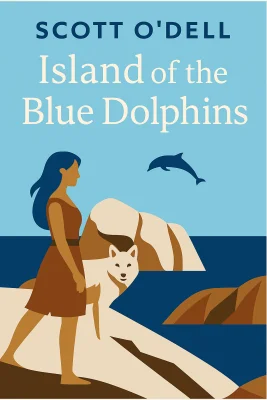
Island of the Blue Dolphins
Categories
Fiction, Classics, Historical Fiction, Young Adult, School, Historical, Adventure, Childrens, Middle Grade, Survival
Content Type
Book
Binding
Kindle Edition
Year
2010
Publisher
HMH Books for Young Readers
Language
English
ASIN
B0038AUY8M
ISBN
0547488890
ISBN13
9780547488899
File Download
PDF | EPUB
Island of the Blue Dolphins Plot Summary
Introduction
The crimson sails appeared on the horizon like drops of blood against the endless blue. Twelve-year-old Karana watched from the clifftops of San Nicolas Island as the Aleut hunting ship approached Coral Cove, her heart hammering with a mixture of fear and curiosity. She had heard the stories whispered by her elders—tales of these northern hunters who came for the precious sea otter pelts, leaving destruction in their wake. What began as a negotiation between Captain Orlov and her father, Chief Chowig, would soon spiral into tragedy, forever altering the fate of the Ghalas-at tribe. When violence erupted on the beach below, when the red sails finally disappeared beyond the kelp beds, Karana could never have imagined that she would become the sole survivor on this windswept island. Her journey from a protected daughter of a chief to a master of survival would span eighteen years of isolation, where every dawn brought new challenges and every sunset marked another day conquered against impossible odds.
Chapter 1: The Abandoned Child of the Island
The massacre at Coral Cove left the village of Ghalas-at shattered. Where forty-two men had once lived, only fifteen remained, most too old to hunt or fight. Karana's father lay among the dead, his secret name—foolishly given to the Russian captain—having weakened him in his final battle. The surviving women wailed through the storm that followed, carrying their dead to the southern headland for burial while the Aleut corpses burned on the beach. Months later, when the white men's ship arrived to evacuate the remaining islanders, chaos ruled the wind-whipped waters. Karana watched in horror from the crowded deck as her six-year-old brother Ramo appeared on the distant cliff, waving his fishing spear above his head. He had run back to retrieve his forgotten weapon, missing the final boat to shore. The captain refused to wait—the storm would drive them onto the rocks. Without hesitation, Karana flung herself into the churning sea. The icy water closed over her head as she watched the ship's sails disappear into the mist. She swam through mountainous waves until her feet touched sand, where Ramo waited at the water's edge, tears streaming down his face. They were alone now, the last children of Ghalas-at, abandoned on an island that stretched two leagues long and one league wide, shaped like a sleeping dolphin in the vast Pacific. The wild dogs came that very night, drawn by the scent of food left behind. Dozens of domestic animals, orphaned when their masters died, had joined the feral pack that roamed the island's northern caves. Their howls echoed across the empty village as Karana and Ramo huddled together, realizing that survival would demand everything they had never been taught.
Chapter 2: Learning to Survive Alone in the Wilderness
Little Ramo declared himself Chief Tanyositlopai and insisted on retrieving a canoe from the hidden cache beneath the southern cliffs. Despite Karana's fears, she let him go, knowing he must grow into manhood faster than nature intended. But when she found his torn body in the ravine, surrounded by the tracks of the wild dog pack, her world collapsed into grief and rage. The large gray dog with yellow eyes had led the attack. Karana tracked the pack to their cave and built fires to smoke them out, wounding their leader with an arrow before he vanished into the brush. She carried Ramo's body back to the village, where she sat through the night making a vow that would consume her: she would kill every wild dog on the island. But first, she had to survive. The laws of her tribe forbade women from making weapons, yet without spears and arrows, she would surely die. Would the four winds punish her transgression? Would the earth shake and bury her beneath falling rocks? Karana wrestled with these fears as she shaped her first spear point from hardened wood, bound it with seal sinews, and crafted a bow from precious driftwood. The day she completed her weapons, nothing terrible happened. The earth remained still, the winds blew as they always had. She had broken the sacred law and lived, proving that survival mattered more than tradition. With her bow across her back and spear in hand, she set out to build a new life—and to hunt down the creatures that had murdered her brother.
Chapter 3: From Enemy to Friend: Taming the Wild
The confrontation came sooner than expected. Karana discovered the wounded pack leader among the rocks, the broken shaft of her arrow still protruding from his chest. He lay motionless, blood matting his thick gray fur, his yellow eyes clouded with pain. She raised her spear, ready to complete her revenge. But something stayed her hand. Perhaps it was the way he looked at her, without fear or aggression, just quiet acceptance of death. Instead of ending his life, she carried him to her camp, a strange mercy that surprised even herself. For days she tended his wounds with coral twigs, leaving water within reach, expecting him to die or flee. Neither happened. The dog grew stronger, and though he would not take food from her hand, he waited each evening for the fish she provided. She named him Rontu—Fox Eyes—for his alert, intelligent gaze. Slowly, over many weeks, fear gave way to trust. He began sleeping by her fire, following her on daily journeys, even wagging his tail when she returned from hunting. The transformation was complete when the rest of the wild pack returned to challenge Rontu's new allegiance. On a grassy mound overlooking the sea, Karana watched him fight two rivals simultaneously. Blood flowed, bones cracked, but when the battle ended, Rontu stood victorious. He lifted his head and howled—not in pain, but in triumph. The surviving dogs slunk away, and the pack never again threatened the headland. From enemy to friend, from hunter to companion, Rontu had chosen his side.
Chapter 4: Building a Home Between Earth and Sea
With Rontu as guardian, Karana began constructing a permanent refuge. The headland offered the best vantage point to watch for ships, but it needed fortification against the elements and any remaining threats. She scavenged whale ribs from the sandspit, ancient bones bleached white by countless storms, and drove them deep into the rocky soil. The fence curved outward like a crescent moon, impossible to climb, bound together with bull kelp that shrank tight as leather when dried. Inside this sanctuary, she built her house against the natural rock wall, using fire-hardened poles and broad kelp leaves for the roof. The work consumed months, but each completed section brought deeper satisfaction than any task she had known. Winter tested her preparations mercilessly. Storms lashed the island for days at a time, sending spray clear over the cliffs. But Karana's shelter held firm. She had carved storage niches into the rock face, safe from mice and weather. Her fire pit, lined with carefully chosen stones, held coals from sunset to sunrise. Rain drummed on the kelp roof while she worked by the light of dried fish, crafting ever better tools and weapons. When spring returned, her transformation was complete. The frightened girl who had once fled from wild dogs now stood confidently within walls of her own making. She had learned to read weather in cloud formations, to find fresh water in the driest seasons, to preserve food against future want. The island was no longer her prison—it was becoming her kingdom.
Chapter 5: Unexpected Encounters and Brief Connections
The Aleuts returned two summers later, their red sails cutting through morning mist like harbingers of doom. Karana had prepared for this moment, stockpiling supplies in a hidden cave deep in the brush-choked ravine. She sealed herself inside with Rontu, waiting while the hunters made their camp at the familiar spring. For weeks she remained hidden, emerging only at night to gather food and water. But solitude weighs heavy on the human spirit, and when she glimpsed a young Aleut woman near the stream, loneliness overcame caution. The encounter began with fear—Karana's spear raised, the stranger's hands empty—but evolved into something neither expected. The woman called herself Tutok. Despite the language barrier, they began meeting daily, trading words and laughter in the warm sunshine. They pointed at objects—bird, sky, water, sun—sharing the sounds their peoples made for the same things. Tutok admired Karana's cormorant feather skirt, while Karana marveled at the black stone necklace Tutok left as a gift. But friendship between their peoples was impossible. When the Aleut ship finally departed, Karana stood on the headland watching the sails shrink to nothing, feeling more alone than ever before. Tutok had shown her what she was missing—the simple pleasure of human conversation, the comfort of shared understanding. The memory would sustain her through darker times ahead, proof that enemies could become friends when they dared to see each other as human.
Chapter 6: The Language of Nature and Animal Companions
Rontu became Karana's constant companion, but he was not her only friend. She rescued a wounded sea otter from the kelp beds, nursing it back to health in a tidal pool. The creature, which she named Mon-a-nee for its large, expressive eyes, stayed far longer than necessary, accepting fish from her hands and swimming alongside her canoe. When Mon-a-nee finally returned to the wild, Karana thought their friendship had ended. But months later, the otter reappeared with two pups, teaching them to crack abalone shells against their chests while floating on their backs. Only then did Karana realize her mistake—Mon-a-nee was female. She renamed her Won-a-nee and watched with delight as the little family played in the offshore kelp forests. Birds also answered her need for companionship. She captured two young ravens before they could fly, clipping their wings and training them to perch on her shoulders. Tainor and Lurai became so tame they would fly free during the day but always return at sunset, begging for food with soft, musical calls that filled the lonely evenings with life. Even a wounded gull with a broken leg became part of her strange household. These creatures could not speak her language, yet they understood something deeper—the rhythm of care and feeding, the comfort of proximity, the simple pleasure of being alive together. In their presence, Karana discovered that survival was not enough. She needed to nurture life, not merely endure it.
Chapter 7: Weathering Time Until Rescue Arrives
Years blended into decades, marked only by the changing seasons and the gradual graying of Rontu's muzzle. Karana stopped cutting notches in her door post to count the passing moons—time had lost its urgency. She lived fully in each day, fishing the reef at dawn, crafting ever more beautiful clothes and ornaments, exploring sea caves where her ancestors had once carved images in living stone. The island revealed its secrets slowly. She found caves filled with ancient skeletons and ceremonial figures, their abalone shell eyes glittering in torchlight like watching spirits. She mastered the art of spearing giant devilfish, battling tentacles thick as her arm in the churning surf. She learned to predict earthquakes from the restless behavior of gulls, to read the approach of tsunami waves in the sudden retreat of the sea. When Rontu died of old age, Karana grieved as deeply as for any human friend. She buried him on the headland with ceremony, surrounding his grave with colored stones. Later, she captured and tamed one of his sons, naming him Rontu-Aru to honor the memory of his father. But the loss reminded her that she too was aging, that rescue might never come. Eighteen years after diving from the evacuation ship, Karana saw white sails on the horizon. This time, when the men called out, she answered. She emerged from her house wearing her finest cormorant dress and otter cape, her face painted with the traditional marks of her tribe. The sailors stared in amazement at this woman who had not merely survived alone, but had created a life of dignity and purpose on the world's edge. Her long vigil was finally over.
Summary
Karana's rescue marked the end of an extraordinary chapter in human endurance, but also the closing of an entire world. She was the last speaker of her people's language, the final keeper of their customs and memories. When she died at Mission Santa Barbara, unable to communicate with even the Indian converts there, the culture of Ghalas-at died with her. Her magnificent feathered skirt was sent to Rome as a curiosity, while the island that shaped her remained in the Pacific, slowly surrendering to wind and wave. Yet her story transcends mere survival. In eighteen years of solitude, Karana discovered that humans are not meant to live alone—we are creatures of connection, finding meaning through our relationships with others, whether human, animal, or the living world itself. She proved that the human spirit can adapt to any circumstance, that dignity can flourish even in isolation, and that sometimes our greatest enemies can become our dearest friends. The Island of the Blue Dolphins shaped her into something unprecedented: a woman who belonged completely to herself, master of her fate on a stage as vast as the sea.
Best Quote
“After that summer, after being friends with Won-a-nee and her young, I never killed another otter. I had an otter cape for my shoulders, which I used until it wore out, but never again did I make a new one. Nor did I ever kill another cormorant for its beautiful feathers, though they have long, think necks and make ugly sounds when they talk to each other. Nor did I kill seals for their sinews, using instead kelp to bind the things that needed it. Nor did I kill another wild dog, nor did I try to speak another sea elephant.Ulape would have laughed at me, and other would have laughed, too -- my father most of all. Yet this is the way I felt about the animals who had become my friends and those who were not, bu in time could be. If Ulape and my father had come back and laughed, and all the other had come back and laughed, still I would have felt the same way, for animals and birds are like people, too, though they do no talk the same or do the same things. Without them the earth would be an unhappy place.” ― Scott O'Dell, Island of the Blue Dolphins
Review Summary
Strengths: The book is praised for its educational value, particularly for young girls, teaching them survival skills and resourcefulness. The reviewer expresses personal fondness for the book, highlighting its nostalgic and sentimental value. The initial part of the story is engaging, with a compelling narrative about the Chumash tribe. Weaknesses: The narrative is criticized for becoming monotonous and lacking a strong motive for the protagonist, which diminishes reader engagement. The middle section is described as dull, with a lack of dynamic storytelling. The reviewer suggests that the author could have taken more creative liberties to enhance the story's appeal. Overall: The review conveys a mixed sentiment, appreciating the book's educational aspects and nostalgic value but critiquing its narrative execution. The recommendation is moderate, suggesting it may not fully captivate all readers.
About Author

Scott O'Dell
O'Dell traces a path in literature that champions historical narratives with a moral compass. He delves into themes of survival, resilience, and the dignity of marginalized peoples, exemplified in his renowned book "Island of the Blue Dolphins." This work, inspired by the true story of a Nicoleño girl, embodies his commitment to exploring social injustice and environmental concerns. By addressing these issues, O'Dell’s writing aligns with the rising activism of the 1960s and 1970s, seeking to inspire young readers to think critically about their world.\n\nWhile initially an author of adult literature, O'Dell's shift to children's historical fiction in his later years marked a significant turning point. His storytelling methodology, rooted in the landscapes of California and Mexico, offers readers a deep moral engagement with history. Through novels like "The King’s Fifth" and "My Name is Not Angelica," he extends his narrative reach, providing insights into historical periods and events often overlooked. Therefore, his work serves as a vital educational tool, offering young readers a reflective lens on past and present societal issues.\n\nThe impact of O'Dell’s literary contributions is underscored by numerous accolades, including the Newbery Medal for "Island of the Blue Dolphins" and the Hans Christian Andersen Award. His legacy endures through the Scott O'Dell Award for Historical Fiction, established to encourage exceptional works in the genre. Readers and educators alike benefit from his compelling bio, which demonstrates that it is never too late to find one’s true calling, reinforcing the transformative power of storytelling in illuminating human experience.
Read moreDownload PDF & EPUB
To save this Black List summary for later, download the free PDF and EPUB. You can print it out, or read offline at your convenience.

Island of the Blue Dolphins
by Scott O'Dell
