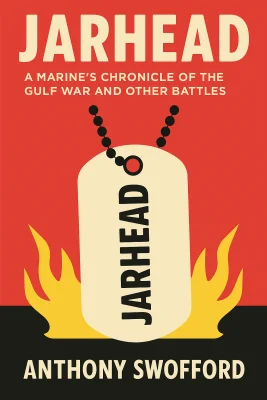
Jarhead
A Marine's Chronicle of the Gulf War and Other Battles
Categories
Nonfiction, Biography, History, Memoir, Military Fiction, Autobiography, Biography Memoir, Military History, War, Middle East
Content Type
Book
Binding
Paperback
Year
2005
Publisher
Scribner
Language
English
ASIN
0743287215
ISBN
0743287215
ISBN13
9780743287210
File Download
PDF | EPUB
Jarhead Plot Summary
Introduction
In the scorching deserts of Saudi Arabia, a young Marine named Anthony Swofford crouched in a fighting hole, oil rain falling from burning Kuwaiti wells, questioning everything he thought he knew about war, heroism, and himself. This moment captures the essence of a generation's military experience—one that would challenge romantic notions of combat and reveal the complex psychological landscape of modern warfare. Swofford's story emerges from the unique position of a scout sniper during the Gulf War, offering an unvarnished look at the realities faced by those who serve on the front lines. Through Swofford's eyes, readers will discover the profound transformation that occurs when young men are shaped by military culture, the psychological toll of preparing for a war that may never fully materialize, and the lasting impact of combat experiences on those who return home. His journey illuminates the often-overlooked human cost of military service, the brotherhood forged in extreme circumstances, and the challenge of reconciling the warrior identity with civilian life. This narrative stands as both a personal reckoning and a broader commentary on American military culture, offering insights that extend far beyond the battlefield to touch on themes of identity, belonging, and the search for meaning in an uncertain world.
Chapter 1: From Boyhood to Marine: The Path to Enlistment
Anthony Swofford's journey to the Marine Corps began long before he ever set foot on a military base, rooted in a complex web of family history, adolescent rebellion, and the search for identity that defines many young American men. Growing up in a military family, with a father who served in Vietnam and an uncle who died as a Marine embassy guard, Swofford was surrounded by the mythology of military service from an early age. Yet his path to enlistment was neither straightforward nor inevitable, marked instead by false starts, parental resistance, and the gradual awakening of what he would later recognize as a deeply ingrained need to prove himself. The pivotal moment came in 1984 when Swofford was just fourteen years old. The bombing of the Marine barracks in Lebanon, which killed 241 American servicemen, became seared into his consciousness as he folded newspapers on his morning delivery route. The images of Marines carrying their fallen comrades from the rubble awakened something primal in the teenager—a connection to what he perceived as authentic manhood and purpose. His mother's careful application of a Marine Corps iron-on to his T-shirt became a ritual of transformation, the heat of the iron symbolically preparing him for the furnace of military life that lay ahead. His first attempt to enlist at seventeen met with fierce resistance from his father, who understood the realities of military service in ways his son could not yet comprehend. The confrontation between father and son—one seeking to protect, the other desperate to prove himself—revealed the generational divide that often shapes military families. His father's demand that the recruiter guarantee his son's safety was both impossible and poignant, reflecting a parent's helpless awareness that military service, by its very nature, places young lives at risk. The physical altercation with his father that followed became a defining moment in Swofford's understanding of masculinity and power. The realization that he was stronger than his father but that his father was "meaner" revealed the complex dynamics of violence, discipline, and survival that would later define his military experience. This confrontation served as both an end and a beginning—the end of his childhood relationship with his father and the beginning of his independent journey toward military service. When Swofford finally enlisted at seventeen and a half, signing the contract on his own, he was driven not just by patriotic fervor but by a deeper need to claim his place in the masculine tradition of his family. The Marine Corps represented not just military service but a rite of passage, a way to transform himself from uncertain adolescent to proven warrior. His father's reluctant drive to the processing station, including a stop at the building where Swofford was born, suggested a complex mixture of pride and foreboding that would prove prophetic. The transition from civilian to Marine would prove more challenging than Swofford anticipated, involving not just physical transformation but a fundamental reshaping of identity, values, and worldview that would define the rest of his life.
Chapter 2: Boot Camp and Transformation
The transformation from civilian teenager to Marine began the moment Anthony Swofford stepped onto the yellow footprints at Marine Corps Recruit Depot San Diego, but the process would prove far more complex and brutal than any recruiting poster suggested. Boot camp represented not just military training but a deliberate destruction and reconstruction of identity, designed to strip away individual will and replace it with the collective consciousness of the Corps. For Swofford, this process began immediately with Drill Instructor Burke's violent introduction to military authority when he shoved the recruit's head through a chalkboard after a failed attempt at drawing a footlocker diagram. The psychological warfare of boot camp extended far beyond physical punishment to encompass a systematic assault on personal identity and civilian values. Drill instructors like Burke and Seats wielded profanity and humiliation as precisely as weapons, creating an environment where recruits existed in a constant state of stress and hypervigilance. The renaming of body parts and everyday objects—hands became "dickskinners," mouths were "cum receptacles"—represented more than crude humor; it was a linguistic transformation that separated recruits from their former lives and prepared them for a world where violence and death were occupational hazards. Swofford's assignment as Catholic lay reader placed him in the uncomfortable position of leading prayers for fellow recruits while simultaneously questioning his own faith and the compatibility of religious belief with the warrior ethos being drilled into him. The irony of leading prayers in preparation for training designed to make efficient killers would haunt him throughout his military service, highlighting the contradictions inherent in American military culture. His struggles with this role reflected broader questions about moral authority, belief, and the psychological cost of preparing for war. The physical challenges of boot camp—the endless exercise, sleep deprivation, and constant stress—were matched by psychological pressures that tested each recruit's commitment to the transformation process. The fake branding ritual Swofford endured upon arriving at his first duty station revealed both the cruelty and the bonding mechanisms of military culture. The relief he felt upon discovering the branding was fake was overshadowed by the realization that he had been willing to accept genuine physical scarring as the price of acceptance. Perhaps most significantly, boot camp introduced Swofford to the concept of institutional loyalty that would define his military experience. The Marine Corps demanded not just obedience but love—a devotion that transcended rational self-interest and family bonds. This demanded loyalty would later create profound conflicts as Swofford grappled with the gap between military mythology and battlefield reality. The graduation from boot camp marked not an end but a beginning—the birth of a new identity that would prove both empowering and imprisoning, providing a sense of belonging and purpose while simultaneously limiting individual expression and moral questioning in ways that would echo throughout his post-military life.
Chapter 3: Deployment to Saudi Arabia
The deployment to Saudi Arabia in August 1990 marked Anthony Swofford's transition from theoretical warrior to actual combatant, though the reality of this transformation would prove far more complex and frustrating than anyone anticipated. The initial excitement of finally being called to real military action was quickly tempered by the harsh realities of desert life and the growing awareness that this conflict would be unlike any previous American military engagement. As Swofford stepped off the civilian jetliner onto Saudi soil, the oppressive heat and surreal nature of arriving for war via commercial flight foreshadowed the contradictions that would define the entire Gulf War experience. The immediate challenges of acclimating to desert conditions—the relentless sun, omnipresent sand, and extreme temperatures—paled in comparison to the psychological adjustment required to prepare for combat against an unknown enemy. The Iraqi forces massed across the border represented not just a military threat but an existential challenge to everything these young Marines had been taught about warfare. Intelligence reports spoke of battle-hardened veterans who had survived eight years of brutal conflict with Iran, soldiers who had learned to fight and die while many of the Americans were still in elementary school. The distinction between front-line combat troops and rear-echelon personnel became immediately apparent as Swofford's unit found themselves living in austere field conditions while support personnel enjoyed air-conditioned barracks and hot meals. This disparity highlighted the class divisions within the military that would become more pronounced as the deployment stretched on. The grunts who would actually engage the enemy were forced to endure the harshest conditions while those who would never face combat lived in relative comfort. The daily routine of desert life—endless training exercises, equipment maintenance, and the constant battle against sand and heat—created a grinding monotony that tested morale and unit cohesion. The famous PB pills, distributed with ominous warnings about nerve gas attacks, represented the unknown chemical threat that haunted every Marine's thoughts. The three-times-daily ritual of swallowing experimental medication while wearing gas masks became a constant reminder of their vulnerability and the unprecedented nature of the threat they faced. Perhaps most challenging was the growing awareness that they were fighting not just for Kuwait's freedom but for economic and political interests that had little to do with the democratic ideals they had been taught to defend. The realization that they were protecting oil fields and corporate profits rather than defending American soil created a crisis of meaning that many Marines struggled to resolve. This knowledge, combined with the sterile, technological nature of the conflict, began to erode the romantic notions of warfare that had drawn many of them to military service. The deployment to Saudi Arabia transformed abstract concepts of duty, honor, and sacrifice into concrete realities of heat, sand, and fear, setting the stage for a conflict that would challenge everything these young warriors thought they knew about war and themselves.
Chapter 4: Life in the Desert: Waiting for War
The months of waiting in the Arabian Desert created a unique form of psychological warfare that no military training had prepared Anthony Swofford and his fellow Marines to endure. The liminal existence between peace and war, between preparation and action, tested their sanity and resolve in ways that actual combat might not have. Days blended into weeks as they lived in a state of constant readiness for a war that always seemed imminent but never quite arrived, creating a surreal environment where the greatest enemy was often boredom punctuated by moments of terror. The routine of desert life became both anchor and torment—the endless cycle of equipment maintenance, physical training, and tactical exercises that maintained readiness while slowly eroding morale. The omnipresent sand infiltrated everything, becoming a metaphor for the way the desert environment penetrated their bodies, minds, and souls. Equipment constantly malfunctioned, food spoiled in the heat, and the simple act of staying hydrated became a full-time occupation that nonetheless failed to prevent the gradual dehydration of hope and purpose. Letters from home became lifelines to a world that seemed increasingly distant and unreal. The Any Marine correspondence program brought contact with American civilians who could never truly understand the psychological pressure of waiting for death in a foreign desert. These connections, while providing temporary comfort, also highlighted the growing disconnect between the warriors and the society they ostensibly served. The ritual of burning letters and photographs before potential combat operations symbolized the necessity of severing emotional ties that might compromise combat effectiveness. The Scud alerts that punctuated their days and nights created a Pavlovian response of fear and confusion that further eroded their psychological stability. The wailing sirens, the desperate scramble for gas masks and protective gear, and the long minutes of uncertainty about whether chemical death was descending from the sky created a constant state of hypervigilance that exhausted both body and spirit. The false alarms, which vastly outnumbered real attacks, created a cynical awareness of the arbitrary nature of survival and death in modern warfare. Entertainment became crucial to maintaining sanity—whether through illicit alcohol consumption, marathon poker games, or the sharing of war stories from previous conflicts. The viewing of Vietnam War films took on ritualistic significance, providing both inspiration and warning about what awaited them. These cinematic representations of combat became their primary reference point for understanding what war might actually entail, creating expectations that reality would both fulfill and shatter. The desert environment itself became a character in their story—vast, hostile, and indifferent to human suffering. The mirage became both literal and metaphorical, representing the way heat and isolation distorted perception and judgment. The realization that they had become part of the desert, that it was now inside them physically and spiritually, marked a point of no return in their transformation from civilians to warriors. This integration with the hostile environment prepared them for combat while simultaneously alienating them from the peaceful world they had left behind.
Chapter 5: The Gulf War: Combat and Its Aftermath
When combat finally arrived, it came with a suddenness and intensity that caught Anthony Swofford and his fellow Marines off guard, despite months of preparation. The air campaign that preceded the ground war transformed the Iraqi positions ahead of them into a moonscape of destruction that both awed and horrified the young warriors. The sight of enemy vehicles and bodies scattered across the desert like broken toys revealed the true face of modern warfare—not the glorious charges and heroic struggles they had imagined, but the systematic annihilation of human beings through superior technology and overwhelming firepower. The first experience of incoming artillery fire provided Swofford with his initial taste of genuine terror and exhilaration. The sound of enemy rounds passing overhead—like the earth itself exhaling in agony—marked his transition from observer to participant in the ancient dance of death that defines all warfare. The sight of the explosion patterns in the sand, beautiful and terrible in their violence, revealed the aesthetic dimension of destruction that would haunt his memories long after the war ended. The friendly fire incident that nearly killed his own unit highlighted the chaotic and arbitrary nature of modern combat, where death could come from any direction without warning or explanation. The image of American tanks firing on American supply convoys encapsulated the confusion and horror that characterized much of the actual fighting. This betrayal by their own forces proved more traumatic than enemy attacks, violating the basic trust that holds military units together under extreme stress. The ground war, when it finally came, lasted only a few days but provided enough horror to last a lifetime. The long march through fields of destroyed Iraqi equipment and scattered corpses gave Swofford his first intimate encounter with the reality of mass death. The sight of enemy soldiers blown apart by American bombs, some still clutching propaganda pamphlets promising their salvation, revealed the pathetic vulnerability of human flesh when confronted with modern military technology. Perhaps most disturbing was the discovery that many of the enemy positions had been abandoned or contained only surrendering soldiers eager to escape the slaughter. The absence of the fierce resistance they had expected created a sense of anticlimax that left many Marines feeling cheated of the combat experience they had spent months preparing for. The easy victory, while welcome from a survival standpoint, provided little opportunity for the personal testing and validation that many had sought through military service. The aftermath of combat brought its own unique challenges as Swofford and his unit were assigned to clear enemy bunkers and positions. The intimate contact with enemy dead—examining their personal effects, reading their letters, and contemplating their humanity—created psychological conflicts that training had never addressed. The realization that these corpses had been men much like themselves, with families and fears and hopes, challenged the dehumanization process that had made killing them possible. The war's end came with shocking suddenness, leaving Swofford with a profound sense of incompleteness and confusion about what he had actually experienced and what it all meant.
Chapter 6: Homecoming and Disillusionment
The return to America brought Anthony Swofford face to face with a civilian population that had experienced the Gulf War as a television spectacle rather than lived reality, creating an unbridgeable gap between his understanding of combat and the public's perception of military heroism. The victory parades and yellow ribbons that greeted the returning warriors felt hollow and performative to men who had witnessed the arbitrary brutality and moral ambiguity of modern warfare. The disconnect between public celebration and private trauma marked the beginning of Swofford's long struggle to reconcile his military experience with civilian life. The hero's welcome, while well-intentioned, revealed the American public's need to transform the complex realities of warfare into simple narratives of good versus evil, victory versus defeat. Swofford found himself cast in a role he neither wanted nor felt he deserved—that of the victorious warrior defending freedom and democracy. The truth of his experience—months of boredom punctuated by moments of terror and confusion—fit poorly with the heroic narrative the public demanded. This forced performance of heroism became another form of psychological burden for men already struggling to process their combat experiences. The institutional support systems designed to help veterans transition back to civilian life proved inadequate for addressing the complex psychological and emotional challenges facing Gulf War veterans. The military's focus on physical readjustment ignored the deeper spiritual and moral wounds that many veterans carried home with them. The assumption that a quick, successful war would produce minimal psychological casualties proved tragically wrong, leaving many veterans to struggle alone with experiences that civilian society could neither understand nor adequately address. Family relationships, strained by months of separation and the fundamental changes that military service had wrought in the returning veterans, required painful renegotiation. Swofford's discovery that his mother had remarried during his deployment symbolized the way life had continued for those at home while he was frozen in the timeless environment of military service. The realization that he had become a stranger in his own family reflected the broader alienation that many veterans experienced upon returning home. The military culture that had provided structure, purpose, and identity during deployment became a source of conflict in the civilian world. The brotherhood of combat arms, with its emphasis on loyalty, aggression, and shared hardship, translated poorly to a society that valued individual achievement, emotional restraint, and peaceful resolution of conflicts. Many veterans found themselves caught between two worlds—no longer civilians but not quite soldiers either. Perhaps most challenging was the growing awareness that their sacrifice had been in service of political and economic interests that had little to do with the ideals they had been taught to defend. The knowledge that they had risked their lives to protect oil fields and corporate profits rather than American freedom created a cynicism that poisoned their relationship with both military and civilian authority. This betrayal of trust would prove more lasting and damaging than any physical wounds they might have sustained in combat. The homecoming that should have marked the end of their military service instead became the beginning of a lifelong struggle to find meaning and purpose in a society that celebrated their service while remaining willfully ignorant of its true cost.
Chapter 7: The Psychological Toll of War
The most enduring wounds of Anthony Swofford's military service were not physical but psychological, manifesting in ways that neither he nor the military medical establishment fully understood at the time. The hypervigilance that had been essential for survival in combat became a liability in civilian life, making normal social interactions feel threatening and unpredictable. The constant state of alertness that had once protected him from enemy fire now prevented him from finding peace in the safety of his own home, creating a prison of perpetual tension from which there seemed to be no escape. Sleep became elusive as the boundaries between past and present, memory and reality, began to blur in ways that defied rational explanation. The dreams that haunted his nights were populated not just by enemy soldiers and exploding shells, but by the corpses he had encountered in the aftermath of combat—men whose faces he remembered but whose names he would never know. These nocturnal visitations served as reminders of his complicity in their deaths, even though he had never actually pulled the trigger that killed them. The guilt of survival proved particularly corrosive, eating away at his sense of self-worth and purpose in ways that were difficult to articulate or address through conventional therapy. Why had he lived when others had died? What made his life more valuable than that of the Iraqi soldiers whose corpses he had searched for intelligence? These questions had no satisfactory answers, yet they demanded constant attention, creating a mental loop of self-examination that provided no resolution or peace. Anger became his default emotional state, a protective barrier that kept others at a safe distance while providing an outlet for the frustration and confusion that threatened to overwhelm him. This rage was not directed at any specific target but was instead a generalized fury at the world that had created the circumstances of his military service and then failed to acknowledge its true cost. The people who thanked him for his service, who called him a hero, who displayed yellow ribbon magnets on their cars—they all became objects of his contempt because they celebrated what they did not understand. The identity crisis that followed his return to civilian life cut to the core of his understanding of masculinity, purpose, and belonging. The Marine Corps had provided not just a job but a complete worldview, a set of values, and a brotherhood that civilian life could not replace. Without the structure and meaning that military service had provided, he found himself adrift in a society that valued things he had been taught to despise—material comfort, emotional expressiveness, and peaceful resolution of conflicts. Substance abuse offered temporary relief from the psychological pain but created new problems that compounded his existing struggles. Alcohol and drugs provided a brief escape from the hypervigilance and emotional numbness that characterized his daily existence, but they also destroyed relationships and opportunities that might have provided genuine healing. The self-medication that seemed necessary for survival in civilian life became another form of self-destruction that perpetuated the cycle of pain and isolation. The long-term effects of his military service would prove far more profound and lasting than anyone had anticipated, reshaping not just his understanding of himself but his relationship with his country, his family, and the very concepts of duty and sacrifice that had motivated his original enlistment.
Summary
Anthony Swofford's journey through military service and combat reveals a fundamental truth about modern warfare: the greatest battles are often fought not on distant battlefields but in the minds and hearts of those who return home forever changed by their experience. His story stands as a testament to the complex psychological toll of military service, challenging romanticized notions of war while honoring the genuine sacrifice and courage of those who serve. The transformation from idealistic teenager to hardened warrior to struggling veteran illustrates the profound human cost of America's military commitments, costs that extend far beyond casualty statistics to encompass the spiritual and emotional wounds that may never fully heal. The lasting value of Swofford's narrative lies not in its condemnation of military service but in its honest examination of the gap between military mythology and lived reality. His experiences offer crucial insights for anyone seeking to understand the true nature of modern warfare and its impact on those who wage it. For readers, particularly those considering military service or trying to understand veterans in their own lives, Swofford's story provides a framework for comprehending the complex challenges facing those who have served their country in combat. His unflinching honesty about the psychological costs of war serves as both warning and tribute, ensuring that the true price of military service is neither forgotten nor minimized in future discussions of American military policy.
Best Quote
“My despair is less despair than boredom and loneliness.” ― Anthony Swofford, Jarhead: a Marine's Chronicle of the Gulf War and Other Battles
Review Summary
Strengths: The review highlights the book's engaging narrative, noting its vivid depiction of the frustrations faced by Marines. The author, Anthony Swofford, provides an authentic perspective as a former Marine, which adds credibility to his account. The book is described as having a compelling pace and a unique take on the concept of war, focusing on the inner turmoil of soldiers. Weaknesses: The review suggests that the book lacks the wit of other war satires like "Catch-22." Additionally, the narrative is criticized for spending a significant portion of the book on pre-war experiences, which may not meet all readers' expectations for a war story. Overall: The reader finds the book engaging and authentic, recommending it for its unique perspective on military life, despite some narrative pacing issues.
About Author

Anthony Swofford
Swofford interrogates the gritty and unvarnished realities of war and masculinity through his literary works, offering a candid look at the psychological tolls of combat. He focuses on themes of trauma, existential challenges, and identity, which are encapsulated in his acclaimed memoir "Jarhead". This book provides an unflinching account of his experiences in the Persian Gulf War, presenting a stark contrast to glorified military narratives. Swofford’s method involves confronting the complexities of manhood and the struggle to reconcile with past experiences, leading to a profound exploration of personal transformation.\n\nBeyond his book writing, Swofford has contributed significantly to the academic and literary community. He has taught English and creative writing at several institutions and has written for esteemed publications such as "The New York Times" and "Harper’s". His work has transcended the page, contributing to documentaries like "Semper Fi". Readers and audiences benefit from Swofford’s honest portrayal of military life and the psychological intricacies of those who serve, offering insights that resonate with both veterans and civilians. His literary style, recognized through accolades like the Michener-Copernicus Fellowship, ensures his contributions to literature remain impactful.\n\nIn addition to "Jarhead", which was adapted into a film, Swofford has penned other works that explore various facets of human experience. His novel "Exit A" delves into a coming-of-age story set in Japan, while his ongoing memoir work continues to examine personal themes such as fatherhood. Through these narratives, Swofford charts a course for understanding the deeper realities of life and identity, making his bio not just a summary of achievements but a testament to the enduring power of truth in storytelling.
Read moreDownload PDF & EPUB
To save this Black List summary for later, download the free PDF and EPUB. You can print it out, or read offline at your convenience.
Jarhead
by Anthony Swofford
